上一片拆掉火三角灭了火。这一片小烧瓶走进厨房,遇到一群脾气完全不同的东西:有的酸溜溜,有的滑腻腻。它们叫酸和碱——但想认出它们,千万不能靠嘴尝。Last leaf we tore the fire triangle apart. Now the little flask walks into the kitchen and meets a crowd with very different tempers: some taste sour, some feel slippery. They are acids and bases — and you must never identify them by taste.
第 1 步:酸和碱,就在你身边Step 1: Acids and bases are all around you
先来认识这两大家族——Meet the two families first —
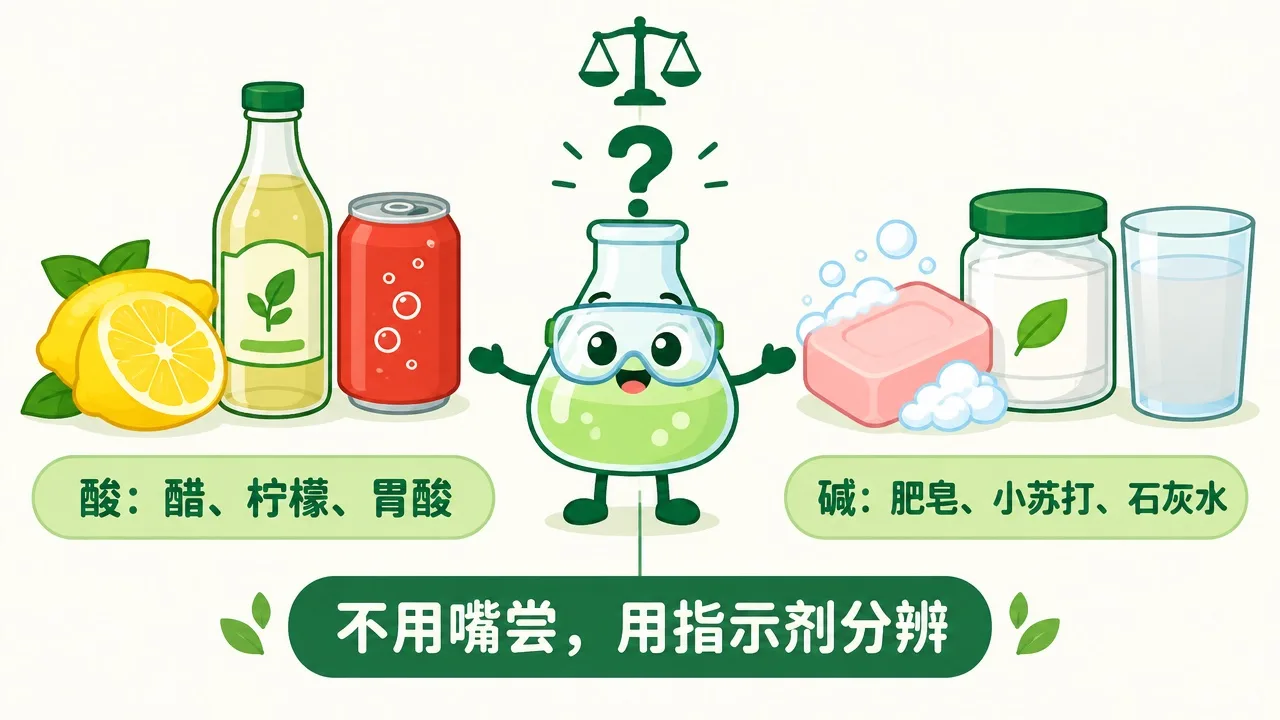
酸:醋、柠檬、汽水、酸奶,还有胃里帮忙消化的胃酸——尝起来酸溜溜。碱:肥皂、小苏打、洗涤剂、澄清石灰水——摸起来滑腻腻,像抹了一层油。注意:厨房里的食用酸不可怕,可实验室的浓酸浓碱有强腐蚀性,会烧伤皮肤、烧坏衣服,绝对不能尝、不能摸。Acids: vinegar, lemon, fizzy drinks, yoghurt, and the stomach acid that helps you digest — they taste sour. Bases: soap, baking soda, detergent, limewater — they feel slippery, like a thin layer of oil. But note: edible kitchen acids are harmless, while concentrated lab acids and bases are strongly corrosive — they burn skin and eat through clothes. Never taste or touch them.
酸和碱长得都像普通的水,怎么分辨?Both look like plain water — so how do we tell them apart?
第 2 步:指示剂——酸碱的照妖镜Step 2: Indicators reveal the hidden identity
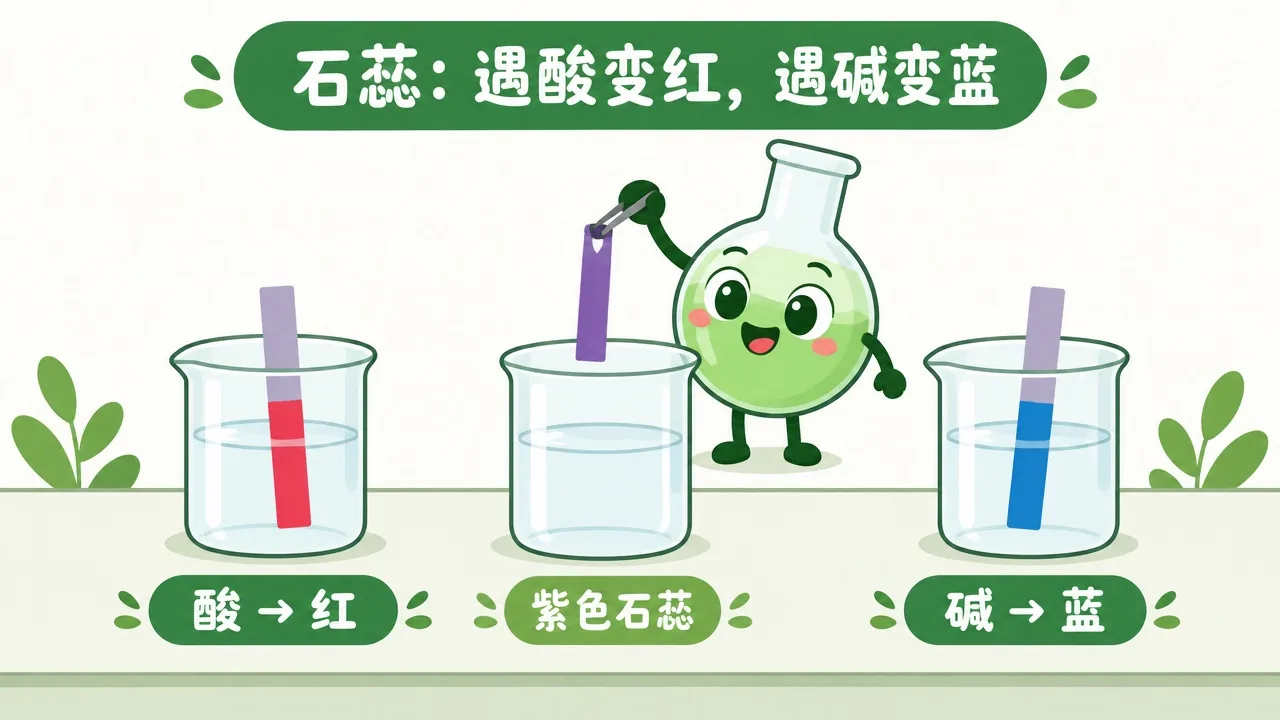
用指示剂。最经典的是紫色石蕊:遇酸变红,遇碱变蓝——四个字:酸红碱蓝。酚酞是另一种:遇酸不变色,遇碱变红。实验室里用玻璃棒蘸取待测液点在试纸上,看颜色变化,绝不能用嘴尝。注意:不是所有液体都会让石蕊变色——食盐水是中性的,试纸毫无反应。Use an indicator. The classic is purple litmus: red in acid, blue in base — a neat rhyme to remember. Phenolphthalein is another: colourless in acid, pink in base. In the lab you dip a glass rod and touch it to the paper, then read the colour — never taste. And note: not every liquid changes litmus — salt water is neutral, and the paper does nothing at all.
认出了酸和碱,它们能干什么?厨房早就用上了——Now that we can tell them apart — what are they good for? Kitchens have used them for centuries —
第 3 步:厨房里的酸碱妙用Step 3: Acid–base tricks in the kitchen
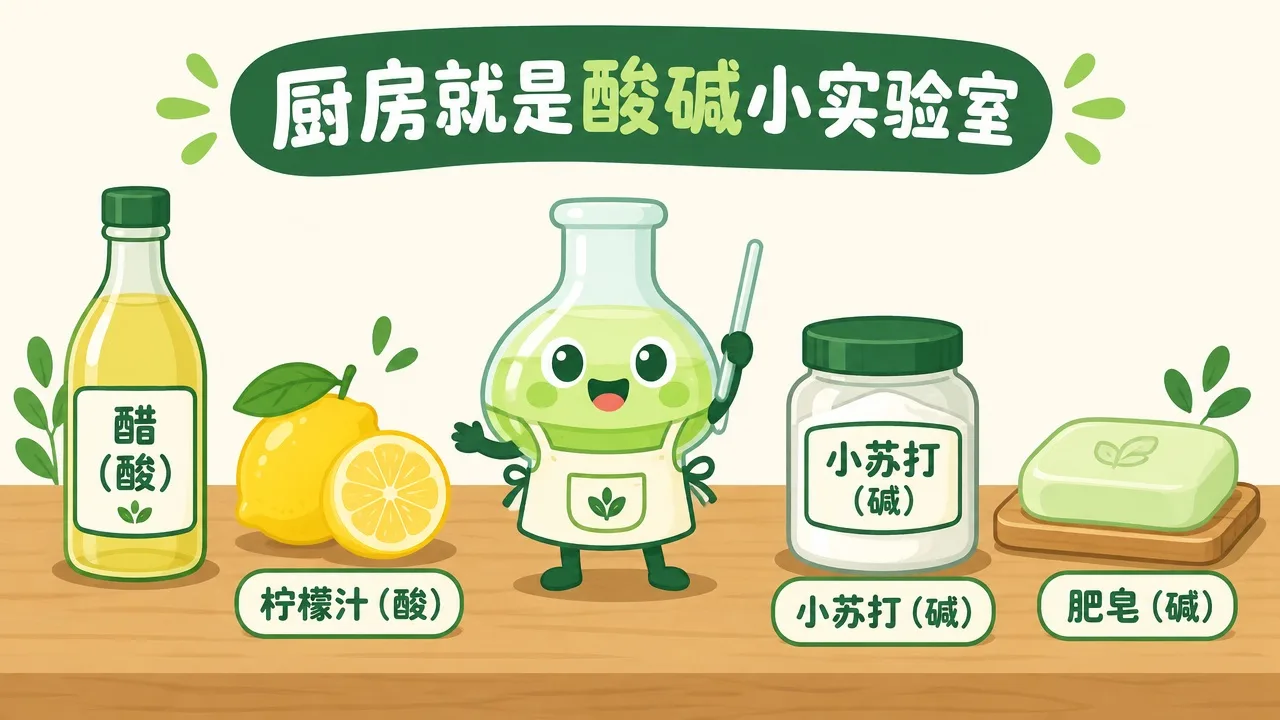
蒸馒头时面团发酸,加一点小苏打(碱)中和,馒头又香又松;胃酸过多时,吃一粒含碱的胃药,把多余的酸中和掉;被蚊虫叮咬(甲酸)涂点肥皂水,痒感就轻了。酸和碱碰到一起会互相“抵消”,这叫中和——下一片 pH 值就专门讲它。When dough turns sour, a pinch of baking soda (a base) neutralises it and the buns steam up fluffy; when there is too much stomach acid, an antacid tablet neutralises the extra; an insect bite (formic acid) calms down with a dab of soapy water. Acid meets base and they cancel each other — that is neutralisation, and the next leaf, pH, is all about it.
🎮 你来当化验员(60 秒)🎮 Your turn: lab analyst (60 seconds)
4 份神秘样品,滴石蕊、看颜色、分酸拣碱——小心那份不按套路出牌的。4 mystery samples: drop litmus, read the colour, sort acid from base — and watch for the one that breaks the pattern.
一句话记住它:酸和碱靠指示剂认身份——石蕊酸红碱蓝;它们相遇会互相中和。Remember it in one line: indicators reveal acids and bases — litmus turns red in acid, blue in base; when they meet, they neutralise each other.
酸:醋、柠檬、胃酸(酸味);碱:肥皂、小苏打、石灰水(滑腻感)Acids: vinegar, lemon, stomach acid (sour); bases: soap, baking soda, limewater (slippery)石蕊:酸红碱蓝;酚酞:遇碱变红;食盐水是中性的,不变色Litmus: red in acid, blue in base; phenolphthalein turns pink in base; salt water is neutral — no colour change浓酸浓碱有腐蚀性,绝不能尝;酸碱相遇会中和(面团+小苏打、胃药)Concentrated acids and bases are corrosive — never taste; acid + base neutralise (dough + baking soda, antacids)
内容参考 OpenStax 等公开教材,多来源核对 · AI 生成、人工审核 · 发现错误欢迎指正,帮这片叶子长得更好。Based on OpenStax and other open textbooks, cross-checked across sources · AI-generated, human-reviewed · Spotted a mistake? Tell us — help this leaf grow.
 Back to tree