🔁 敏捷开发:每两周端一盘小菜🔁 Agile: Serve a Small Dish Every Two Weeks
上一片里,全世界的人都来帮小电脑改菜谱。帮手多了,新问题来了:先做哪道,多久交一次?憋三个月做一桌大餐,还是每两周端一盘小菜?这一片讲敏捷开发。Last leaf, people all over the world pitched in on Little Computer’s recipe. More helpers bring a new question: which dish first, and how often to deliver? Hide away for three months cooking a giant feast — or serve a small dish every two weeks? This leaf is about agile development.
第 1 步:两周端一盘Step 1: One dish every two weeks
先看敏捷怎么干活——切成小块,一轮一轮做。First, how agile works — cut the job small, cook it round by round.
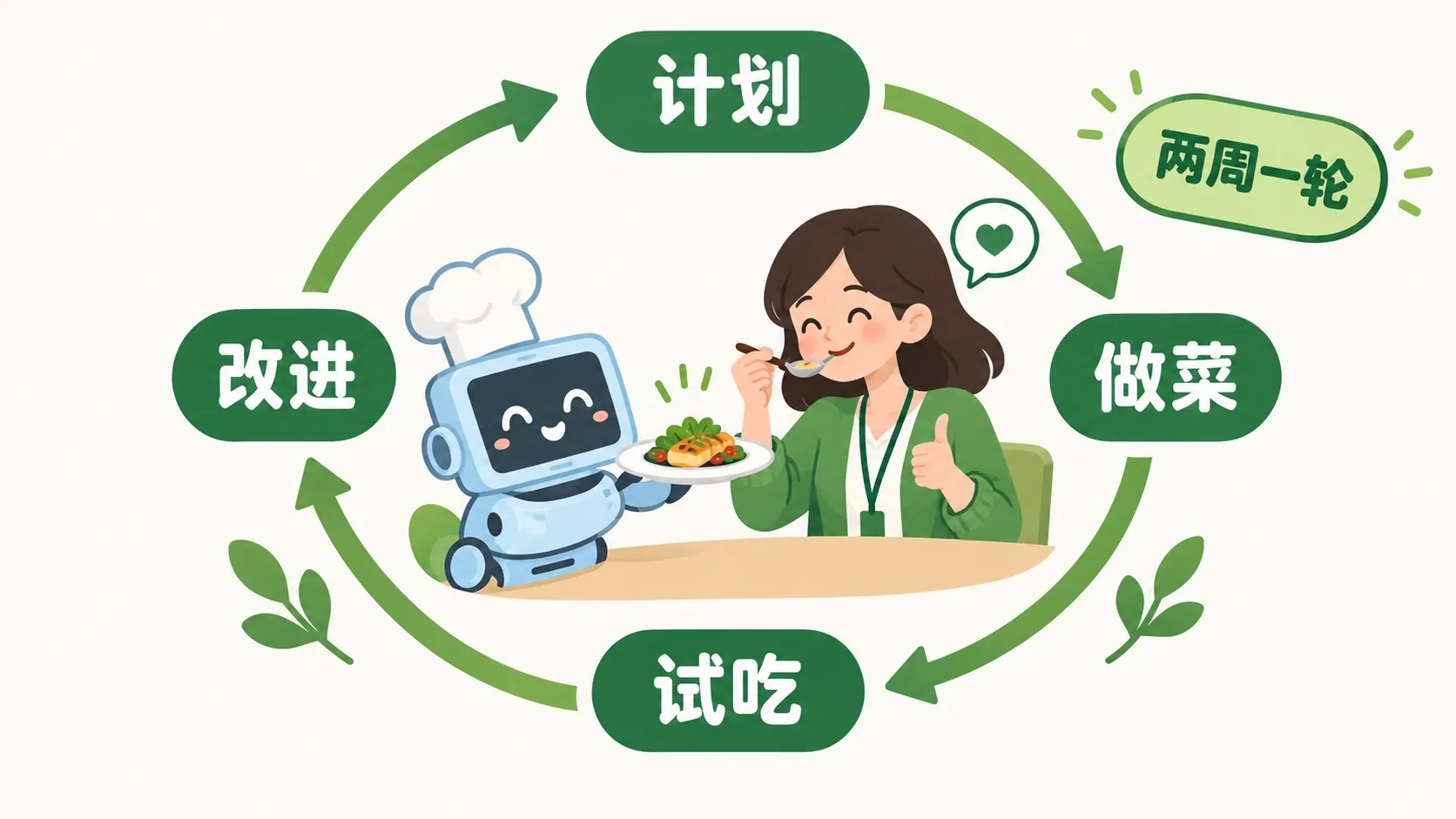
敏捷开发不憋大招。小电脑把大工程切成小块,每两周做完一块。这两周叫一个冲刺(Sprint)。每轮四步:计划、做菜、试吃、改进。冲刺结束,就端出一盘能吃的小菜:功能虽小,但真能用。老师尝一口提意见,下一轮照着改。Agile skips the one big reveal. Little Computer cuts a big project into small pieces and finishes one every two weeks. Those two weeks are called a sprint. Each round has four steps: plan, cook, taste, improve. At the end of a sprint, out comes a small dish you can actually eat: a small feature, but one that really works. The teacher takes a bite and gives feedback; the next round follows it.
一盘一盘地上,不比一次做完更慢吗?Serving dish by dish — isn’t that slower than doing it all at once?
第 2 步:需求一变,谁更亏Step 2: When plans change, who loses more?
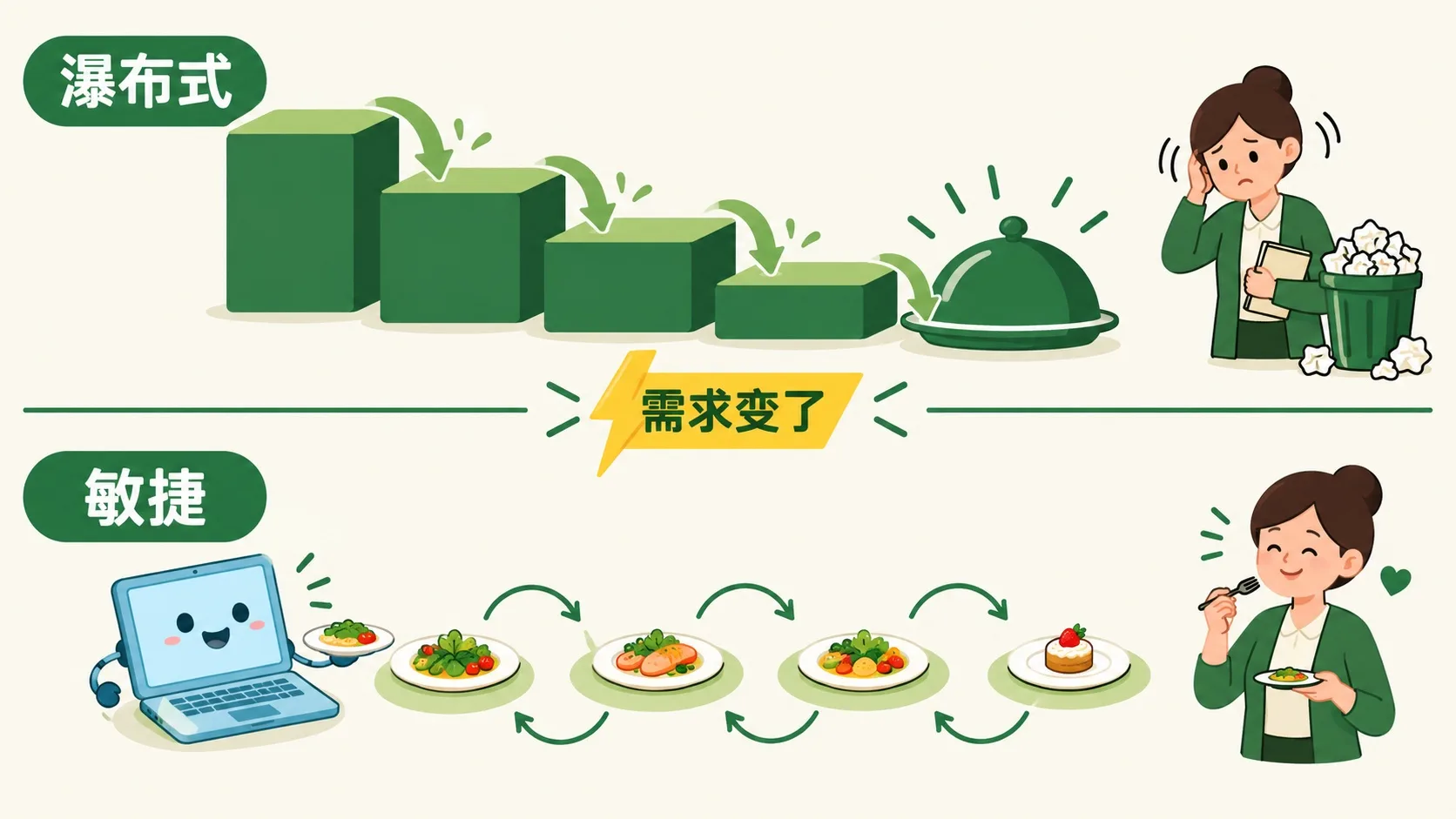
未必。真正费时间的,是做了半天白做。老办法叫瀑布式,像瀑布一级级往下流。需求、设计、编写、测试,做完一步才走下一步。全部做完,最后才一起交付。做到一半需求变了,前面的活大半白干。敏捷每两周就听一次反馈,跑偏最多偏两周。不过需求很稳的工程,比如造桥,瀑布式照样好用。Not really. What truly wastes time is work you end up throwing away. The old way is called waterfall, flowing down one level at a time: requirements, design, building, testing — each step finished before the next. Everything is delivered together at the very end. If plans change halfway, much of the earlier work is wasted. Agile gets feedback every two weeks, so it drifts off course by two weeks at most. Still, for projects with very stable plans — like building a bridge — waterfall works just fine.
真实的敏捷团队,每天都在忙些什么?So what does a real agile team do every day?
第 3 步:每日站会和任务板Step 3: Daily stand-ups and the task board
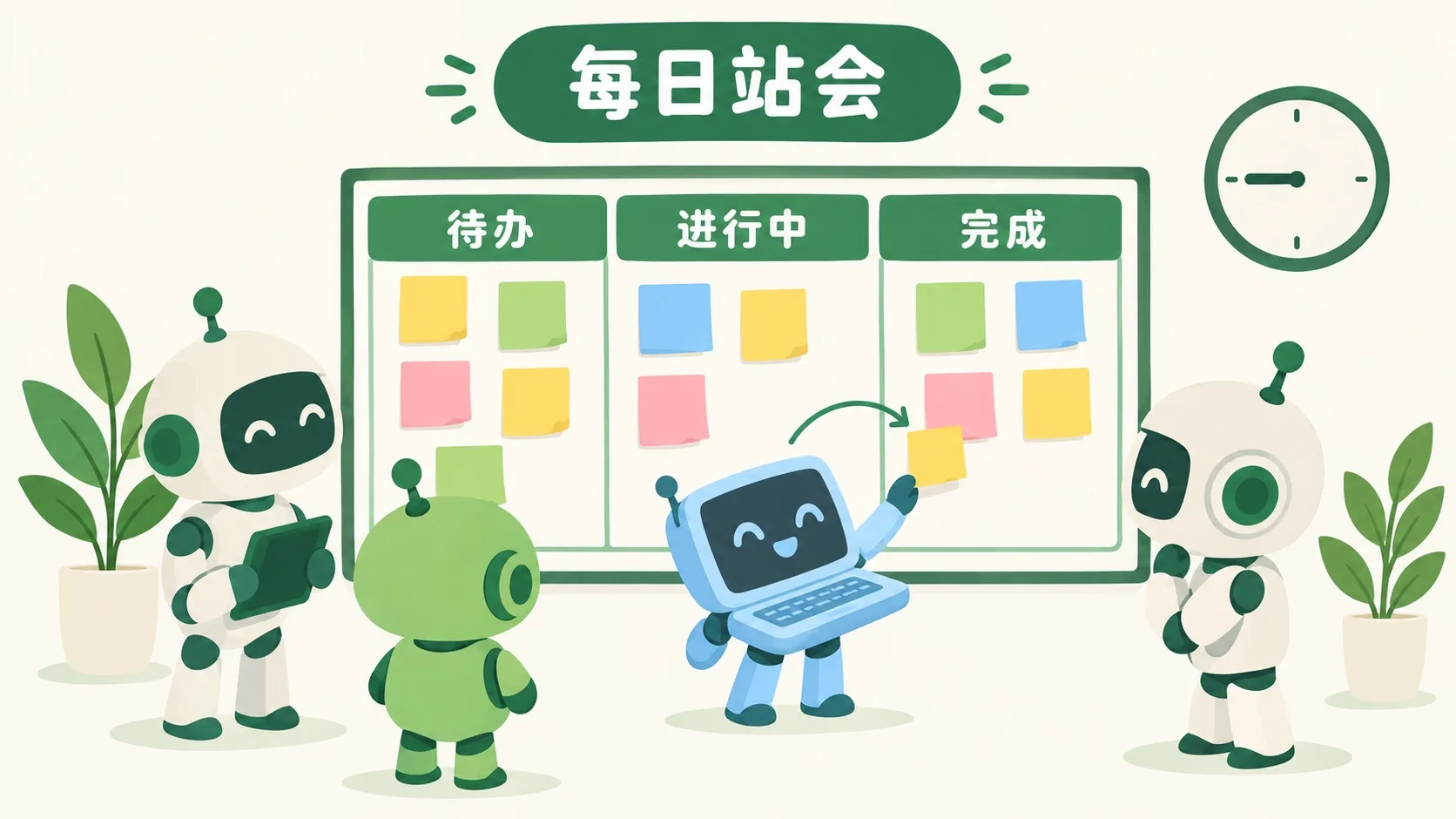
每天早上开个 15 分钟的站会,大家站着说三件事。昨天做了啥,今天做啥,卡在哪儿。墙上的任务板分三栏:待办、进行中、完成。便利贴一张张往右挪,进度一眼看清。2001 年,17 位程序员写下《敏捷宣言》:响应变化,胜过死守计划。Every morning there’s a 15-minute stand-up: everyone stays on their feet and shares three things — what I did yesterday, what I’ll do today, where I’m stuck. The task board on the wall has three columns: To do, Doing, Done. Sticky notes slide right one by one, so progress is clear at a glance. In 2001, 17 programmers wrote the Agile Manifesto: responding to change over following a plan.
🎮 两个厨房比一比(30 秒)🎮 Your turn: two kitchens race (30 seconds)
道理讲完了。瀑布厨房和敏捷厨房同做 4 道菜,中途老师改主意:猜猜谁浪费得少?Theory done. A Waterfall kitchen and an Agile kitchen cook the same 4 dishes, and the teacher changes her mind midway: guess who wastes less?
一句话记住它:敏捷 = 切成小块,每两周交付一盘能用的小菜,听完反馈再改。Remember it in one line: agile means cutting work small, delivering a usable dish every two weeks, and adjusting after feedback.
冲刺(Sprint):两周一轮,计划 → 做菜 → 试吃 → 改进Sprint: a two-week round — plan → cook → taste → improve瀑布式最后才交付,需求一变就大返工;需求稳时照样好用Waterfall delivers only at the end, so a change means big rework — fine when plans are stable每日站会 + 任务板:待办 → 进行中 → 完成,进度一眼看清Daily stand-up + task board: To do → Doing → Done, progress at a glance
内容参考 OpenStax 等公开教材,多来源核对 · AI 生成、人工审核 · 发现错误欢迎指正,帮这片叶子长得更好。Based on OpenStax and other open textbooks, cross-checked across sources · AI-generated, human-reviewed · Spotted a mistake? Tell us — help this leaf grow.
 Back to tree