阿禾来到雅典的山丘。神庙下面的城市,人人都能参与决策吗?Ahe reaches the hill above Athens. Could everyone in the city below take part in decisions?
第 1 步:许多城邦,不是一个国家Step 1: Many city-states
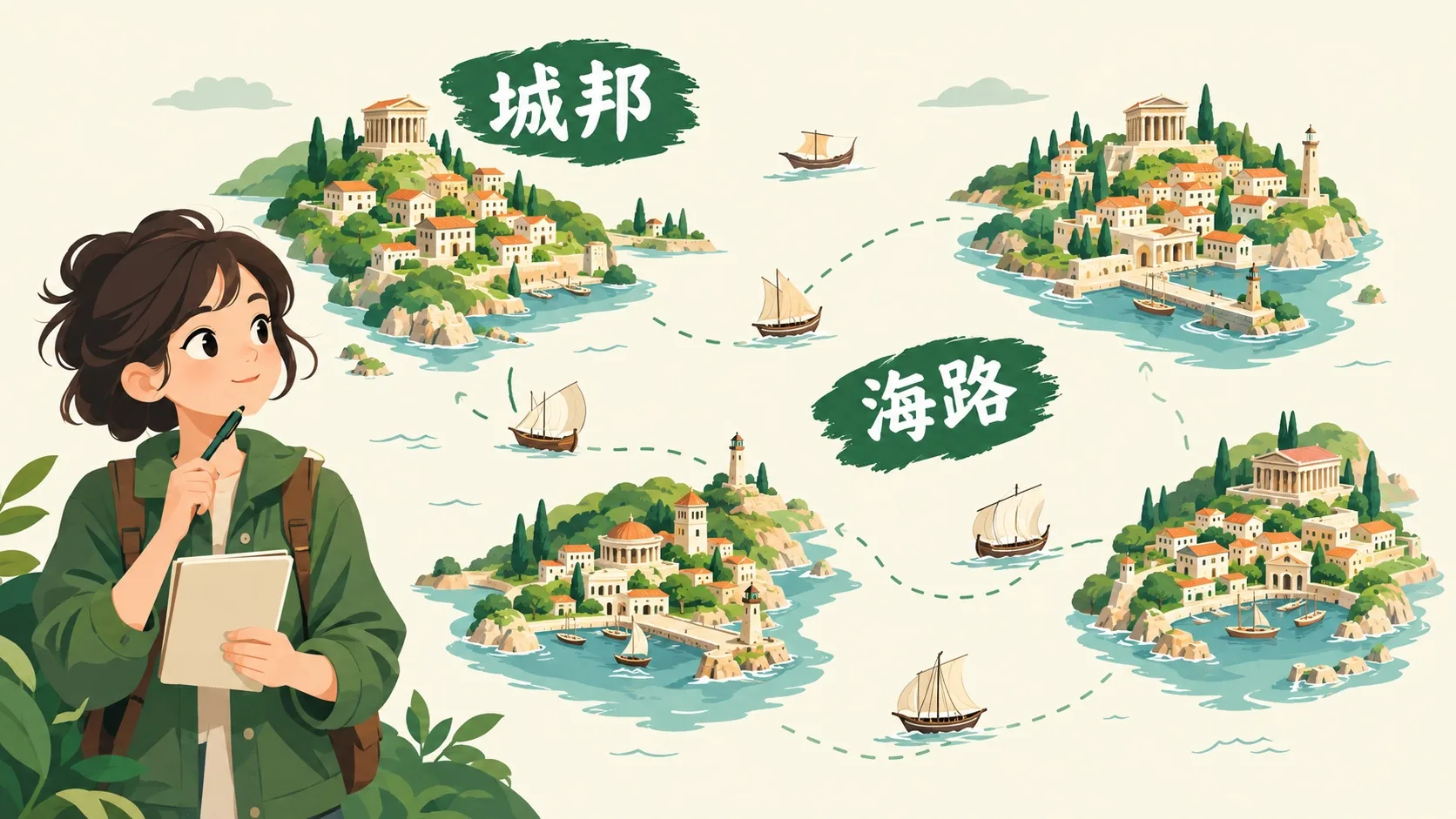
古希腊世界由许多城邦组成。The ancient Greek world included many city-states.
城邦是城市与周边地区的共同体。雅典和斯巴达制度不同。语言、祭祀和贸易把它们联系起来。战争也常发生。A polis combined a city with its surrounding territory. Athens and Sparta had different institutions. Language, worship and trade connected communities, while rivalry and war also shaped their relationships.
第 2 步:参与有边界Step 2: Participation had limits
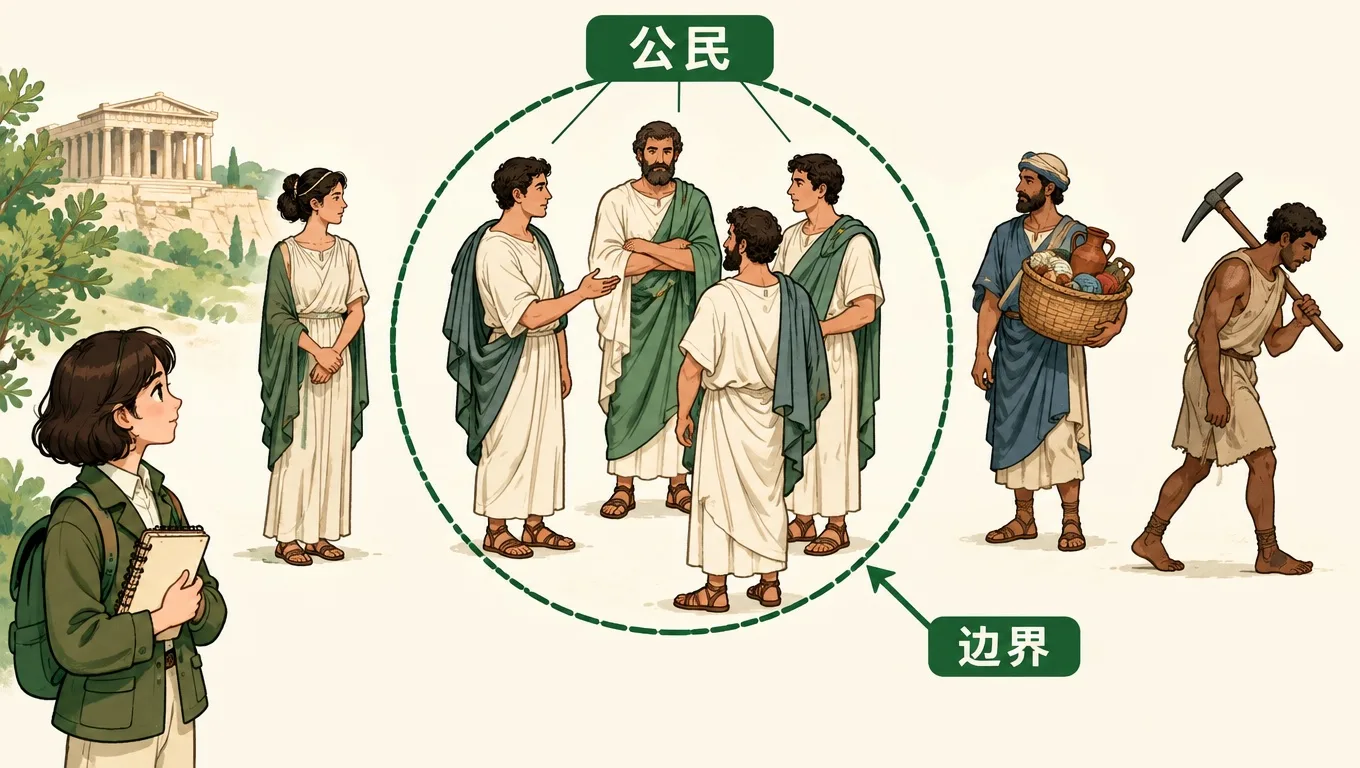
雅典发展出一种直接民主。Athens developed a form of direct democracy.
符合资格的男性公民参与决策。妇女、奴隶和外来居民不享同等权利。介绍民主成就,也要说明谁被排除。Eligible male citizens took part in decisions. Women, enslaved people and resident foreigners lacked the same political rights. Understanding this achievement also requires noticing the people excluded from it.
第 3 步:建筑保存共同记忆Step 3: Buildings preserve memory
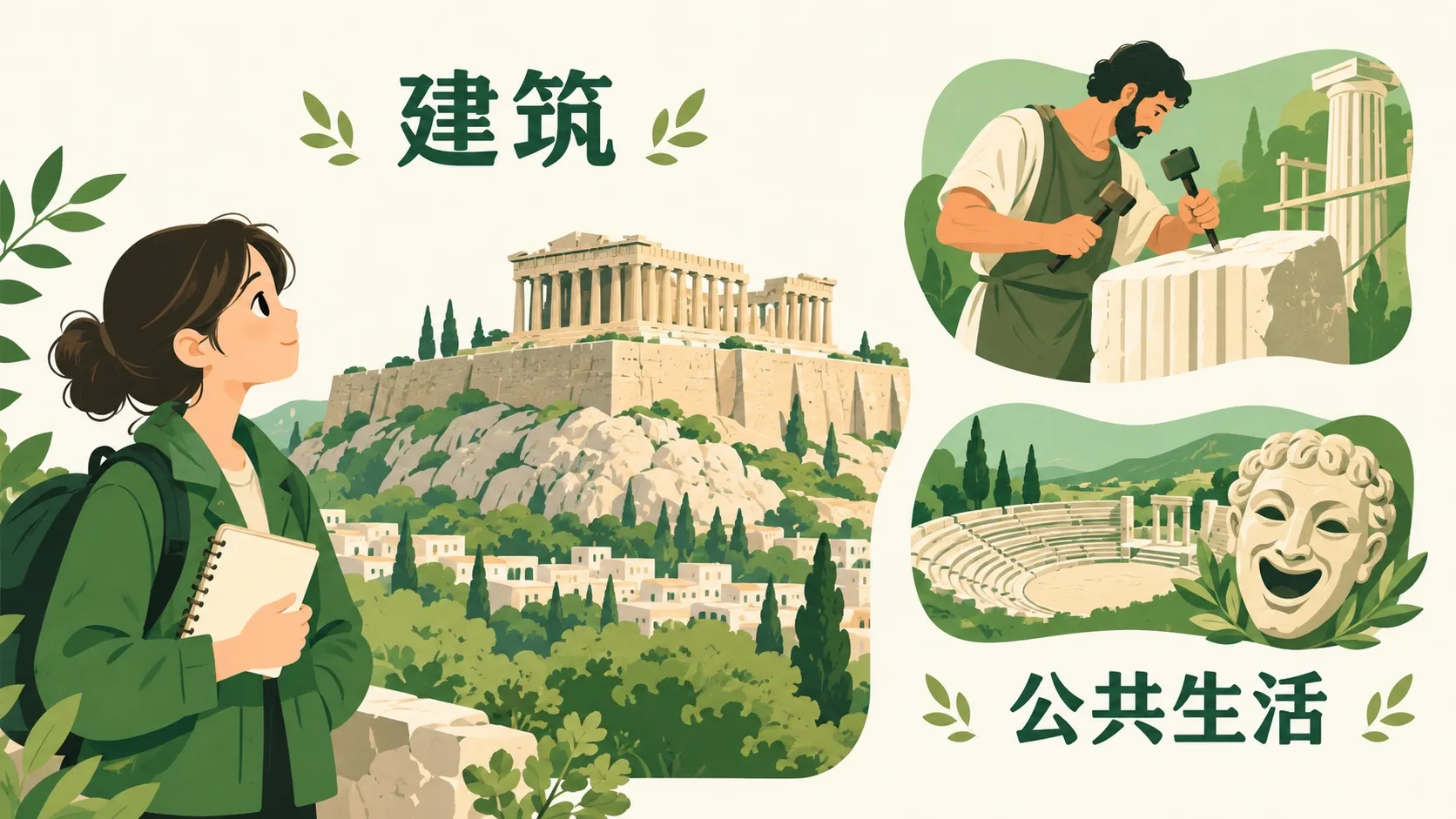
卫城上的建筑与雅典历史相连。Acropolis monuments are tied to Athenian history.
神庙、雕塑和戏剧反映信仰与公共生活。它们也展示财富和权力。阿禾既看美感,也问是谁出钱、谁在劳动。Temples, sculpture and theatre reveal religion and public life. They also express wealth and power. Ahe asks not only what looks beautiful, but who commissioned it and whose work made it possible.
🎮 证据工作台🎮 Evidence desk
把五张卡分为“观察/有记录”与“解释/待证”。先看证据支持多大结论。Sort five cards into “Observed / documented” or “Interpretation / unproven”. Ask how much the evidence actually supports.
一句话记住它:古希腊包含许多城邦。Remember: Ancient Greece included many city-states.
古希腊包含许多城邦。Ancient Greece included many city-states.雅典民主不等于人人有权。Athenian democracy excluded many people.艺术也反映劳动与权力。Art also reflects labour and power.
依据上述公开资料编写 · AI 辅助制作 · 发现问题欢迎指正,帮这片叶子长得更好。Based on the public sources above · AI-assisted production · Spotted a problem? Tell us — help this leaf grow.
 Back to tree