⚛️ 原子结构:迷你太阳系⚛️ Atomic Structure: A Mini Solar System
上一片说,一切由不停运动的小球组成。把其中一个小球(分子)再拆开,你会发现里面藏着一个迷你太阳系——中心一颗“太阳”,外面绕着一群“行星”。Last leaf, everything was made of restless little balls. Crack one of those balls (a molecule) open, and inside hides a mini solar system — a “sun” at the center with “planets” orbiting around it.
第 1 步:原子里的“太阳系”Step 1: The solar system inside an atom
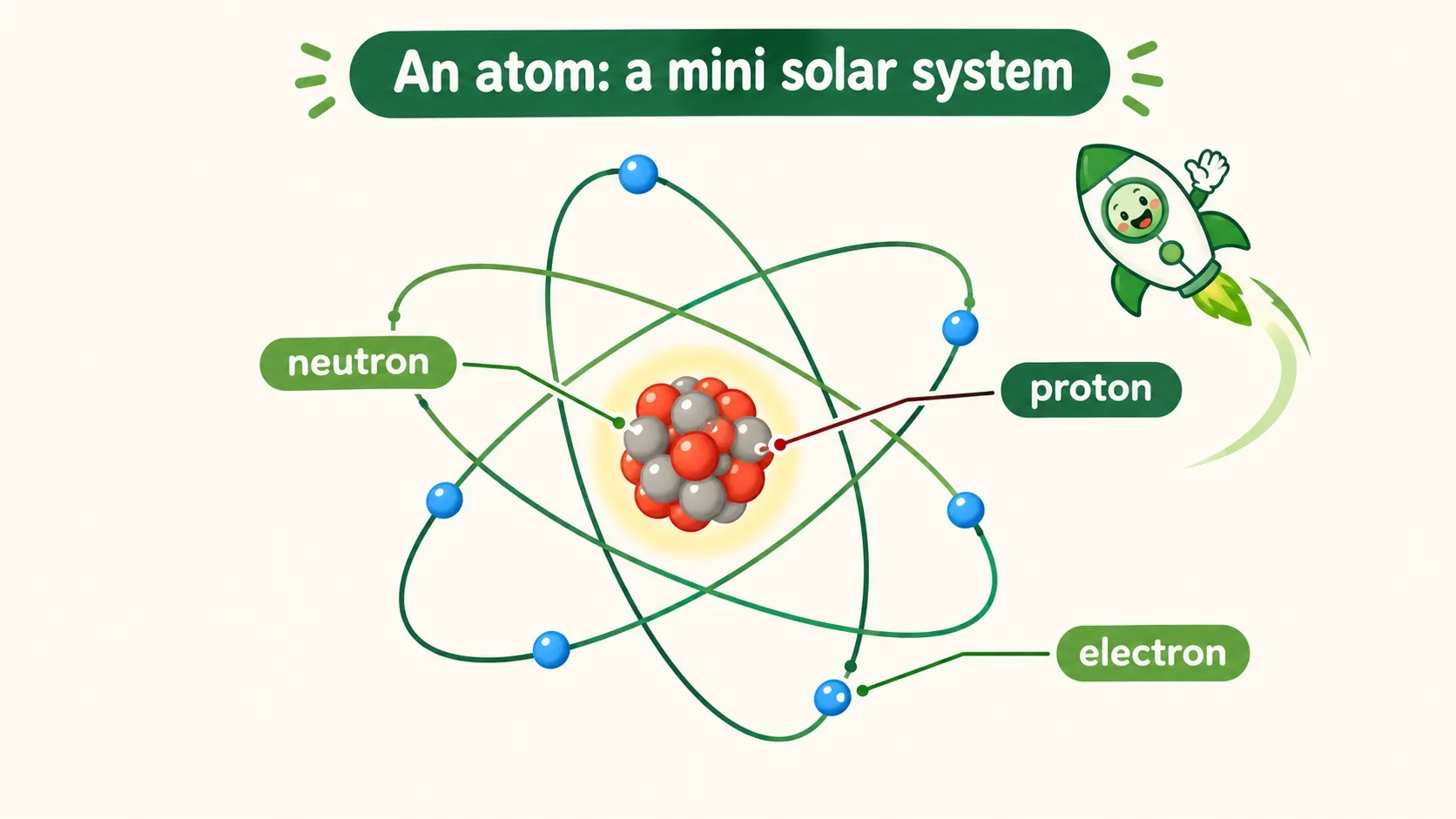
这个迷你太阳系里,谁是太阳,谁是行星?In this mini solar system, which part is the sun — and which are the planets?
中心是原子核:带正电的质子和不带电的中子挤在一起,原子的质量几乎全在这里。外围是带负电的电子,像行星一样绕着核飞快转动。核非常小,却决定了这个原子的一切。At the center sits the nucleus: positively charged protons and uncharged neutrons packed together, holding nearly all the atom's mass. Around it fly negatively charged electrons, orbiting fast like planets. The nucleus is tiny — yet it decides everything about the atom.
科学家怎么知道原子中间有核、外面却很空?How could scientists know there's a nucleus in the middle and mostly empty space around it?
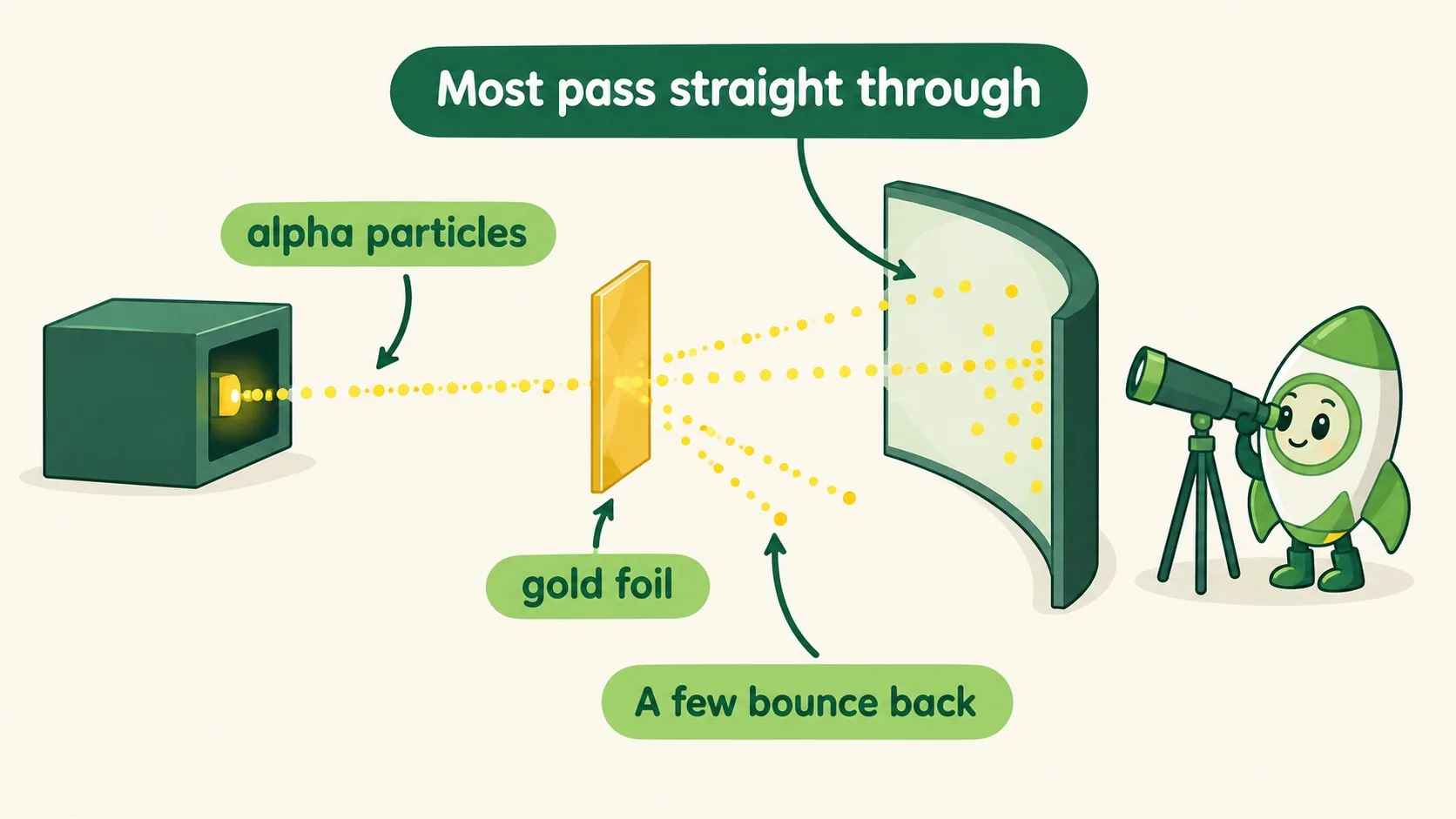
第 2 步:金箔里的“炮弹”Step 2: Firing “cannonballs” at gold foil
卢瑟福把 α 粒子当炮弹,轰击一层薄薄的金箔:大多数粒子笔直穿过——说明原子内部几乎全是空的;极少数被狠狠弹回来——说明中心有一个又小又重、带正电的东西。这就是原子核的发现:原子像一座空荡荡的操场,中间放着一颗小铅球。Rutherford fired alpha particles like cannonballs at a thin sheet of gold foil: most flew straight through — the atom is mostly empty space; a few bounced sharply back — something small, heavy and positively charged sits at the center. That was the discovery of the nucleus: an atom is a vast empty playground with one tiny lead ball at its middle.
原子核到底有多小?Just how small is that nucleus, really?
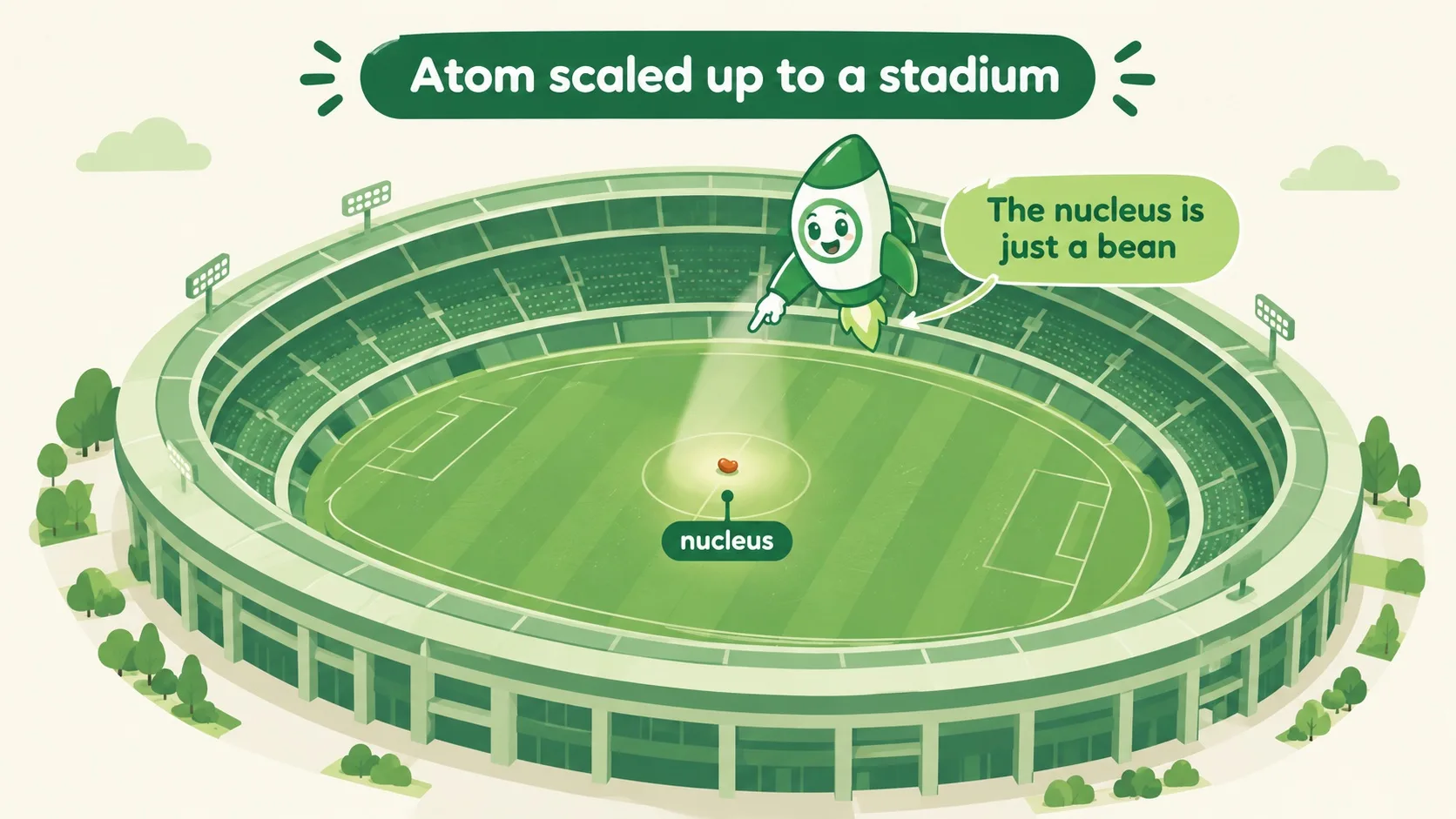
第 3 步:把原子放大成体育场Step 3: Blow the atom up to a stadium
如果原子放大成一座体育场,原子核只有场地中央一颗豆子那么大——其余全是空的。但元素是什么,全看这颗“豆”:1 个质子是氢,2 个是氦,6 个是碳。质子数就是元素的身份证;中性原子里,电子数和质子数一样多。Blow an atom up to a whole stadium, and its nucleus is only a single bean on the center spot — everything else is empty. Yet what the element is depends on that bean: 1 proton is hydrogen, 2 is helium, 6 is carbon. The proton count is the element's ID card; in a neutral atom, electrons equal protons.
🎮 你来当装配师(30 秒)🎮 Your turn: atom assembly line (30 seconds)
先看模型数一数质子,再动手拼出氢、氦、碳——拖一拖、点一点都行。First count the protons in a model, then build hydrogen, helium and carbon yourself — drag or click, both work.
一句话记住它:原子 = 原子核(质子 + 中子)+ 核外电子;原子核又小又重,质子数决定元素。Remember it in one line: an atom = nucleus (protons + neutrons) + orbiting electrons; the nucleus is tiny but heavy, and the proton count decides the element.
核里住着带正电的质子和不带电的中子,核外是带负电的电子The nucleus holds positive protons and neutral neutrons; negative electrons orbit outside卢瑟福金箔实验:大多数粒子穿过(内部很空)、少数弹回(中心有核)Rutherford's gold foil: most particles pass through (empty inside), a few bounce back (a central nucleus)尺度惊人:原子放大成体育场,核只有豆子大;质子数决定元素(氢 1、氦 2、碳 6)Wild scale: stadium-sized atom, bean-sized nucleus; proton count decides the element (H 1, He 2, C 6)
内容参考 OpenStax 等公开教材,多来源核对 · AI 生成、人工审核 · 发现错误欢迎指正,帮这片叶子长得更好。Based on OpenStax and other open textbooks, cross-checked across sources · AI-generated, human-reviewed · Spotted a mistake? Tell us — help this leaf grow.
 Back to tree