🦠 细菌感染:抗生素只对它有效🦠 Bacterial Infection: Antibiotics Only Work Here
上一片的过敏是免疫系统“打错人”。这一片换真麻烦上场:细菌是有细胞的独立生物,会自己繁殖——免疫系统打不赢时,就要请抗生素外援。Last leaf was the immune system shooting at the wrong target. Now meet real trouble: bacteria are independent living cells that reproduce on their own — and when the immune system can't keep up, it calls in the antibiotic cavalry.
第 1 步:细菌是自己吃饭的独立生物Step 1: Bacteria are independent living cells
先在显微镜下把一个细菌拆开看。First, open up one bacterium under the microscope.
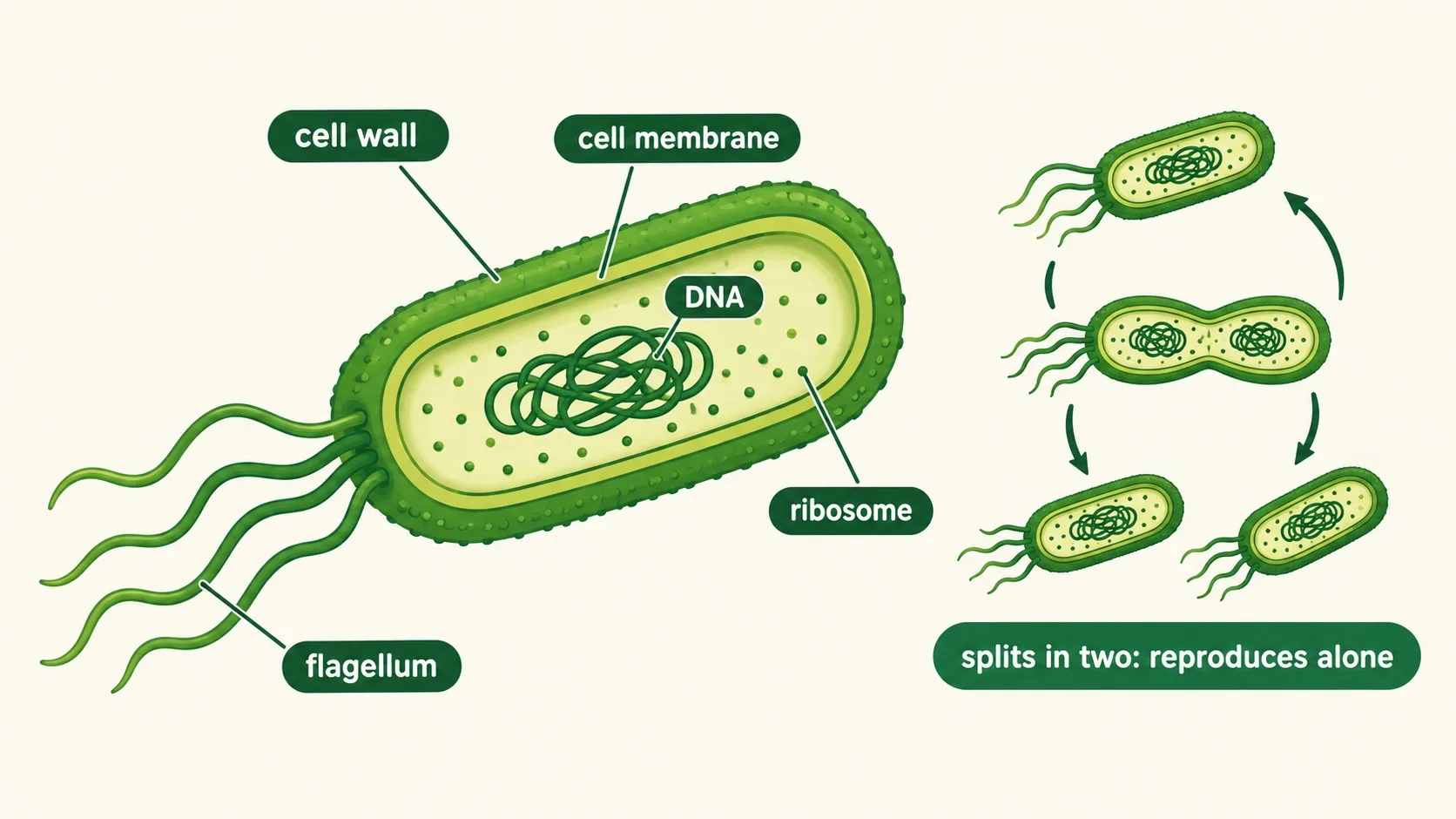
细菌是单细胞独立生物:外面一圈厚厚的细胞壁当铠甲,里面有自己的 DNA 和生产车间(核糖体),身后几根鞭毛当螺旋桨。它自己吃饭、自己生活,靠“一分为二”疯狂繁殖——条件合适时每 20 分钟翻一倍。A bacterium is a single independent cell: a thick cell wall as armor, its own DNA and little factories (ribosomes) inside, several flagella as propellers behind. It feeds itself and lives on its own, multiplying by splitting in two — doubling every 20 minutes when conditions are right.
细菌怎么把人生病?抗生素又是怎么打到它的?How do bacteria make us sick — and how do antibiotics hit back?
第 2 步:致病与抗生素的“拆墙行动”Step 2: How they harm — and how antibiotics tear the wall down
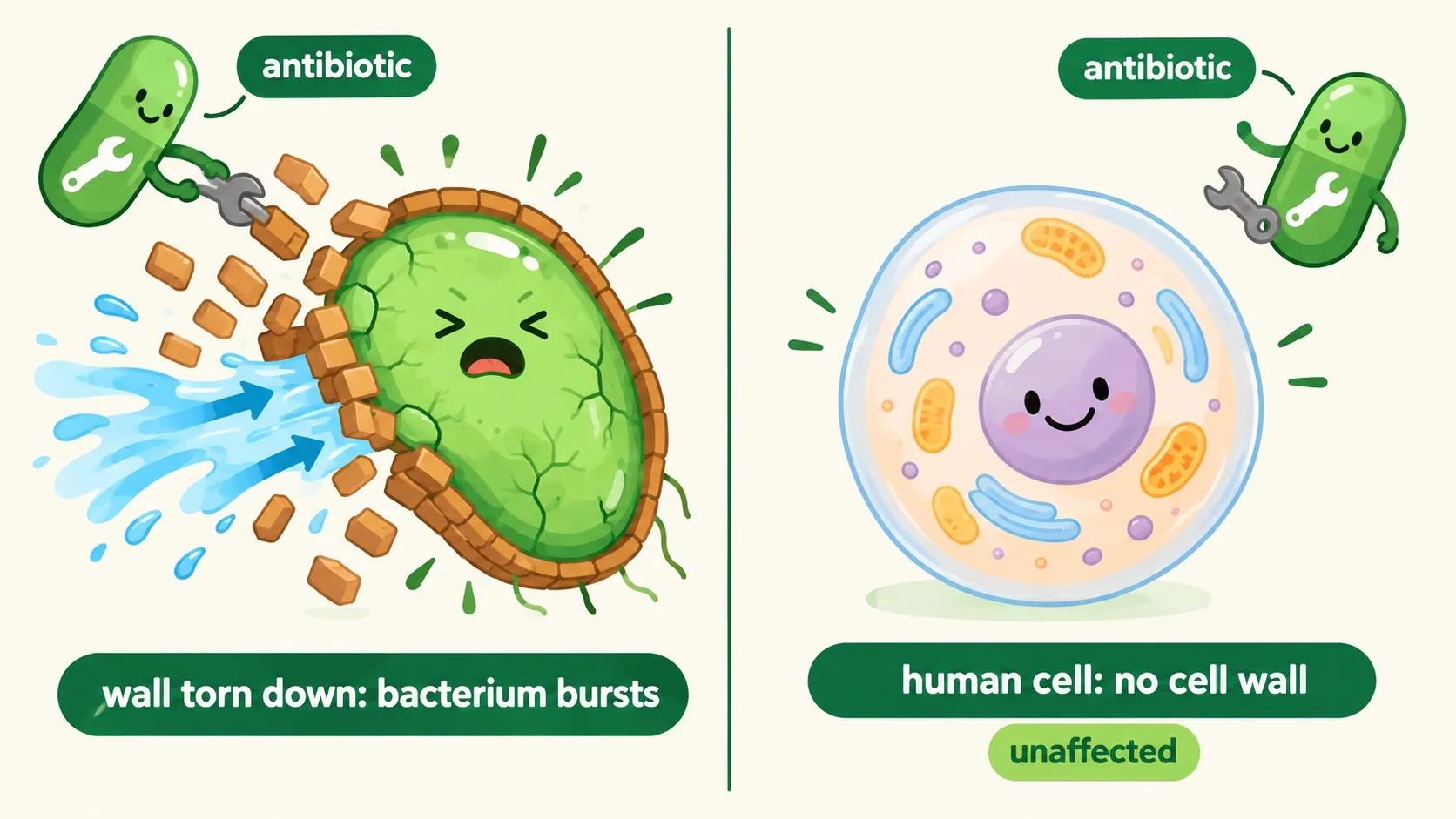
细菌致病主要靠两条路:产毒素(如破伤风毒素),或直接入侵组织安营扎寨。抗生素的绝招是拆墙:阻止细胞壁合成,没有墙的细菌吸水涨破。人体细胞根本没有细胞壁,所以基本不受伤——这就是抗生素能“指哪打哪”的原因。Bacteria harm us two main ways: making toxins (like tetanus toxin), or invading tissue and setting up camp. The antibiotic trick is demolition: block cell-wall synthesis, and the wall-less bacterium swells and bursts. Human cells have no cell wall at all, so they're barely touched — that's why antibiotics hit so precisely.
这么好用的武器,为什么医生越开越谨慎?Such a handy weapon — so why do doctors prescribe it more and more carefully?
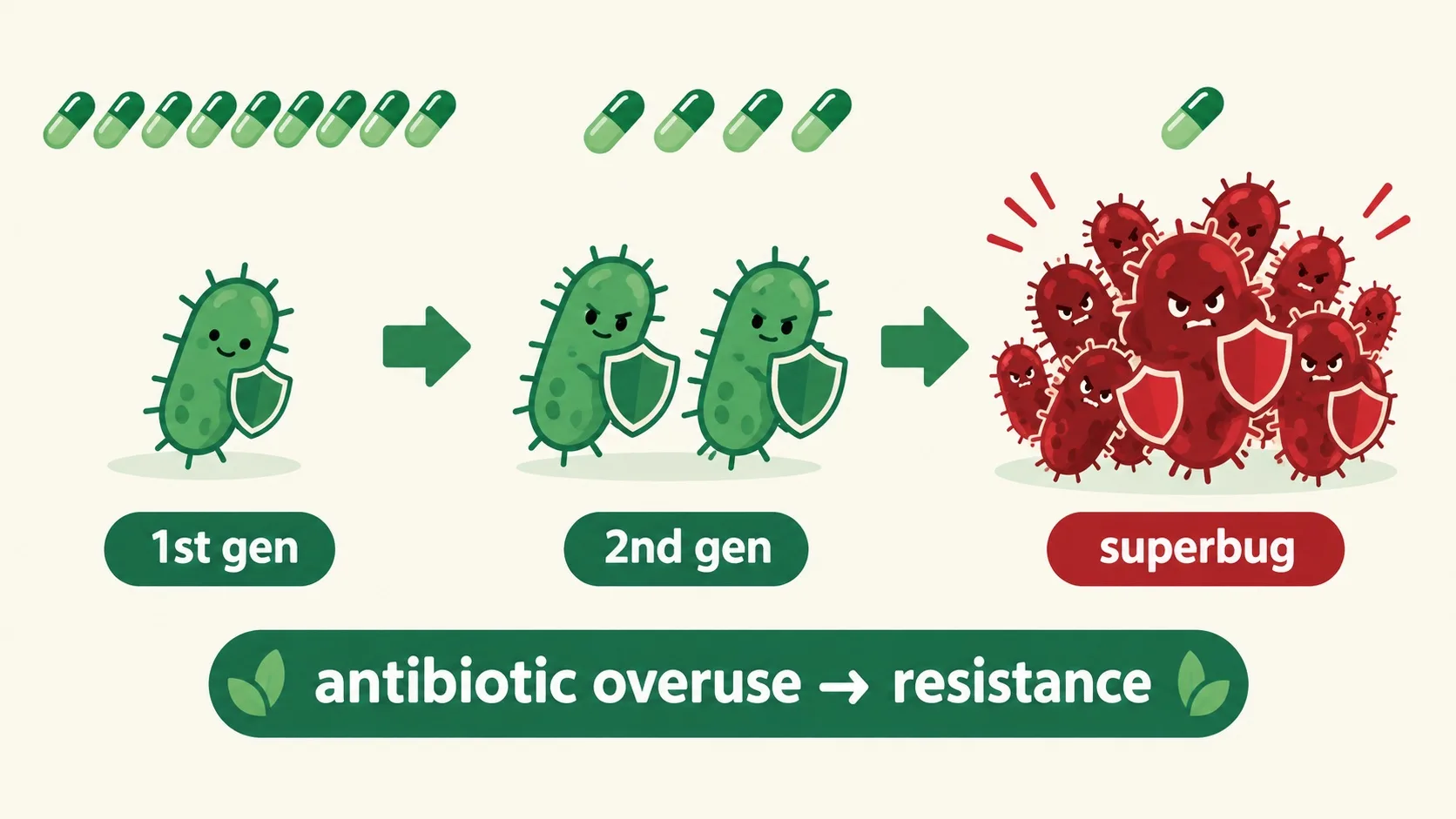
每次用药,最能扛的细菌会幸存下来继续分裂——相当于边挨打边“练级”。滥用抗生素、疗程不足,都在给它们送经验,最后养出多种药都打不动的“超级细菌”。所以记住三件事:遵医嘱、足疗程、不自己乱吃——还要知道:抗生素对病毒无效,感冒多数是病毒引起的,吃抗生素白吃。Every course of antibiotics lets the toughest bacteria survive and keep dividing — leveling up while under fire. Overuse and half-finished courses hand them free experience, until a multi-drug-proof superbug emerges. So remember three things: follow the prescription, finish the course, never self-medicate. And one more: antibiotics don't work on viruses — most colds are viral, so antibiotics are wasted on them.
🎮 你来当小医生(30 秒)🎮 Your turn: run the clinic (30 seconds)
道理讲完了。先在显微镜下对比细菌和病毒,再接 4 个门诊病例,判断感染类型、选对处理。Theory done. Compare bacteria and viruses under the microscope, then take 4 clinic cases: judge the type, pick the right handling.
一句话记住它:细菌是有细胞壁的独立生物,抗生素拆墙杀它;滥用会“练级”出超级细菌;对病毒完全无效。Remember it in one line: bacteria are independent cells with walls, antibiotics kill by tearing walls down; overuse levels up superbugs; and they do nothing to viruses.
细菌 = 有细胞壁的独立细胞,自己分裂繁殖(这点和病毒完全不同)Bacteria = independent cells with walls that reproduce by themselves (unlike viruses)致病靠产毒素/入侵组织;抗生素破坏细胞壁 → 细菌涨破,人细胞无壁不受伤They harm via toxins or tissue invasion; antibiotics break the wall → the bacterium bursts; human cells have no wall滥用抗生素 → 耐药菌 → 超级细菌;感冒是病毒,吃抗生素无效Overuse → resistant bacteria → superbugs; colds are viral — antibiotics won't help
内容参考 OpenStax 等公开教材,多来源核对 · AI 生成、人工审核 · 发现错误欢迎指正,帮这片叶子长得更好。Based on OpenStax and other open textbooks, cross-checked across sources · AI-generated, human-reviewed · Spotted a mistake? Tell us — help this leaf grow.
 Back to tree