✂️ 细胞分裂:一个变两个的魔法✂️ Cell Division: the One-Becomes-Two Magic
上一片里,线粒体在细胞里当发电厂。可细胞自己是怎么从一变二、又怎么补上伤口的缺口的?答案是一场每天都在你身体里上演的“分身术”——细胞分裂。🦠 小细胞今天就来表演给你看。Last leaf, mitochondria worked as the cell's power plants. But how does a cell go from one to two — and how are wounds patched up? The answer is a copy trick running inside you right now: cell division. 🦠 Little Cell is here to show you how it's done.
第 1 步:复制 → 排队 → 分开 → 一分为二Step 1: Copy → line up → separate → split in two
先说为什么要分:你长高、伤口愈合、单细胞生物生宝宝,全靠它。那它到底怎么做到的?Start with the why: growing taller, healing a cut, even a single cell having offspring — all of it runs on division. So how does it actually work?
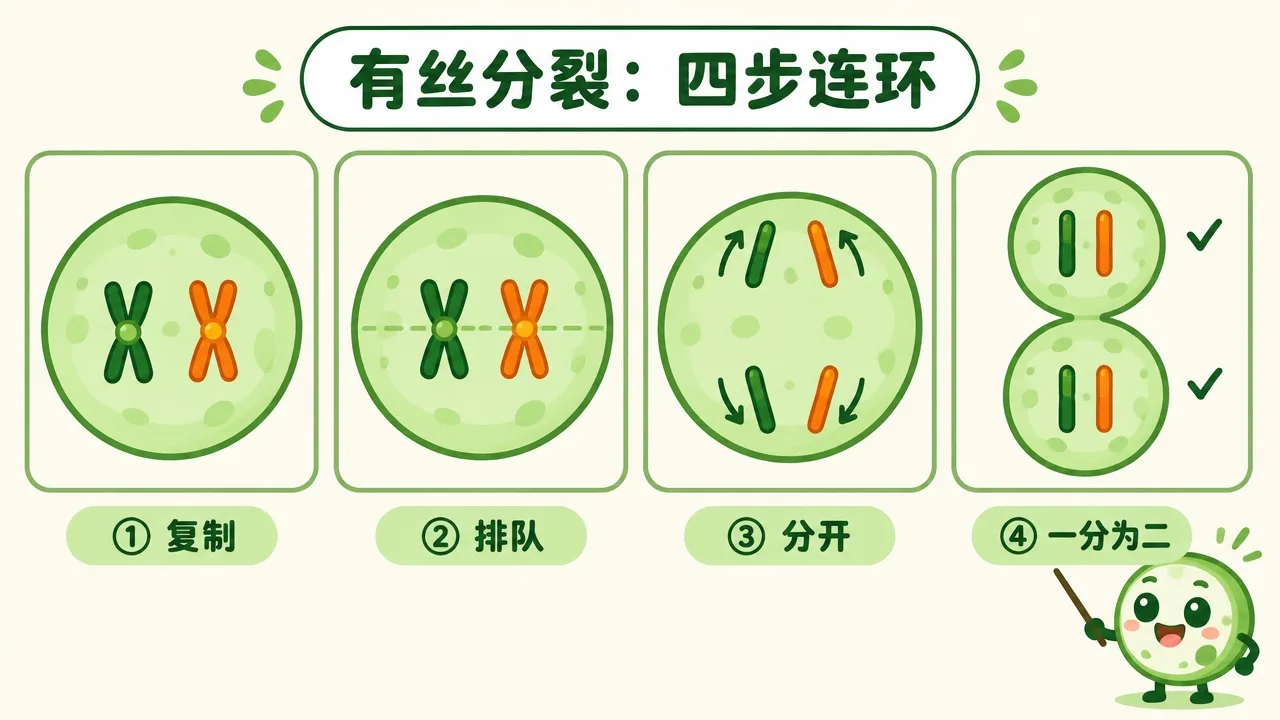
有丝分裂像一场彩排好的四幕剧。第一幕“复制”:每条染色体先抄一份,变成两条一模一样的姐妹染色单体;第二幕“排队”:它们整整齐齐站到细胞中央;第三幕“分开”:姐妹被拉开,一半去上、一半去下;第四幕“一分为二”:细胞中间收腰、缢断成两个。神奇的是——两个子细胞的染色体数目,和妈妈一模一样。Mitosis is a well-rehearsed four-act play. Act one, Copy: every chromosome makes an exact copy of itself, becoming two identical sister chromatids. Act two, Line up: they march to the middle of the cell in a neat row. Act three, Separate: the sisters are pulled apart — half up, half down. Act four, Split in two: the cell pinches at the waist and divides into two. And here's the wonder: each daughter cell ends up with exactly the mother's chromosome number.
说了这么多,你怎么知道这是真的,而不是编出来的?Fair enough — how do you know this is real and not just made up?
第 2 步:亲眼看见:洋葱根尖实验Step 2: See it for yourself: the onion root tip
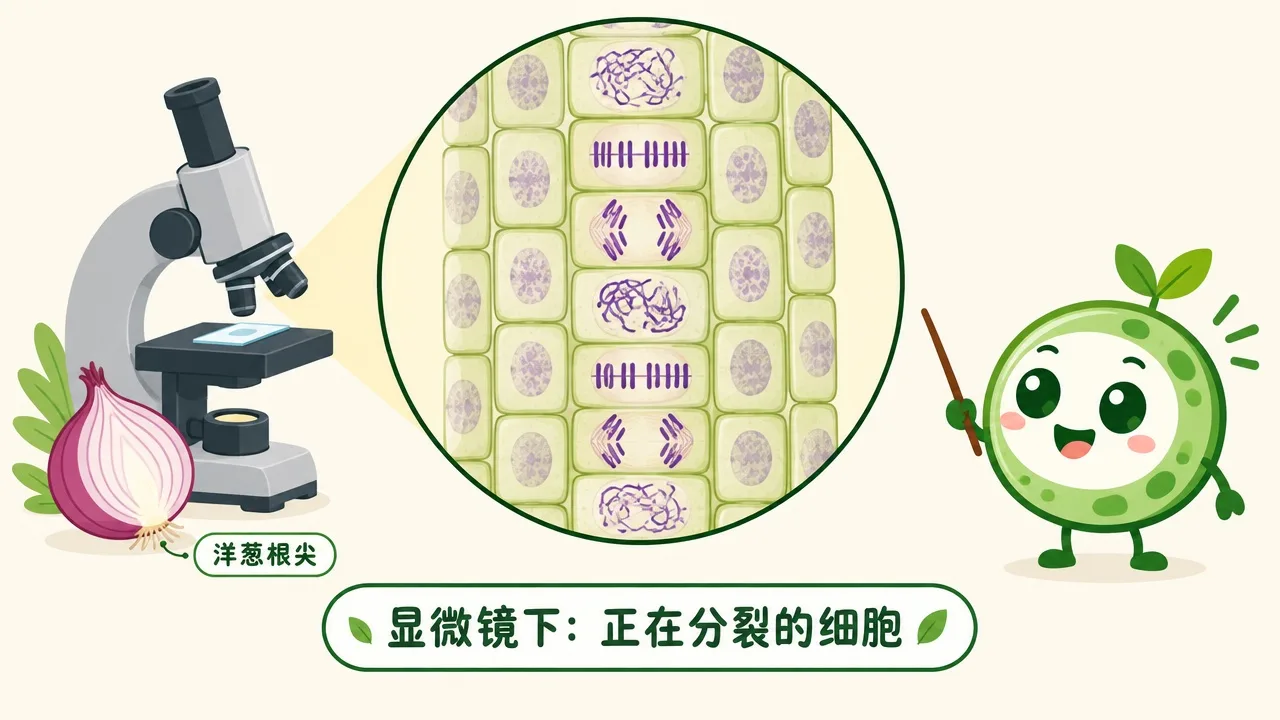
把洋葱泡在水里,根尖会一个劲儿地长——那里是分裂最热闹的地方。切下根尖、染色、压片,放到显微镜下:细胞排得像一排排小砖头,有的染色体散成细线,有的排在中间,有的正分成两团。不同时期的细胞被“定格”在同一张视野里,分裂的全过程一眼看全。Leave an onion in water and its root tip grows non-stop — that's where division is busiest. Snip the tip, stain it, squash it on a slide and look through a microscope: cells sit in tidy brick-like rows, some with chromosomes as loose threads, some lined up mid-cell, some pulling apart into two groups. Every stage is frozen in one view — the whole show in a single snapshot.
既然分裂这么能干,要是它停不下来呢?So division is powerful — what if it simply never stops?
第 3 步:刹车坏了:癌细胞Step 3: When the brakes fail: cancer cells
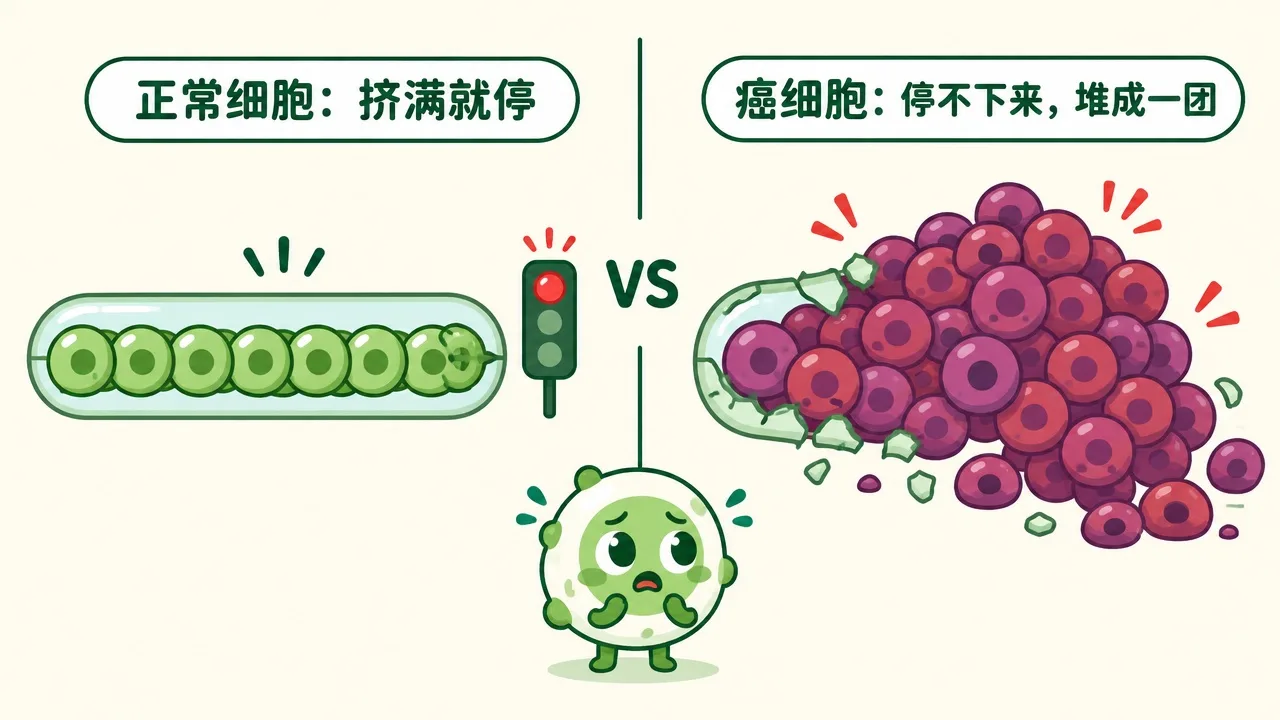
正常细胞很守规矩:挤满一层、碰到邻居就停下来(这叫接触抑制)。癌细胞把这套规矩全弄丢了——它们不停分裂、越堆越多,还抢营养、随血液跑到别处安家(转移)。控制分裂的基因出了问题,是许多疾病的起点。所以下一片要讲的 DNA,正是这套“规矩”的说明书。Normal cells follow the rules: once a layer is crowded, they stop at their neighbours (contact inhibition). Cancer cells lose the whole rulebook — they divide non-stop, pile up, grab nutrients and travel through the blood to settle elsewhere (metastasis). When the genes that control division go wrong, many diseases begin. Which is exactly why the next leaf is about DNA — the instruction book for those rules.
🎮 你来当分裂导演(1 分钟)🎮 Your turn: direct the division (1 minute)
道理讲完了,轮到你了:在分裂动画台上,亲手把细胞一步一步推着分裂一次。Theory done — now push a cell through division yourself, one step at a time, at the animation desk.
一句话记住它:细胞分裂 = 先复制一份“说明书”,再平均分给两个孩子;有丝分裂出来的两个子细胞,和妈妈长得一模一样。Remember it in one line: division = copy the manual first, then share it equally between two daughters; mitosis hands each daughter exactly what mum had.
四步走:复制 → 排队 → 分开 → 一分为二(有丝分裂)Four steps: copy → line up → separate → split in two (mitosis)为什么分:生长、修补、繁殖——你每天都在用Why divide: growth, repair, reproduction — you use it every day失控的分裂 = 癌细胞;洋葱根尖是观察分裂的经典材料Runaway division = cancer; the onion root tip is the classic place to watch it
内容参考 OpenStax 等公开教材,多来源核对 · AI 生成、人工审核 · 发现错误欢迎指正,帮这片叶子长得更好。Based on OpenStax and other open textbooks, cross-checked across sources · AI-generated, human-reviewed · Spotted a mistake? Tell us — help this leaf grow.
 Back to tree