🚪 细胞膜:看门的磷脂双分子层🚪 Cell Membrane: The Doorman Made of Lipids
上一片参观了细胞内部,认识了各个细胞器。可细胞和外界之间,还隔着一道会挑人的边界——细胞膜。它既是墙,也是门:什么能进来、什么该出去,都由它说了算。Last leaf we toured the cell's interior and met its organelles. But between the cell and the outside world stands a picky boundary — the cell membrane. It is both a wall and a gate: what gets in, what goes out, all decided here.
第 1 步:两层磷脂,砌成一堵会挑人的墙Step 1: Two rows of lipids build a picky wall
这堵墙用什么材料砌的?为什么能软软地合拢?What is this wall made of — and why can it softly seal itself?
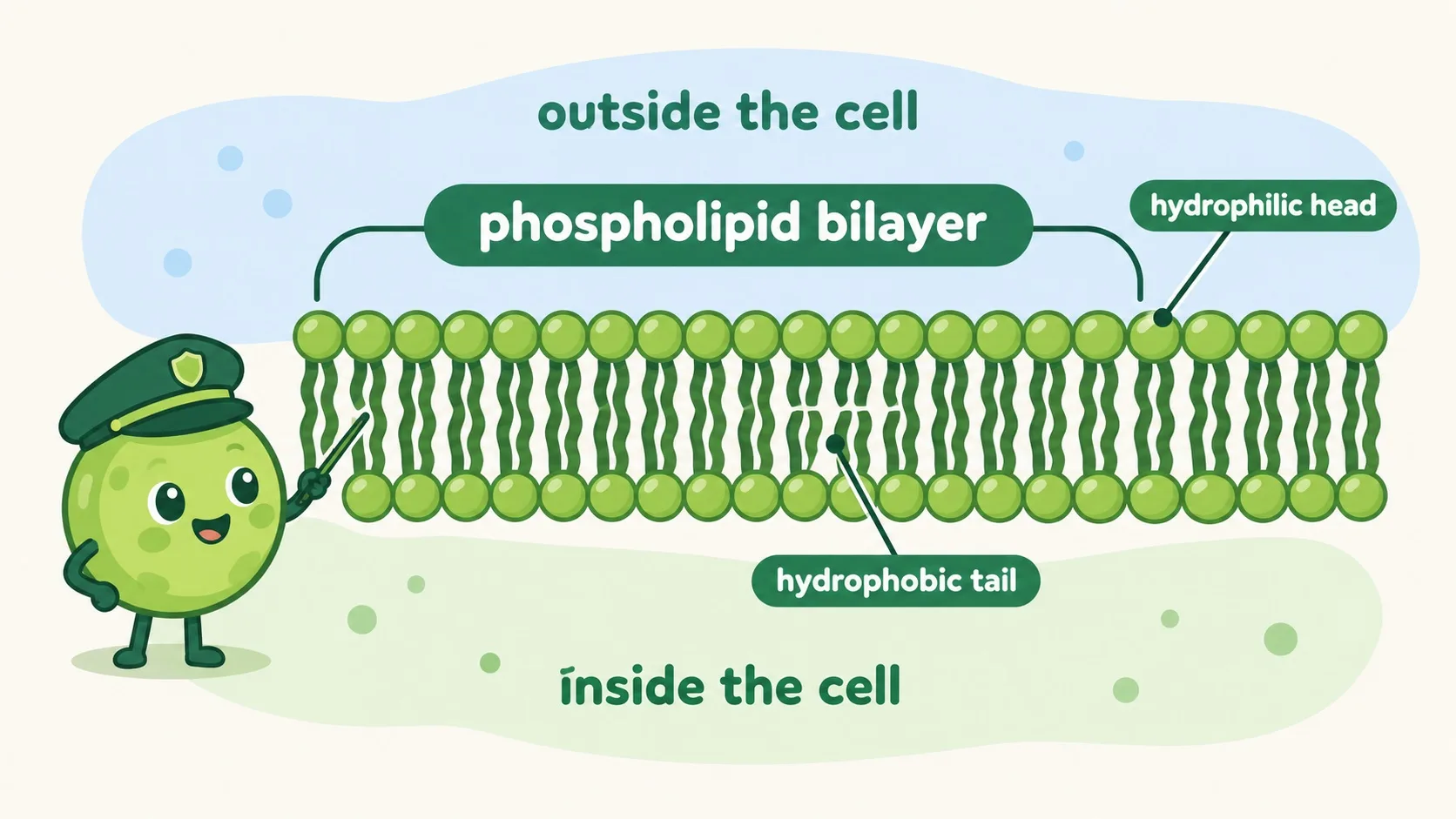
把细胞膜放大一亿倍,会看到两层整整齐齐的磷脂分子:每个分子有一个「亲水头」(喜欢水)和两条「疏水尾」(怕水)。头朝外、尾朝内,两层尾巴对尾巴排成「双分子层」——细胞外和细胞内都是水环境,亲水的头正好站两边,怕水的尾巴躲中间。这堵墙软软的,戳一下还能自己补上,所以细胞不怕轻轻挤压。Zoom the membrane up a hundred-million times and you'll see two neat rows of phospholipids. Each molecule has a water-loving “hydrophilic head” and two water-fearing “hydrophobic tails”. Heads face out, tails hide in the middle — a bilayer. Water surrounds both sides, so the heads stand in water while the tails tuck themselves away. The wall is soft and can patch itself, so gentle squeezes don't pop the cell.
为什么有的物质直接穿过,有的却要走专门的门?Why do some substances slip straight through while others need a special door?
第 2 步:三档门,各走各的路Step 2: Three kinds of doors, three kinds of guests
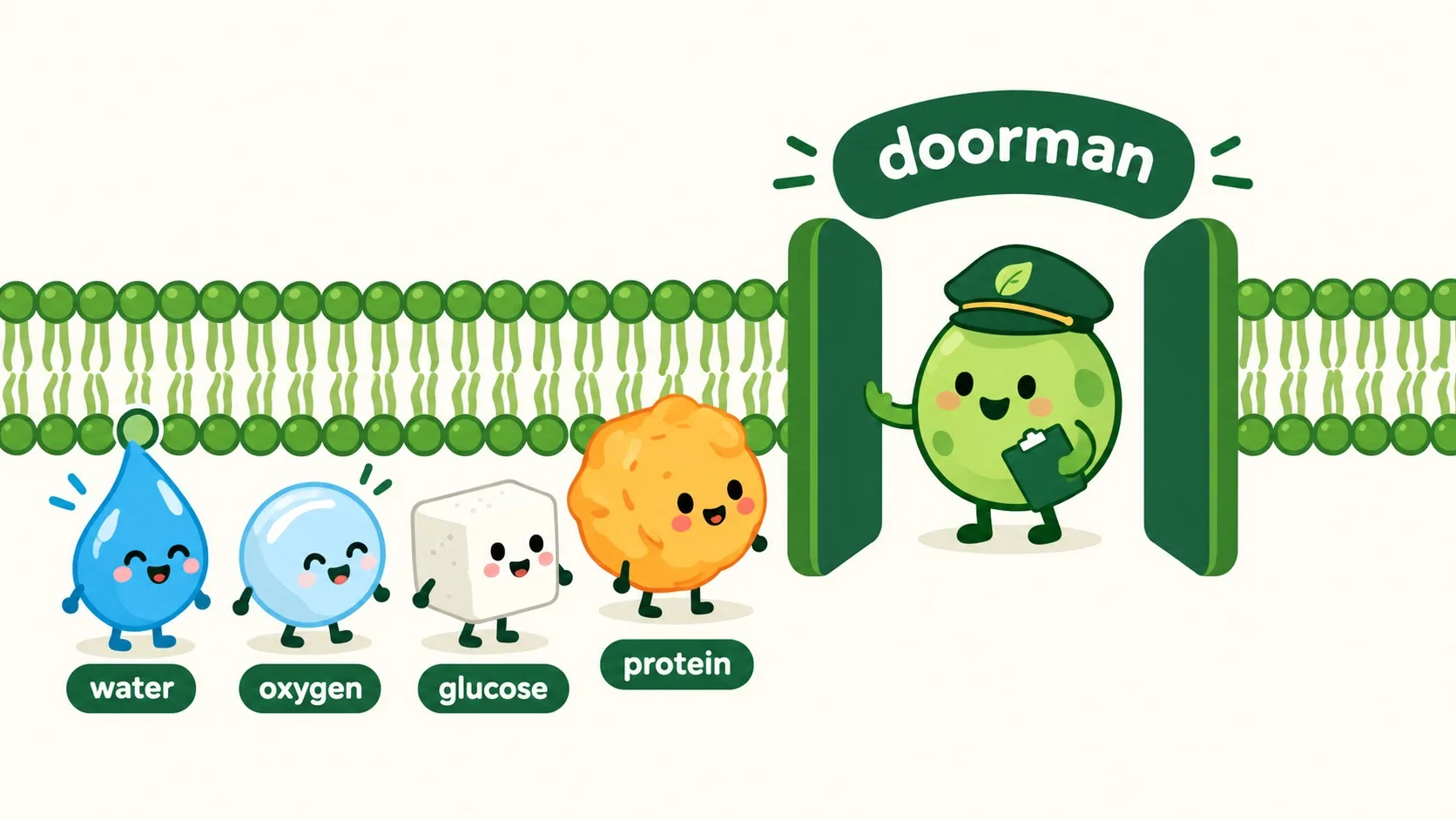
细胞膜是「选择透过性」的:该进的进,该拦的拦。个头很小的水和氧气,直接从磷脂的缝隙钻过去;葡萄糖大一些,得走「通道蛋白」这扇小门;更大的蛋白质更麻烦,要裹进「囊泡」里,像坐电梯一样进出。门卫是谁?就是这层膜本身——它靠形状和电荷,认出谁是自己人、谁是入侵者。The membrane is selectively permeable: let in what's needed, block what's not. Tiny water and oxygen slip straight between the phospholipids. Bigger glucose must use a channel protein door. Larger proteins need even more — they ride inside a vesicle, like an elevator in and out. Who is the doorman? The membrane itself — by shape and charge it tells friend from foe.
那么大的颗粒,膜怎么把它「吃」进去?A particle that big — how can the membrane “eat” it?
第 3 步:大口吞,打包吐Step 3: Swallow big, spit neat
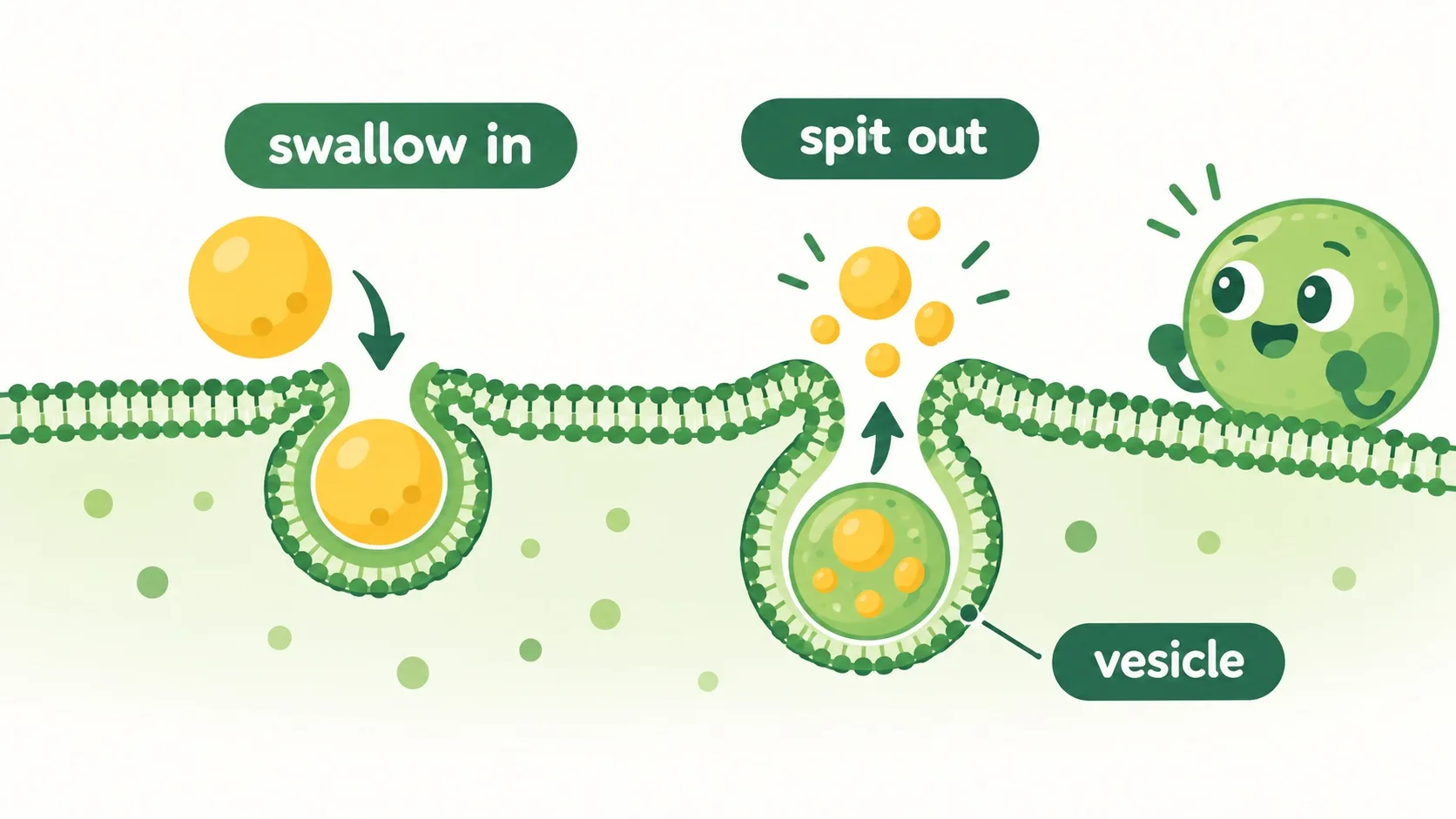
大颗粒靠近时,细胞膜会像两只手一样包上去,把它裹成一个小泡——这叫囊泡,然后拉进细胞里(吞进来);反过来,细胞要把废物或产品送出去,就让囊泡贴上膜、开口一吐(吐出去)。一吞一吐之间,细胞和外界完成了大宗交易,而膜自己几乎不破——这就是它既当墙又当门的原因。When a big particle comes close, the membrane hugs it like two arms, wraps it into a bubble called a vesicle and pulls it inside (swallowing in). The reverse works too: to ship waste or products out, a vesicle docks on the membrane, opens up and spits its cargo out. Through this in-and-out trade the cell does bulk business with the world without tearing its wall — that's why the membrane is both wall and door.
🎮 你来当膜门卫(1 分钟)🎮 Your turn: membrane doorman (1 minute)
道理讲完了。物质排队上门:需要的放行,有害的拦截——4 关,看看你判断得准不准。Theory done. Substances queue at the gate: let in what's needed, block what's harmful — 4 levels to prove your judgment.
一句话记住它:细胞膜 = 磷脂双分子层 + 选择透过性:头亲水、尾疏水排成墙;小分子直接过、大门走通道、大颗粒靠囊泡。Remember it in one line: cell membrane = phospholipid bilayer + selective permeability: heads love water, tails fear it; small molecules slip through, medium ones use channels, big ones ride vesicles.
磷脂分子有亲水头和疏水尾,两层尾巴对尾巴排成双分子层Phospholipids have hydrophilic heads and hydrophobic tails, arranged tail-to-tail in a bilayer小分子(水、氧气)直接穿过;葡萄糖走通道蛋白;大颗粒靠囊泡吞吐Small molecules (water, oxygen) pass directly; glucose uses channel proteins; big cargo rides vesicles膜是选择透过性的:需要的放行、有害的拦截——这是细胞的边界智慧The membrane is selectively permeable: let in the good, block the bad — the cell's border wisdom
内容参考 OpenStax 等公开教材,多来源核对 · AI 生成、人工审核 · 发现错误欢迎指正,帮这片叶子长得更好。Based on OpenStax and other open textbooks, cross-checked across sources · AI-generated, human-reviewed · Spotted a mistake? Tell us — help this leaf grow.
 Back to tree