🔥 细胞呼吸:细胞里慢烧的“火”🔥 Cellular Respiration: the Slow Fire Inside
上一片里,叶绿体把阳光装进葡萄糖。这一片反过来看:细胞怎么把葡萄糖里的能量取回来用——像一块慢慢烧、不冒火的“火”。🦠 小细胞带你钻进线粒体能量炉台。Last leaf, chloroplasts packed sunlight into glucose. This leaf flips it around: how does a cell get that energy back out — like a slow, flameless “fire”? 🦠 Little Cell takes you inside the mitochondrial furnace.
第 1 步:不冒火的慢燃烧Step 1: A slow burn with no flame
木头点火又亮又烫,细胞里的“燃烧”为什么不会把细胞烧坏?Burning wood gives light and fierce heat — why doesn't the cell's “burn” destroy the cell?
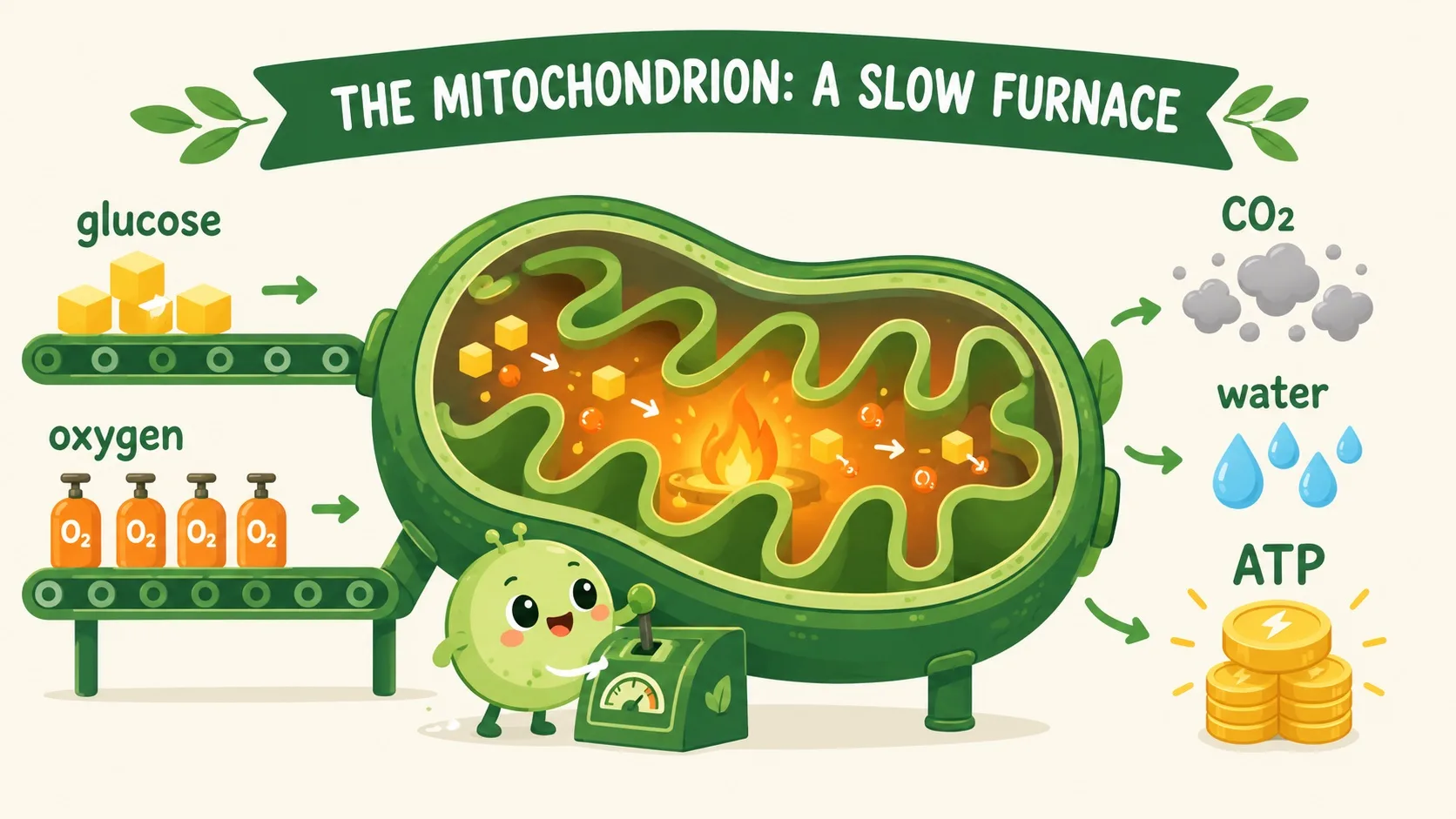
如果葡萄糖一下子烧完,细胞会被烧坏。所以它改成“一小步一小步地拆”:在氧气帮忙下,葡萄糖被拆成二氧化碳和水,能量分批装进 ATP 小电池。这就是细胞呼吸(有氧呼吸),主车间是线粒体。配方一句话:葡萄糖 + 氧气 → 二氧化碳 + 水 + 能量。If glucose burned all at once, the cell would be wrecked. So instead it takes the reaction step by step: with oxygen's help, glucose is taken apart into carbon dioxide and water, and the energy is packed in batches into little ATP batteries. That's cellular respiration (aerobic), and its main workshop is the mitochondrion. The recipe in one line: glucose + oxygen → CO₂ + water + energy.
那跑完步停下来,为什么还要大口喘半天?Then why do you gasp for ages after a run?
第 2 步:运动后的酸和喘Step 2: The burn and the gasps after exercise
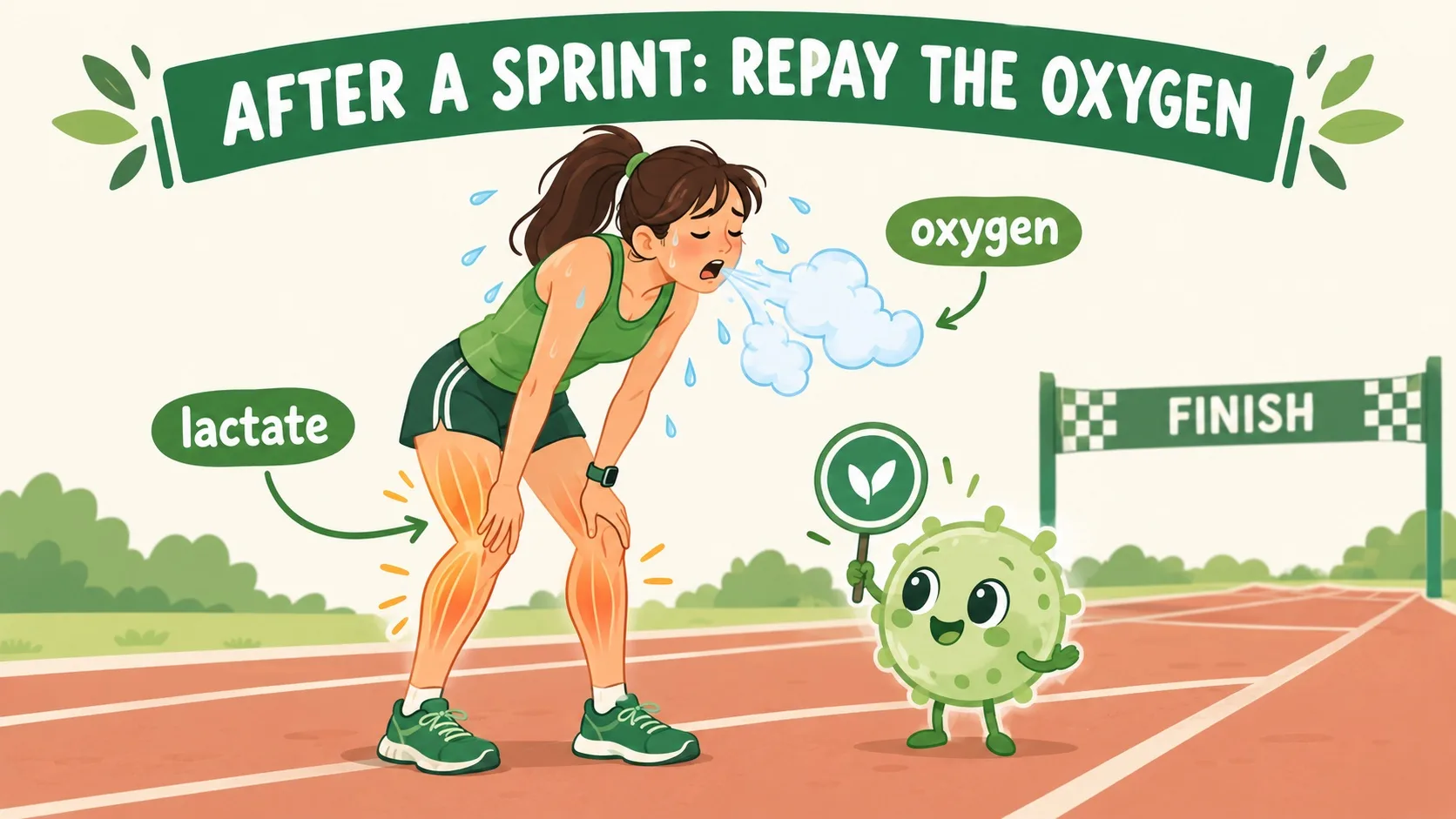
肌肉收缩特别费 ATP。冲刺时氧气运得不够快,一部分糖只能走无氧应急线:产能少得多,还留下乳酸。于是腿又酸又胀;停下来大口喘气,就是在把欠下的氧补回来,慢慢清掉乳酸。所以运动不能只练爆发,还要练“供氧能力”。Muscles burn ATP fast. In a sprint, oxygen can't be delivered quickly enough, so some sugar takes the anaerobic emergency route: far less energy, plus leftover lactate. That's why your legs ache and feel heavy; the deep gasping afterwards is you repaying the oxygen debt and clearing the lactate. That's why training isn't only about bursts — it's about your oxygen supply too.
同一个“无氧模式”,在酵母身上会发生什么?What happens when the same “no-oxygen mode” runs in yeast?
第 3 步:酿酒的秘密Step 3: The secret of brewing
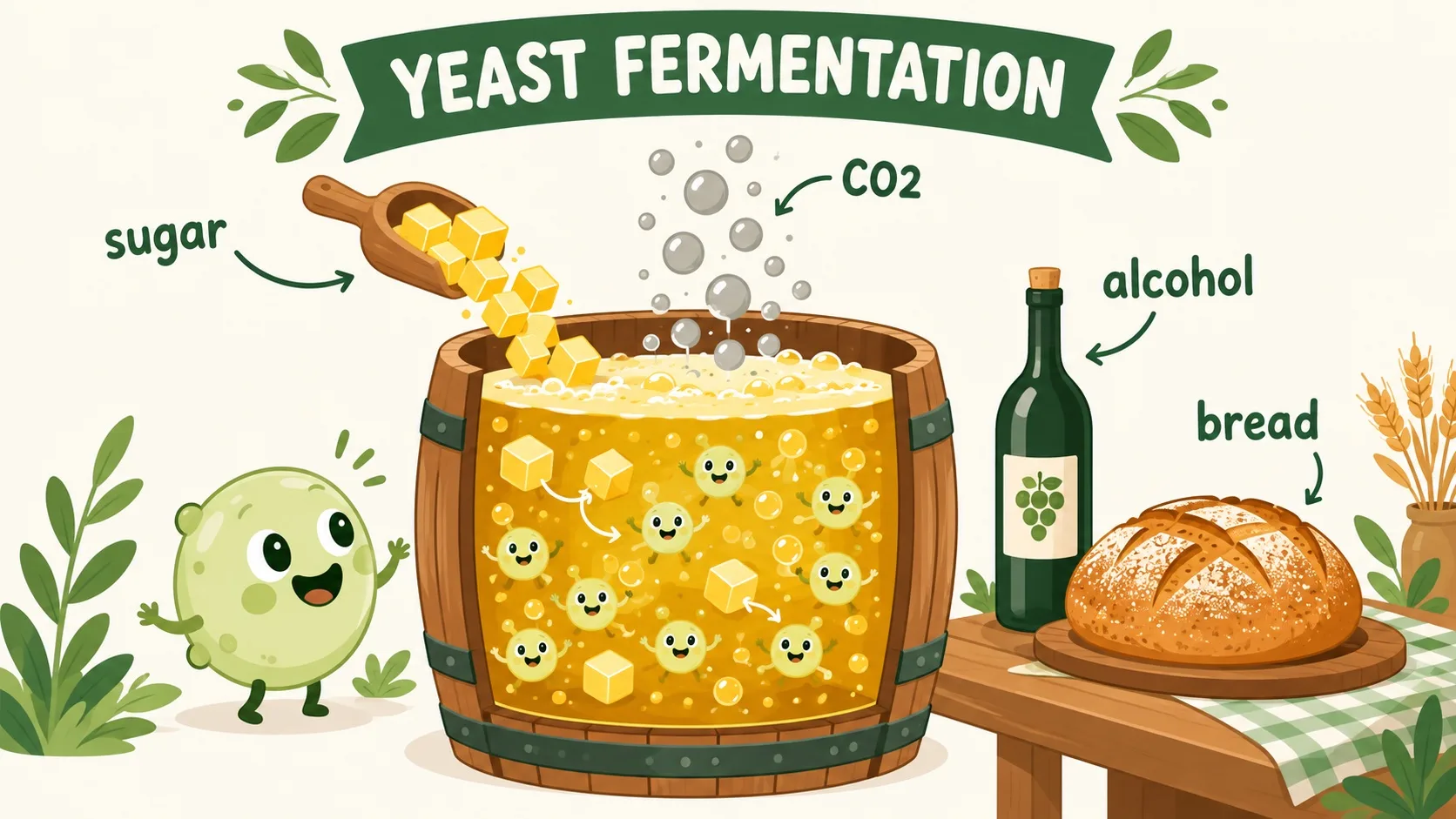
酵母没有氧气也能过日子:它把糖变成酒精和二氧化碳,同时拿到少量能量——这叫发酵。酿酒、发面都是它的手艺:酒里的酒精、面包和啤酒里的气孔,都是酵母的“无氧作品”。注意:人剧烈运动时走的是另一条无氧路线,产生的是乳酸,不是酒精。Yeast can live without oxygen: it turns sugar into alcohol and CO₂ while grabbing a little energy — that's fermentation. Brewing and bread-making are its craft: the alcohol in wine and the bubbles in bread and beer are yeast's “anaerobic artwork”. Note: during hard exercise, humans take a different anaerobic route and make lactate, not alcohol.
🎮 你来当能量调度员(30 秒)🎮 Your turn: energy dispatcher (30 seconds)
道理讲完了。拖动糖和氧气的供给滑块,看 ATP 产量;再切换有氧/无氧模式,比一比效率,完成 4 张供能单。Theory done. Drag the sugar and oxygen sliders to watch ATP output; switch between aerobic and anaerobic modes to compare efficiency — and finish 4 supply orders.
一句话记住它:细胞呼吸 = 把葡萄糖“慢烧”成二氧化碳和水,能量装进 ATP;有氧高效,无氧应急。Remember it in one line: cellular respiration slowly burns glucose into CO₂ and water and packs the energy into ATP — efficient with oxygen, an emergency stopgap without it.
有氧呼吸:葡萄糖 + 氧气 → 二氧化碳 + 水 + 大量能量,主车间是线粒体Aerobic: glucose + oxygen → CO₂ + water + lots of energy; main workshop: the mitochondrion剧烈运动供氧不足 → 无氧呼吸 → 乳酸 → 腿酸胀;休息后大口喘气补氧Hard exercise, short on oxygen → anaerobic respiration → lactate → aching legs; the deep breaths afterwards repay the oxygen酵母无氧发酵 → 酒精 + 二氧化碳,酿酒发面都靠它;方向与光合作用正好相反Anaerobic yeast fermentation → alcohol + CO₂, the trick behind brewing and baking; the reverse of photosynthesis
内容参考 OpenStax 等公开教材,多来源核对 · AI 生成、人工审核 · 发现错误欢迎指正,帮这片叶子长得更好。Based on OpenStax and other open textbooks, cross-checked across sources · AI-generated, human-reviewed · Spotted a mistake? Tell us — help this leaf grow.
 Back to tree