🌡️ 气候变化:地球正在“发烧”🌡️ Climate Change: Earth Has a Fever
上一片在宇宙深处看星系远去。这片🌍蓝色星球向导摸摸地球额头:有点烫,发烧了。Last leaf watched galaxies leave, deep in space. Now the 🌍 Blue Planet Guide feels Earth's forehead: warm — a fever.
第 1 步:地球体温:逼近 +1.5°CStep 1: Earth's temperature: nearing +1.5 °C
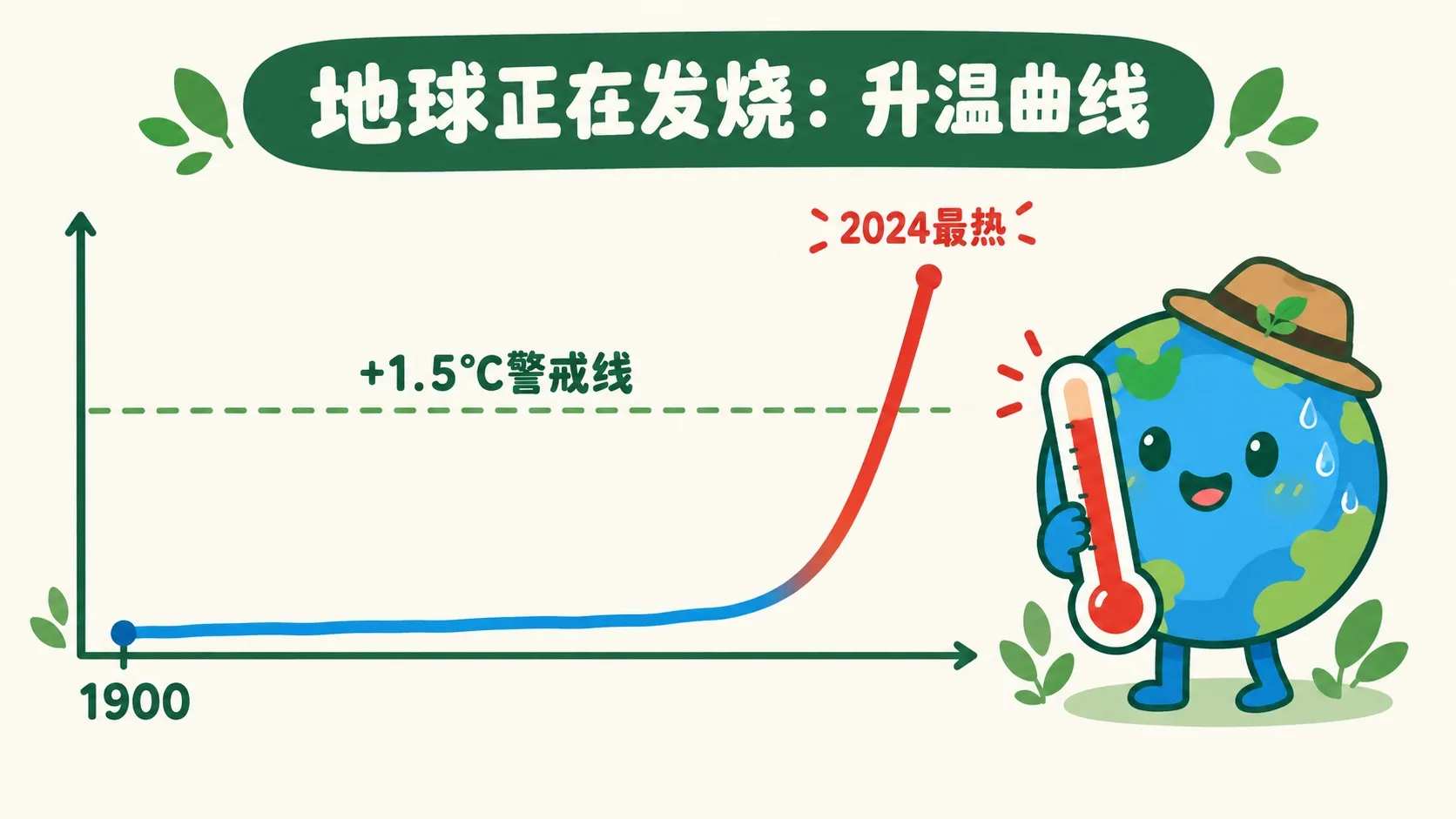
发烧多少度?先看体温曲线。How high is the fever? Check the curve first.
工业革命以来,全球平均气温一路爬升。2024 年创最热纪录,逼近 +1.5°C 警戒线。曲线像冰球杆:平躺百年,突然翘头。Since the Industrial Revolution, the global average keeps climbing. 2024 set the hottest record, nearing the +1.5 °C line. The curve is a hockey stick: flat for a century, then a sharp kick up.
体温计会骗人吗?看三个证人。Can a thermometer lie? Check three witnesses.
第 2 步:三个证人:冰川、海面、极端天气Step 2: Three witnesses: glaciers, seas, extremes
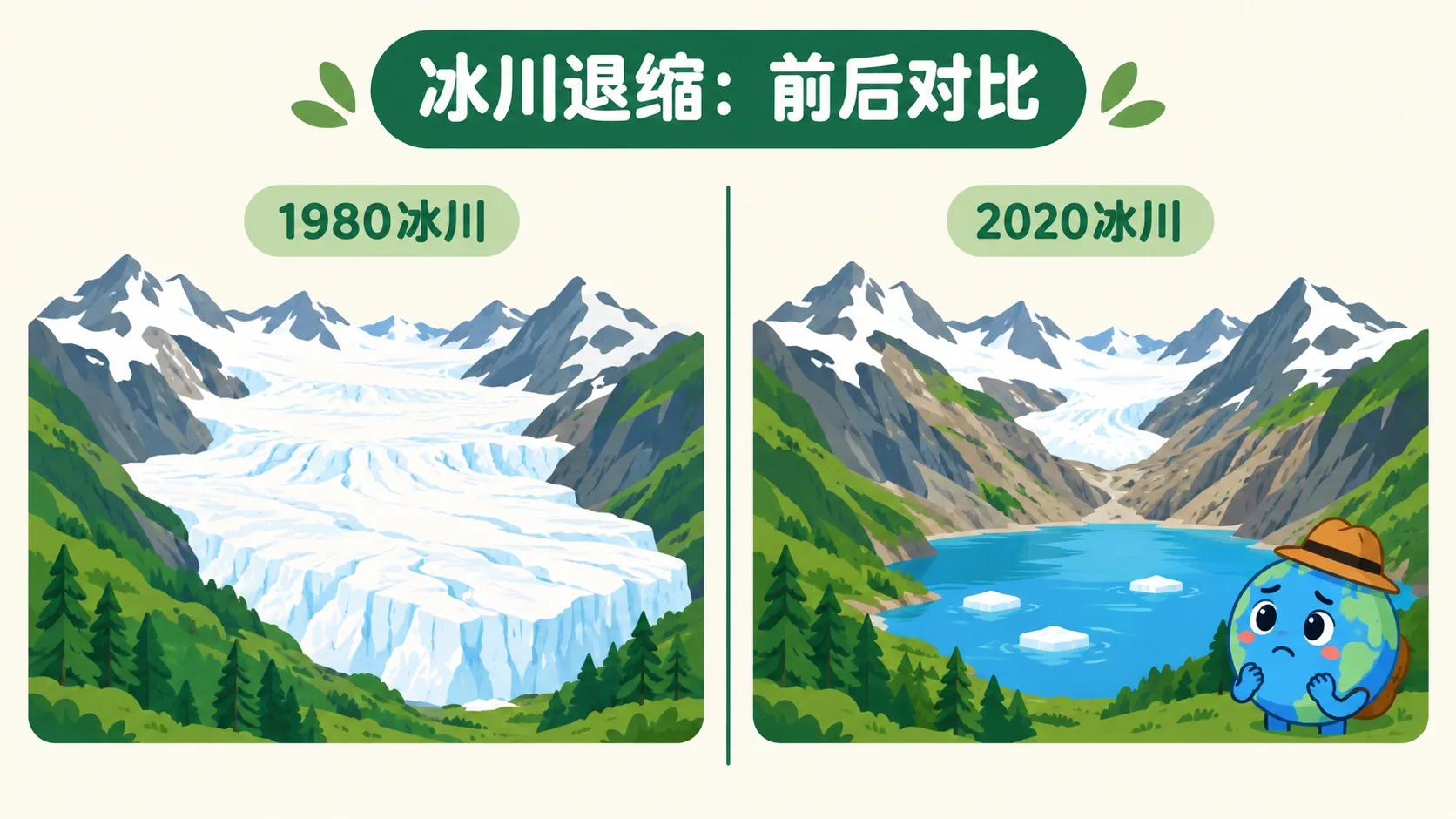
冰川退缩成小水洼,海平面年年上涨,热浪暴雨越来越猛。三个证人说法一致:地球真在变暖。Glaciers shrink to puddles, seas rise year by year, heatwaves and downpours hit harder. Three witnesses agree: Earth is truly warming.
变暖赖谁?看两份名单。Who is to blame? Check two lists.
第 3 步:人 vs 自然:排放定线Step 3: Humans vs nature: emissions pick the road
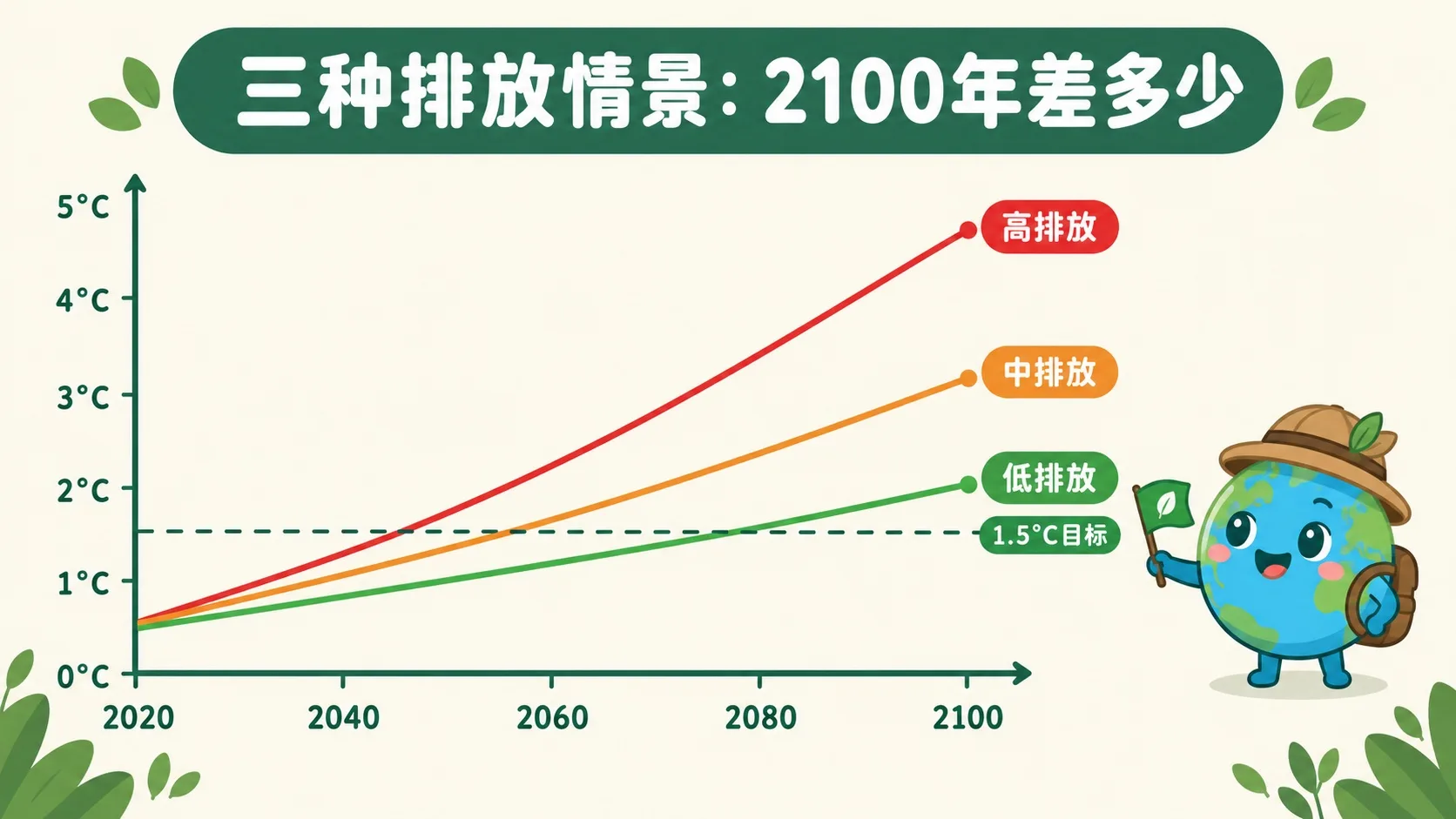
太阳变化等自然因素只占小头,大头是人类烧煤烧油排温室气体。《巴黎协定》约定:2°C 封顶,力争 1.5°C。走哪条路,升温差两三倍。Natural causes like solar shifts play a small part; the big share is humans burning coal and oil. The Paris Agreement says: cap at 2 °C, fight for 1.5 °C. The road we pick changes warming two- to threefold.
🎮 排放定线(30 秒)🎮 Pick the path (30 seconds)
道理讲完了。点三条路看 2100 年差多少,再做 4 道选择:选出守住 1.5°C 的路。Theory done. Tap three roads to compare 2100 — then answer 4 picks: choose the road that holds 1.5 °C.
一句话记住它:发烧有证据,病因是排放;走低排放的路,才能守住 1.5°C。Remember it in one line: the fever shows, emissions caused it — only the low road holds 1.5 °C.
体温:工业革命以来升温逼近 +1.5°C,2024 最热Fever: nearing +1.5 °C since industry began; 2024 hottest证据三件套:冰川退缩、海平面上升、极端天气Three proofs: shrinking glaciers, rising seas, extremes病因与药方:人类排放是大头;《巴黎协定》2°C 封顶、力争 1.5°CCause and cure: human emissions lead; Paris caps 2 °C, aims 1.5 °C
内容参考 OpenStax 等公开教材,多来源核对 · AI 生成、人工审核 · 发现错误欢迎指正,帮这片叶子长得更好。Based on OpenStax and other open textbooks, cross-checked across sources · AI-generated, human-reviewed · Spotted a mistake? Tell us — help this leaf grow.
 Back to tree