☄️ 彗星与陨石:太阳系的“脏雪球”和“石头雨”☄️ Comets & Meteorites: Dirty Snowballs and Rock Rain
看完身边最近的月亮,🌌 星空向导指向更远的访客:拖着大尾巴的彗星,和从天而降的石头。它们其实是一家子。Done with our nearest neighbour, the Moon, 🌌 Star Guide points at visitors from farther away: comets with giant tails, and rocks that rain from the sky. They are one family, really.
第 1 步:彗星是一颗脏雪球Step 1: A comet is a dirty snowball
先看拖尾巴的这位:它的尾巴到底是什么?First, the one with the tail: what is that tail, actually?
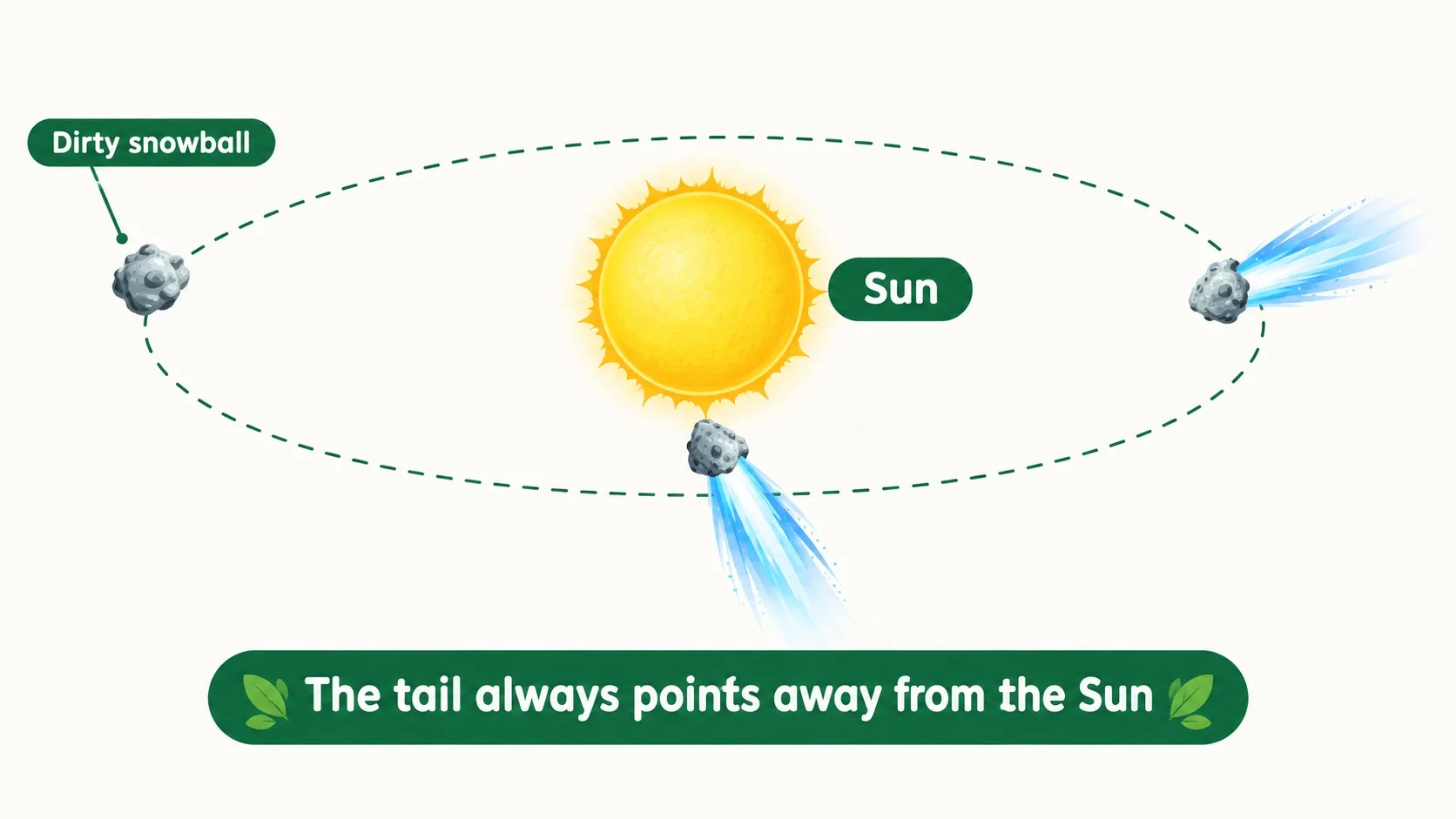
彗星的本体很不起眼:一颗混着尘土的脏雪球,平时又黑又安静。靠近太阳后,冰被烤成气体喷出来,太阳风再把它往外一吹,就成了又长又亮的尾巴。所以尾巴永远背对太阳,离得越近越长,跑远了就缩回去。最有名的哈雷彗星,每 76 年靠近一次太阳,下次是 2061 年。A comet itself is humble: a dusty dirty snowball, dark and quiet most of the time. Near the Sun, its ice bakes into gas, and the solar wind blows it outward into a long bright tail. So the tail always points away from the Sun — longer when close, gone when far. The most famous one, Halley's Comet, swings by every 76 years; next visit, 2061.
彗星讲完了。那从天上掉下来的石头,又是什么?Comets done. So what are the rocks falling out of the sky?
第 2 步:一块石头,三个名字Step 2: One rock, three names
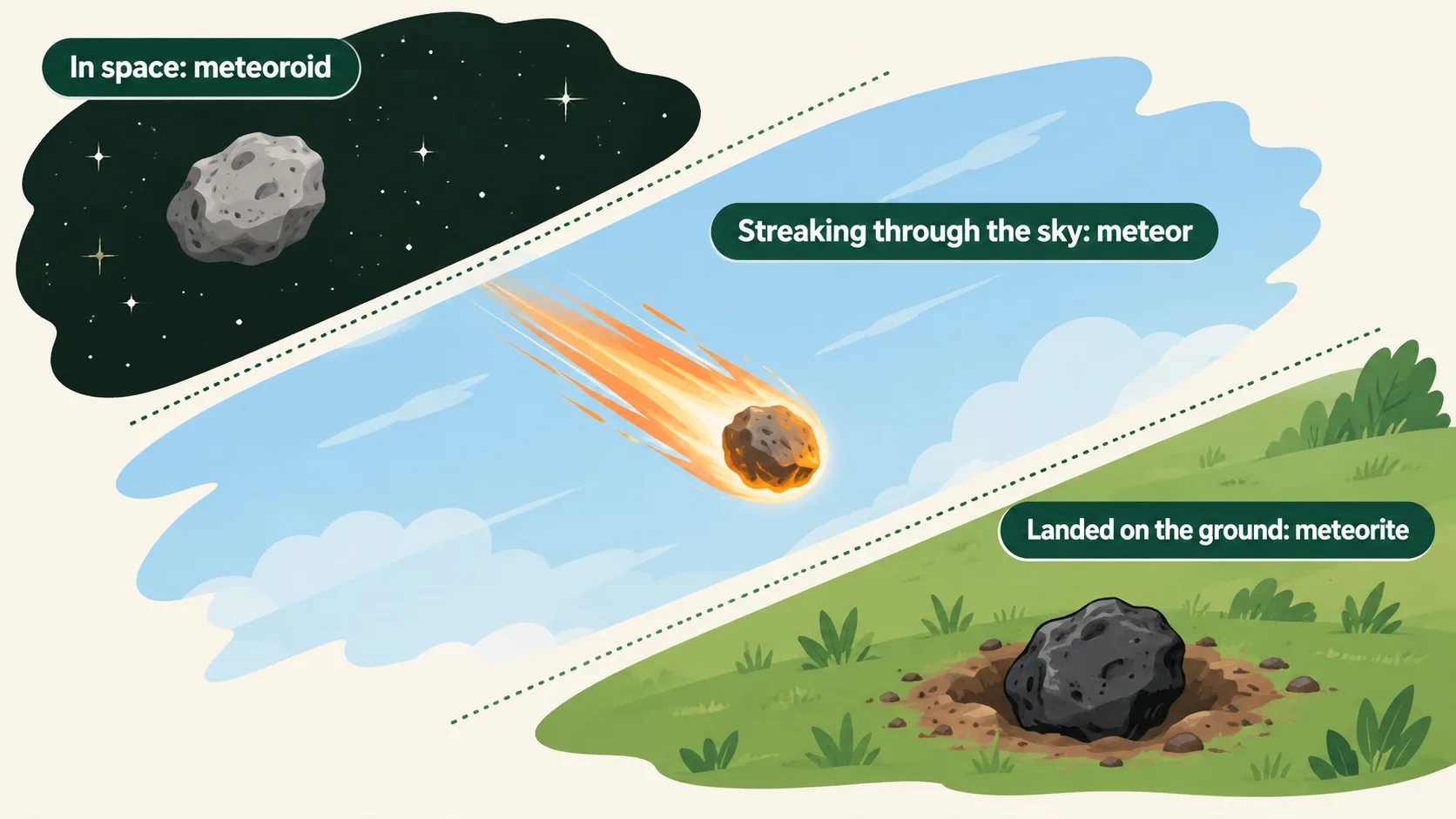
同一块石头,在不同地方叫不同名字。在太空里飘着时叫流星体,冲进大气层烧得发光时叫流星,烧剩下落到地面才叫陨石。1908 年,一颗石头在通古斯上空炸开,2000 平方公里的森林全被推倒。还有人认为,6600 万年前撞地球的那颗,顺手终结了恐龙。One rock, three names for three places. Drifting in space: meteoroid. Burning bright through the air: meteor. Surviving to the ground: meteorite. In 1908, a rock exploded over Tunguska, flattening 2,000 square kilometres of forest. And some scientists blame the one that hit 66 million years ago for finishing off the dinosaurs.
石头天天往下掉,我们为什么还安然无恙?流星雨又是怎么来的?Rocks fall every day — why are we still fine? And where do meteor showers come from?
第 3 步:大气层是盾牌,流星雨是穿尘埃带Step 3: The atmosphere is a shield; showers are dust crossings
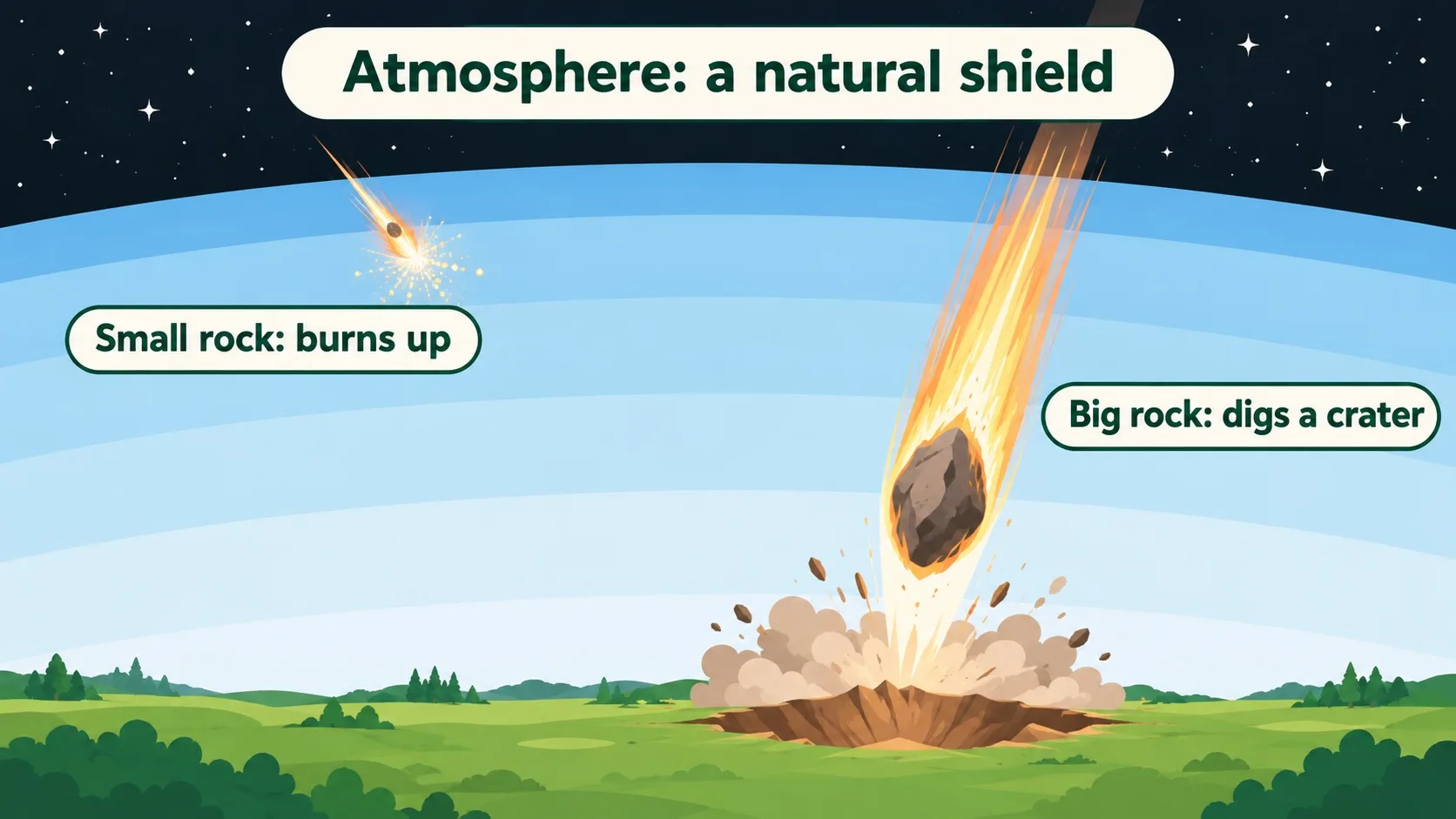
大气层是我们的天然盾牌。小石头冲进来,摩擦生热,几十公里高空就烧没了,只剩一道光。只有够大的石头能活下来,砸出坑来。而流星雨更浪漫:彗星一路掉“渣”,地球每年穿过这条尘埃带时,成百上千颗尘埃一起被点亮。8 月的英仙座流星雨,就是这么来的。The atmosphere is our natural shield. Small rocks rush in, heat up by friction, and burn away tens of kilometres up — just a streak of light. Only big ones survive to dig craters. Meteor showers are more romantic: comets drop crumbs all along the way, and each year Earth crosses that dusty trail, hundreds of specks lighting up together. August's Perseids happen exactly like this.
🎮 和星空向导一起遛彗星(30 秒)🎮 Walk a comet with Star Guide (30 seconds)
道理讲完了。拖着彗星绕太阳转一圈,看尾巴永远指向哪边;再答两道题:彗尾方向和流星雨成因。Theory done. Walk the comet around the Sun and watch where the tail always points; then two quizzes: tail direction and what makes a meteor shower.
一句话记住它:彗星是脏雪球,尾巴永远背太阳;石头落地前叫流星,落地才叫陨石。Remember it in one line: a comet is a dirty snowball with its tail forever away from the Sun; a falling rock is a meteor until it lands — then it's a meteorite.
彗尾永远背对太阳:近长远短;哈雷彗星 76 年一来(2061 年再见)Tails always point away: long near, short far; Halley's Comet returns every 76 years (see you in 2061)太空里叫流星体,发光时叫流星,落地才叫陨石(通古斯、恐龙都和它们有关)Meteoroid in space, meteor while glowing, meteorite once landed (Tunguska and the dinosaurs included)大气层挡下几乎所有石头;流星雨 = 地球穿过彗星尘埃带The atmosphere stops almost everything; a meteor shower = Earth crossing a comet's dust trail
内容参考 OpenStax 等公开教材,多来源核对 · AI 生成、人工审核 · 发现错误欢迎指正,帮这片叶子长得更好。Based on OpenStax and other open textbooks, cross-checked across sources · AI-generated, human-reviewed · Spotted a mistake? Tell us — help this leaf grow.
 Back to tree