🔄 轮作:土地的“换班表”🔄 Crop Rotation: the Field's Shift Schedule
上一片里,小细胞学会了科学浇水。水肥都管好了,这块地是不是就能年年种同一种庄稼?老农听了直摇头:地也要“换班”。Last leaf, the little cell learned to water smartly. With water and fertilizer sorted, can this field grow the same crop every year? Farmers shake their heads: the field needs shift work too.
第 1 步:土地的换班表Step 1: The field's shift schedule
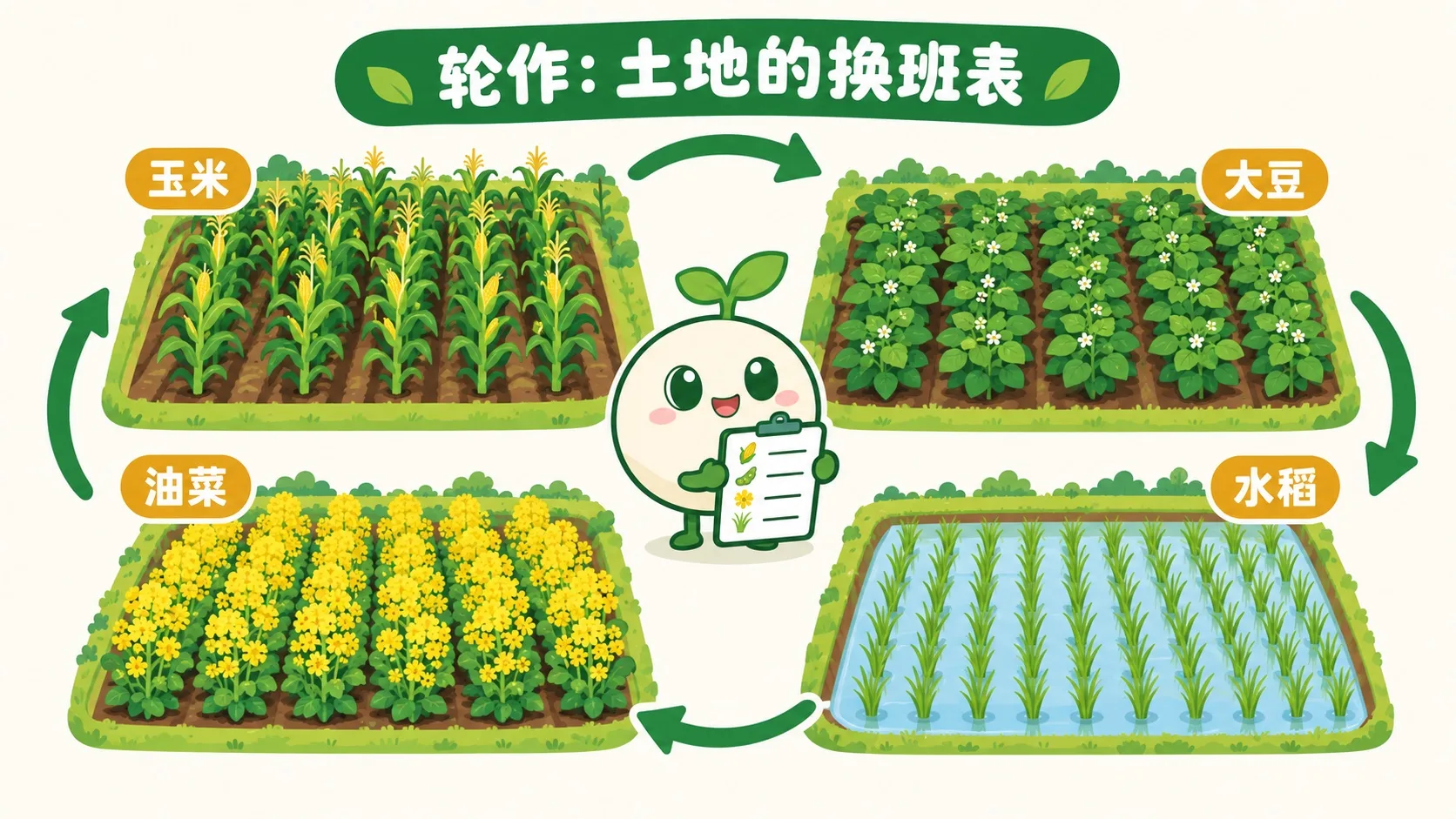
老农的答案,写在一张四格“换班表”里。The farmers' answer fits on a four-cell shift schedule.
今年这块种玉米,明年换大豆,后年换油菜、再换水稻——不同作物轮着“值班”,这叫轮作。轮班表不是随便排的:禾本科、豆科、十字花科轮流上,深根配浅根,就像好排班要劳逸结合。Corn this year, soybean next, then rapeseed, then rice — crops take turns on duty. That is crop rotation. The schedule isn't random: grass, legume and cabbage families alternate, deep roots pair with shallow ones — like a good shift roster balancing work and rest.
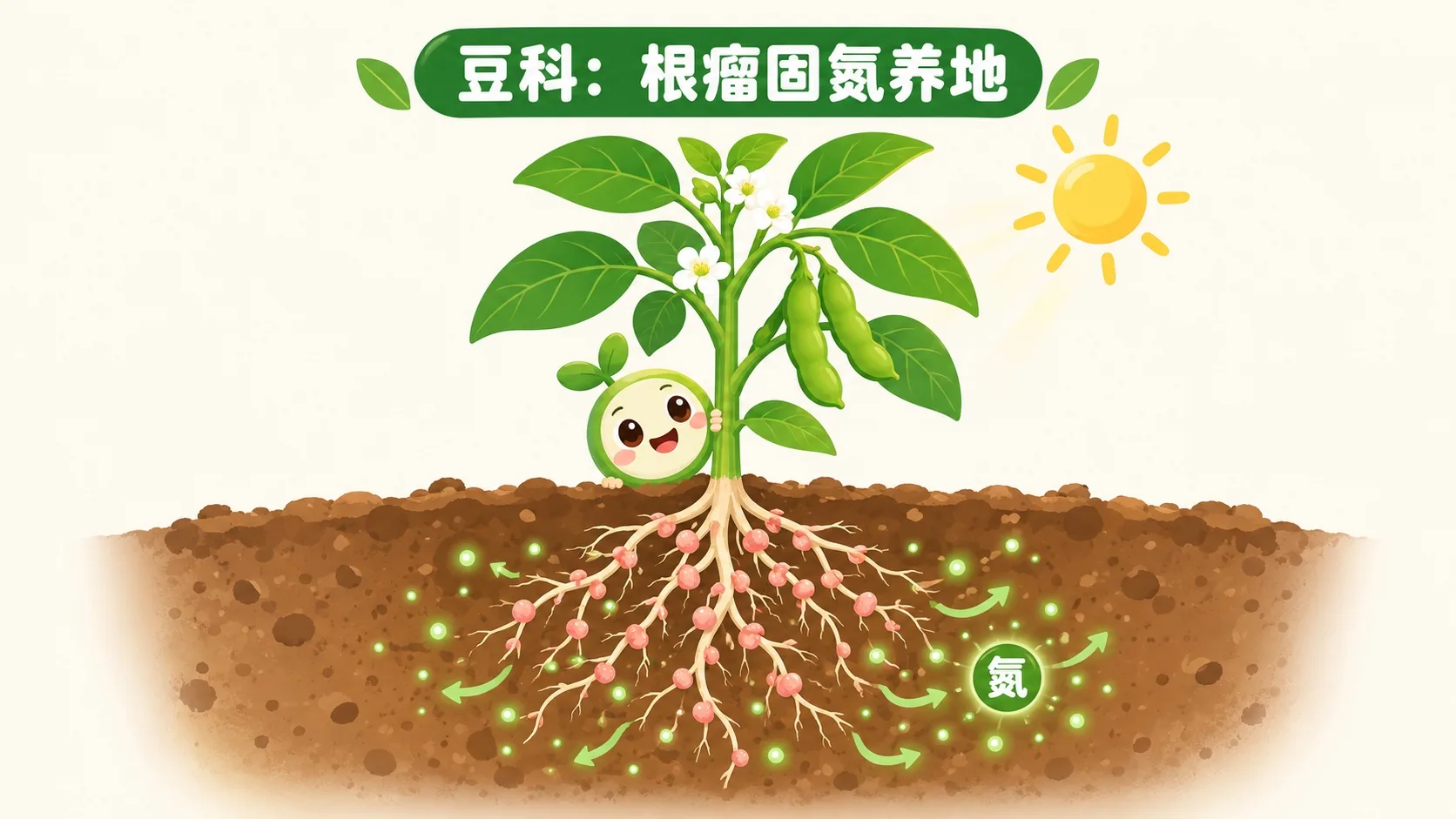
换班为什么有魔法?秘密藏在豆科植物的根上。Why does rotating work like magic? The secret hangs on legume roots.
第 2 步:豆科是自带氮肥的“补剂队”Step 2: Legumes carry their own nitrogen factory
玉米、水稻是“吃氮大户”,连年种会把氮抽光。豆科(大豆、豌豆)的根上长着小瘤子——根瘤,里面的根瘤菌能把空气中的氮变成肥料。轮到豆科上班,等于边种边给土地发补品:根瘤一开张,土壤的氮就回血。Corn and rice are nitrogen guzzlers — grow them every year and the soil runs dry. Legumes (soybeans, peas) grow little bumps on their roots — nodules — where bacteria turn air nitrogen into fertilizer. When legumes take a shift, they fertilize while they grow: nodules refill the soil's nitrogen tank.
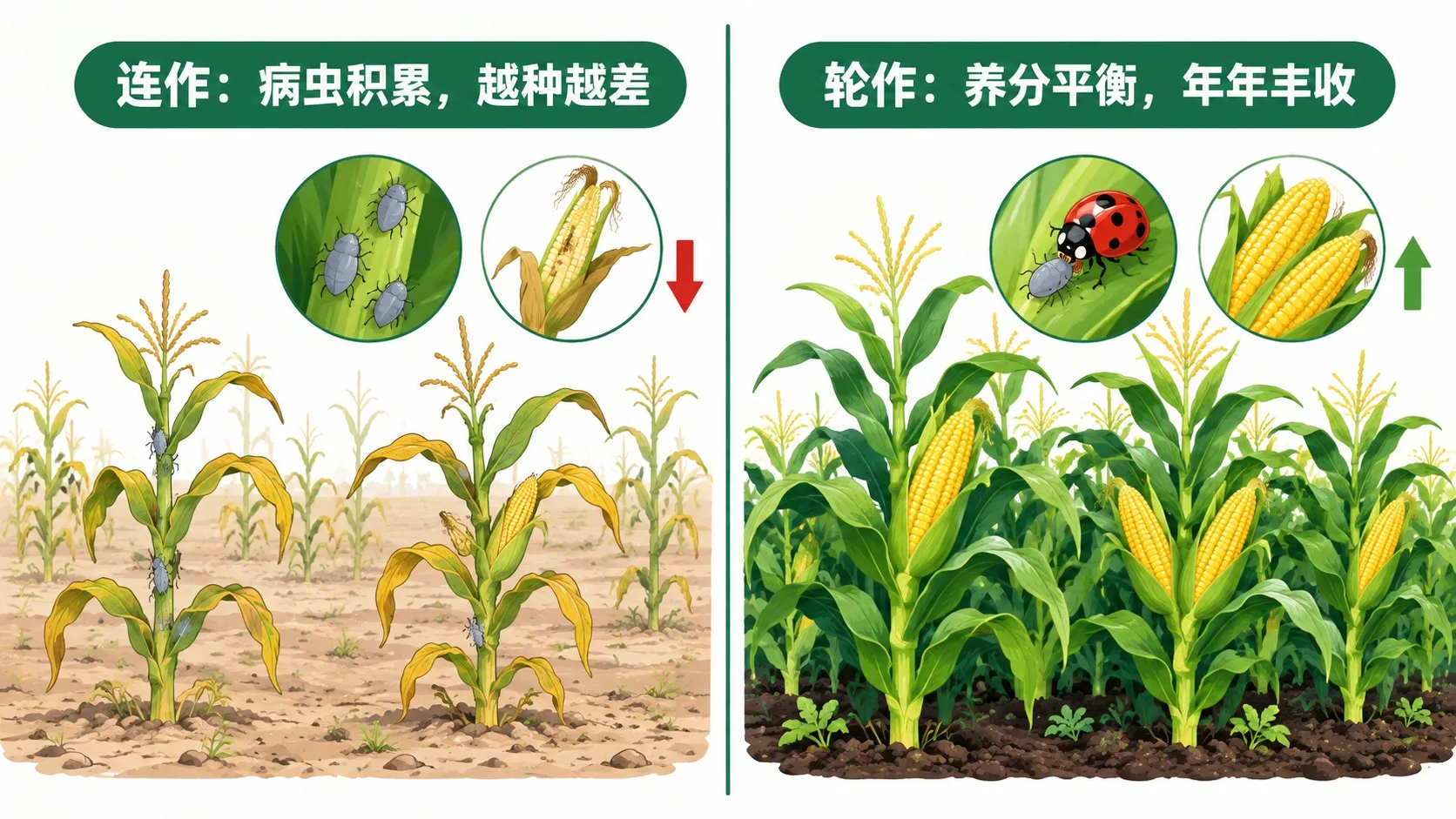
要是不排班、连年种一样呢?土地会这样“抗议”。And if you never rotate? The field protests like this.
第 3 步:连作的代价Step 3: The price of monoculture
同一块地年年种玉米,专吃玉米的虫子和病菌越聚越多,同一种养分被年年抽走——这就是连作障碍:苗越长越弱,产量一年不如一年。换成轮作,病虫找不到“老饭馆”,养分有豆科回来补,同样的地能多收好几成。水稻—油菜、玉米—大豆,都是流传千年的好排班。Plant corn on the same field every year, and its special pests and diseases gather while the same nutrients drain away — continuous cropping obstacles: weaker plants, shrinking harvests. Rotate, and pests can't find their regular restaurant while legumes refill the nutrients — the same field yields far more. Rice–rapeseed, corn–soybean: shift schedules refined over a thousand years.
🎮 你来排土地的换班表(30 秒)🎮 Your turn: write the shift board (30 seconds)
道理讲完了。先给一块田排 4 年班,看地力条怎么变、连作什么时候报警;再闯 4 关,排出最合理的轮作顺序。Theory done. First schedule 4 years for one field — watch the soil bar and monoculture alarms; then clear 4 levels and order the best rotation.
一句话记住它:轮作 = 给土地排换班表——同科连作养病虫、抽养分;豆科穿插固氮养地,越轮越肥。Remember it in one line: crop rotation = a shift schedule for soil — same-family monoculture breeds pests and drains nutrients; legume shifts refill nitrogen, and rotation makes soil richer.
连作障碍:同科连年种 → 病虫积累 + 养分失衡Monoculture trouble: same family yearly → pests pile up + nutrients drain豆科根瘤固氮:边种边给土壤补氮,天然养地Legume nodules fix nitrogen: fertilizing while growing — nature's soil food经典排班:水稻—油菜、玉米—大豆;深浅根搭配更好Classic shifts: rice–rapeseed, corn–soybean; deep and shallow roots pair best
内容参考 OpenStax 等公开教材,多来源核对 · AI 生成、人工审核 · 发现错误欢迎指正,帮这片叶子长得更好。Based on OpenStax and other open textbooks, cross-checked across sources · AI-generated, human-reviewed · Spotted a mistake? Tell us — help this leaf grow.
 Back to tree