🎯 生态位:每个物种的“岗位”🎯 Ecological Niche: every species has a job
上一片里,物质在大自然里一圈圈地转。转圈的每一站,都站着不同的生物——它们各吃各的、各住各的,谁和谁也不撞车。这一片,看每个物种站的那个“岗位”:生态位。Last leaf, matter went round and round through nature's cycles. Every stop along the way is staffed by different living things — each eating its own food, living in its own place, without crashing into the others. This leaf looks at the “job” each species holds: its ecological niche.
第 1 步:什么是生态位Step 1: What is a niche?
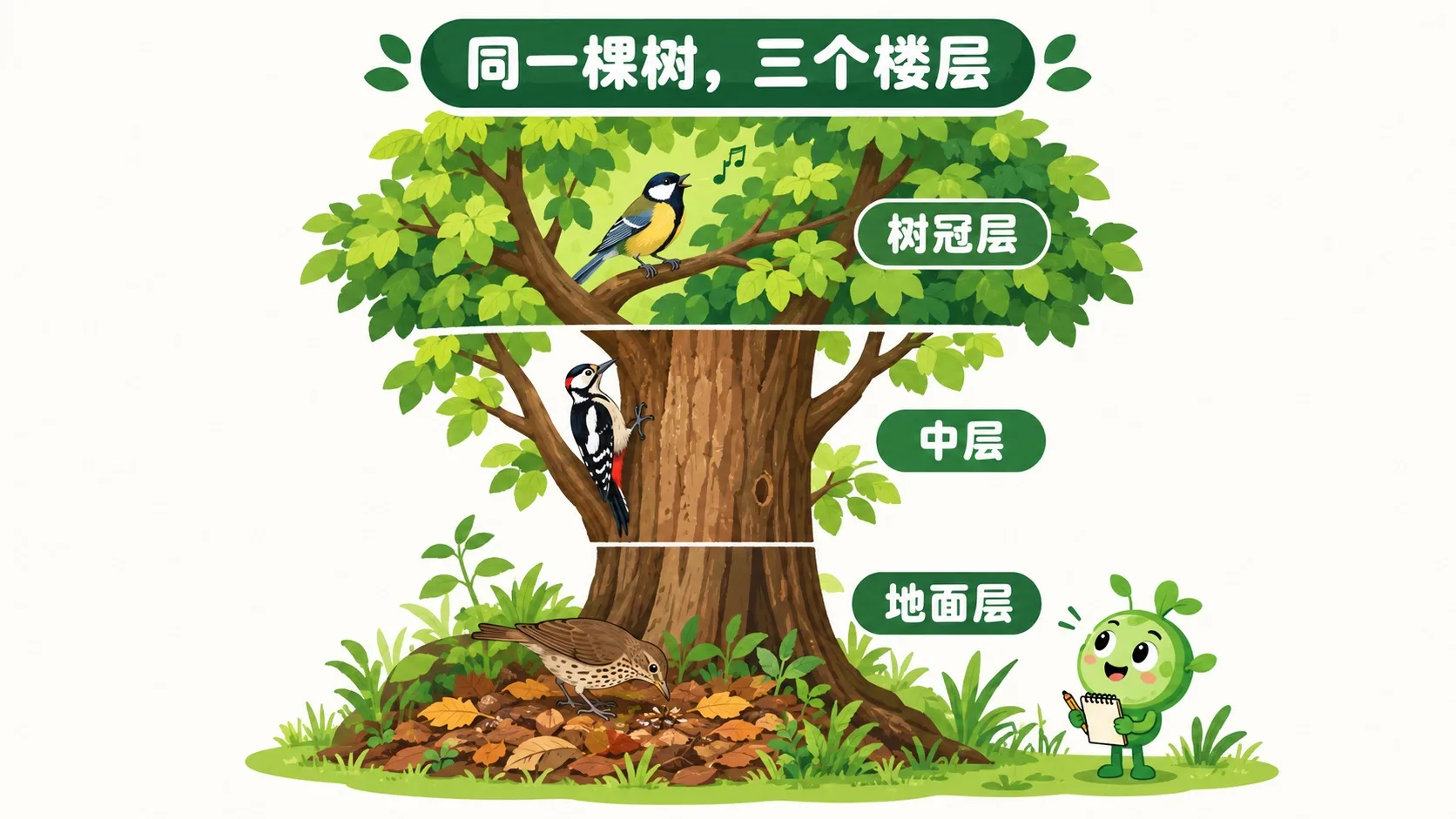
先看一片林子:同一棵大树上,住着好几拨鸟。Start with one tree in a forest — several groups of birds live on it.
同一棵大树,被鸟们分成了三个“楼层”:树冠层的山雀在枝头唱歌,树干上的啄木鸟凿树皮找虫,地面的画眉在落叶里翻找食物。它们不是商量好的,而是各有所长、各吃各的。一个物种的“岗位”——吃什么、住哪、什么时候活动——合起来就叫生态位(niche)。One big tree, divided by the birds into three “floors”: tits sing in the canopy, a woodpecker chisels the bark for insects, a thrush rummages through the leaf litter below. Nobody arranged this — each just does what its body is built for. A species' “job” — what it eats, where it lives, when it is active — is together called its ecological niche.
可要是两种鸟的饭碗一样呢?But what if two birds want the same meal?
第 2 步:岗位撞车,就有人要改行Step 2: When jobs collide, someone retrains
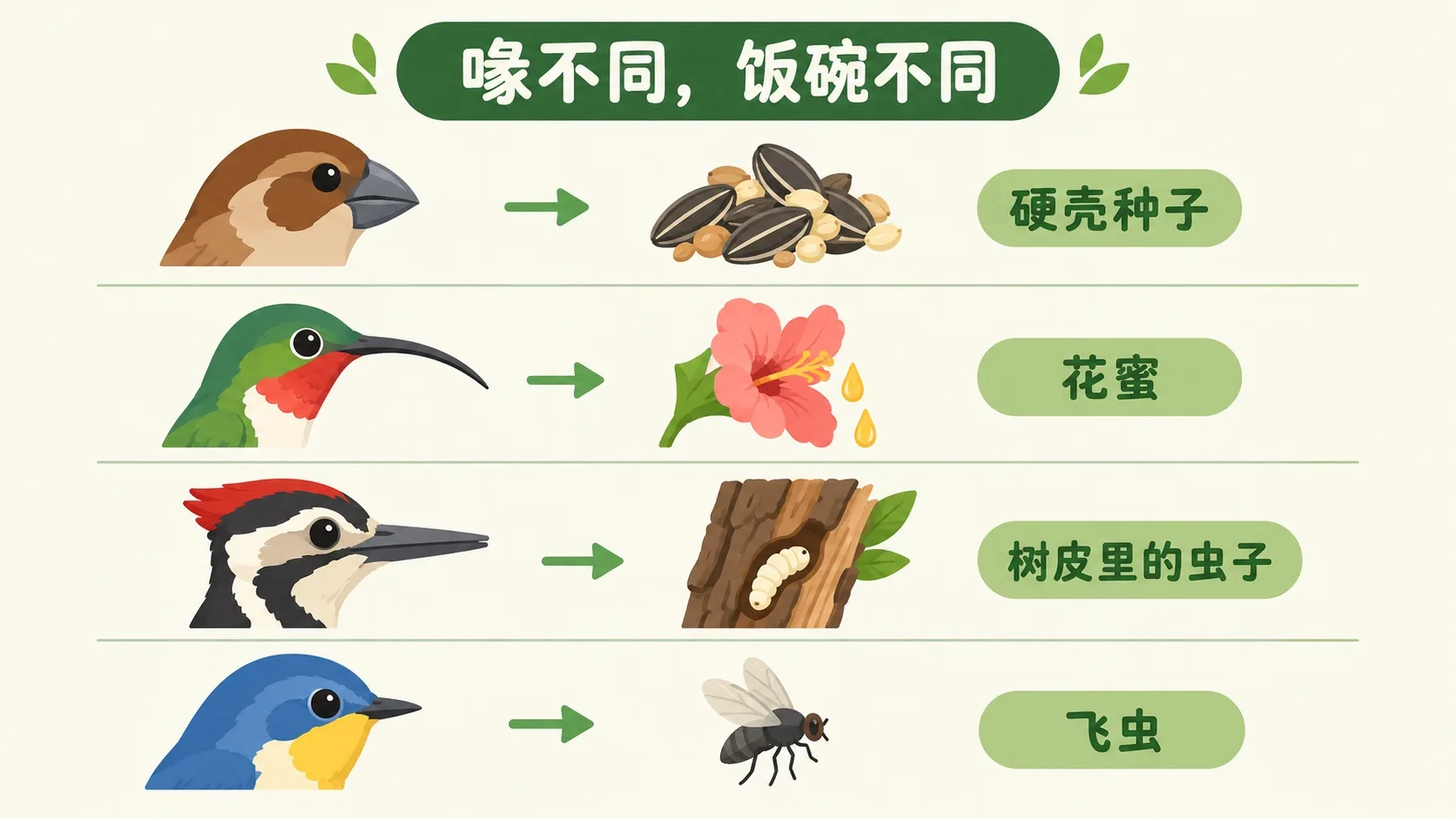
达尔文雀是经典例子:同一群祖先飞上海岛后,喙慢慢变了形。粗壮的喙砸开硬壳种子,细弯的喙伸进花朵吸蜜,凿子般的喙刨出树皮里的虫——喙不同,饭碗就不同。两个物种的生态位一旦重叠,抢食就开始了;抢不出结果时,自然选择会把它们慢慢“推开”,各走各的路。这叫生态位分化。Darwin's finches are the classic example: after one ancestral flock reached the islands, their beaks slowly changed shape. A thick beak cracks hard seeds, a thin curved beak sips nectar, a chisel beak digs out bark insects — different beaks, different meals. Once two species' niches overlap, competition starts; when neither wins, natural selection slowly pushes them apart onto separate paths. That is niche differentiation.
把镜头拉远,整片森林都是这样分层的。Zoom out, and the whole forest is layered the same way.
第 3 步:整片森林,各就各位Step 3: The whole forest, each in its place
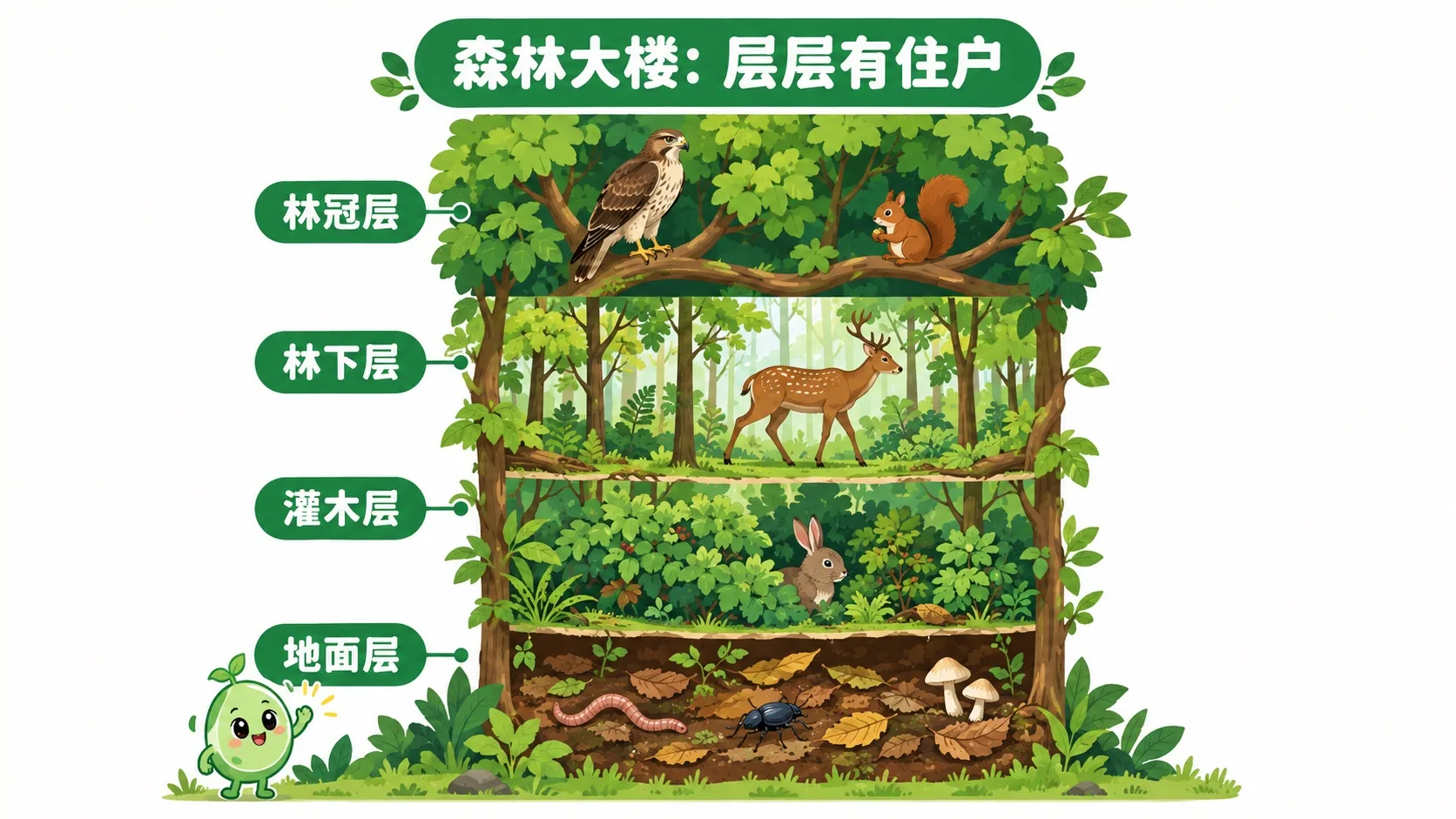
森林像一栋大楼:林冠层有鹰和松鼠,林下层是小鹿穿行,灌木层藏着兔子,地面层则有蚯蚓和甲虫在分解落叶。每一层的光照、食物、藏身处都不同,住户也就不同。生态位越丰富,系统越稳——少了一环,别的环节都可能跟着晃。A forest is like a tall building: hawks and squirrels in the canopy, deer wandering the understory, rabbits hiding in the shrub layer, and earthworms and beetles breaking down fallen leaves on the ground. Each layer offers different light, food and shelter, so each has different residents. The richer the niches, the steadier the system — remove one link and the others wobble.
🎮 你来当分蛋糕大会的主持人(30 秒)🎮 Your turn: host the great food share (30 seconds)
6 种鸟,喙形各不相同;食物就摆在面前。给每只鸟找到对口的饭,别让两只鸟挤同一份——挤到一起,警报就会响。Six birds with six different beaks, and the food is on the table. Match each bird to the meal its beak is built for — and don't let two crowd one plate, or the overlap alarm will sound.
一句话记住它:生态位 = 一个物种“吃什么、住哪、何时活动”的岗位;岗位一重叠,竞争就开始,竞争久了就各分家。Remember it in one line: a niche is a species' job — what it eats, where it lives, when it is active; overlap the jobs and competition begins, and competition separates the paths.
生态位 = 角色 + 资源 + 时间(吃什么、住哪、何时活动)A niche = role + resources + timing (food, home, active hours)生态位重叠 → 竞争 → 分化(达尔文雀的喙越分越开)Overlap → competition → differentiation (Darwin's finches)森林分层,各就各位;生态位越多样,系统越稳Forests are layered, one crew per floor; more niches, steadier system
内容参考 OpenStax 等公开教材,多来源核对 · AI 生成、人工审核 · 发现错误欢迎指正,帮这片叶子长得更好。Based on OpenStax and other open textbooks, cross-checked across sources · AI-generated, human-reviewed · Spotted a mistake? Tell us — help this leaf grow.
 Back to tree