⚡ 电荷:摩擦起电的小把戏⚡ Electric Charge: The Little Trick of Static
上一片我们拆开了光,找到了藏在白光里的彩虹。这一片认识另一位隐形主角——电荷:它住在每个原子里,还会在你开门时“咬”你一口。Last leaf we split light apart and found the rainbow inside. This leaf stars another invisible hero — electric charge: it lives inside every atom, and it may zap your hand on a doorknob.
第 1 步:摩擦起电:梳子吸纸屑Step 1: Rubbing makes static: the comb trick
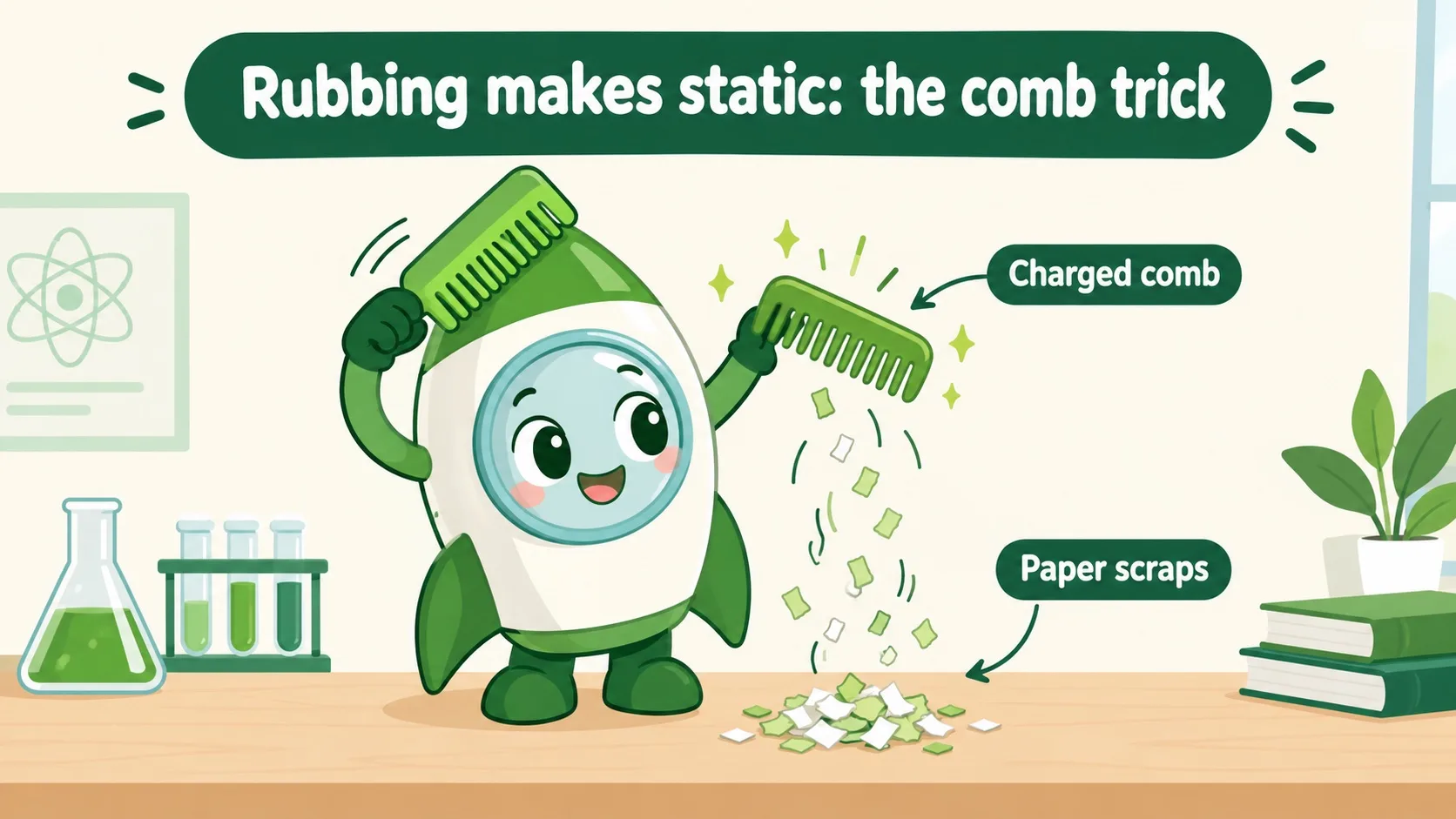
先做个小实验:把塑料梳子在头发上快速摩擦,再靠近碎纸屑。Try it: rub a plastic comb through your hair, then hold it near paper scraps.
纸屑自己跳上来了!摩擦让梳子带上了电。自然界只有两种电荷:正电荷(+)和负电荷(−)。摩擦不是造出电,只是把电荷从头发搬到梳子上——电荷总量始终不变。The scraps jump up! Rubbing gave the comb a charge. Nature has exactly two kinds of charge: positive (+) and negative (−). Rubbing doesn't create charge — it just carries it from your hair to the comb; the total never changes.
两个都带电的气球碰面,会发生什么?What happens when two charged balloons meet?
第 2 步:同种相斥,异种相吸Step 2: Like repels like, opposites attract
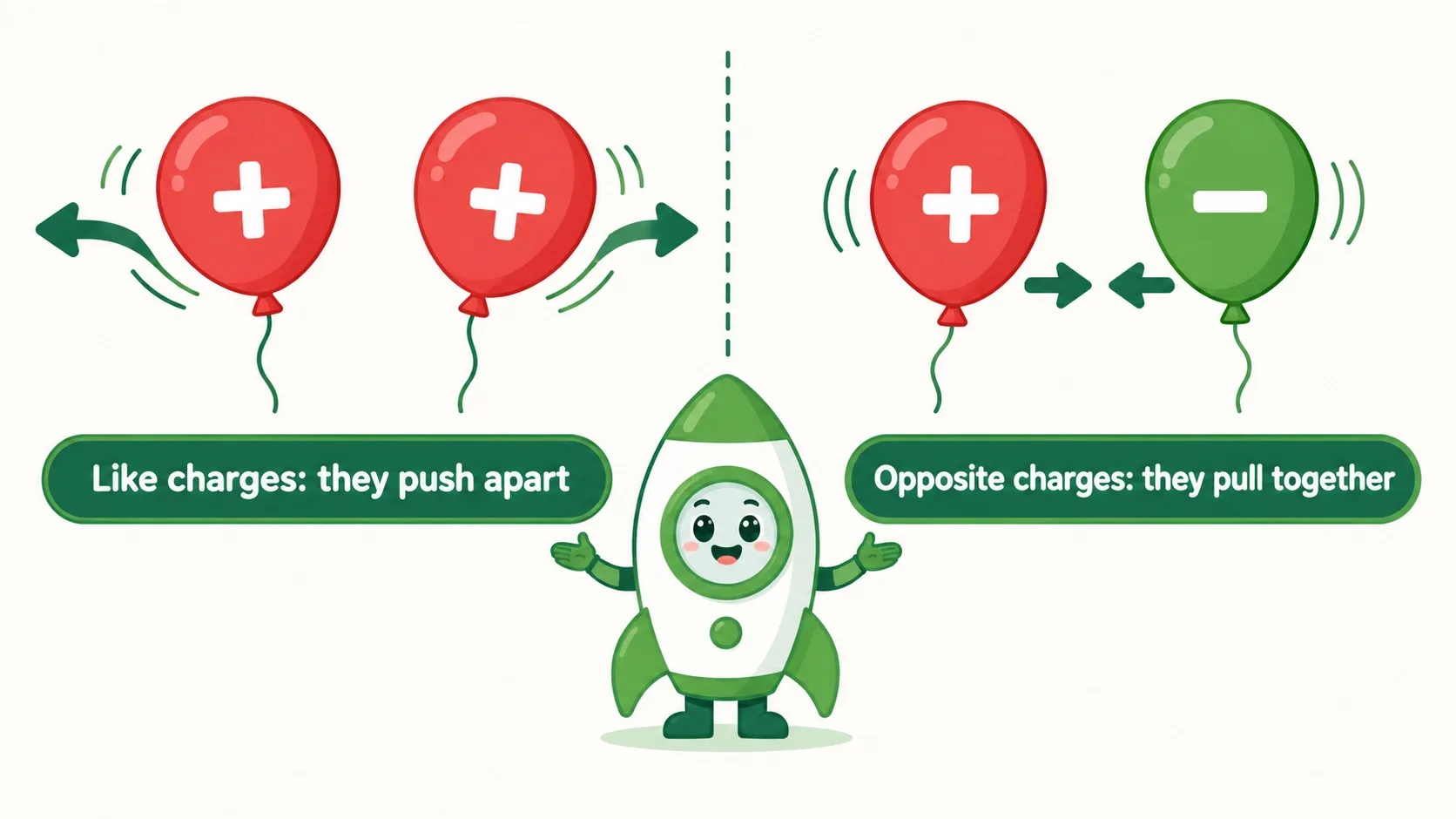
记住八个字:同种相斥、异种相吸。两个都带正电的气球互相推开;一正一负就吸在一起。毛皮摩擦过的气球带负电,能吸起头发——头发里的正电荷凑了过来。Eight words to remember: like charges repel, opposite charges attract. Two positive balloons push apart; one positive and one negative snap together. A fur-rubbed balloon turns negative and lifts your hair — the positive charges lean in.
攒在身上的电荷,最后去了哪儿?Where does the charge that piles up finally go?
第 3 步:放电:门把手和闪电Step 3: Discharge: doorknobs and lightning
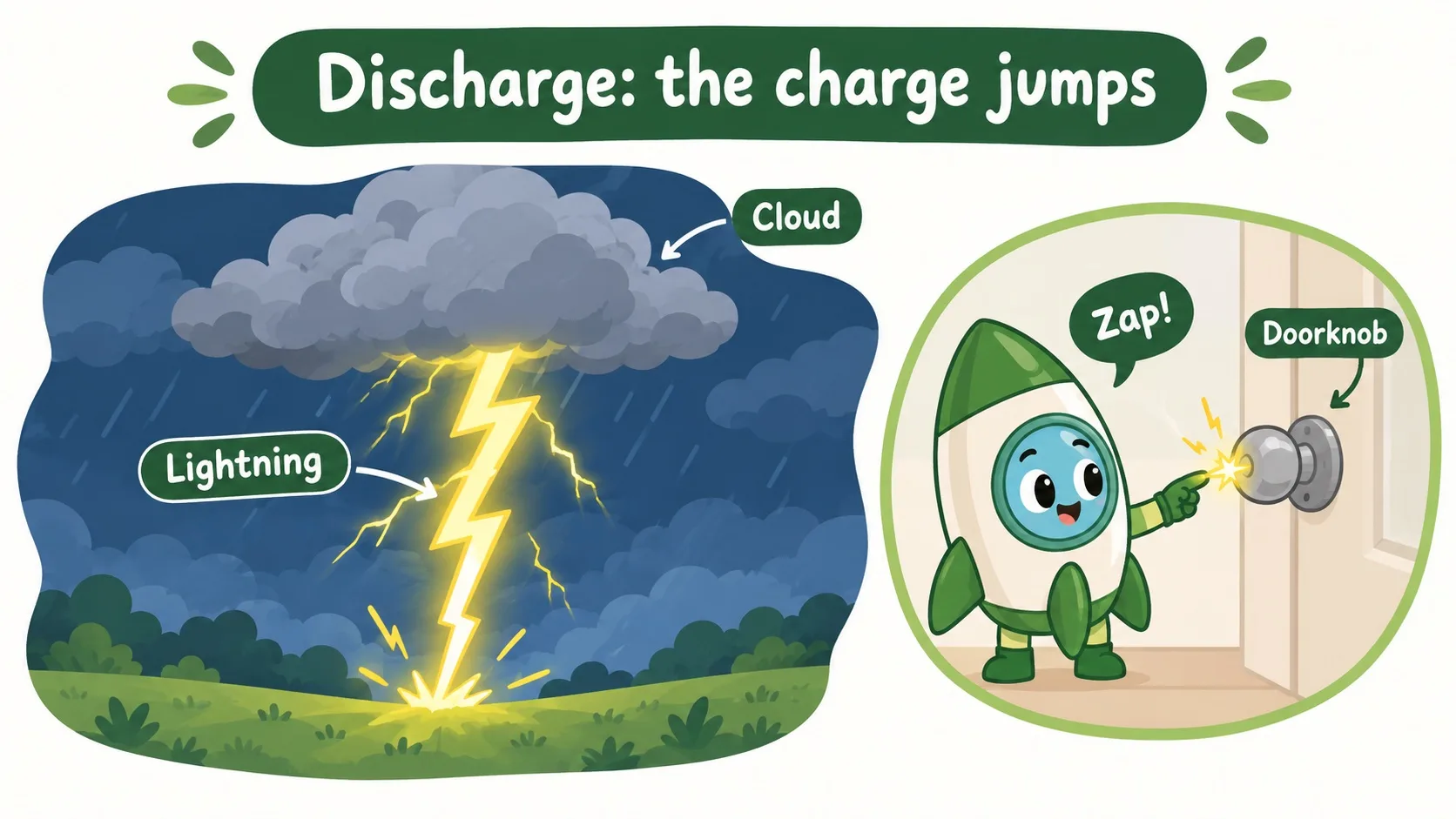
走路时鞋底和地毯摩擦,电荷在你身上越攒越多。手指靠近金属门把手,电荷“啪”地跳过去,手指一麻——这就是放电。雷雨云里攒的电荷多得多,一跳就是闪电,几亿伏的电压把空气击穿。As you walk, your soles scuff charge onto you. Reach for a metal doorknob and zap — the charge jumps across and your finger tingles: that's a discharge. Storm clouds store far more charge; one giant jump is lightning, hundreds of millions of volts punching through the air.
🎮 你来当电学家(1 分钟)🎮 Your turn: be the charge scientist (1 minute)
道理讲完了。先拖两个电荷球,看吸引和排斥的力箭头;再答 4 道小题检验一下。Theory done. First drag the two charge balls and watch the force arrows; then answer 4 quick questions.
一句话记住它:电荷只有正负两种;同种相斥、异种相吸;摩擦只搬运电荷,放电就是电荷跳走了。Remember it in one line: charge comes in two kinds; like repels like and opposites attract; rubbing only moves charge around, and discharge is charge jumping away.
两种电荷:正电荷 +、负电荷 −;同种相斥、异种相吸Two kinds: positive + and negative −; like repels like, opposites attract摩擦起电 ≠ 创造电荷,只是把它搬了个家(电荷守恒)Rubbing never creates charge, it just moves it (charge is conserved)放电:电荷攒够就跳——门把手的小火花、几亿伏的闪电Discharge: stored charge jumps — a doorknob spark, or lightning at hundreds of millions of volts
内容参考 OpenStax 等公开教材,多来源核对 · AI 生成、人工审核 · 发现错误欢迎指正,帮这片叶子长得更好。Based on OpenStax and other open textbooks, cross-checked across sources · AI-generated, human-reviewed · Spotted a mistake? Tell us — help this leaf grow.
 Back to tree