⚠️ 安全用电:220V 的规矩⚠️ Electrical Safety: The Rules of 220 Volts
上一片把电热的账算清了:粗线、不超负荷、保险丝和空气开关,都是为了让 Q 小一点。这一片更进一步,把「电不伤人」的规矩一次讲明白——从 36V 这条线开始。Last leaf settled the heat account: thick wires, no overloading, fuses and breakers — all to keep Q small. This leaf goes one step further and lays out the rules that keep electricity from hurting people, starting at the 36-volt line.
第 1 步:36V——人与电的安全线Step 1: 36 volts — the safety line for the body
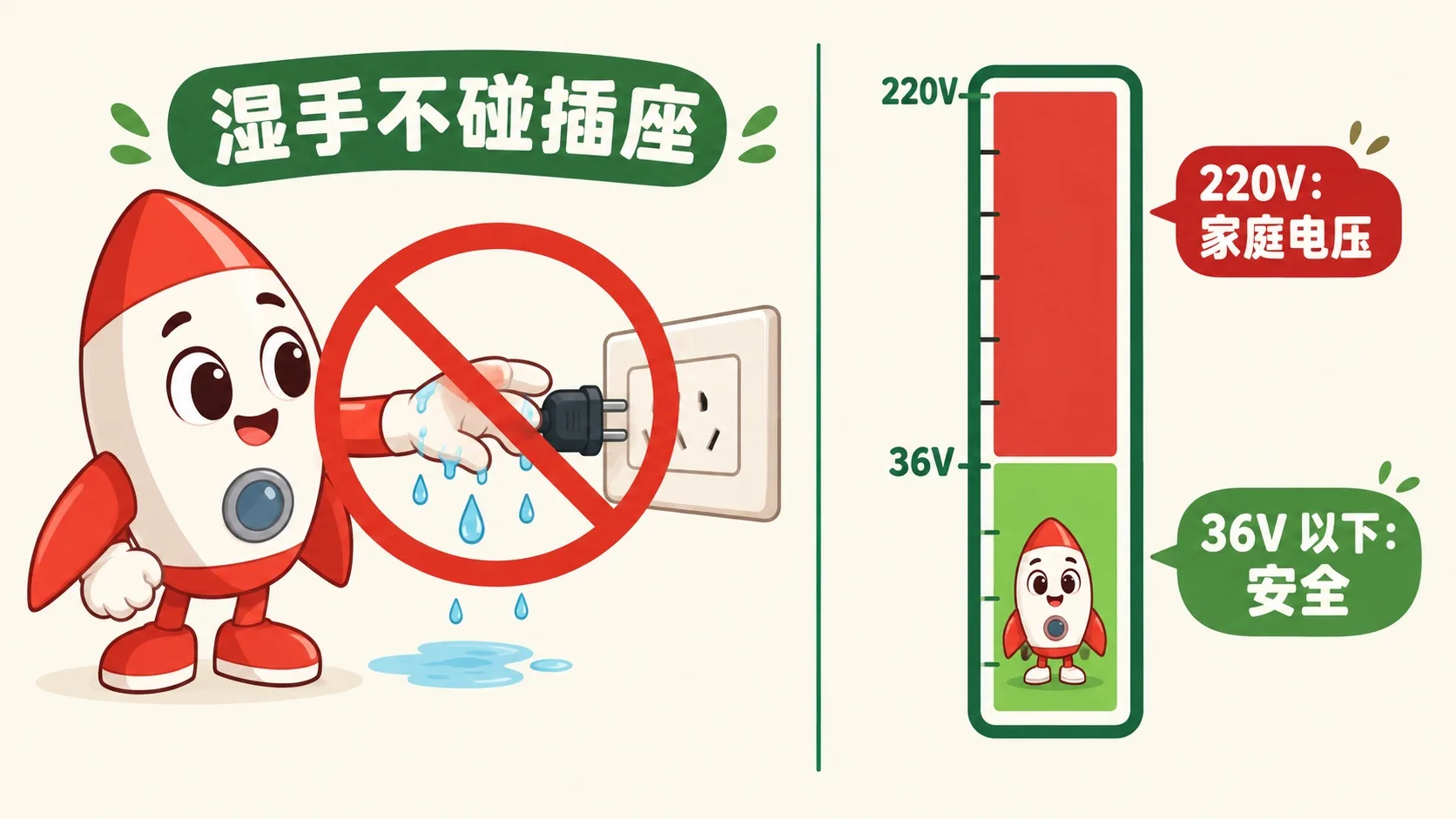
先看家里最危险的一个瞬间:湿手去碰插座。Start with the most dangerous moment in any home: a wet hand reaching for a socket.
人体本来是个不太好的导体:干手时电阻约一万欧。可水一上来,电阻掉到约一千欧——同样的 220V,电流一下子大 10 倍。所以湿手千万别碰插座。家庭电路的 220V 对人体绝不安全;一般认为不高于 36V 才是安全电压。家里那三根线也各有分工:火线(L)带着 220V 电压,零线(N)与地相连、电压接近 0,地线(PE)把电器外壳接到大地。三孔插座的「左零右火上接地」,就是它们的记号。A human body is a poor conductor: dry hands have a resistance of roughly ten thousand ohms. Add water and it drops to about one thousand — the same 220 V drives ten times the current through you. So never touch a socket with wet hands. Mains at 220 V is never safe for a body; 36 V and below is what we call safe voltage. The three wires at home each have a job: live (L) carries the 220 V, neutral (N) connects to earth and sits near 0 V, and earth (PE) links appliance cases to the ground. A three-hole socket's rule — neutral left, live right, earth on top — is how you tell them apart.
人的规矩说完了,那电路自己有没有规矩?That is the human rule — does the circuit have rules of its own?
第 2 步:短路与过载——电路自己踩刹车Step 2: Shorts and overloads — the circuit hits its own brakes
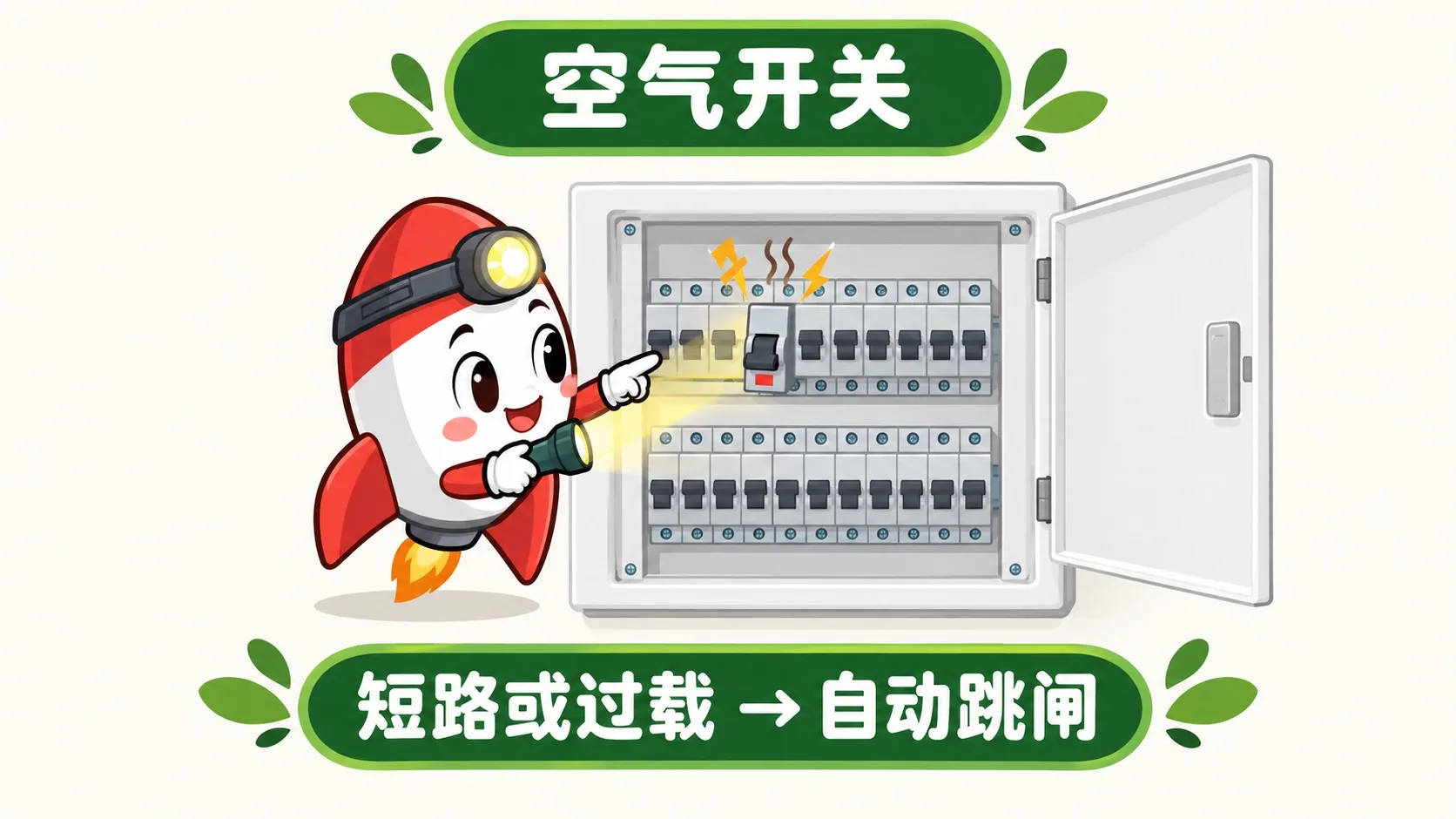
有,两道。第一道叫短路:火线和零线不经过电器、直接相碰,电阻几乎为零,电流瞬间变得极大。第二道叫过载:太多大功率电器同时用,总电流超过导线能承受的值。两者的结果相同——Q = I²Rt 里的 I 太大,导线立刻发烫。所以电路里必须装保险丝或空气开关:电流一超标,保险丝熔断、空开跳闸,主动把电掐断。保险丝烧了要换新,空开跳了可以复位——但它们只负责断电,不负责找原因。Two of them. The first is the short circuit: live and neutral touch directly without passing through any appliance, resistance is nearly zero, and the current explodes. The second is the overload: too many high-power appliances at once push the total current past what the wire can carry. Both end the same way — the I in Q = I²Rt gets huge and the wire heats up fast. So circuits carry fuses or breakers: the moment current goes over the limit, a fuse melts or a breaker trips and cuts the power. A burnt fuse is replaced; a tripped breaker can be reset — but neither one finds the cause.
保护器只负责断电,那真正防患的一步在哪?The protector only cuts power — where is the step that prevents trouble?
第 3 步:大功率的专线,与救命的顺序Step 3: A dedicated line for big loads — and the rescue order
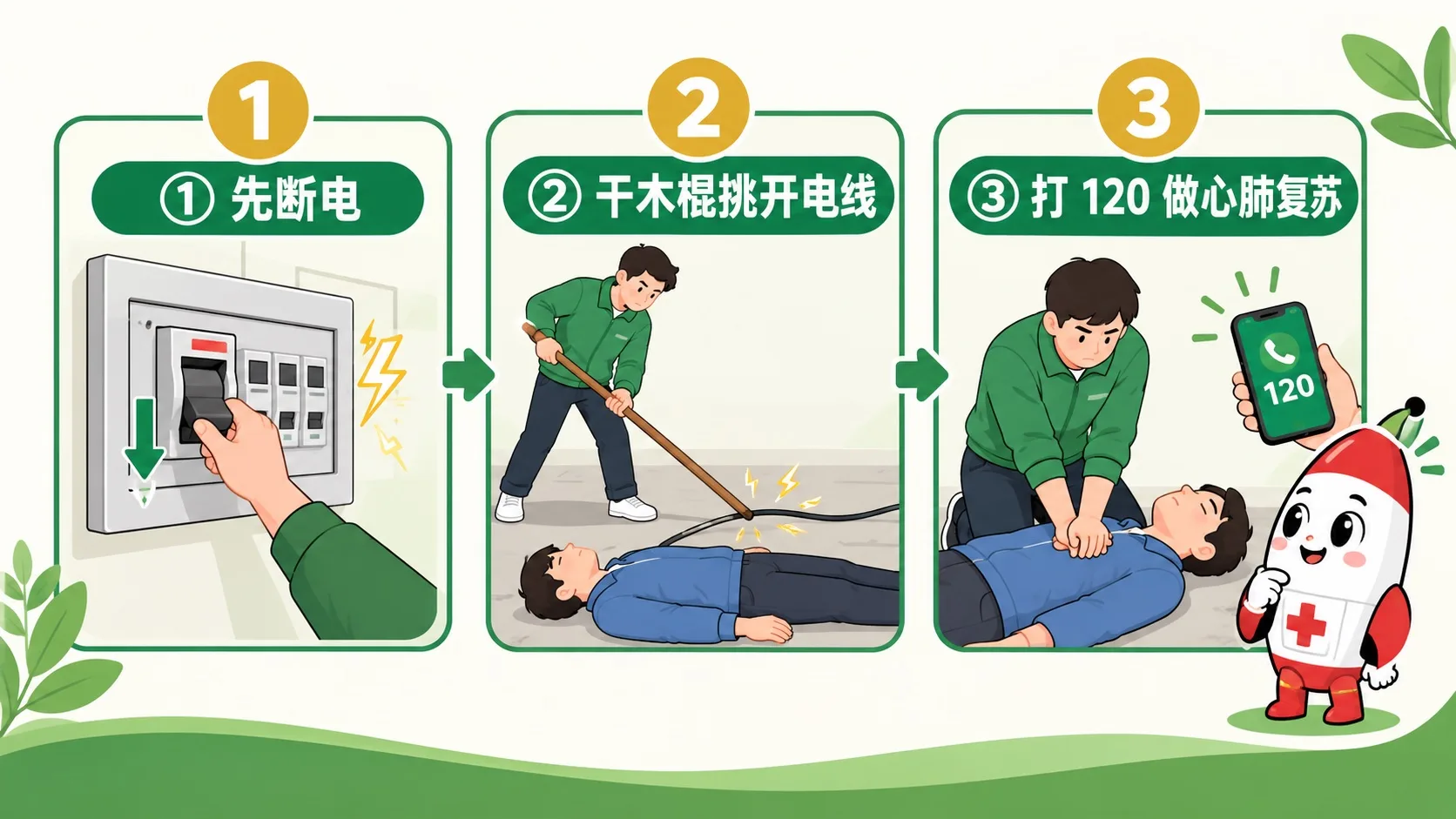
这一步在装修时就该做对:空调、电热水器这类大功率电器,要单独走一条线、配专用插座。回忆 I²Rt——它们电流大,和一堆小电器挤一根细线,过载几乎必然。万一还是有人触电:先断电,拉总闸、拔插头;够不到闸,就用干燥木棍等绝缘物把电线挑开;绝对不能直接用手拉触电的人——你也会变成导体。脱险后立刻做心肺复苏、打 120。顺序错了,救人的人也会倒下。This step belongs to the day of rewiring: high-power appliances like air conditioners and water heaters need their own dedicated line and socket. Remember I²Rt — their currents are big, and crowded onto one thin line with a pile of small appliances, an overload is almost certain. If someone still gets shocked: cut the power first — pull the main switch, unplug the plug; if you cannot reach it, push the wire away with a dry wooden stick or another insulator; never pull the victim with your bare hands — you become a conductor too. Once they are clear, start CPR and call 120. Get the order wrong, and the rescuer goes down as well.
🎮 你来当家庭电路巡查员(30 秒)🎮 Your turn: home circuit patrol (30 seconds)
道理讲完了。去小火箭的新家巡查 4 处用电隐患:先判断它危不危险,再选出正确的修法。Theory done. Patrol Rocket's new home and clear 4 electrical hazards: first judge whether each one is dangerous, then pick the right fix.
一句话记住它:220V 的规矩就三条:湿手不碰插座(36V 才安全)、大功率电器单独走线、短路漏电先断电再处理。Remember it in one line: three rules of 220 V — dry hands only, dedicated lines for high-power appliances, and cut the power first when something goes wrong.
人体安全电压不高于 36V;火线带 220V、零线近 0V、地线保护外壳(左零右火上接地)Safe voltage is 36 V or below; live carries 220 V, neutral sits near 0 V, earth protects the case (neutral left, live right, earth on top)短路(火零直连)和过载(电流超标)都会让导线急剧发热;保险丝/空开自动断电,漏电保护器专防漏电Shorts (live touching neutral) and overloads (current too big) both overheat wires; fuses and breakers cut power automatically, leakage protectors guard against leakage大功率电器要单独走线;触电救援顺序:先断电(或用干木棍挑开电线),再心肺复苏、打 120Give high-power appliances their own line; rescue order: cut the power first (or push the wire away with dry wood), then CPR and call 120
内容参考 OpenStax 等公开教材,多来源核对 · AI 生成、人工审核 · 发现错误欢迎指正,帮这片叶子长得更好。Based on OpenStax and other open textbooks, cross-checked across sources · AI-generated, human-reviewed · Spotted a mistake? Tell us — help this leaf grow.
 Back to tree