🐼 濒危物种:正在消失的邻居🐼 Endangered Species: Neighbours in Trouble
上一片说,多样性是地球的保险。可如今保险单上有些名字正被划掉——这一次我们看看:谁在消失、为什么,以及怎么把它们拉回来。Last leaf called diversity Earth's insurance. Yet some names on the policy are being crossed out — this time we look at who is vanishing, why, and how to pull them back.
第 1 步:家园被切碎Step 1: Home cut to pieces
一种生物为什么会走到濒危?先看看最要命的那一刀。Why does a species slide toward extinction? First look at the deepest cut of all.
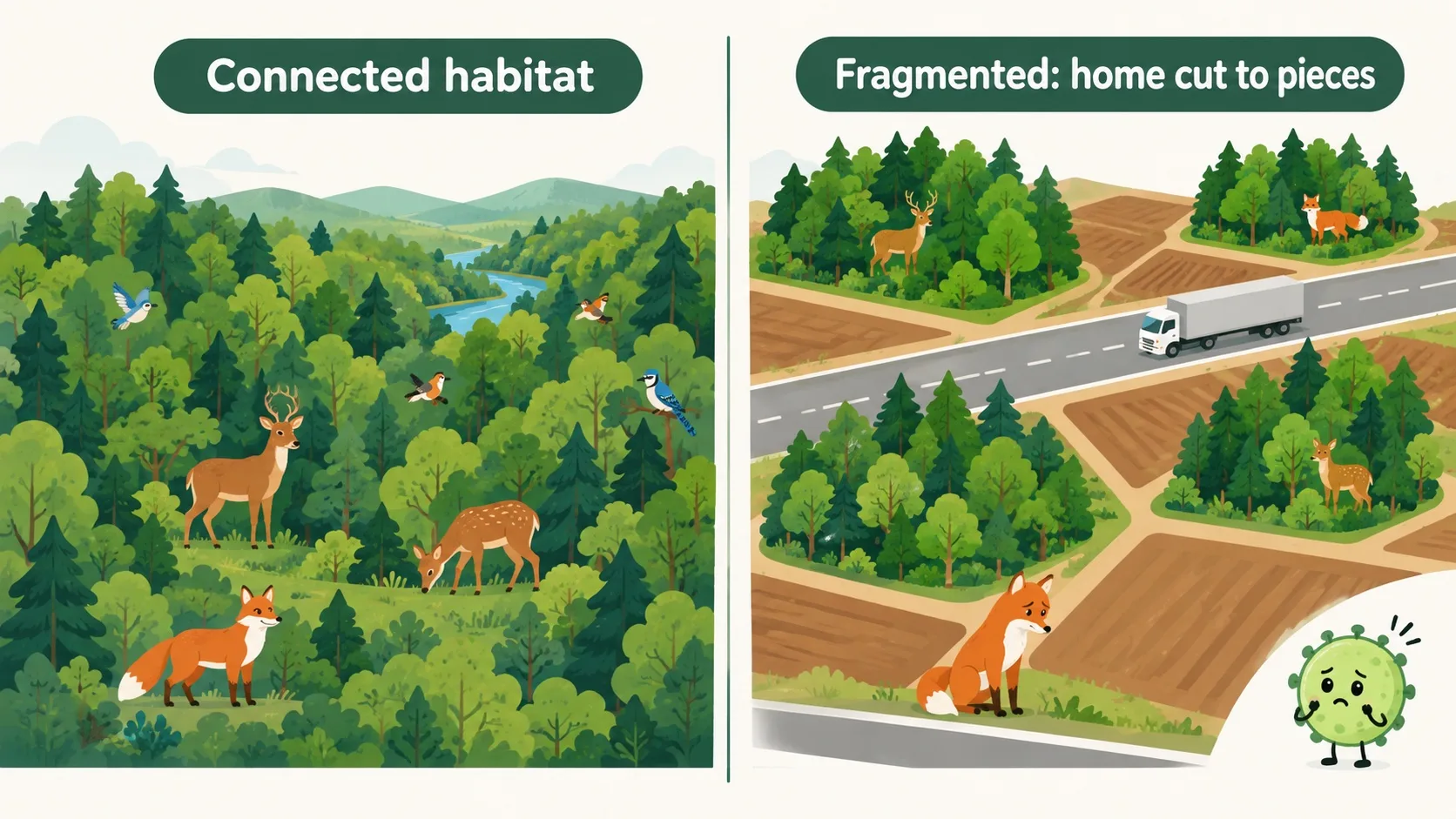
物种消失的原因里,排第一的是栖息地破坏:森林被砍、湿地被填,动物没了家。被公路和农田切碎后,栖息地变成一座座「孤岛」,动物困在小块里,找食物、找伴侣都难。此外还有过度捕猎、污染和入侵物种——它们常常同时发生,把物种一步步推远。The number-one cause is habitat loss: forests cut down, wetlands filled in — home gone. Sliced by roads and farms, habitat becomes “islands”; animals trapped in small patches struggle to find food and mates. Add overhunting, pollution and invasive species — often all at once — and a species gets pushed further and further away.
风险这么复杂,科学家怎么给每个物种记一笔?With risks this tangled, how do scientists keep score for every species?
第 2 步:红名单上的名字Step 2: Names on the red list
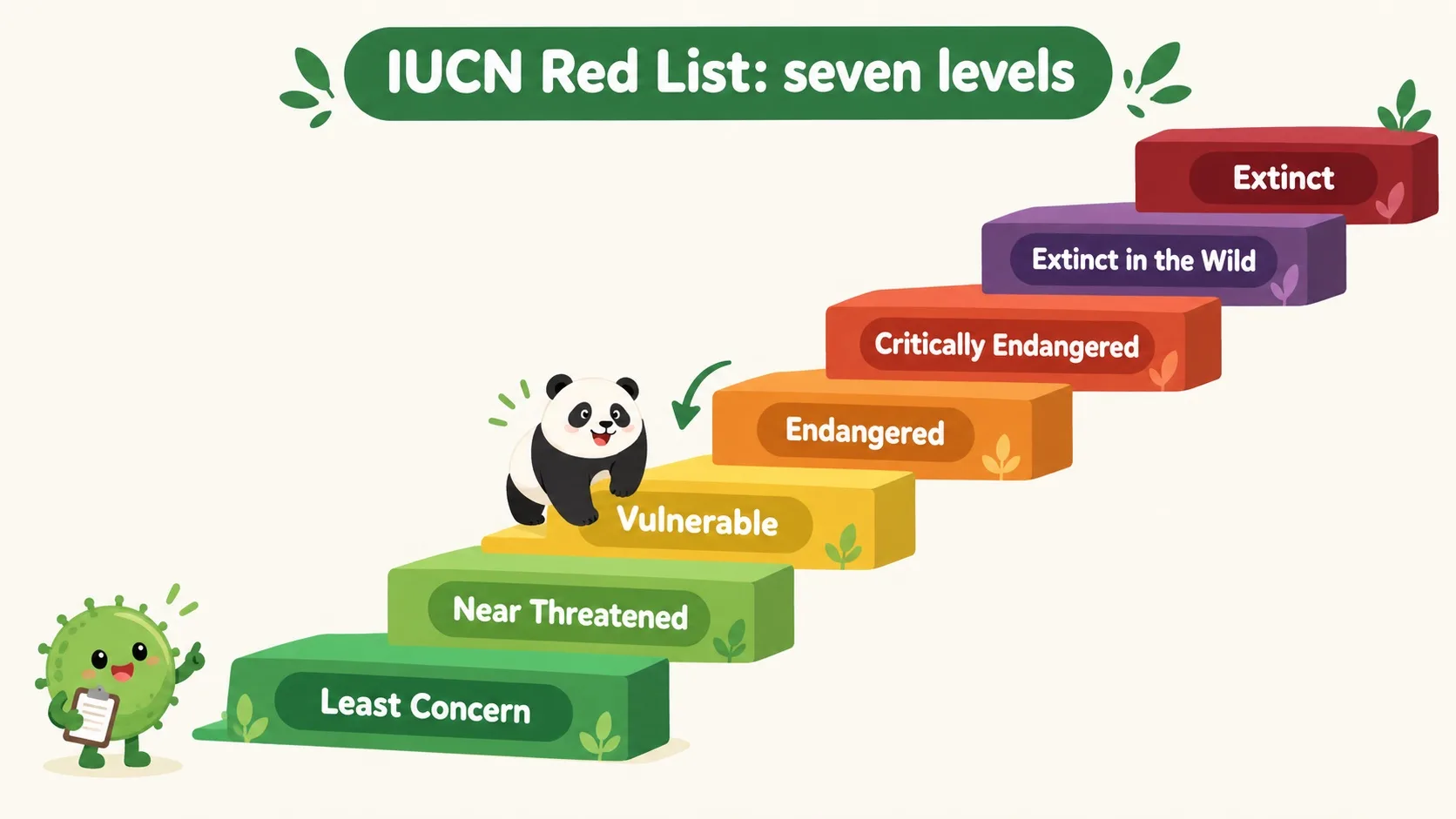
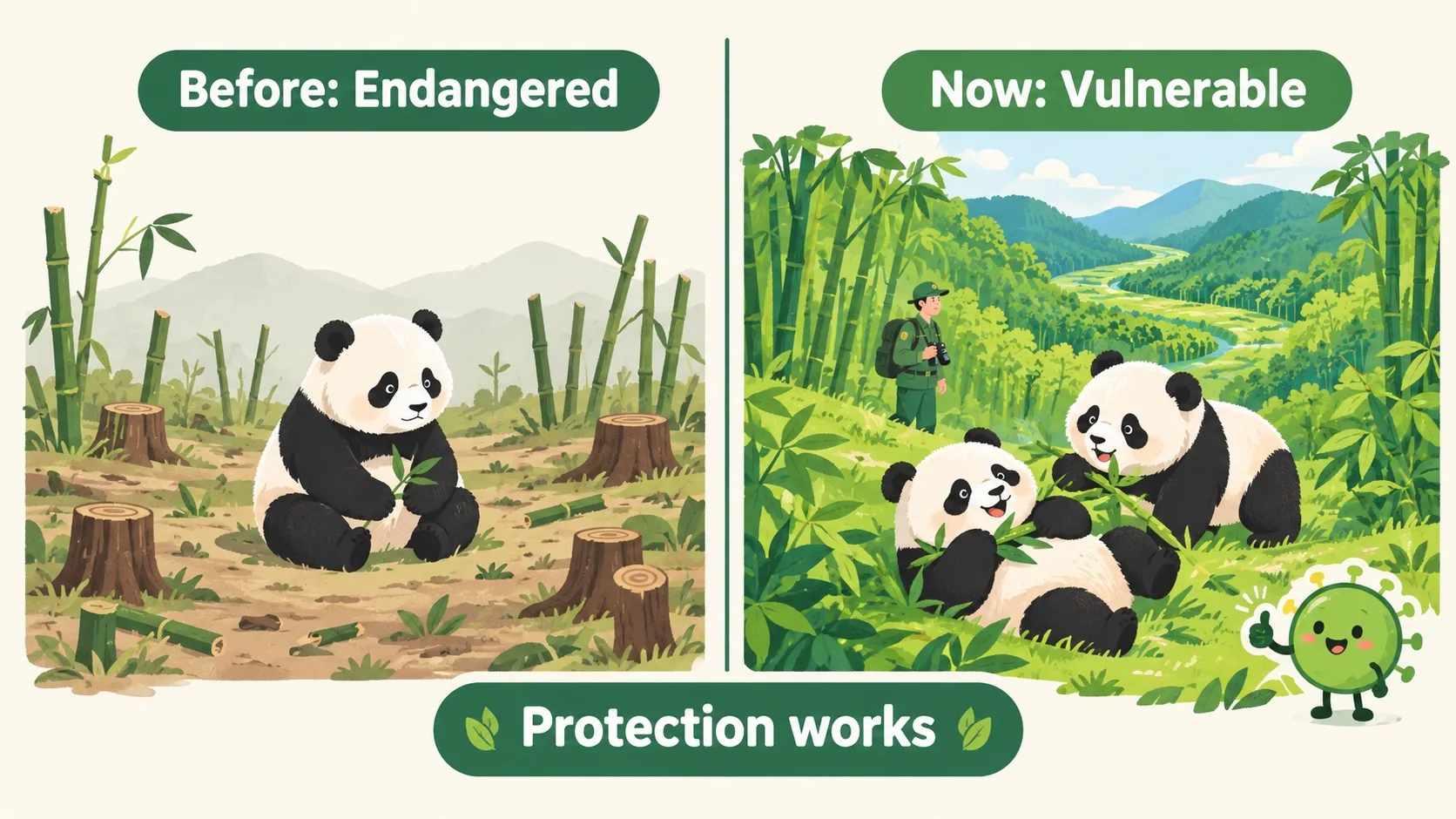
IUCN 红色名录把物种分成七个等级:无危、近危、易危、濒危、极危、野外灭绝、灭绝。等级越高,离消失越近。好消息是等级也能往下走:随着保护见效,大熊猫在 2016 年从「濒危」降到「易危」——名字还在名单上,但退了一步。The IUCN Red List sorts species into seven levels: Least Concern, Near Threatened, Vulnerable, Endangered, Critically Endangered, Extinct in the Wild, Extinct. The higher the level, the closer to gone. Good news: a species can also step down. Thanks to protection, the giant panda moved from Endangered to Vulnerable in 2016 — still listed, but one step back.
大熊猫是怎么做到的?它给出了一个能抄的答案。How did the panda do it? It leaves us an answer worth copying.
第 3 步:救得回来Step 3: Bringing them back
保护手段是一套组合拳:建自然保护区守住家园、用生态廊道把碎片连起来、反盗猎减少伤害、人工繁育补充种群、再科学放归。大熊猫靠这套组合拳实现了降级;但降级不是毕业——只要栖息地还在受威胁,保护就得继续。Protection is a combo: nature reserves to guard the home, green corridors to reconnect the fragments, anti-poaching patrols to cut the harm, breeding programmes to boost numbers, and science-based release. With this combo the giant panda stepped down a level — but stepping down is not graduating: as long as the habitat is threatened, protection must go on.
🎮 你来当保护行动员(30 秒)🎮 Your turn: join the protection task force (30 seconds)
道理讲完了。4 份濒危档案,给每个物种挑出最有效的行动——最后一份要挑「没用」的那个。Theory done. Four endangered files — pick the most effective action for each; for the last one, spot the useless action.
一句话记住它:濒危的推手 = 栖息地破坏 + 过度捕猎 + 污染 + 入侵物种;红色名录记风险,保护区 + 廊道 + 反盗猎 + 繁育是有效的组合拳。Remember it in one line: extinction is pushed by habitat loss, overhunting, pollution and invasive species; the Red List tracks the risk, and reserves + corridors + patrols + breeding are a combo that works.
消失的头号原因是栖息地破坏,破碎化把家园变成「孤岛」Habitat loss ranks first — fragmentation turns home into “islands”红色名录七级:无危 → 近危 → 易危 → 濒危 → 极危 → 野外灭绝 → 灭绝Red List, seven levels: Least Concern → Near Threatened → Vulnerable → Endangered → Critically Endangered → Extinct in the Wild → Extinct保护组合拳里保住栖息地排第一;大熊猫 2016 年从濒危降到易危Protecting habitat tops the combo; the giant panda stepped Endangered → Vulnerable in 2016
内容参考 OpenStax 等公开教材,多来源核对 · AI 生成、人工审核 · 发现错误欢迎指正,帮这片叶子长得更好。Based on OpenStax and other open textbooks, cross-checked across sources · AI-generated, human-reviewed · Spotted a mistake? Tell us — help this leaf grow.
 Back to tree