🔑 酶催化:锁与钥匙的加速器🔑 Enzyme Catalysis: The Lock-and-Key Accelerator
上一片说,蛋白质能折成工具。工具里最忙的一类叫酶——细胞里几乎每一个化学反应,都靠它提速。Last leaf, proteins fold into tools. The busiest tools of all are enzymes — almost every chemical reaction in a cell runs faster because of them.
第 1 步:不消耗的加速器Step 1: The accelerator that never wears out
酶到底帮了什么忙?What exactly does an enzyme do?
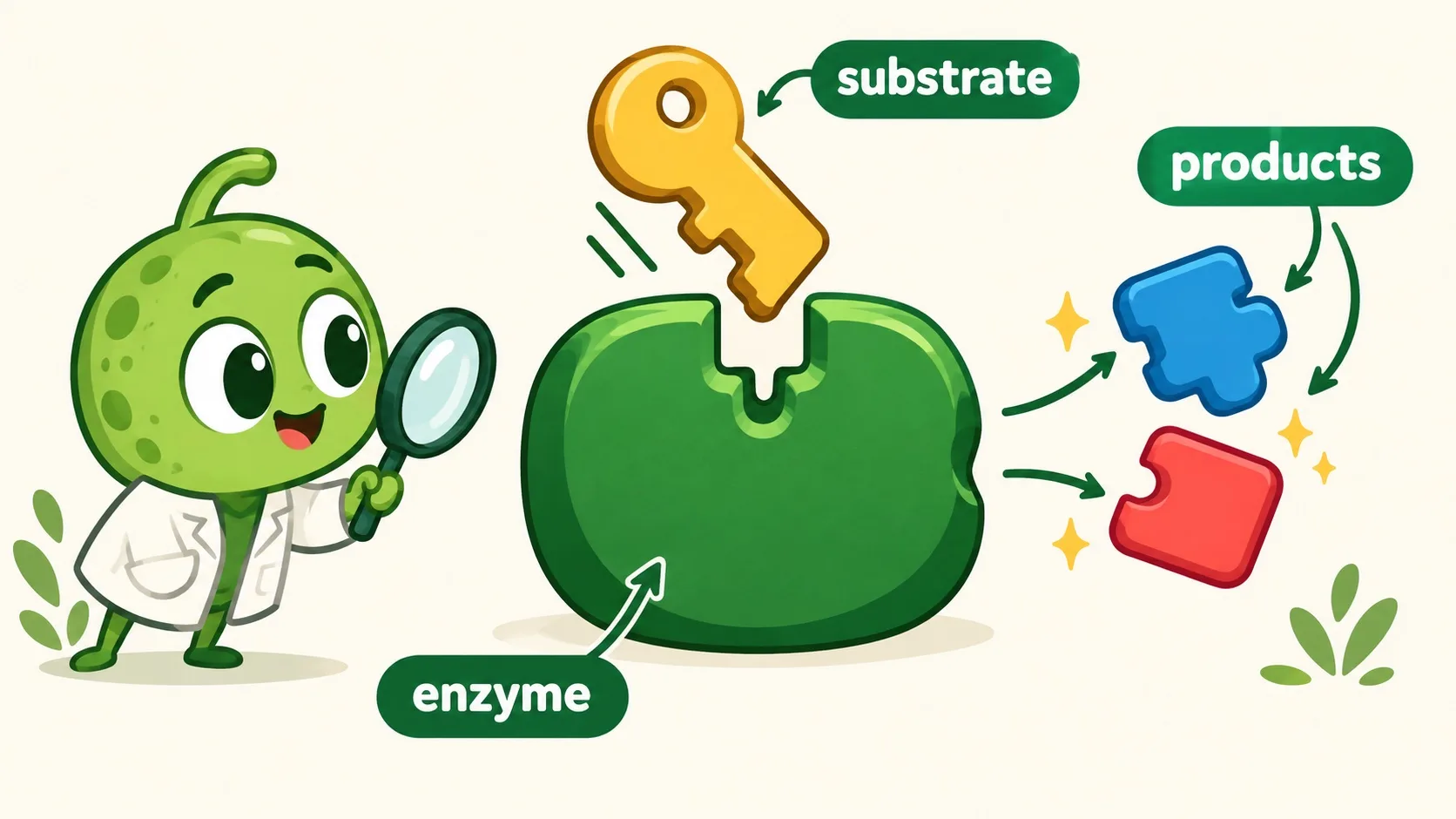
常温下,很多化学反应慢得几乎不动。酶能把它加速上百万倍,自己却完好无损,用完还能接着用——这种本领叫“催化”。它的工作方式像锁和钥匙:酶身上有个形状固定的凹槽(锁),只有形状刚好匹配的底物(钥匙)才插得进去,插进去后反应发生,产物离开,酶原样留下继续值班。At room temperature many reactions barely move. An enzyme can speed one up a million times and still come out unharmed, ready to work again — that's catalysis. It works like a lock and key: the enzyme has a fixed notch (the lock), and only a substrate whose shape matches (the key) fits in. Once in, the reaction happens, the products leave, and the enzyme stays on duty unchanged.
锁和钥匙也有脾气吗?Do locks and keys have a temper too?
第 2 步:太冷太热都不行Step 2: Too cold, too hot — both are bad
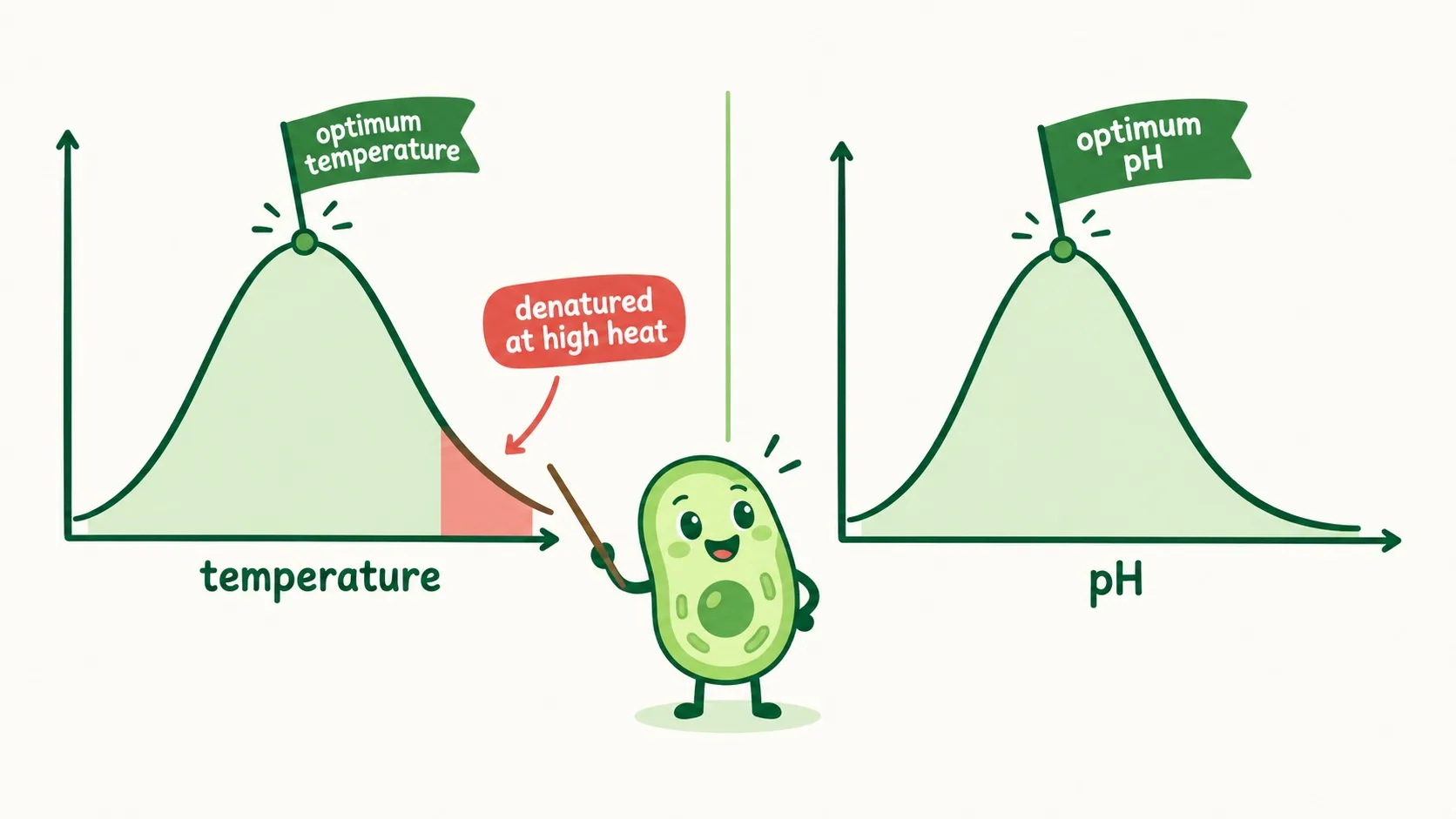
温度升高,反应先变快;超过最适温度,酶的形状被烫坏,活性掉到零,而且不可逆。酸碱也一样:每种酶都有自己的最适 pH,偏酸偏碱都会让它变慢。所以发烧会没胃口、没力气;而胃蛋白酶偏偏喜欢胃酸那种强酸环境,在最适条件下干活最卖力。As temperature rises, the reaction speeds up — until the optimum temperature. Past it, the enzyme's shape gets wrecked, activity drops to zero, and it never recovers. Acidity works the same way: every enzyme has its own optimum pH, and drifting away slows it down. That's why a fever kills your appetite and energy — yet pepsin actually loves the strong acid of stomach juice, where it works hardest.
生活里哪儿能感觉到酶在干活?Where can you feel enzymes at work in daily life?
第 3 步:一口馒头的甜味Step 3: The sweetness of a mouthful of bread
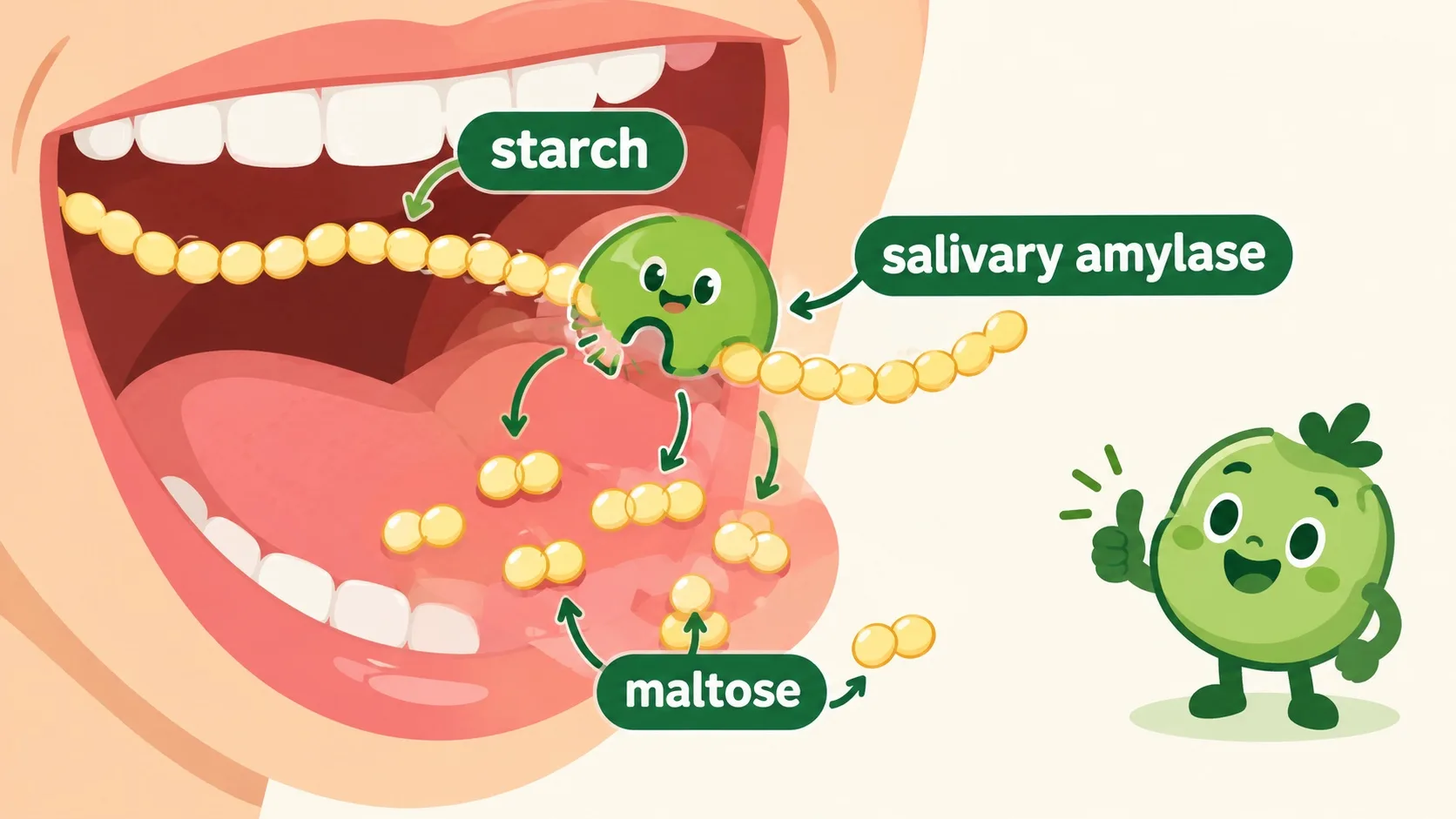
馒头多嚼几下会变甜——唾液里的淀粉酶把没味的淀粉长链,剪成甜甜的小段(麦芽糖)。它的最适温度约 37°C,正好是体温;喝太烫的水、吃太烫的饭,都可能影响它工作。工业上也在用酶:加酶洗衣粉里的酶,专门剪断油渍和污渍里的分子,让衣服洗得更干净。Chew plain bread a bit longer and it turns sweet — salivary amylase snips the tasteless starch chain into sweet little pieces (maltose). Its optimum temperature is about 37°C — exactly body heat. A mouthful of scalding soup can get in its way. Industry uses enzymes too: the enzymes in enzyme washing powder snip apart the molecules in grease and stains so clothes come out cleaner.
🎮 你来当化验员(30 秒)🎮 Your turn: lab technician (30 seconds)
道理讲完了。拖动温度和 pH 旋钮,看反应速率怎么变;再完成 4 张化验单。Theory done. Drag the temperature and pH dials to watch the reaction rate — then finish 4 lab sheets.
一句话记住它:酶 = 锁与钥匙式的加速器;有最适温度和 pH,太高太低都罢工,太烫还会永久失活。Remember it in one line: an enzyme is a lock-and-key accelerator — it has an optimum temperature and pH, quits at the extremes, and heat can denature it for good.
酶是催化剂:不参与消耗、能循环使用,加速上百万倍Enzymes are catalysts: not consumed, used over and over, speeding reactions up a millionfold专一性:一把钥匙开一把锁,一种酶只认一种底物Specificity: one key for one lock — each enzyme accepts only its own substrate有最适温度/pH;高温会永久失活(变性),像鸡蛋煮熟回不去An optimum temperature and pH; high heat denatures it for good — like a cooked egg
内容参考 OpenStax 等公开教材,多来源核对 · AI 生成、人工审核 · 发现错误欢迎指正,帮这片叶子长得更好。Based on OpenStax and other open textbooks, cross-checked across sources · AI-generated, human-reviewed · Spotted a mistake? Tell us — help this leaf grow.
 Back to tree