🗺️ 流行病学:疾病侦探团🗺️ Epidemiology: the Disease Detectives
上一片说,锻炼让你的身体更能打。可为什么有时一人咳嗽,全班跟着请假?只看个人不够,还得看整个人群。🩺 小医生换上侦探装:出发,查案去。Last leaf, exercise made your body a better fighter. But why does one cough sometimes empty a whole classroom? One person isn't enough — you have to watch the whole crowd. 🩺 Dr. Stethoscope puts on a detective coat: let's go solve cases.
第 1 步:看人群,不只看病人Step 1: Watch the crowd, not just the patient
先回答:流行病学到底研究什么?First: what does epidemiology actually study?
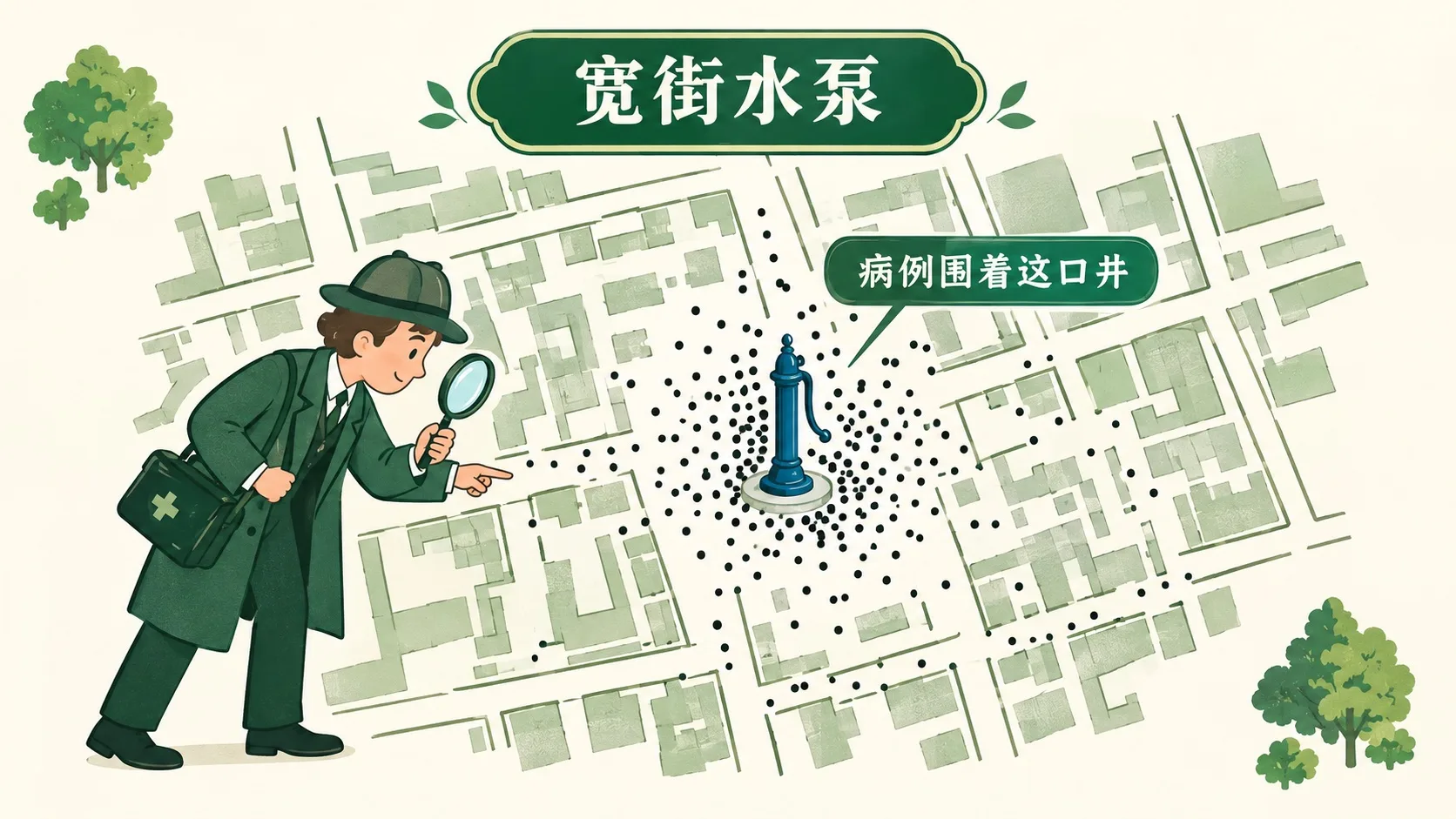
它研究疾病在人群里的分布(谁病了、在哪病、何时病)。1854 年伦敦霍乱爆发,约翰·斯诺把病例一个个标在地图上:黑点密密围着宽街上一口水泵。拔掉泵把手,疫情停了——这就是分布揪出源头的经典一案。It studies how disease is distributed across people — who got sick, where, and when. In the 1854 London cholera outbreak, John Snow dotted every case onto a map: the dots crowded around one Broad Street water pump. Remove the pump handle, stop the outbreak — the classic case of distribution catching the culprit.
找到源头还不够——它传得有多快,会传多远?Finding the source isn't enough — how fast and far does it spread?
第 2 步:传染链与 R₀Step 2: Chains of infection and R0
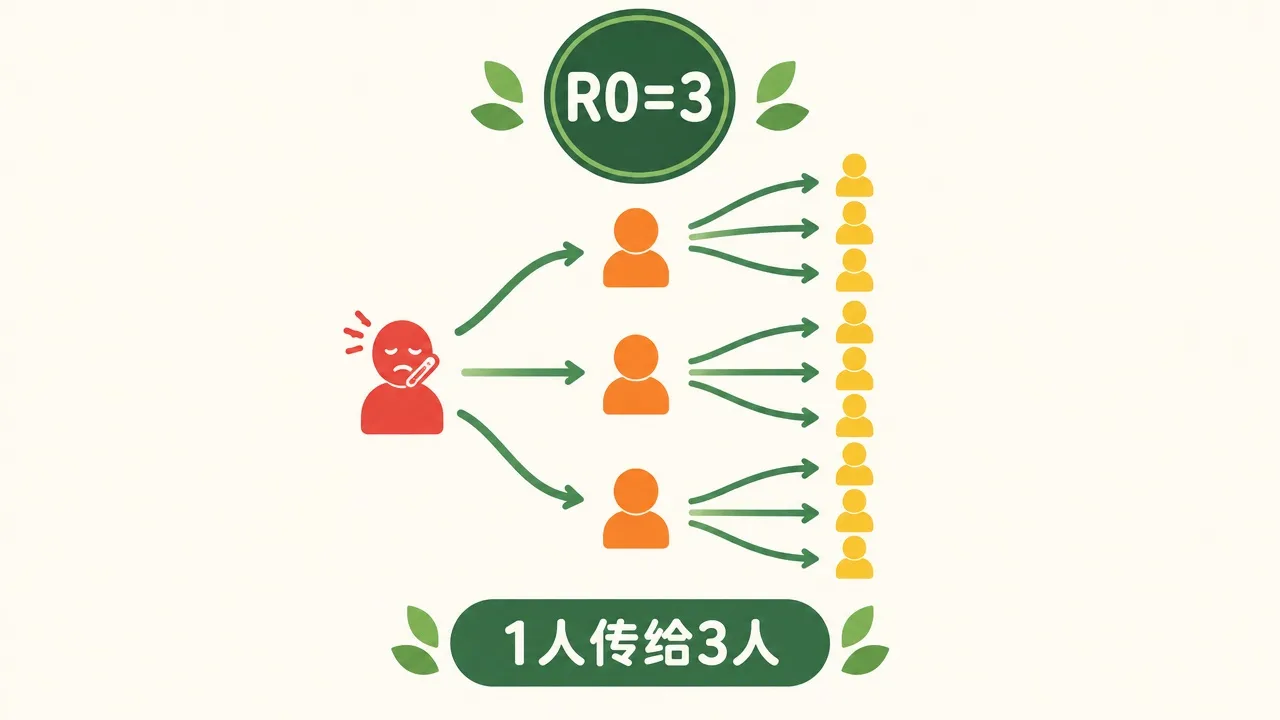
病人传给几个人,再传下去,就织成传染链。R0(读作“阿零”)表示平均 1 个病人传几人:R0=3 就是 1 传 3、3 传 9。R0 小于 1,疫情自己熄火;隔离、戴口罩,都是在把 R0 往下拽。Each case infects a few more, weaving a chain of infection. R0 ("R-naught") is how many people one case infects on average: R0=3 means 1 infects 3, then 9. Below 1, the outbreak dies out by itself; isolation and masks all drag R0 down.
数字摆在眼前就能信吗?侦探的最后一课最关键。Can you trust numbers at face value? The detective's last lesson matters most.
第 3 步:相关不是因果,还要压平曲线Step 3: Correlation isn't causation — and flatten the curve
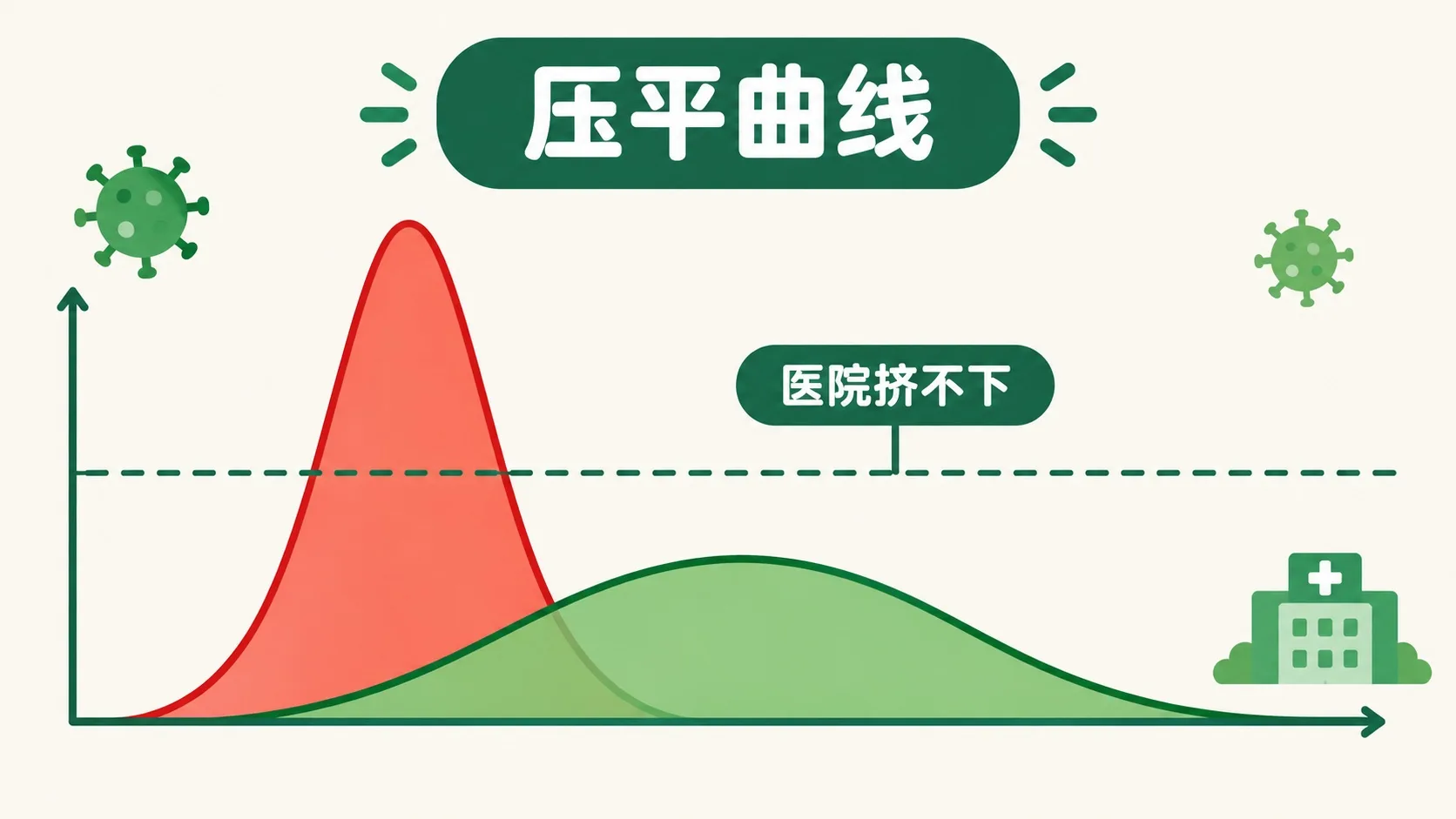
冰淇淋卖得好时溺水也多——能怪冰淇淋吗?不能,元凶是夏天(天热才两者都多)。这叫“相关≠因果”。而我们能做的,是隔离、少聚集,把又高又尖的发病高峰压成又矮又宽,让医院挤不爆。When ice-cream sales rise, drownings rise too — blame the ice cream? No: summer heat drives both. That's "correlation is not causation". What we can do is isolate and gather less, pressing a tall sharp peak of cases into a low wide one, so hospitals never overflow.
🩺 你来当疾病侦探(30 秒)🩺 Your turn: be the detective (30 seconds)
道理讲完了。先拖 R₀ 和隔离滑块,看感染曲线怎么被压平;再闯 4 关:找零号病人,切断传播链。Theory done. First drag the R0 and isolation sliders and watch the curve flatten; then clear 4 levels: find patient zero, cut the chain.
一句话记住它:流行病学 = 人群的疾病侦探:看分布找源头,用 R0 算传播,压平曲线不断链,还分得清相关和因果。Remember it in one line: epidemiology = detectives for crowds: find sources in the distribution, run R0 math, flatten the curve, cut the chain — and never confuse correlation with causation.
分布(谁/哪/何时)能揪出源头:宽街水泵案Distribution (who/where/when) catches sources: the Broad Street pumpR0 = 平均 1 人传几人;隔离把它往下拽,压平曲线R0 = cases per case; isolation drags it down and flattens the curve相关≠因果:先找共同原因,再下结论Correlation isn't causation: look for a shared cause first
内容参考 OpenStax 等公开教材,多来源核对 · AI 生成、人工审核 · 发现错误欢迎指正,帮这片叶子长得更好。Based on OpenStax and other open textbooks, cross-checked across sources · AI-generated, human-reviewed · Spotted a mistake? Tell us — help this leaf grow.
 Back to tree