🦗 食物链:谁吃谁的能量快递🦗 Food Chain: the Energy Delivery Route
上一片里,我们认清了生态系统的三个工种。这一片跟着能量走一趟:太阳的能量怎么从草出发,被一站一站「快递」到老鹰嘴里?Last leaf, we met the three crews of an ecosystem. This leaf follows the energy itself: how does energy from the sun set off from the grass and travel, stop by stop, until it reaches the eagle?
先看草原上最经典的一条接力线。Start with the classic relay on the grassland.
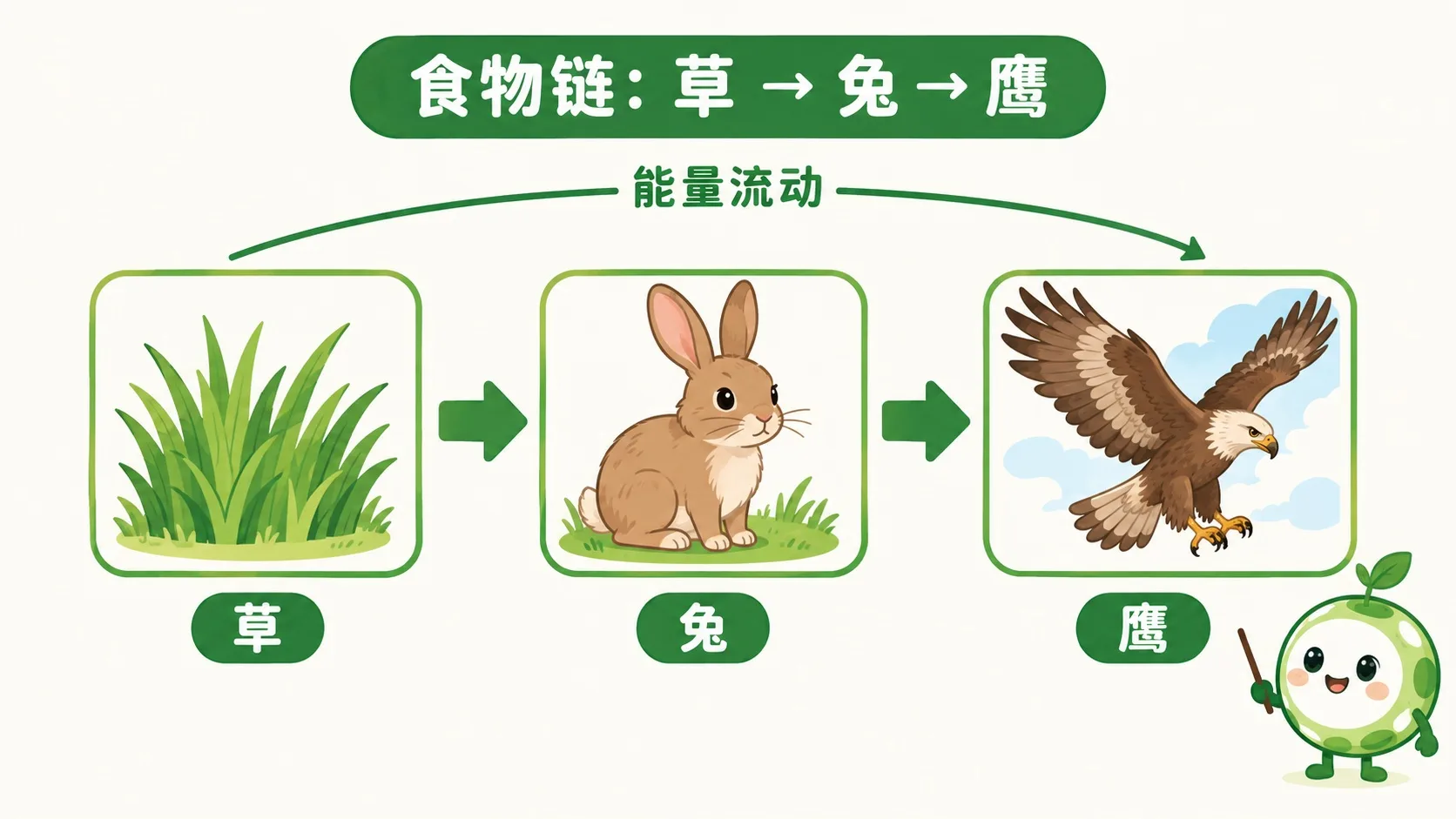
草 → 兔 → 鹰,这就是一条食物链。注意箭头的方向:它不是「谁吃谁」的嘴巴朝向,而是能量流动的方向——草把阳光装进身体,兔子吃掉草,能量就传给了兔子,再传给鹰。起点永远是生产者,因为只有它能用阳光自己做食物;别的生物都得吃现成的。Grass → rabbit → eagle: that's a food chain. Watch the arrow — it's not the direction of a biting mouth, but the direction energy flows. Grass packs sunlight into its body, the rabbit eats the grass, energy moves to the rabbit, then to the eagle. The start is always a producer, because only producers cook their own food from sunlight; everyone else eats ready-made meals.
可现实里,兔子不只吃一种草,蛇也盯着兔子——一条链够用吗?But in reality, rabbits eat more than one plant, and snakes watch the rabbits too — is one chain enough?
第 2 步:很多条链,织成一张网Step 2: Many chains weave into a web
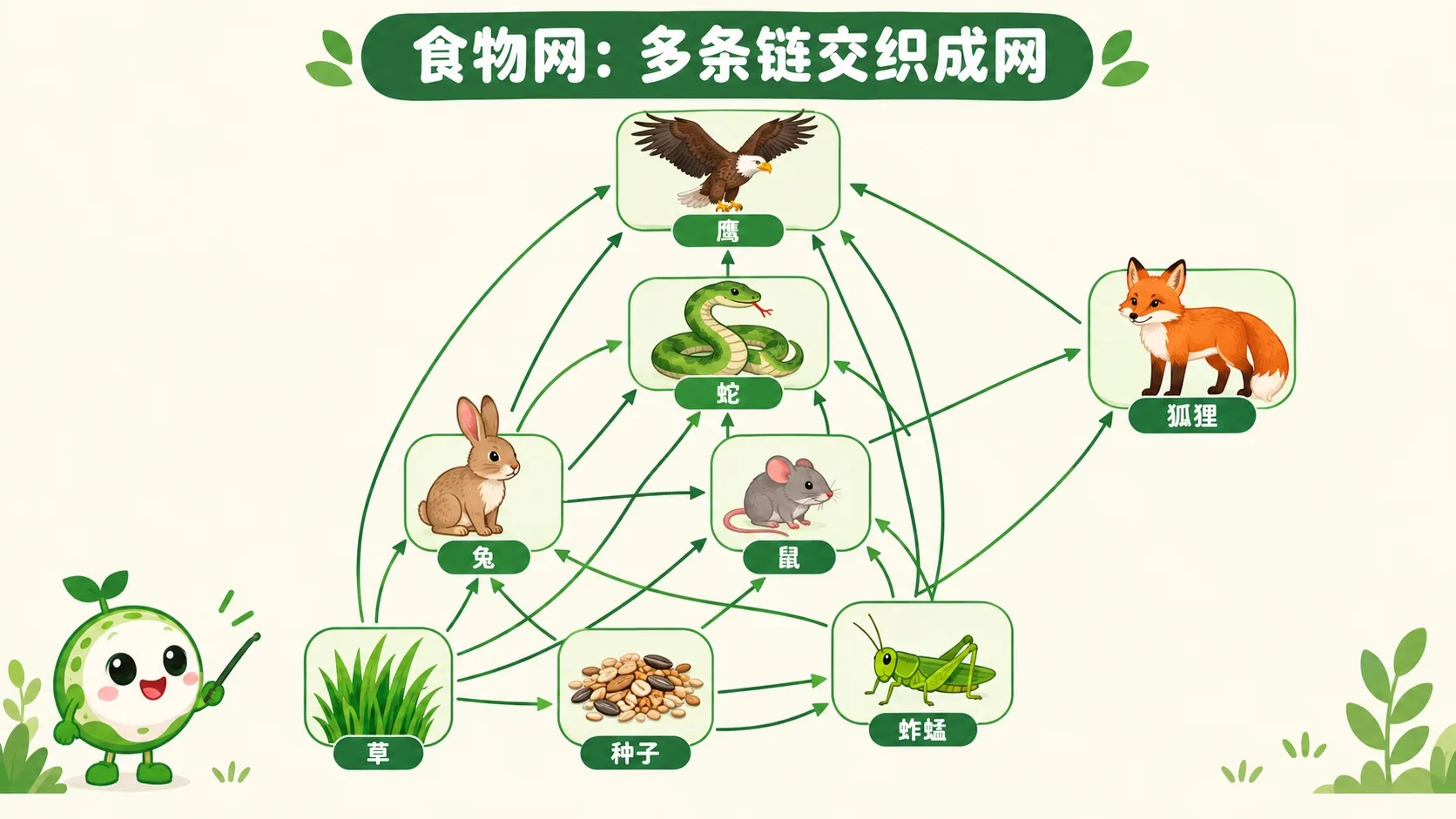
把草原上所有的「谁吃谁」都画出来,线条会互相交叉,织成一张食物网:草和种子喂饱蚱蜢、兔子和老鼠;它们又被蛇、鹰和狐狸盯上。食物网越密,系统越稳——某一种食物少了,捕食者还能换菜单,不至于全线崩掉。Draw every “who eats whom” on the grassland and the lines cross and weave into a food web: grass and seeds feed grasshoppers, rabbits and mice; those in turn are hunted by snakes, eagles and foxes. The denser the web, the steadier the system — when one dish runs short, a predator can change the menu instead of collapsing.
能量沿着链条传下去,是全须全尾地一站站往下送吗?Does energy travel the chain intact, stop after stop?
第 3 步:能量快递,一站比一站小Step 3: Energy delivery — smaller at every stop
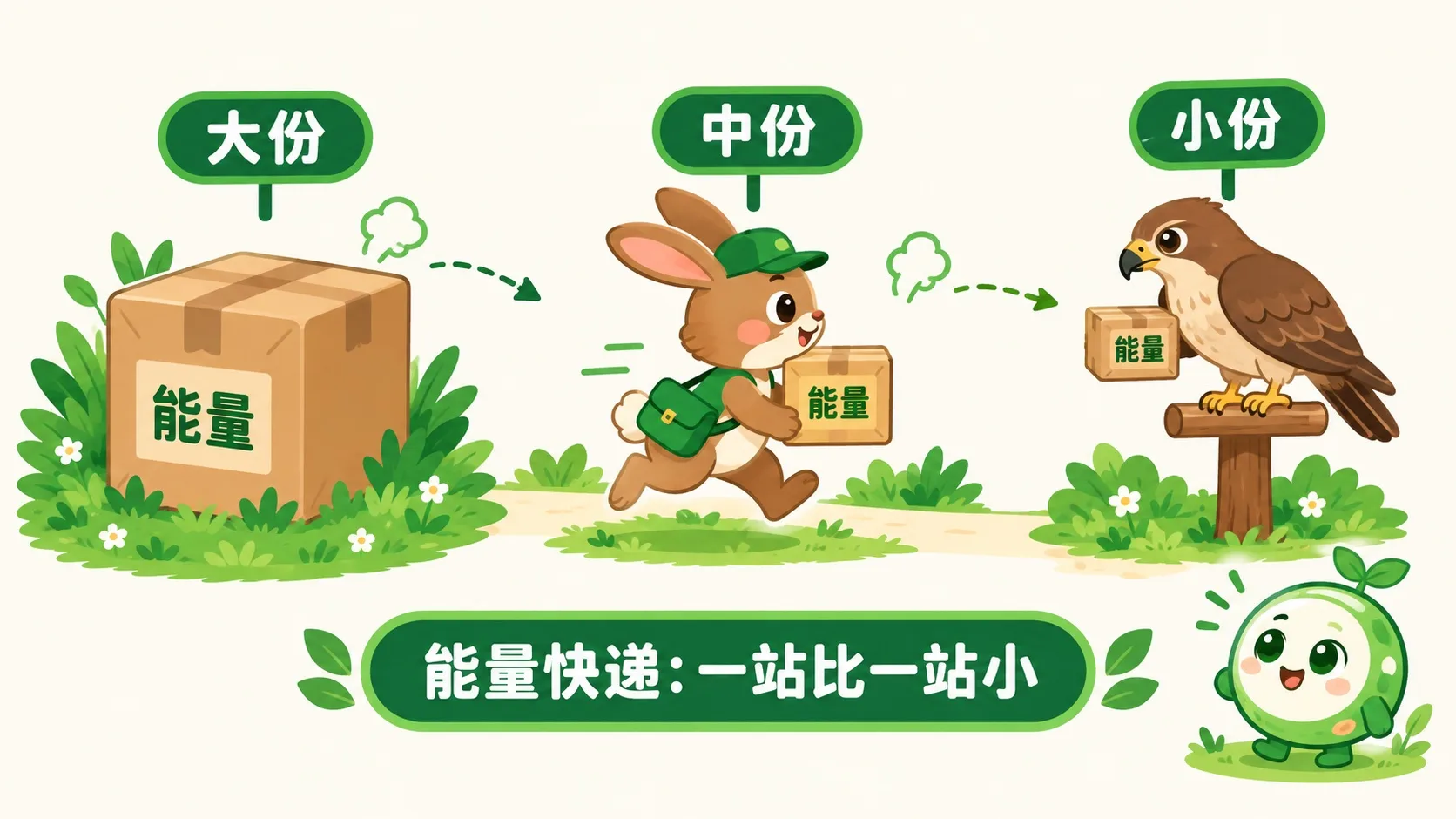
每传一级,能量都会「漏」掉大半:动物要呼吸、要奔跑、要保暖,大部分能量变成热散掉了,只剩一小份(大约十分之一)传给下一站。所以链条一般 4~5 级就到头,顶端的鹰数量也最少。「大鱼吃小鱼」其实就是能量跨级点餐——但级数越往上,能接到的快递越小。At every transfer, most energy leaks away: animals breathe, run and stay warm, so much of it escapes as heat and only a small share (roughly one tenth) reaches the next stop. That's why a chain runs out after about 4–5 levels, and top predators like the eagle are the fewest. “Big fish eat small fish” is energy ordering across levels — but the higher you go, the smaller the parcel.
🎮 你来搭一条食物链(2 分钟)🎮 Your turn: build a food chain (2 minutes)
道理讲完了,动手试试:把草、兔、鹰按顺序接上链条。第 4 关藏着两张「编外卡」——看看你能不能识破它们,说出为什么。Theory done. Link grass, rabbit and eagle in order. The last level hides two “outsiders” — can you spot them and say why?
一句话记住它:食物链 = 谁吃谁排成一条队,箭头指向能量流动的方向;生产者是起点,能量一站比一站少。Remember it in one line: a food chain lines up who eats whom — arrows point the way energy flows, producers take the start, and every stop hands on a smaller parcel.
食物链从生产者开始(草 → 兔 → 鹰);箭头方向 = 能量流动方向,不是嘴巴的方向A food chain starts with a producer (grass → rabbit → eagle); arrows show energy flow, not biting direction现实是一张食物网:多条链交织,网越密,生态系统越稳Reality is a food web: many chains woven together — the denser it is, the steadier the ecosystem能量每传一级只剩一小份,链条一般 4~5 级到头;分解者(蘑菇、蜣螂)不站进这条队Only a small share of energy passes each level, so chains run 4–5 links; decomposers (mushrooms, dung beetles) never stand in line
内容参考 OpenStax 等公开教材,多来源核对 · AI 生成、人工审核 · 发现错误欢迎指正,帮这片叶子长得更好。Based on OpenStax and other open textbooks, cross-checked across sources · AI-generated, human-reviewed · Spotted a mistake? Tell us — help this leaf grow.
 Back to tree