🧊 摩擦力:接触面上的“隐形刹车”🧊 Friction: the invisible brake on every surface
上一片说,物体顽固地保持现状。可滑出去的冰壶总会停下。接触面上藏着一个“隐形刹车”,它就是摩擦力。Last leaf, objects stubbornly kept their state. Yet a sliding stone always stops. Between touching surfaces hides an invisible brake — friction.
第 1 步:两个面互相“卡住”Step 1: Two surfaces catching on each other
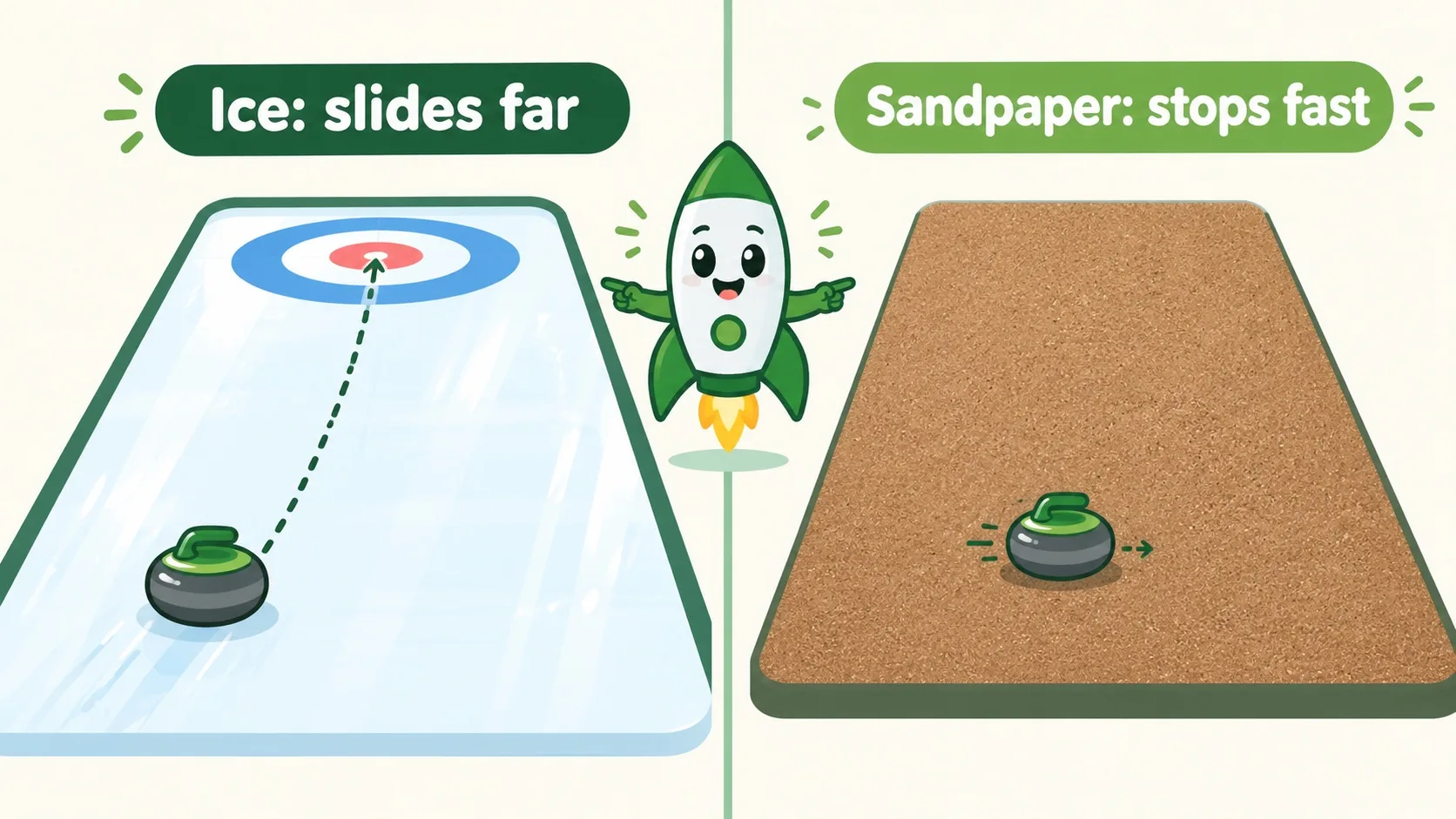
先比较冰面和砂纸:同样一推,结果完全不同。Compare ice and sandpaper: the same push, two very different outcomes.
把任何表面放大,都是凹凸不平的。两个面贴在一起,凸起互相卡住、互相拖拽。这股拖拽力就是摩擦力。没滑动时叫静摩擦,滑动起来叫滑动摩擦,滚起来叫滚动摩擦。拖着走费劲,滚着走省力得多。Zoom into any surface and it is bumpy. When two surfaces touch, their bumps catch and drag on each other — that dragging is friction. Before sliding starts it is static friction; while dragging, sliding friction; when wheels turn, rolling friction. Dragging is hard work — rolling is far easier.
摩擦力能变大变小,靠什么调节?What turns friction up or down?
第 2 步:两个调节钮Step 2: Two dials for friction
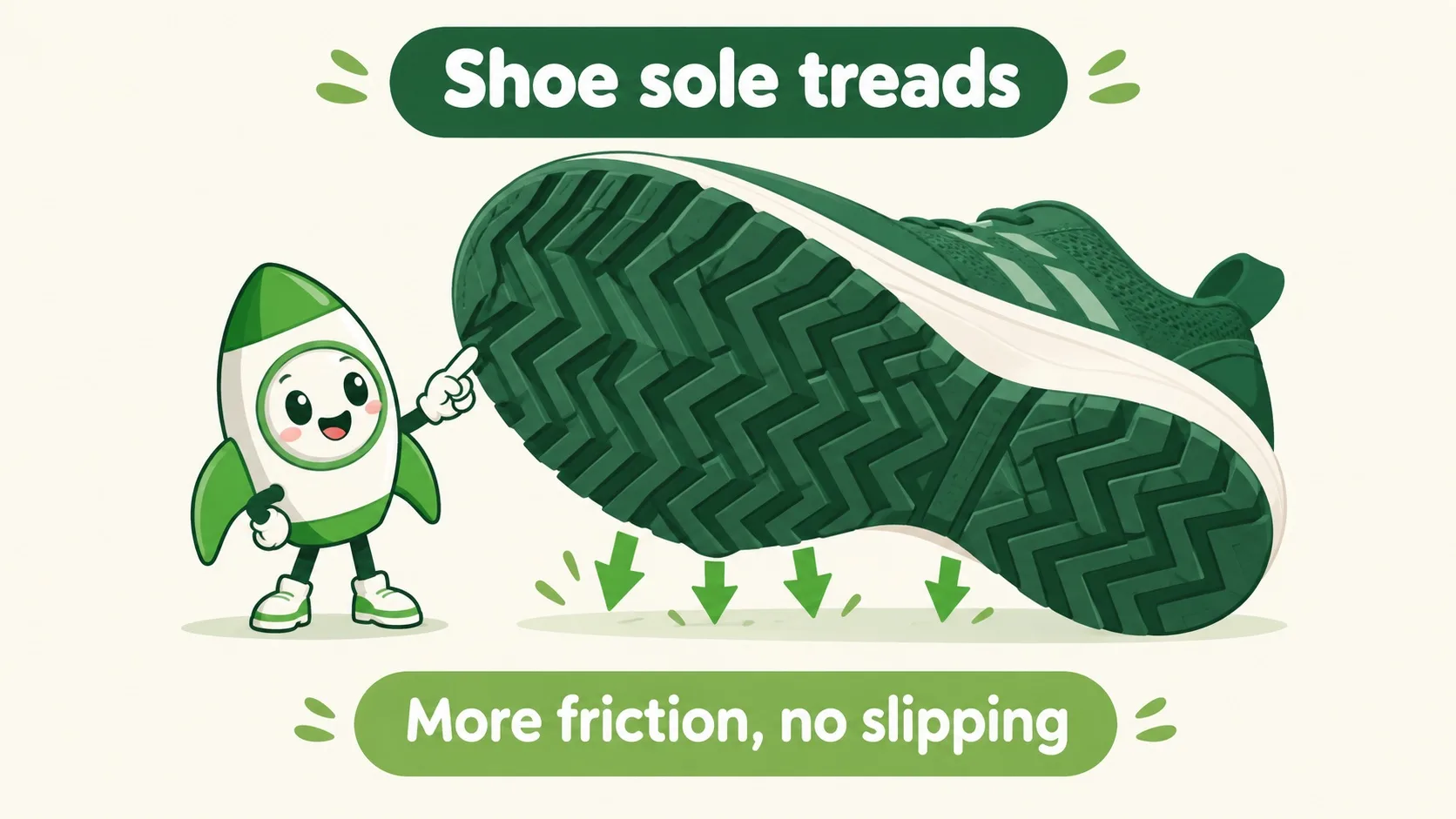
钮一:表面越粗糙,摩擦越大。鞋底花纹就是为了更粗糙,走路才不滑。钮二:压力越大,摩擦越大——按得越紧,橡皮擦得越干净。走路、刹车、拧瓶盖都离不开摩擦,这些是“有益摩擦”。Dial one: rougher surfaces, more friction — shoe soles have treads for exactly that, so you don't slip. Dial two: more pressure, more friction — press harder and the eraser cleans better. Walking, braking and opening jars all depend on friction — that's helpful friction.
摩擦也不全是朋友——在机器里,它就成了敌人。Friction isn't always a friend — inside machines it turns into an enemy.
第 3 步:有用的留住,有害的赶走Step 3: Keep it where it helps, lose it where it hurts
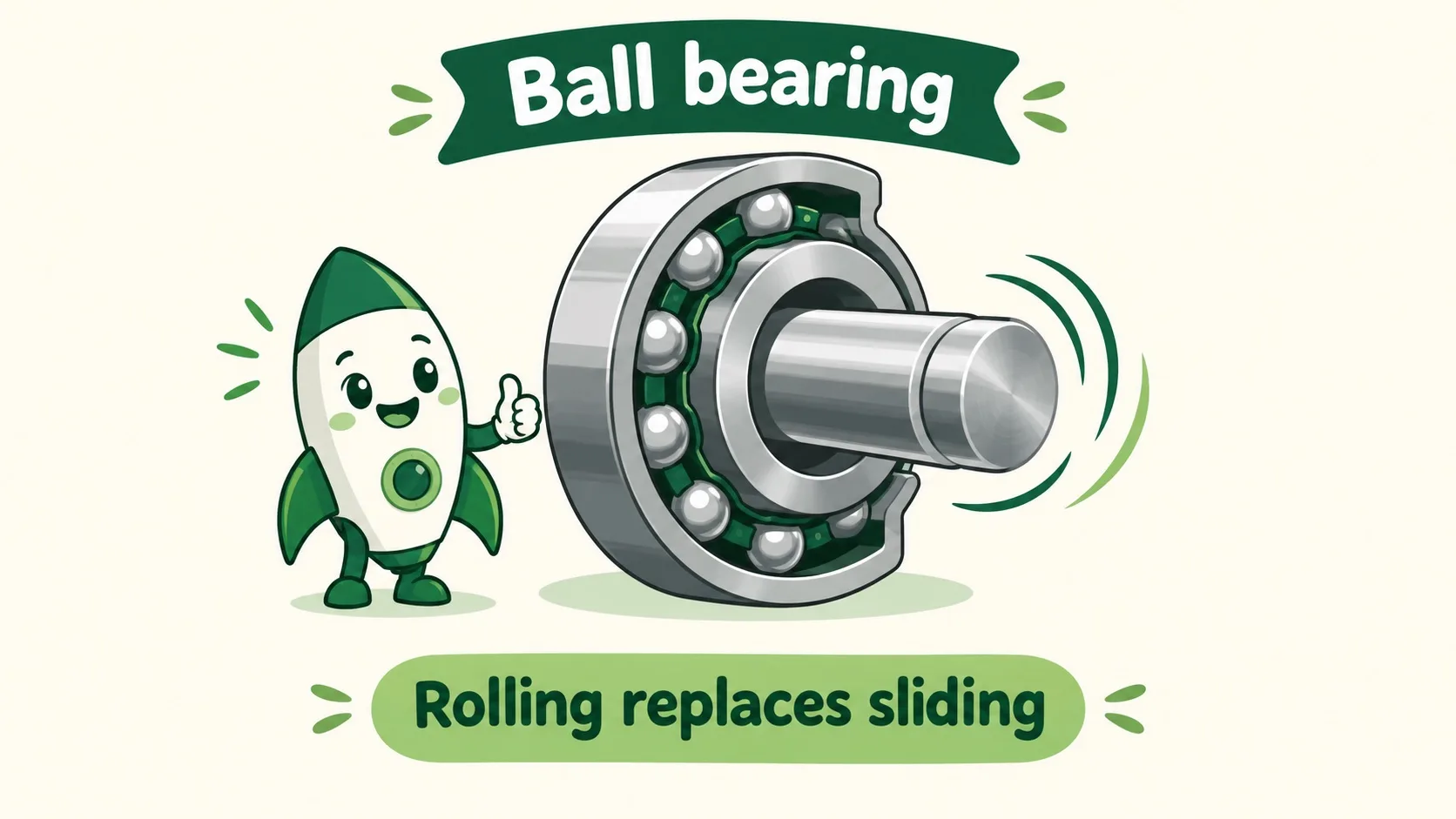
机器零件互相摩擦会发热、磨损、白白耗能,这时要减小它:加润滑油把凹凸隔开、用滚珠把滑动变滚动、把表面打磨光滑。滚珠轴承就是“滚动的智慧”,让轮子转得又快又省力。Rubbing machine parts heat up, wear out and waste energy — so we cut friction down: oil separates the bumps, ball bearings turn sliding into rolling, and polished surfaces glide. The ball bearing is rolling wisdom: wheels spin fast and easy.
🎮 你来当预测员(30 秒)🎮 Your turn: predictor (30 seconds)
道理讲完了。先推箱子、调地面粗糙度,看它滑多远;再完成 4 关地面预测。Theory done. First push the box on different floors and watch the distance; then finish 4 floor predictions.
一句话记住它:摩擦力是接触面上的“隐形刹车”,大小看两件事——表面粗糙程度和压力大小。Remember it in one line: friction is the invisible brake between surfaces, set by two things — how rough the surface is and how hard the surfaces press.
内容参考 OpenStax 等公开教材,多来源核对 · AI 生成、人工审核 · 发现错误欢迎指正,帮这片叶子长得更好。Based on OpenStax and other open textbooks, cross-checked across sources · AI-generated, human-reviewed · Spotted a mistake? Tell us — help this leaf grow.
 Back to tree