🍄 真菌:蘑菇只是冰山一角🍄 Fungi: the Mushroom Is Just the Tip of the Iceberg
上一片里,微生物中的“其他”类藏着两位老熟人:酵母和霉菌。其实超市里的蘑菇、面包上的绿毛、发面用的酵母,都是一家人——真菌。🦠 小细胞今天带你挖开地面,看看真菌的真身。Last leaf, two old friends hid inside the microbes' "others" group: yeast and mold. In fact the mushrooms at the market, the green fuzz on bread and the yeast in dough are all one family — fungi. 🦠 Little Cell is here to dig into the ground and show you what a fungus really is.
第 1 步:真菌不是植物:真身藏在地下Step 1: Fungi are not plants: the real body hides underground
蘑菇安安静静站在那儿,长得像植物,它为什么不算植物?A mushroom just stands there quietly like a plant — so why isn't it one?
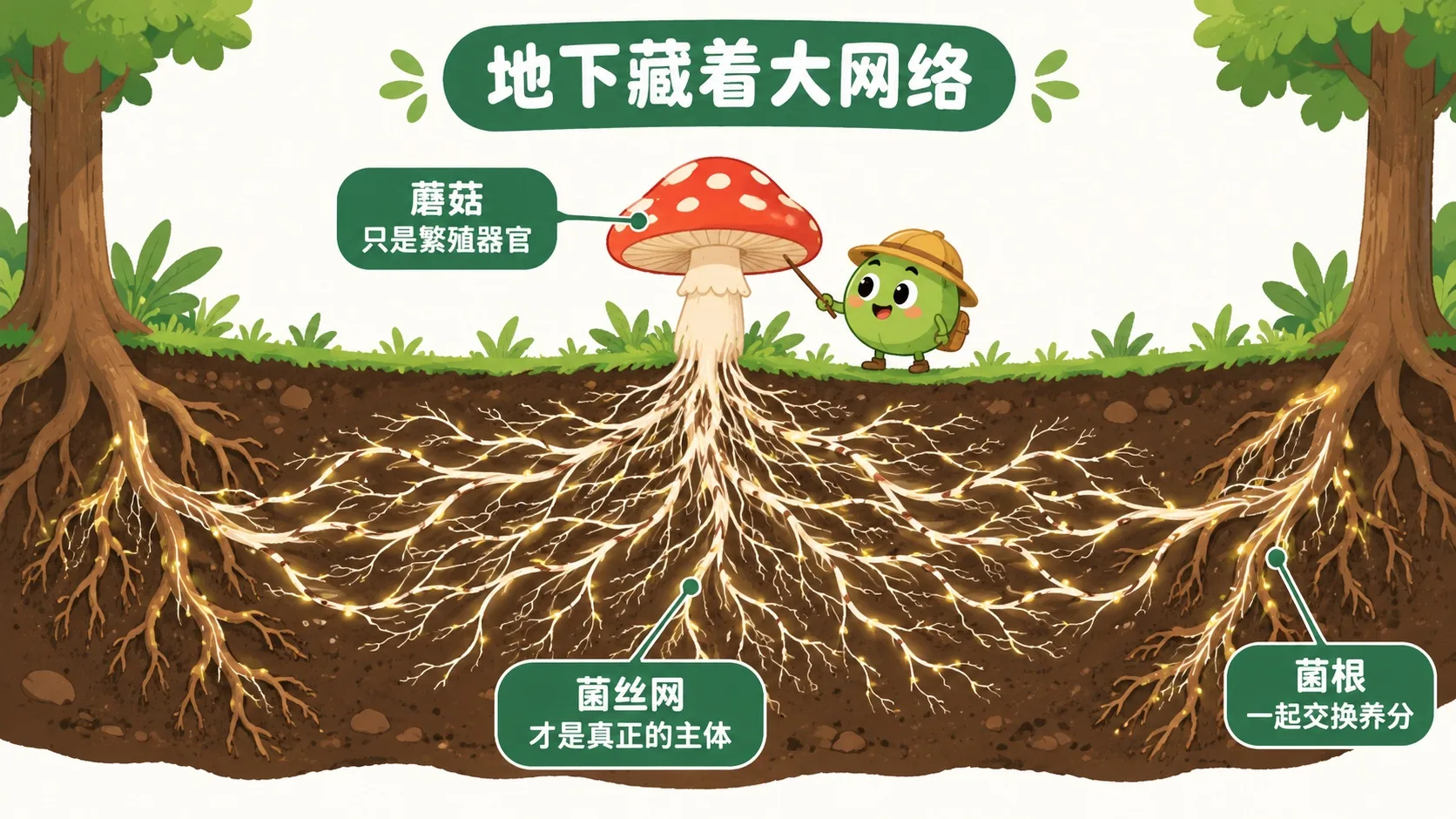
植物有叶绿体,晒晒太阳就能自己造饭;真菌没有叶绿体,只能靠分解吸收——把落叶、枯木里的养分“喝”进来。你看到的蘑菇只是它的繁殖器官,像果树上的果子;真正的主体是地下那张庞大的菌丝网,能铺开好几个操场那么大。菌丝还常缠上树根,和树做起以物换物的买卖(菌根);地衣则是真菌和藻类合租的小屋。Plants have chloroplasts and cook their own food from sunlight; fungi have none, so they live by decomposing and absorbing — drinking nutrients out of fallen leaves and dead wood. The mushroom you see is only its reproductive organ, like fruit on a tree. The real body is the vast web of mycelium underground, wide enough to cover several playgrounds. Those threads often wrap around tree roots, trading nutrients in a fair swap (mycorrhiza); lichens are little shared apartments of fungi and algae.
菌丝网离我们有点远,真菌里有没有天天见面的老熟人?The mycelium web feels far away — is there a fungus we meet every day?
第 2 步:酵母:看不见的烘焙师Step 2: Yeast: the invisible baker
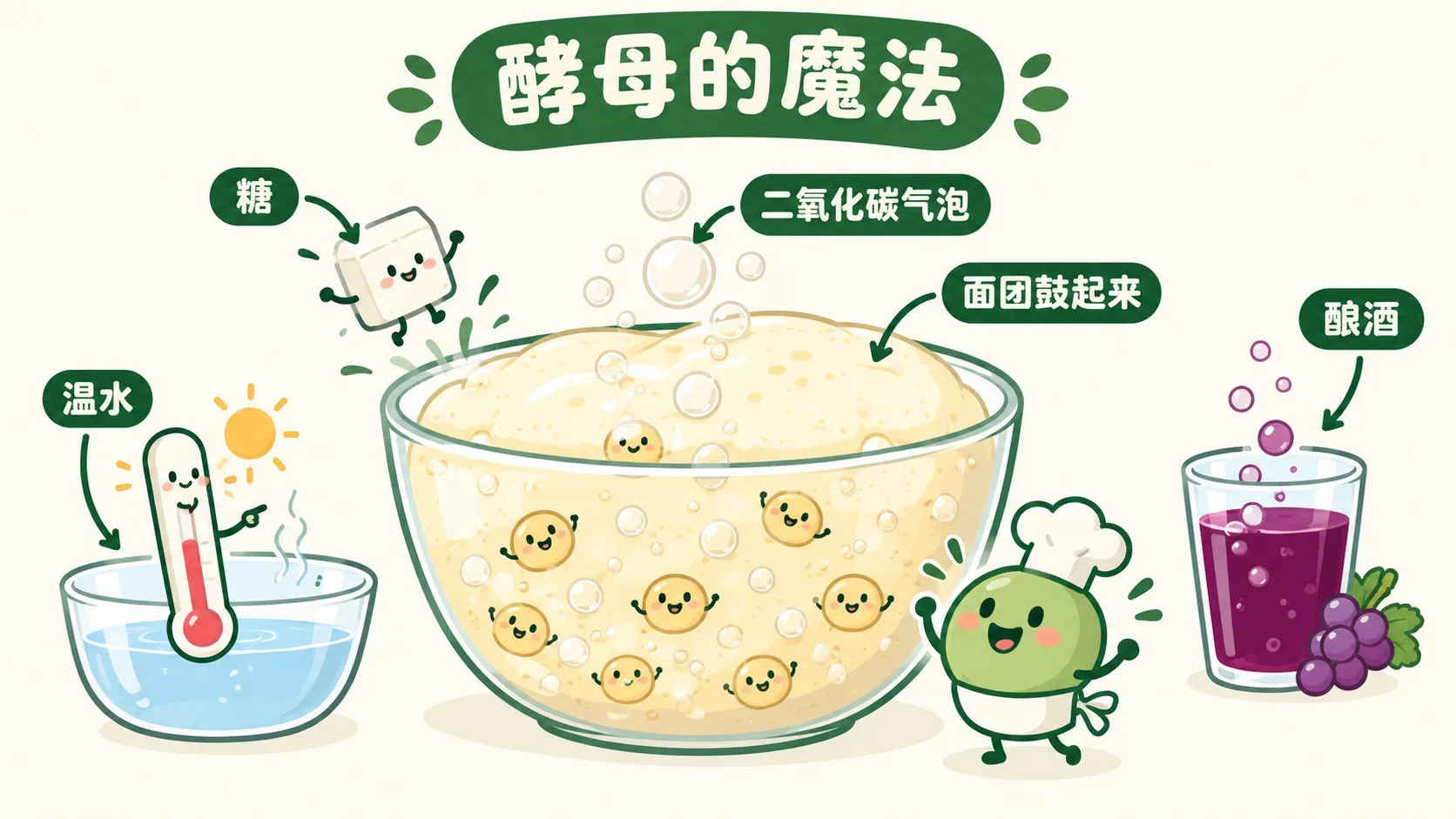
有,酵母。它是单细胞的真菌,小到看不见,却承包了你的早餐:面团里的酵母吃糖、吹出二氧化碳气泡,把面团顶得鼓鼓的;没有氧气时,它还能把葡萄汁里的糖变成酒精——酿酒也靠它。酵母很讲究:温度太低它睡着,太热它罢工,30~40 度的温水和糖是它的最爱。游戏里你可以亲手调一调配方。Yes — yeast. It is a single-celled fungus, too small to see, yet it makes your breakfast: in dough it eats sugar and blows carbon dioxide bubbles that puff the dough up; without oxygen it can turn the sugar in grape juice into alcohol — winemaking runs on it too. Yeast is picky: too cold and it falls asleep, too hot and it quits — warm water at 30–40°C and sugar are its favourites. In the game you can tune the recipe yourself.
发霉的面包和橘子总让人皱眉——霉菌难道只会搞破坏?Moldy bread and oranges make us frown — do molds only cause trouble?
第 3 步:霉菌:从发霉到救命药Step 3: Mold: from spoiled food to a life-saving drug
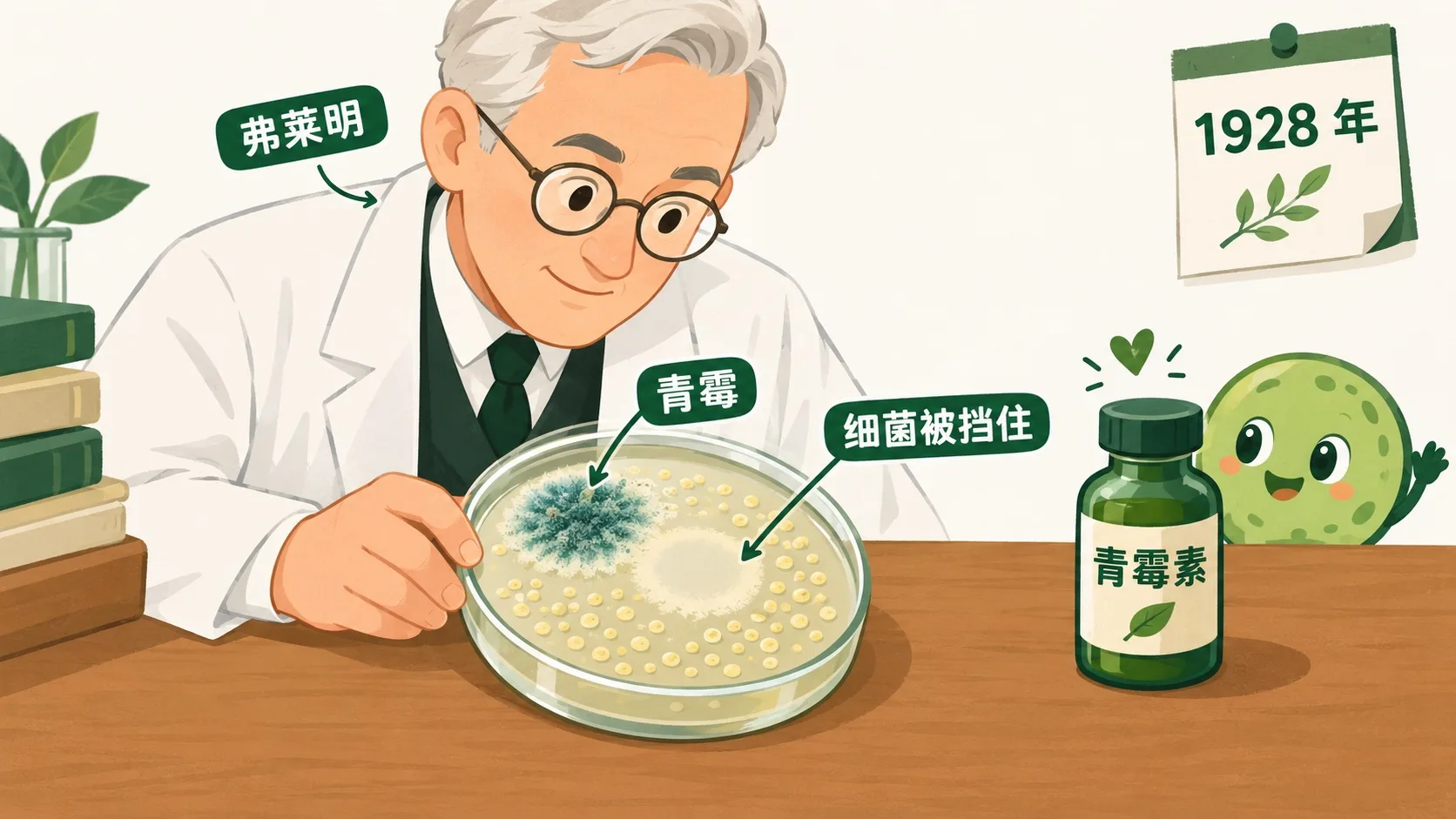
也不全是。1928 年,弗莱明发现一个培养皿里的青霉四周,细菌都退避三舍——青霉分泌的青霉素能杀死细菌。它后来成了救命的抗生素,救了无数人。日常生活里要记住另一面:发霉的食物要整个丢掉,切掉霉斑也不能吃;野外颜色鲜艳、带菌环菌托的蘑菇多半有毒,不认识的野生蘑菇一口都别尝。Not entirely. In 1928 Fleming noticed that around a patch of penicillium mold in a petri dish, the bacteria kept their distance — the penicillin the mold released could kill them. It became a life-saving antibiotic and saved countless lives. But remember the other side for daily life: moldy food must be thrown away whole, not just trimmed; and wild mushrooms that are brightly coloured, with a ring on the stem and a cup at the base, are often toxic — never taste a wild mushroom you cannot identify.
🎮 进真菌实验室做两个实验(1 分钟)🎮 Step into the fungi lab for two experiments (1 minute)
道理讲完了,轮到你了:先帮酵母调出冒泡的发酵配方,再当一次蘑菇鉴定师。Theory done — first tune a bubbling yeast recipe, then work as a mushroom inspector.
一句话记住它:真菌不是植物:它靠分解吸收过日子,地下菌丝网才是主体,蘑菇只是它露在地面的“果实”。Remember it in one line: a fungus is not a plant — it lives by decomposing and absorbing, its mycelium web underground is the real body, and a mushroom is just the "fruit" it shows above ground.
没有叶绿体,靠分解吸收;是生态系统里的分解者No chloroplasts: fungi decompose and absorb — nature's decomposers蘑菇 = 繁殖器官;真正的身体是地下菌丝网,还能与树根、藻类共生A mushroom is a reproductive organ; the real body is the underground mycelium, often living with roots and algae酵母发面酿酒;青霉带来青霉素;发霉食物整个丢,野生蘑菇别乱吃Yeast raises bread and makes wine; penicillium gave us penicillin; toss moldy food and never eat wild mushrooms blindly
内容参考 OpenStax 等公开教材,多来源核对 · AI 生成、人工审核 · 发现错误欢迎指正,帮这片叶子长得更好。Based on OpenStax and other open textbooks, cross-checked across sources · AI-generated, human-reviewed · Spotted a mistake? Tell us — help this leaf grow.
 Back to tree