田里的故事讲完了,🩺 小医生现在带你进人体:从这片开始认识“循环与呼吸”。第一位主角是心脏——一块从不休息的肌肉。Field stories done — Doc now takes you into the human body, starting the “circulation & respiration” branch. First up: the heart, a muscle that never rests.
第 1 步:四腔两泵Step 1: Four chambers, two pumps
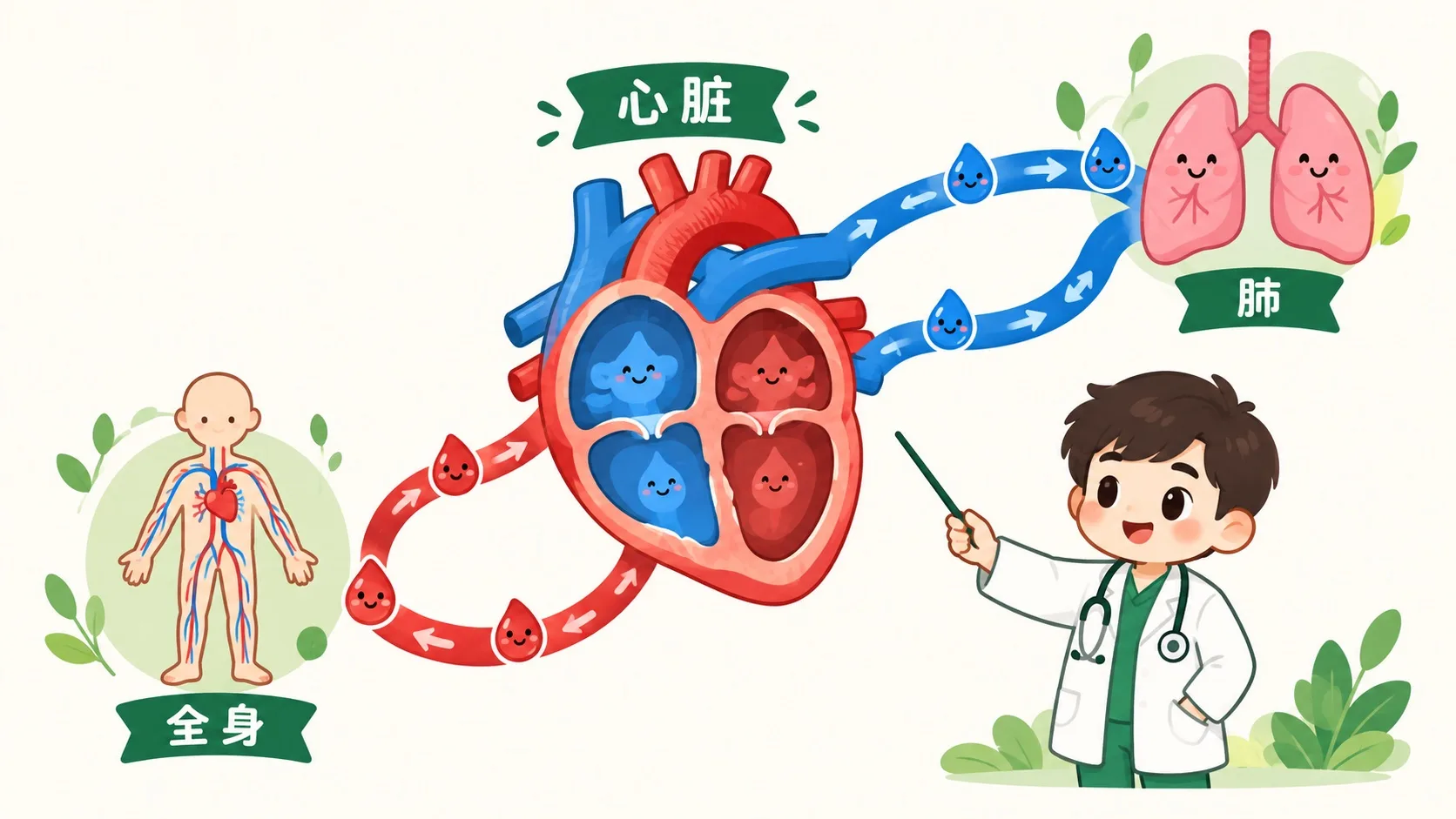
先打开心脏看看它内部的构造。Let's open up the heart and look inside.
心脏里是 4 个腔:上面两个叫“心房”,负责接血;下面两个叫“心室”,负责往外泵。它其实是两台泵:右边的泵把缺氧血送去肺里“充氧”,左边的泵把富氧血送往全身。两台泵同步跳动,血液就在“心→肺→心→全身”这条环线上日夜奔跑。Inside are 4 chambers: two atria on top receive blood; two ventricles below pump it out. It's really two pumps in one: the right pump sends oxygen-poor blood to the lungs to reload, the left pump sends oxygen-rich blood to the whole body. Beating in sync, they keep blood running the loop heart → lungs → heart → body, day and night.
它干得卖不卖力,外面怎么知道?How do we know how hard it's working, from outside?
第 2 步:听,“咚——哒”Step 2: Listen — “lub-dub”
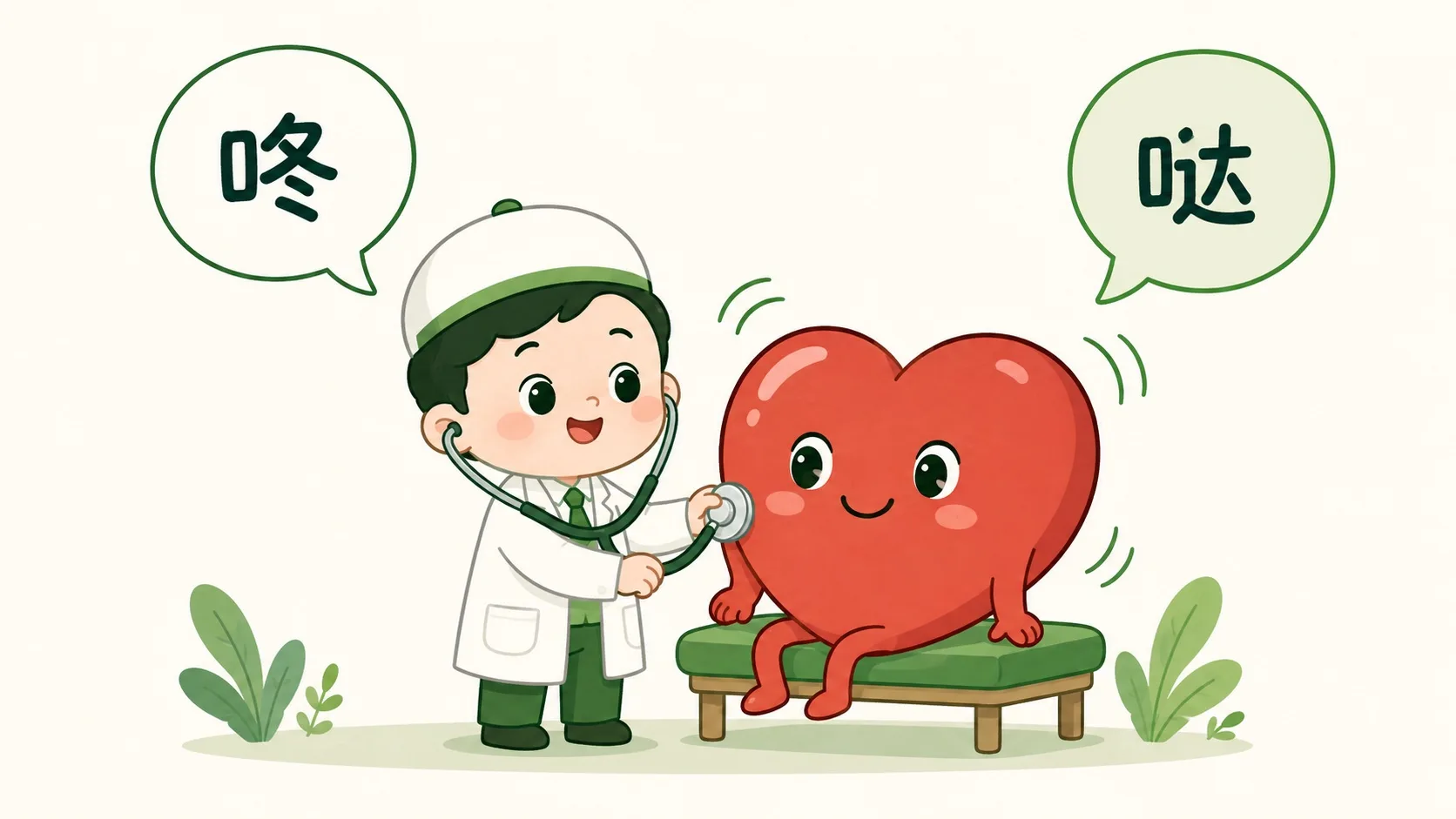
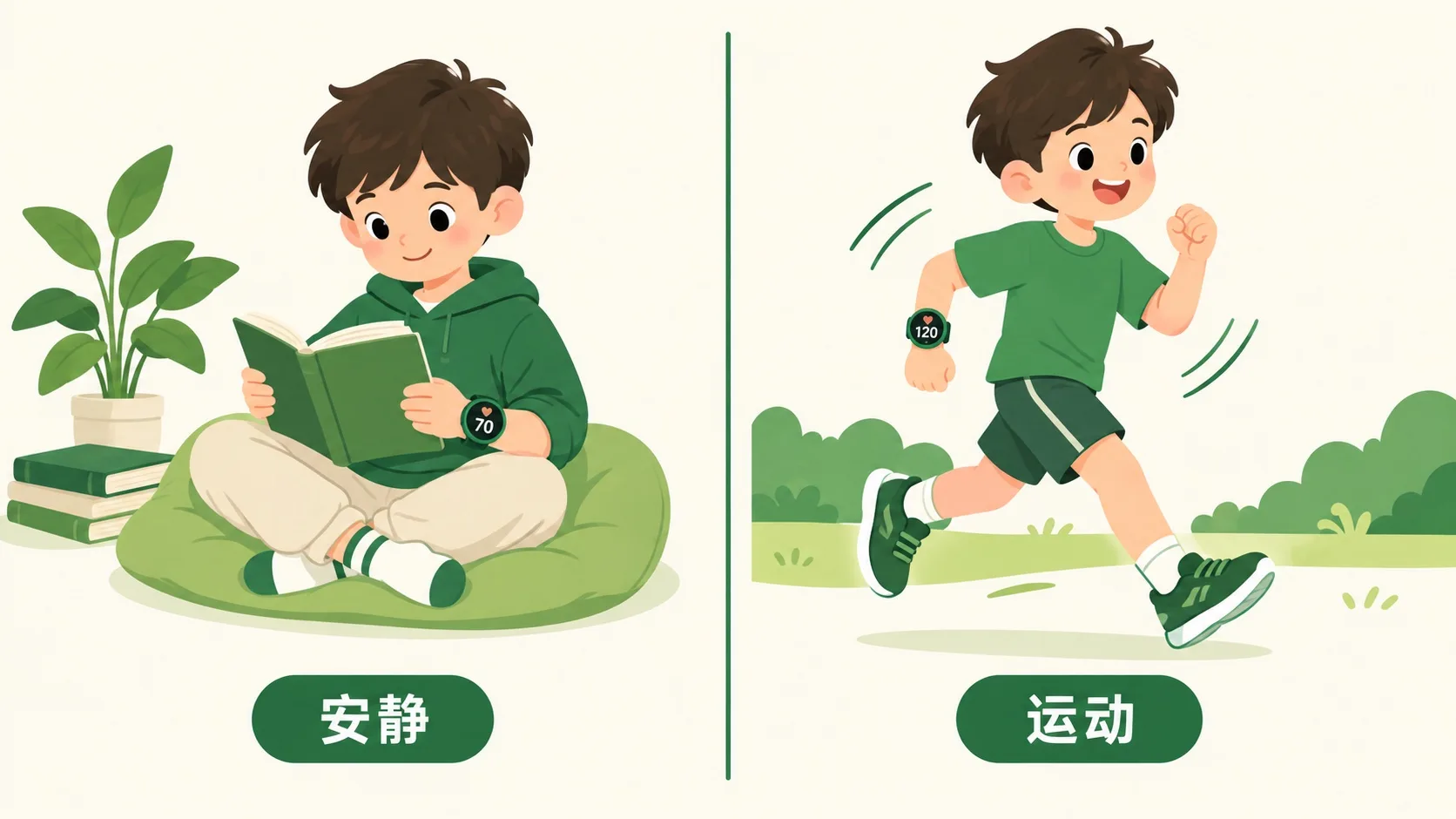
用听诊器贴在胸口,能听到有节奏的两声:“咚”是心室用力收缩泵血,“哒”是瓣膜关门挡住倒流。安静时心脏每分钟跳 60~100 次,小孩新陈代谢快,跳得比大人更勤。Press a stethoscope to the chest and you hear two rhythmic sounds: “lub” is the ventricles squeezing blood out; “dub” is valves snapping shut against backflow. At rest the heart beats 60–100 times a minute; kids' hearts beat even faster.
跑步的时候,它有什么变化?And what happens when you run?
第 3 步:运动心跳与一生工作量Step 3: Exercise heart rate and a lifetime of work
跑步时肌肉急需氧气,心率立刻升到 120~160。心脏每次跳动约泵出 70 毫升血,一分钟就是 5 升上下——一天下来约 7000 升,差不多装满一辆油罐车。一辈子跳 25 亿~30 亿次,从不请一天假。Running muscles demand oxygen, so heart rate jumps to 120–160. Each beat moves about 70 mL — roughly 5 liters a minute, some 7000 liters a day: a full tanker truck. Over a lifetime it beats 2.5–3 billion times, without a single day off.
🎮 你来管心率(30 秒)🎮 Your turn: run the heart rate (30 seconds)
道理讲完了。小医生的泵血实验室开门了:拖滑块调心率,完成 4 个值班任务。Theory done. Doc's pump lab is open: drag the heart-rate slider and finish 4 shifts.
一句话记住它:心脏 = 四腔两泵:右边泵血去肺充氧,左边泵血去全身;安静每分钟跳 60~100 次,运动时加速,一辈子跳几十亿次不停歇。Remember it in one line: the heart is four chambers and two pumps — right side sends blood to the lungs, left side to the body; 60–100 beats a minute at rest, faster in motion, billions of beats in a lifetime.
四腔两泵:心房接血、心室泵血;右泵去肺、左泵去全身Four chambers, two pumps: atria receive, ventricles pump; right to lungs, left to body心音两声:“咚”= 心室泵血,“哒”= 瓣膜关门;静息心率 60~100 次/分Two heart sounds: “lub” = ventricles pumping, “dub” = valves closing; resting rate 60–100 bpm每次泵约 70 mL,一分钟约 5 升;运动时心率升到 120~160About 70 mL per beat, ~5 L a minute; exercise pushes heart rate to 120–160
内容参考公开教材与科普资料,多来源核对 · AI 生成、人工审核 · 发现错误欢迎指正,帮这片叶子长得更好。Based on open textbooks and science resources, cross-checked across sources · AI-generated, human-reviewed · Spotted a mistake? Tell us — help this leaf grow.
 Back to tree