🏖️ 比热容:为什么海边白天不烫、晚上不冷🏖️ Specific Heat: why the seaside stays mild
上一片里,小火箭知道了改变内能要靠做功或热传递;可一次热传递到底会搬走多少能量?它带着问题来到海边,刚一落脚,就被沙滩烫得跳了起来。Last leaf, the little rocket learned that internal energy changes by doing work or by heat transfer. But how much energy does a transfer actually carry? It took the question to the seaside — and the sand burned its feet.
第 1 步:同晒一天,沙滩烫脚海水却凉Step 1: Same sun all day — sand scorches, sea stays cool
先来看看海边这个怪现象。Let's start with a strange seaside fact.
一样大的太阳、一样晒一整天:沙滩烫得让人踮脚,海水却凉丝丝。傍晚再摸一摸:沙滩先凉了,海水反倒温温的。同样多的阳光,为什么升温和降温差这么多?答案藏在两种物质的「比热容」里。Same sun, same whole day of sunshine: the beach scorches your feet while the sea stays cool. Come back at dusk and it flips — sand has gone chilly, water still feels warm. Equal sunshine, wildly different warming — why? The answer hides in a property called specific heat.
把沙和水请进实验室,用同样的火加热,会怎样?Put sand and water in a lab and heat them with the same flame — what happens?
第 2 步:水是个「慢热型」——比热容 cStep 2: Water is the slow-warmer — specific heat c
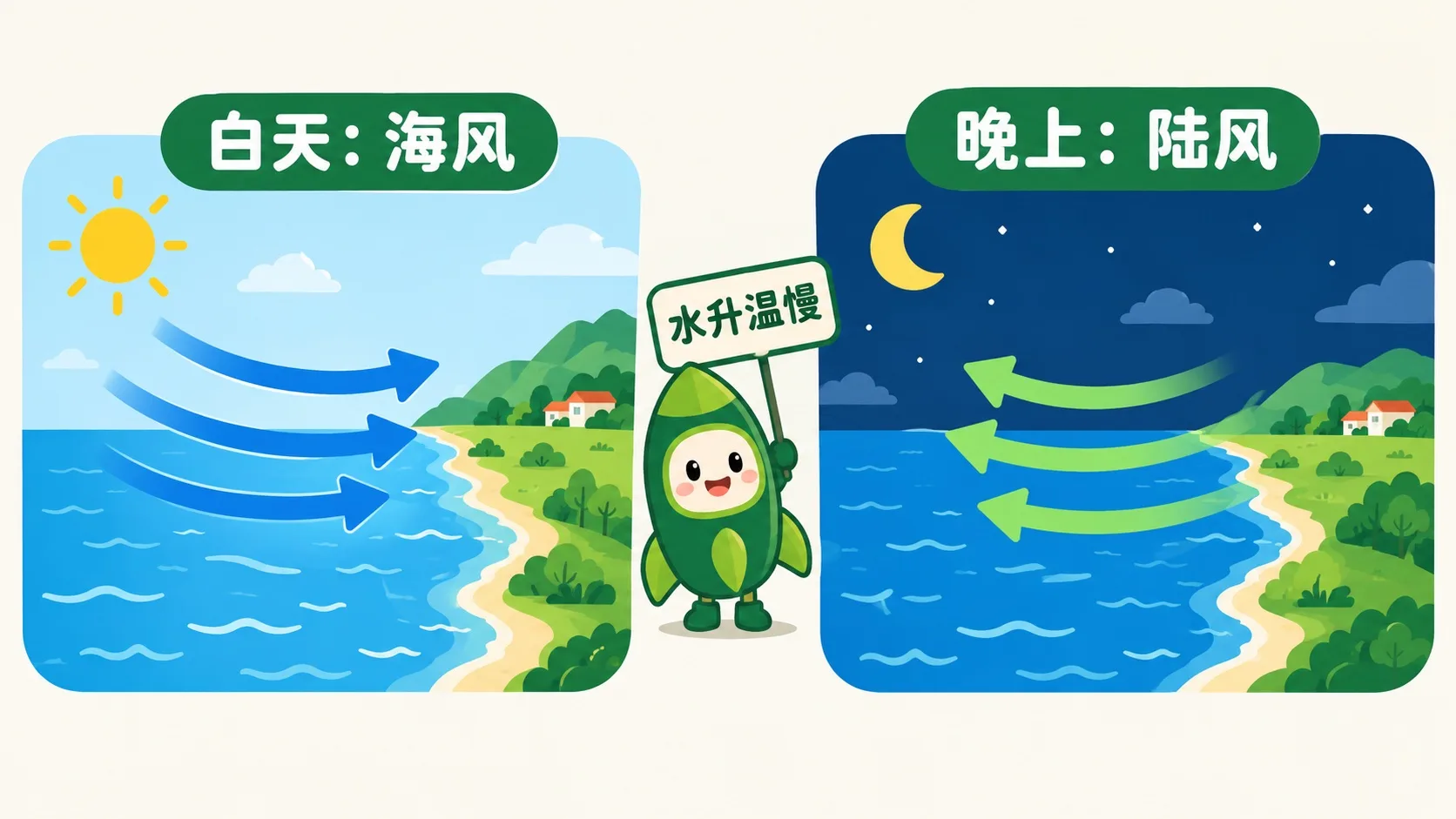
1 kg 沙和 1 kg 水,同样的火:沙的温度噌噌往上涨,水却慢悠悠。水升高 1°C 要吸 4200 J 的热,沙只要约 900 J——这份「吸热本领」叫比热容 c,热量 Q = cmΔt(质量 × 比热容 × 温差)。回到海边就有了海陆风:白天陆地升温快,海面凉空气吹向陆地;晚上陆地凉得快,风反过来吹。1 kg of sand and 1 kg of water on the same flame: the sand's temperature races up, the water crawls. Lifting 1 kg of water by 1°C takes 4200 J; sand needs only about 900 J — that heat-hungriness is the specific heat c, and Q = cmΔt (mass × specific heat × temperature change). Back at the coast this becomes the sea breeze: by day the land heats fast and cool sea air flows in; at night the land cools fast and the wind flips.
这份「慢热」,在生活里还能帮什么忙?Where else does this slow-warming talent come in handy?
第 3 步:这份「慢热」到处在帮忙Step 3: The slow-warmer saves the day
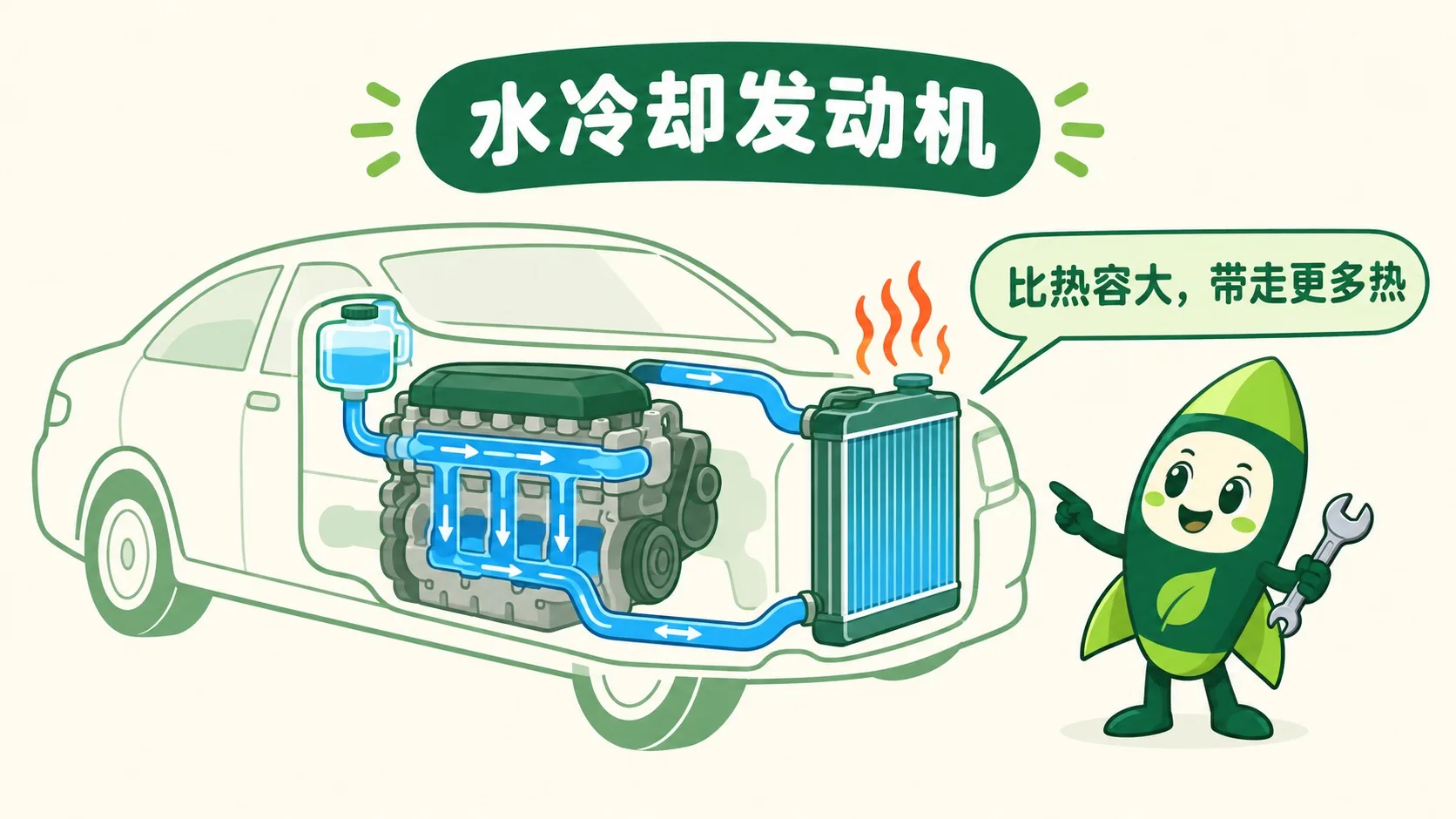
汽车发动机工作时很烫,工程师让水在发动机和水箱之间循环:水的比热容大,一点水就能搬走很多热,发动机才不会烧坏。沿海城市冬暖夏凉、暖气片和热水袋用水,也都是「水升温柔、放热久」的功劳。A car engine runs scorching hot, so engineers loop water between the engine and the radiator: water's huge specific heat lets a little of it carry away a lot of heat, keeping the engine from cooking itself. Coastal cities stay mild year-round, and radiators and hot-water bottles use water for the very same reason — it warms gently and releases heat for ages.
🎮 你来当海边实验员(30 秒)🎮 Your turn: seaside lab assistant (30 seconds)
拖「加热时长」滑块,看沙杯和水杯的升温曲线怎么拉开;点「夜晚」还能看它们怎么冷却。再做 4 个挑战。Drag the heating-time slider and watch the two warming curves pull apart; hit “Night” to watch them cool. Then beat 4 challenges.
一句话记住它:热量 Q = cmΔt;水的比热容特别大(4200 J/kg·°C)= 升温柔、放热久——海洋调节气候,汽车靠水冷却。Remember it in one line: heat Q = cmΔt; water's huge specific heat (4200 J/kg·°C) means it warms gently and cools slowly — oceans moderate climate, cars cool their engines with it.
热量 = 热传递中转移的能量,单位焦耳(J);Q = cmΔtHeat = energy moved in a transfer, measured in joules (J); Q = cmΔt水的比热容 4200 J/(kg·°C),沙约 900:同样吸热,沙升温快得多Water: 4200 J/(kg·°C); sand: about 900 — same heat in, sand warms far faster海洋靠它调气候(海陆风);汽车靠它冷却发动机Oceans use it to moderate climate (sea breeze); cars use it to cool engines
内容参考 OpenStax 等公开教材,多来源核对 · AI 生成、人工审核 · 发现错误欢迎指正,帮这片叶子长得更好。Based on OpenStax and other open textbooks, cross-checked across sources · AI-generated, human-reviewed · Spotted a mistake? Tell us — help this leaf grow.
 Back to tree