⚖️ 假设检验:证据够不够推翻它⚖️ Hypothesis Testing: is the evidence strong enough?
上一片里,小算盘机器人学会了用"网"给估计值一个范围。可校长又问:"新营养餐到底有没有用?"这次不是估计一个数,而是要对一个说法做出判决——推翻它,还是承认证据不够?Last leaf, the robot learned to give an estimate a range — a net. Then the principal asked: "Does the new meal plan actually work?" This time it is not estimating a number; it is judging a claim — overturn it, or admit the evidence is too weak?
第 1 步:先做"无罪推定"Step 1: Start with the benefit of the doubt
想判断一个说法对不对,第一步不是找证据,而是先写好"默认答案"。To judge a claim, the first move is not gathering evidence — it is writing down the default answer.
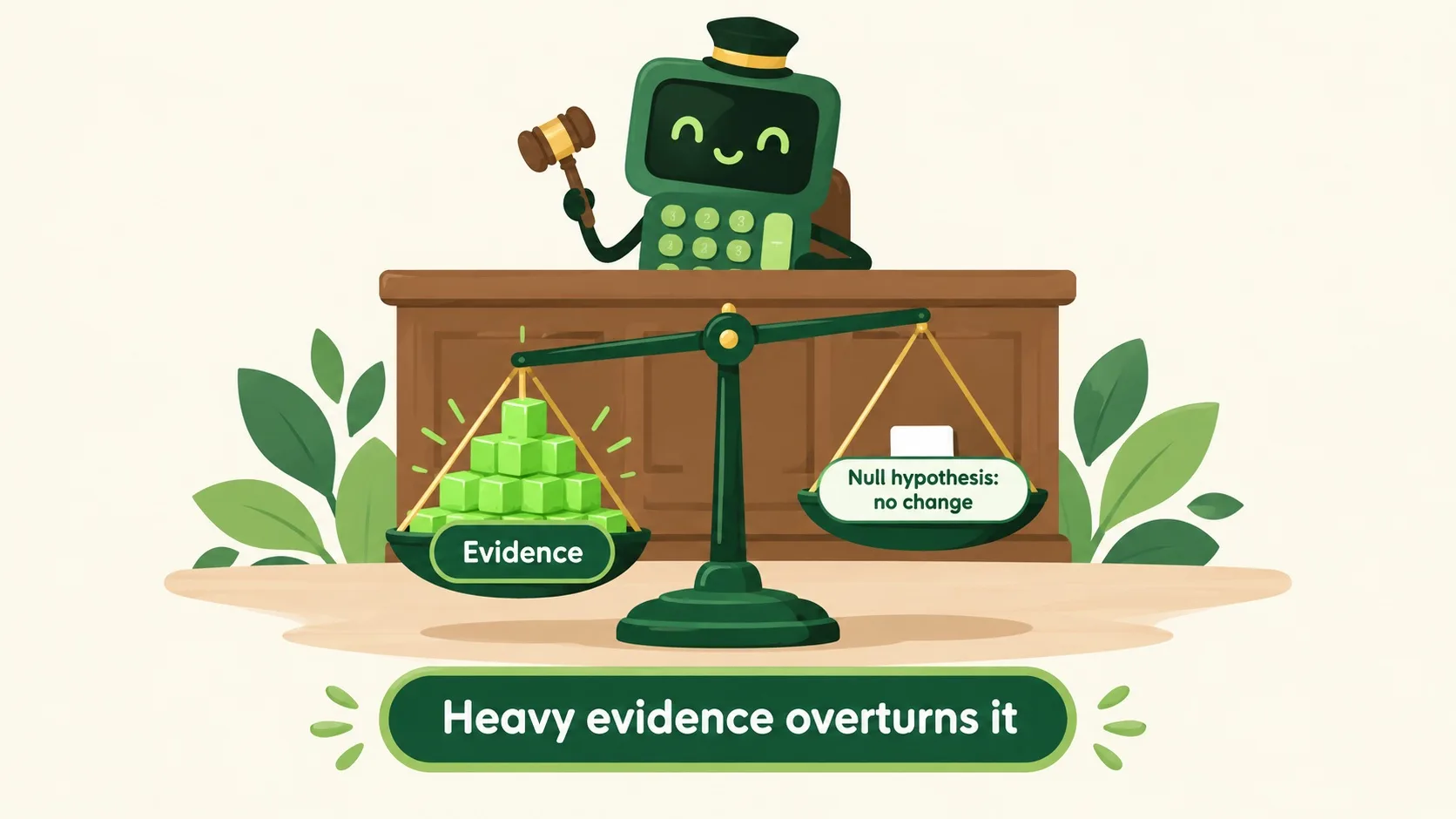
法庭上先做"无罪推定":证据不够时,默认被告无罪。假设检验也一样:先立原假设 H0——"没变化、没差异"。然后往天平上堆证据(数据),证据够重,才推翻它。A court starts with "innocent until proven guilty": without enough evidence, the defendant walks free. Hypothesis testing works the same way: state the null hypothesis H0 first — "no change, no difference". Then pile evidence (data) on the scale; only heavy evidence tips it over.
证据攒到什么程度才算"够重"?统计学给了一条红线。How heavy is "heavy enough"? Statistics draws a red line.
第 2 步:p 值——证据的罕见程度Step 2: The p-value — how rare is this evidence?
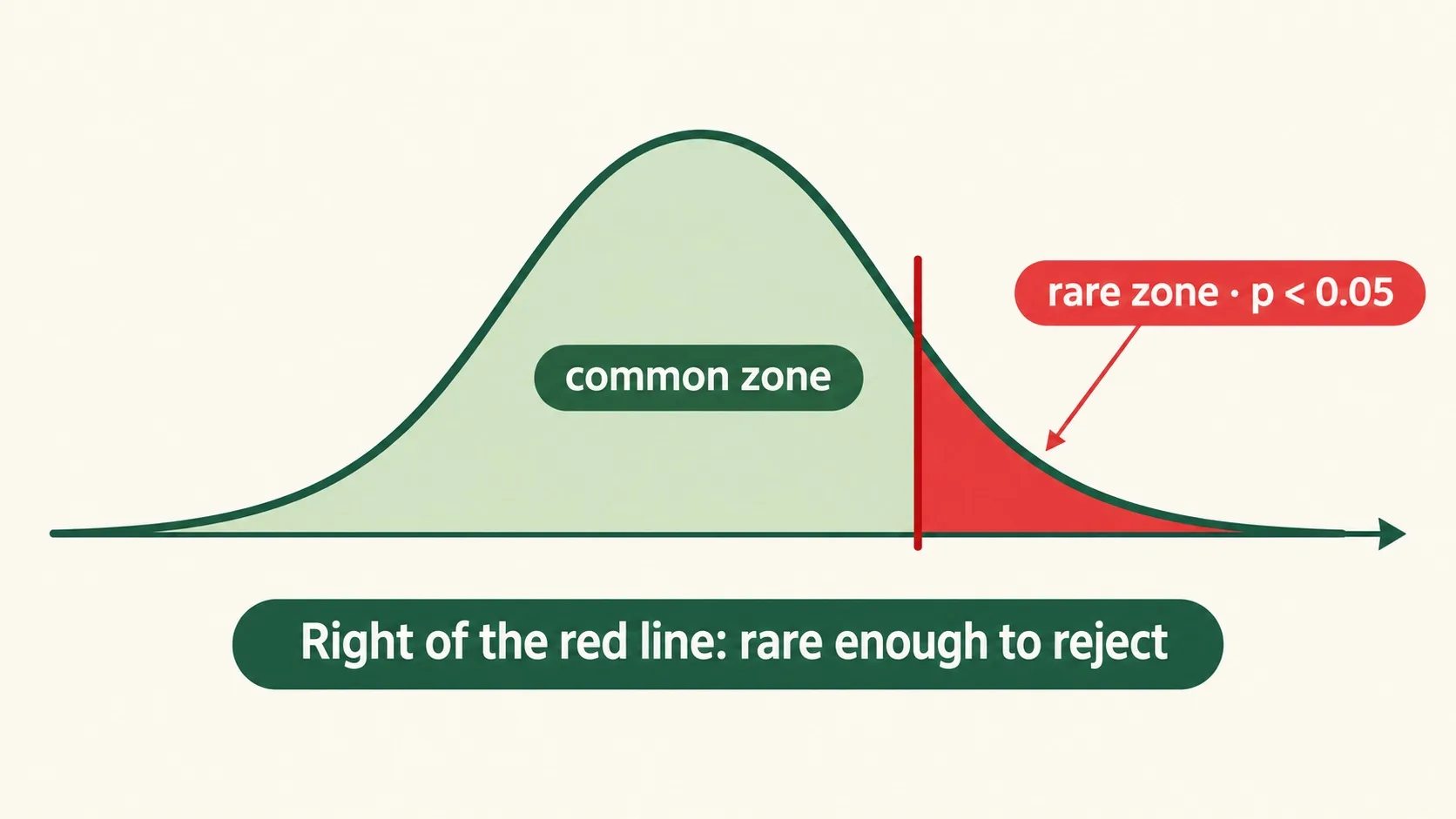
假装原假设成立,把可能出现的证据画成一条曲线:大部分结果落在常见区,越往右越罕见。红色阈值线(常用 0.05)右边的小尾巴就是罕见区。p 值 = 出现这么极端结果的概率;p 小到越过红线,才敢推翻原假设。Pretend the null hypothesis is true, and draw the evidence it would produce: most results land in the common zone, and the further right, the rarer. The tail right of the red line (usually 0.05) is the rare zone. The p-value is the chance of seeing something this extreme — only when p beats the red line dare we overturn H0.
越线就拒绝,但"拒绝"之后还有一句容易误会的话。Cross the line and you reject — but one phrase after that is easily misread.
第 3 步:显著 ≠ 重要Step 3: Significant ≠ important
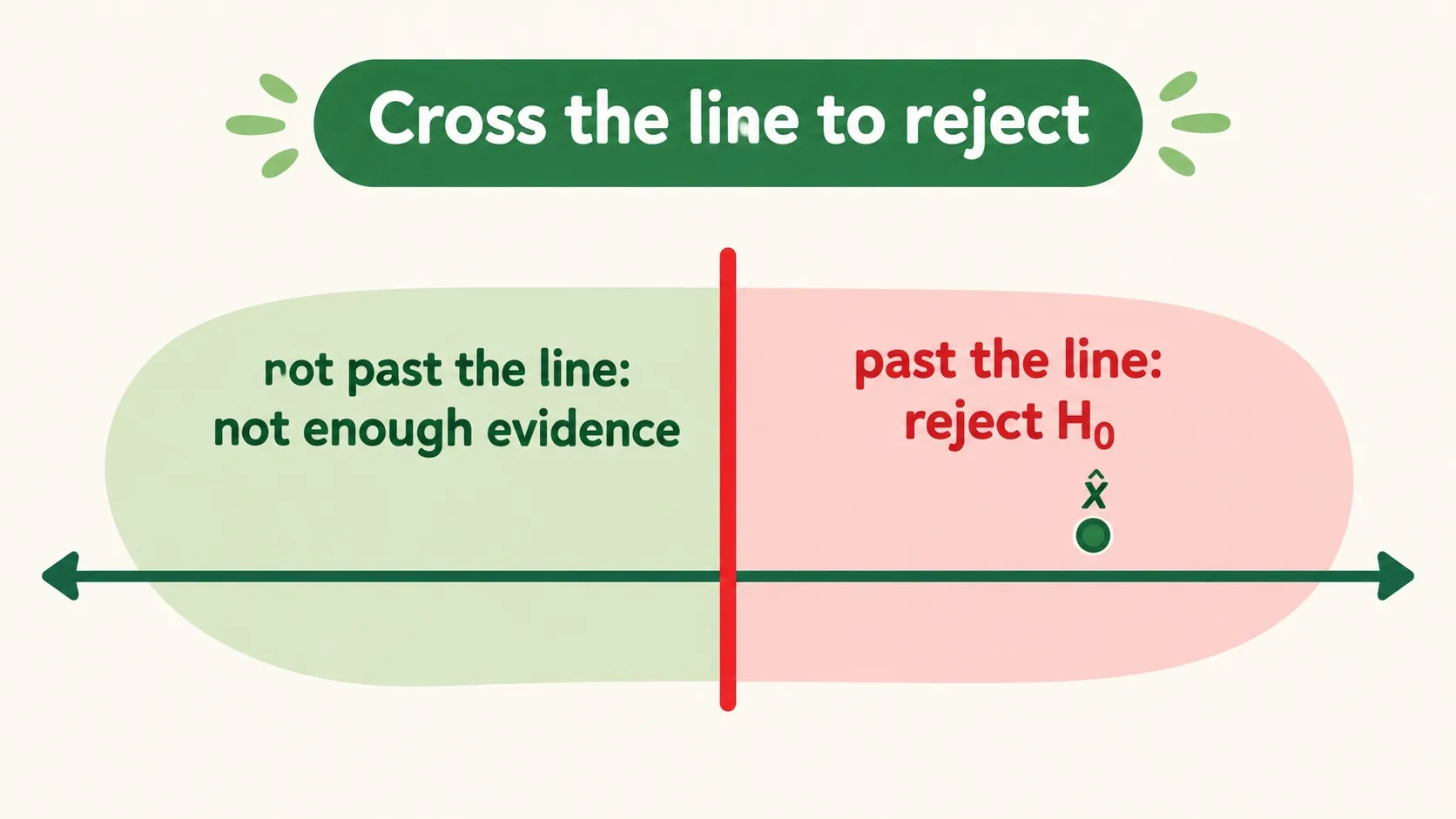
数据点越过红线,就拒绝原假设,结果称为"显著"。但显著只说明"差异不太可能是碰巧",不代表差异很大或很重要:样本足够大时,0.1 cm 的差别也能显著。没越线时只能说"证据不足",不能反过来说原假设一定对。If the data point crosses the red line, reject the null — the result is called "significant". But significant only means "the difference is unlikely to be luck"; it does not mean the difference is big or important: with a large enough sample, even 0.1 cm can be significant. If it does not cross, simply say "not enough evidence" — never conclude that H0 is proven true.
🎮 你来当裁判(40 秒)🎮 Your turn: be the judge (40 seconds)
4 个真实案例摆在眼前:抛硬币、营养餐实验——p 值就在卡片上,拒绝还是不拒绝?Four cases await your verdict: coin flips and a nutrition trial — the p-value is on the card. Reject or not?
一句话记住它:先立原假设"没变化",证据罕见到 p < 0.05 才拒绝它;显著 ≠ 重要,不拒绝 ≠ 没变化。Remember it in one line: start with the null "nothing changed"; reject it only when evidence is rare enough (p < 0.05); significant ≠ important, and not rejecting ≠ no change.
原假设 H0 = 默认"没变化、没差异"(无罪推定)Null hypothesis H0 = the default "no change, no difference" (innocent until proven guilty)p 值越小证据越强;p < 0.05 越过红线才拒绝 H0Smaller p means stronger evidence; only p < 0.05 crossing the red line rejects H0显著 ≠ 重要;不拒绝 ≠ 证明原假设正确Significant ≠ important; failing to reject ≠ proving H0 correct
内容参考 OpenStax 等公开教材,多来源核对 · AI 生成、人工审核 · 发现错误欢迎指正,帮这片叶子长得更好。Based on OpenStax and other open textbooks, cross-checked across sources · AI-generated, human-reviewed · Spotted a mistake? Tell us — help this leaf grow.
 Back to tree