🛡️ 免疫系统:身体的三道防线🛡️ The Immune System: Three Lines of Defense
新陈代谢给每个细胞供能,可身体外面挤满了虎视眈眈的病菌。🦠 小细胞每天安心上班,靠的是谁在守门?🩺 小医生说:是免疫系统——一座三重防御的城堡。Metabolism powers every cell, yet outside the body germs are everywhere. How does 🦠 our little cell work in peace every day? 🩺 Dr. Stethoscope says: the immune system — a castle with three lines of defense.
第 1 步:身体是一座三重防御的城堡Step 1: The body is a triple-fortress castle
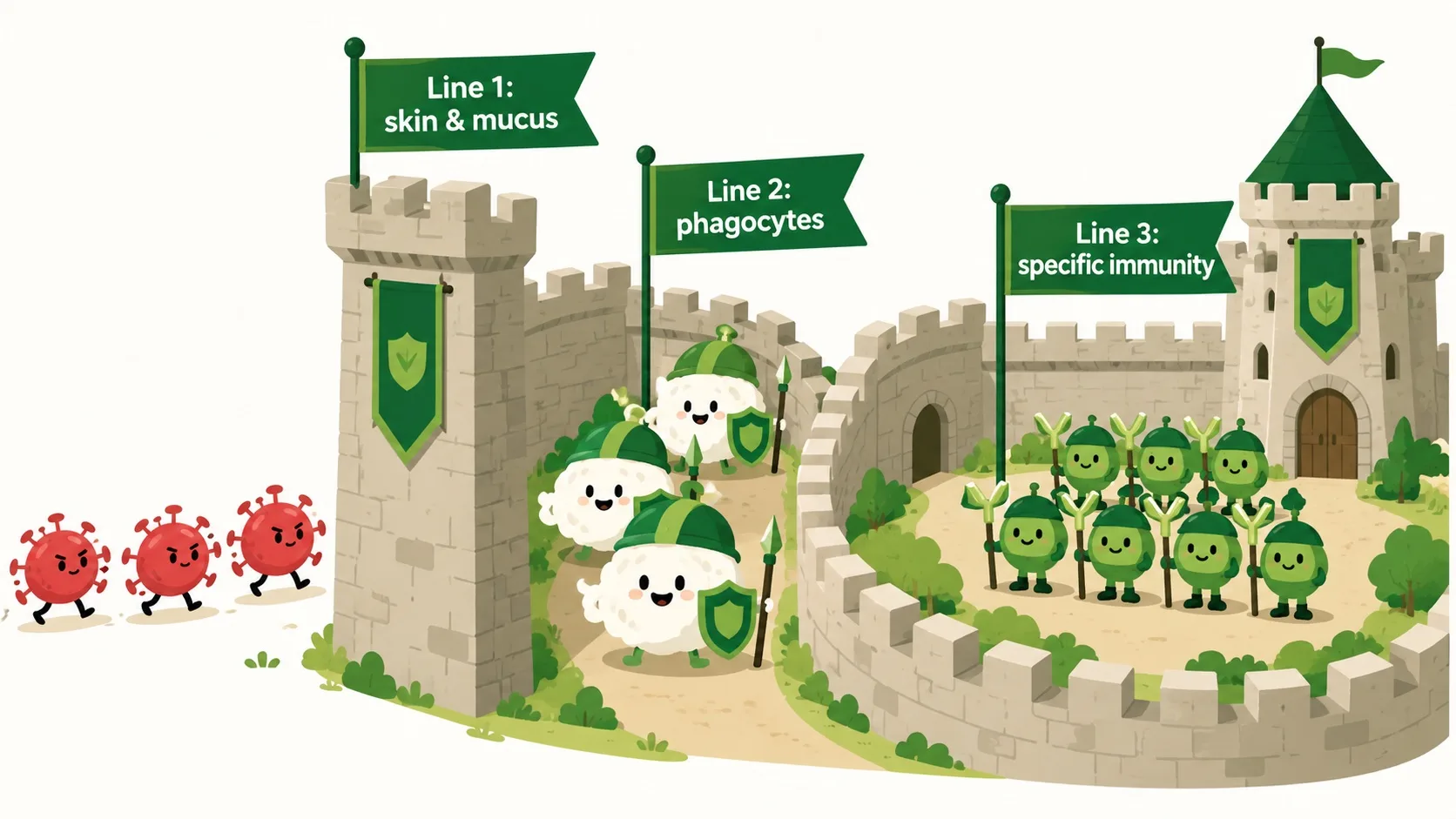
先看全景:一个小病毒想进城堡,得连闯三关。First, the big picture: one little virus must break through three gates.
🩺 小医生布下三道防线:第一道是皮肤和黏膜这堵城墙——把绝大多数细菌直接挡在门外;第二道是到处巡逻的吞噬细胞——见谁都吃、不分种类;第三道是特异性免疫部队——专认敌人的"脸",一个敌人配一种专属抗体。三关一层比一层狠。Dr. Stethoscope sets three lines: Line 1 is skin and mucus — a wall that keeps most germs outside; Line 2 is patrolling phagocytes — they eat anything, no menu needed; Line 3 is the specific immunity squad — it matches each enemy's face with a tailor-made antibody. Each line is deadlier than the last.
前两道防线不挑食,生下来就自带,统称"先天免疫"。它们具体怎么干活?The first two lines eat anything and come built-in — together called innate immunity. How do they actually work?
第 2 步:吞噬细胞——见谁都吃的巡警Step 2: Phagocytes — patrols that eat anything
划破手指,细菌从伤口溜进来。吞噬细胞(一种白色大细胞)立刻变形挤过去,把细菌整个包进泡泡里消化掉。它不需要提前认识敌人——来一个吃一个。但敌人太多太快时,巡警也会忙不过来。You cut a finger and bacteria slip in through the wound. Phagocytes — big white cells — squeeze over, wrap each bacterium into a bubble and digest it. No prior introduction needed: eat first, ask later. But when enemies come too many and too fast, even patrols get overwhelmed.
强敌连闯两关怎么办?第三道防线出手,外加全身总动员——你发烧了。What if a strong enemy breaks both lines? Line 3 steps in, plus a full-body alarm — you get a fever.
第 3 步:特异性免疫与发烧Step 3: Specific immunity and fever
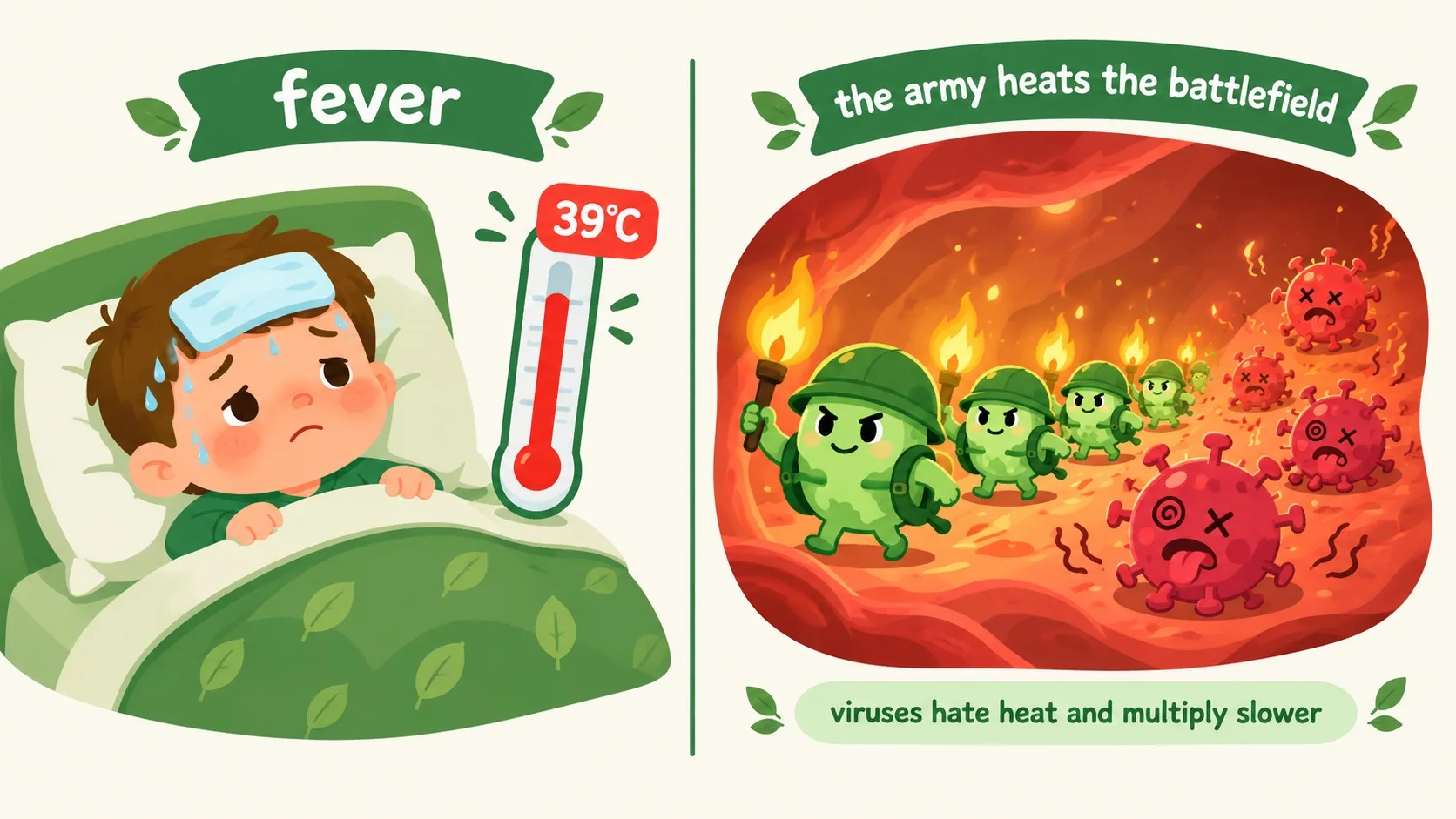
第三道防线的淋巴细胞会"认脸":给每个敌人定制专属抗体,精准围剿,打赢后还留下记忆细胞(下一片细讲)。它们还释放信号让身体升温——这就是发烧。39℃ 下病毒繁殖变慢、免疫细胞更活跃。所以轻度发烧不是敌人,是免疫部队在加热战场。(超过 38.5℃ 或很难受,要听医生的话退烧哦。)Line 3's lymphocytes check faces: they tailor a specific antibody for each enemy, wipe it out, and leave memory cells behind (next leaf!). They also signal the body to warm up — that's fever. At 39°C viruses multiply slower and immune cells work harder. A mild fever isn't the enemy; it's the army heating the battlefield. (Above 38.5°C, or when you feel really bad — follow the doctor's advice.)
🦠 你来当防线指挥官(30 秒)🦠 Your turn: command the defense (30 seconds)
道理讲完了。先按三个剧本看小病毒入侵的下场;再闯 4 关判断题——每个情景是哪道防线立了功?Theory done. Watch the three invasion scenarios first, then clear 4 levels: which line of defense did the job?
一句话记住它:免疫系统 = 三道防线:城墙(皮肤黏膜)挡门、巡警(吞噬细胞)通吃、精锐(特异性免疫)认脸;发烧是部队在加热战场,不是敌人。Remember it in one line: the immune system is three lines of defense — the wall (skin & mucus) blocks, the patrols (phagocytes) eat anything, the elite (specific immunity) matches faces; a fever is the army heating the battlefield, not the enemy.
第一道:皮肤和黏膜,把大部分病菌挡在门外Line 1: skin & mucus keep most germs outside the gate第二道:吞噬细胞无差别吞噬,不认脸只管吃Line 2: phagocytes devour without checking faces第三道:特异性免疫定制抗体精准打击,还留下记忆Line 3: specific immunity tailors antibodies — and leaves memories
内容参考 OpenStax 等公开教材,多来源核对 · AI 生成、人工审核 · 发现错误欢迎指正,帮这片叶子长得更好。Based on OpenStax and other open textbooks, cross-checked across sources · AI-generated, human-reviewed · Spotted a mistake? Tell us — help this leaf grow.
 Back to tree