🎯 独立事件:互不影响的巧合与必然🎯 Independent Events: Coincidences that Don't Interfere
上一片讲「条件概率」:知道 A 发生,会改变 B 的概率。可有些事,知道也白知道——抛两枚硬币,第一枚的结果根本不关心第二枚。这种「互不影响」的关系,就叫独立事件。Last leaf we saw that knowing A can change the probability of B. But for some events, knowing changes nothing — flip two coins and the first result simply doesn't care about the second. This “no influence” relationship is called independence.
第 1 步:两枚硬币,各飞各的Step 1: Two coins, two separate tracks
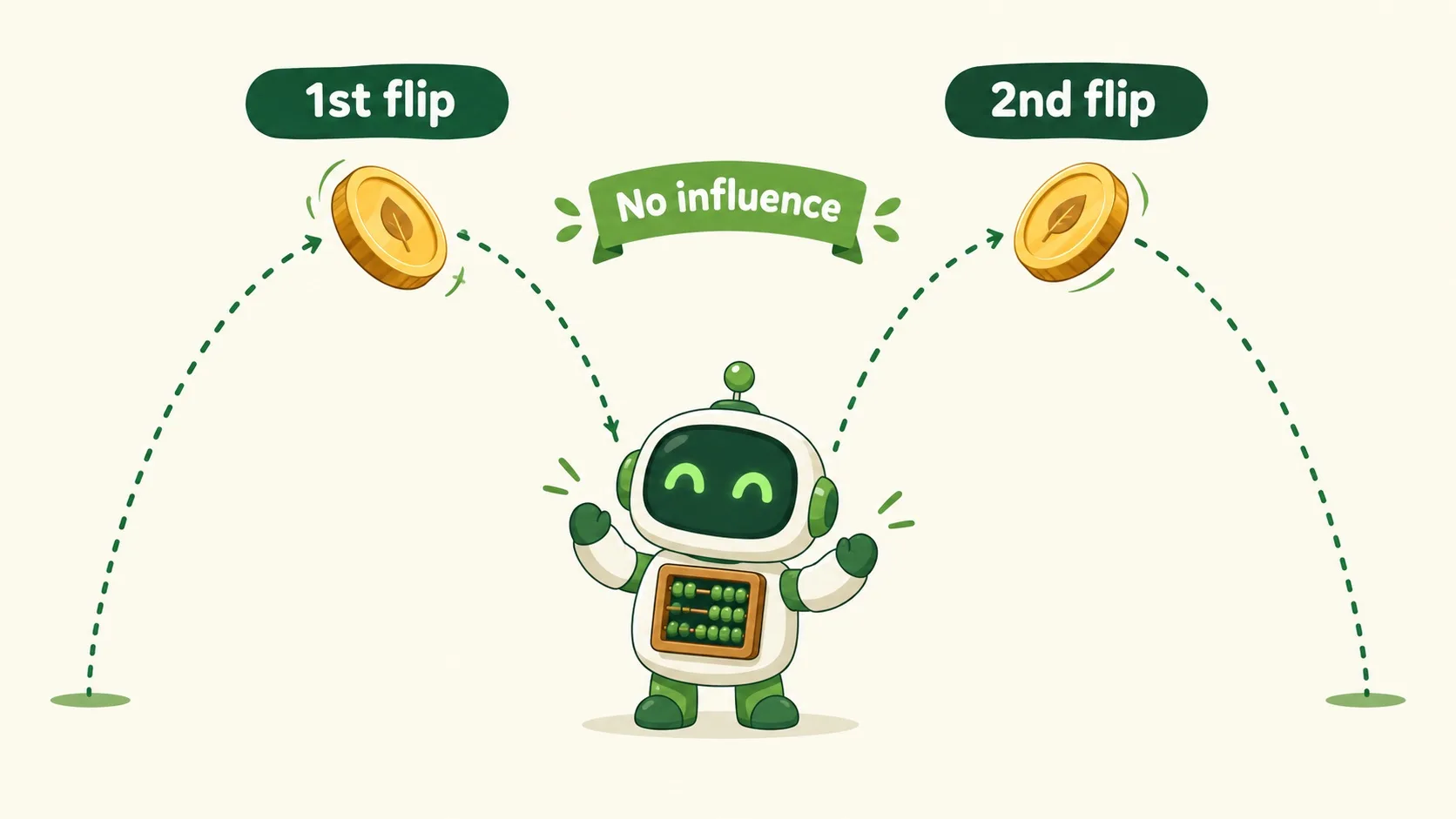
先看小算盘的实验台:两枚硬币同时飞起来,谁也不碰谁。First, visit the robot's lab bench — two coins take off at once, never touching.
小算盘同时抛两枚公平硬币。第一枚落正面还是反面,完全不影响第二枚——第二枚依然保持五成正面的运气。这就是「独立」:A 发生与否,不会改变 B 的概率。The robot flips two fair coins at once. Whether the first lands heads or tails doesn't touch the second — the second still has a 50/50 chance. That's independence: whether A happens does not change the probability of B.
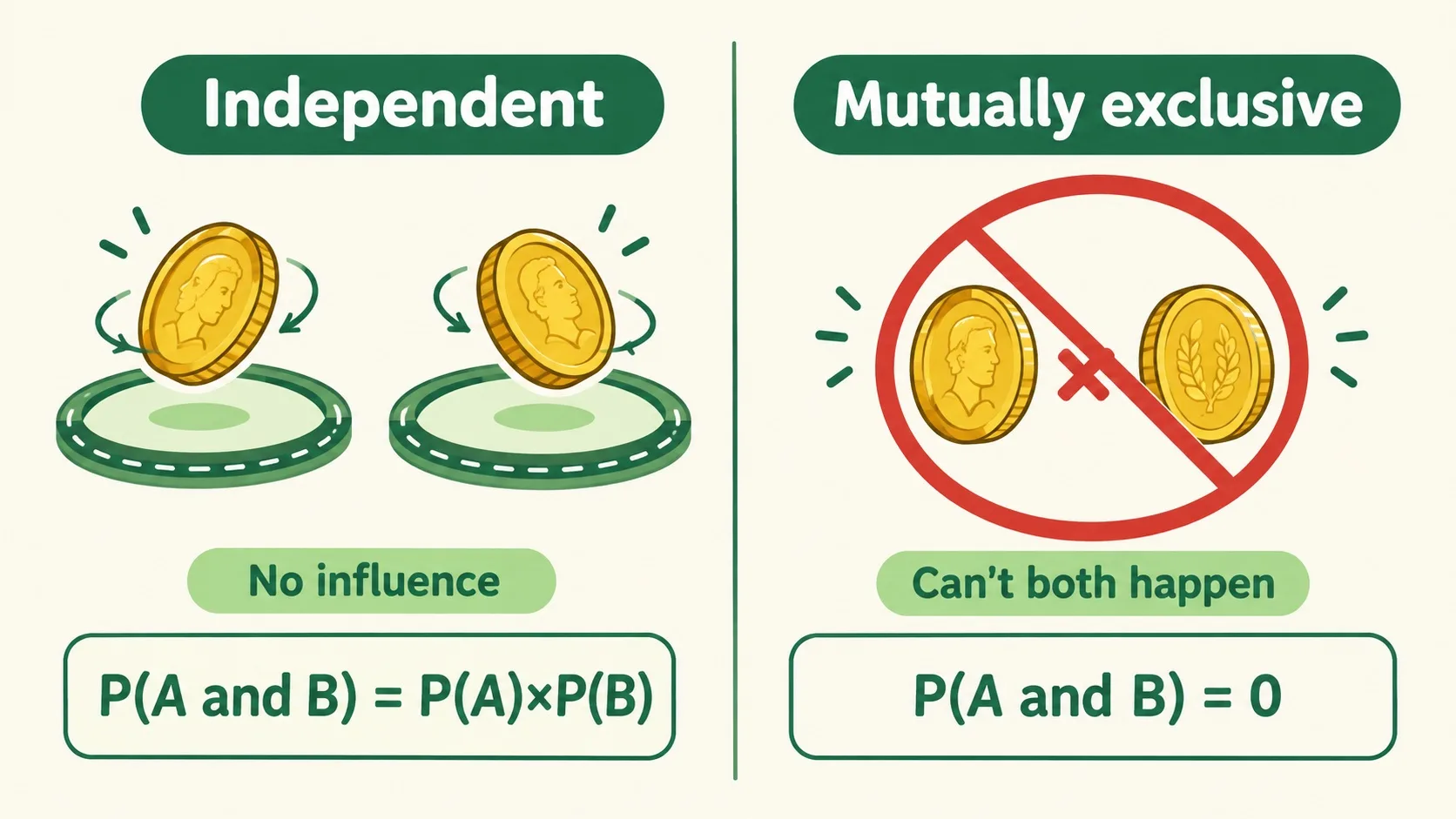
你可能会想:那「正面」和「反面」这种对着干的事,算独立吗?You might wonder: what about opposites — heads and tails of the same coin? Are they independent?
小心,这是最常混的一对!同一枚硬币的「正面」和「反面」是互斥——不可能同时发生;而两次抛出的结果才是独立——互不影响。判独立看「影响不影响概率」,判互斥看「能不能同时发生」。只有独立才能直接乘:P(A且B)=P(A)×P(B),比如 1/2×1/2=1/4。Careful — this is the classic mix-up! Heads and tails of the same coin are mutually exclusive: they can never happen together. Results from two separate flips are independent: they don't influence each other. Independence asks “does it change the probability?”; exclusivity asks “can they happen together?” Only independence allows straight multiplication: P(A and B) = P(A)×P(B), e.g. 1/2 × 1/2 = 1/4.
那「独立」在真实世界里怎么用?So how is independence used in the real world?
第 3 步:工程师的「双保险」Step 3: The engineer's double backup
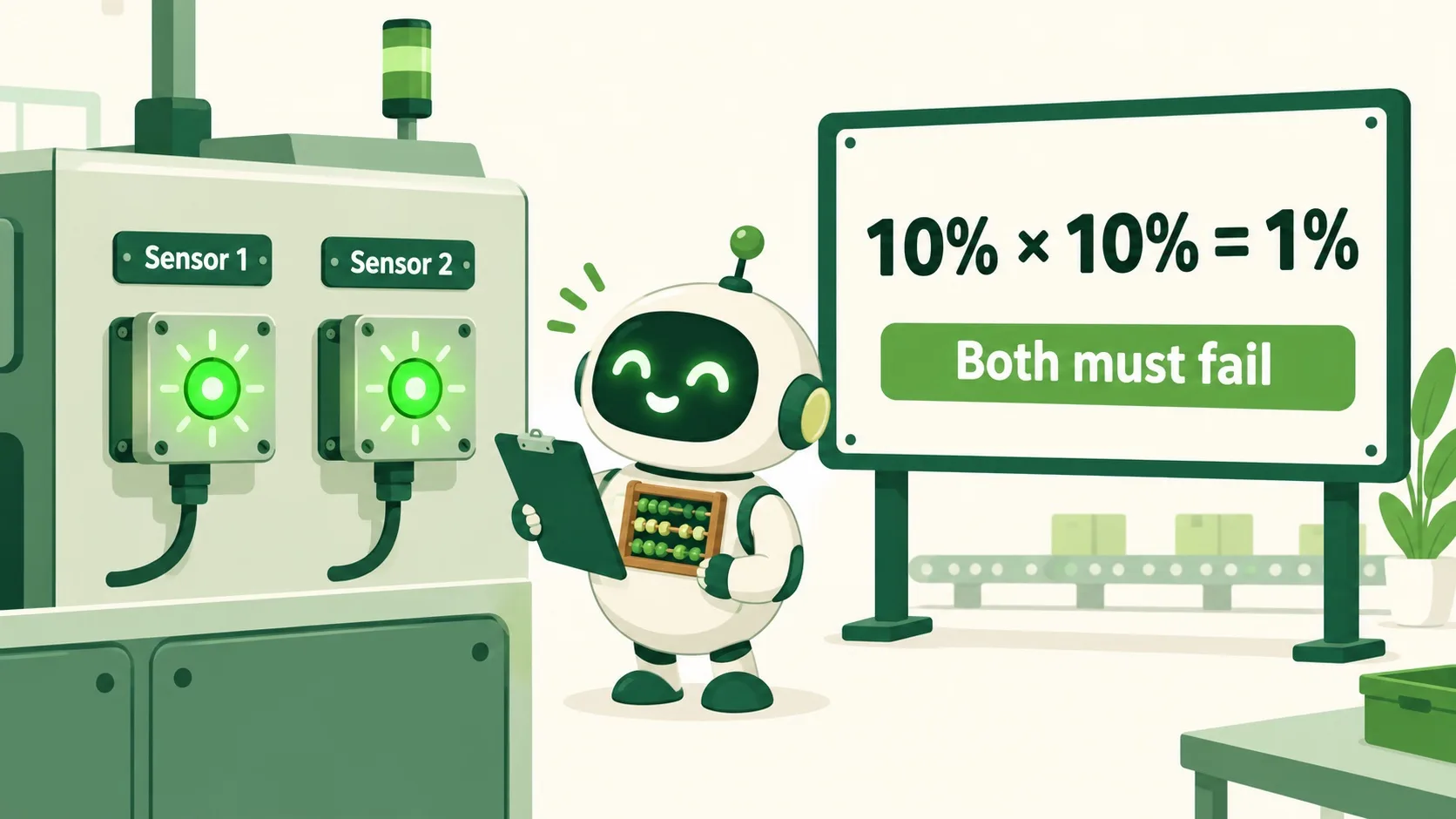
关键设备装两个独立传感器,各自故障率 10%。一个坏了,另一个顶上;只有两个同时坏才失守——概率 10%×10%=1%。独立事件的乘法把「双保险」算得明明白白:多加一个独立备份,同时出事的概率就小十倍。Critical machines carry two independent sensors, each failing with probability 10%. If one dies, the other takes over; the system only fails when both die at once — 10% × 10% = 1%. Multiplication for independent events makes “double backup” measurable: add one independent spare and the chance of a simultaneous failure drops tenfold.
🎮 你来当判断员(4 关)🎮 Your turn: the independence desk (4 rounds)
规则很简单:先判独立,再算概率;只有独立才能直接乘。4 关全过就通关!Simple rule: judge first, then compute — and only multiply when they're independent. Clear all 4 to win!
一句话记住它:独立 = 互不影响;只有独立,才有 P(A且B) = P(A)×P(B);别把它和「互斥」搞混。Remember it in one line: independent = no influence; only then P(A and B) = P(A)×P(B) — and never confuse it with “mutually exclusive”.
独立:A 发生不改变 B 的概率(两枚硬币、两个转盘)Independent: A happening doesn't change B's probability (two coins, two spinners)乘法:独立才能直接乘,1/2×1/2=1/4;不独立就得数或算Multiply: only when independent — 1/2×1/2=1/4; otherwise count or use conditional probability互斥:不能同时发生(正/反),和独立是两回事Mutually exclusive: can't happen together (heads/tails) — a different idea entirely
内容参考 OpenStax 等公开教材,多来源核对 · AI 生成、人工审核 · 发现错误欢迎指正,帮这片叶子长得更好。Based on OpenStax and other open textbooks, cross-checked across sources · AI-generated, human-reviewed · Spotted a mistake? Tell us — help this leaf grow.
 Back to tree