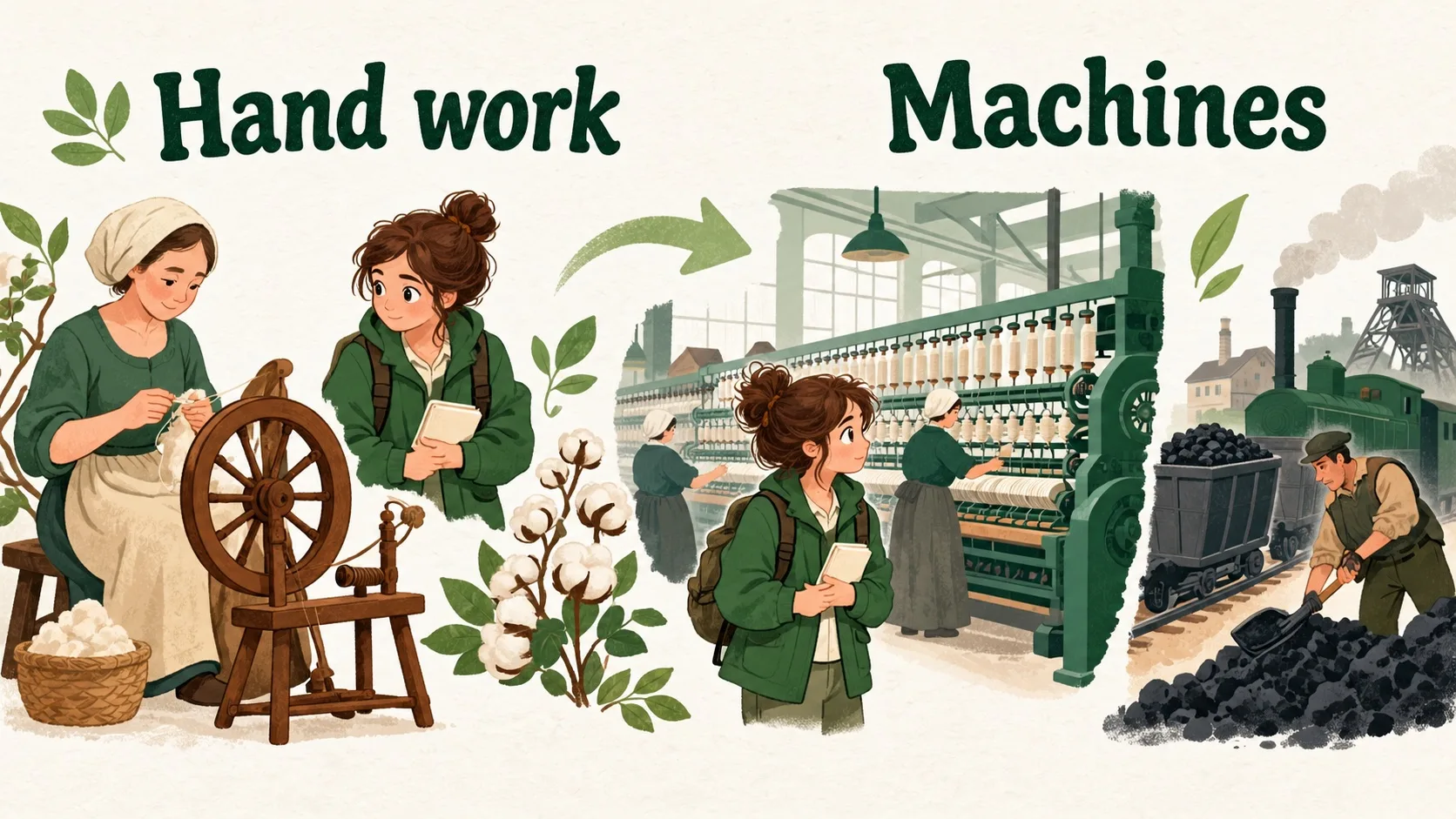
画室外传来机器声。阿禾追踪一团棉花,看生产怎样改变。Machines sound beyond the workshop. Ahe follows a bundle of cotton to see production change.
第 1 步:从手工到机器体系Step 1: A system of machines
工业革命先在英国显著展开。Industrialization developed prominently in Britain before spreading unevenly.
纺织、煤矿与机械制造互相推动。它不是一台机器造成的变化。资金、原料、交通和劳动力都重要。Textiles, coal mining and machine-making reinforced one another. No single machine explains the change. Capital, raw materials, transport and labour all mattered.
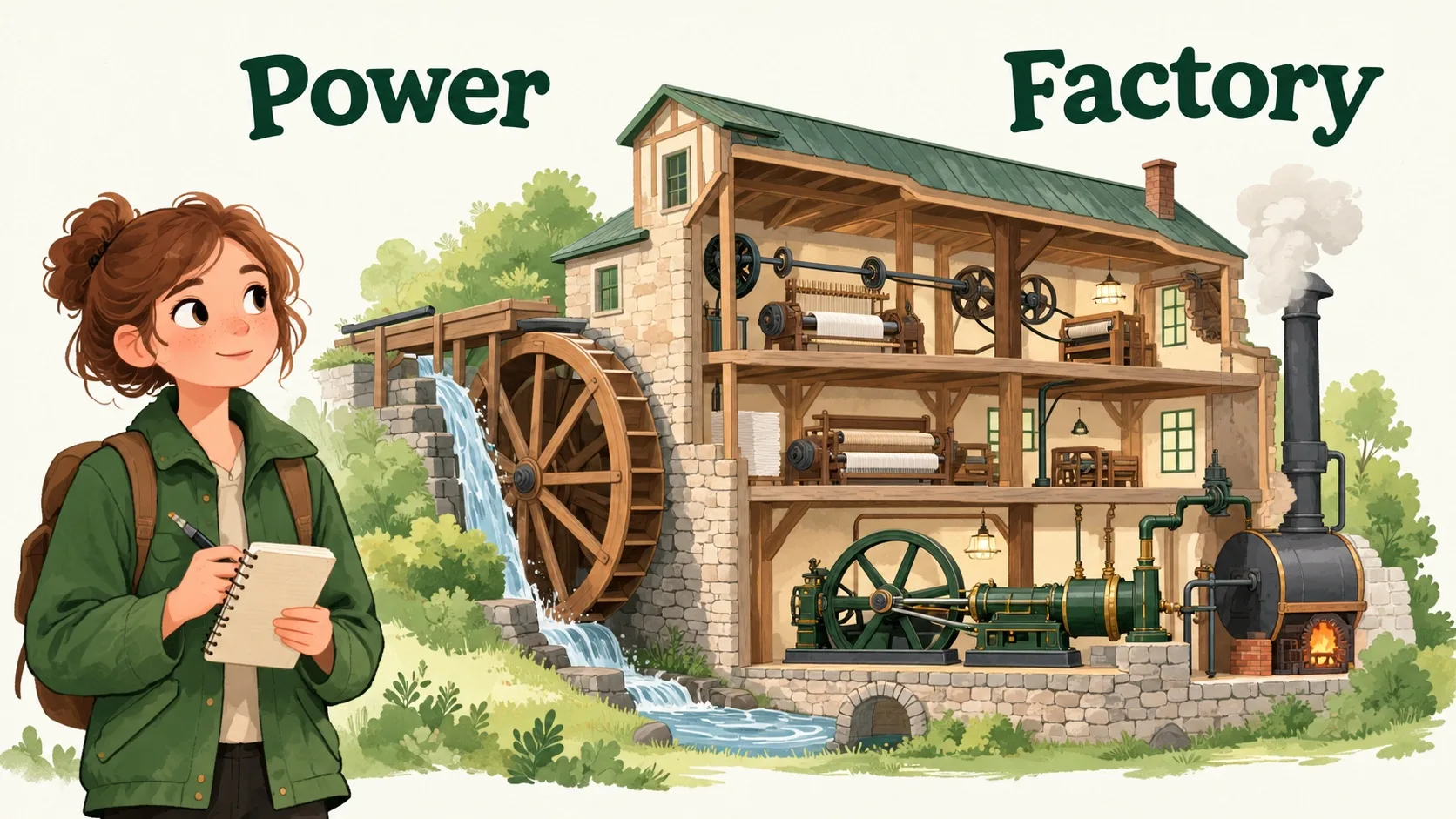
第 2 步:动力改变工厂布局Step 2: Power changes production
蒸汽机把燃料的能量用于做功。Steam engines converted fuel energy into mechanical work.
水力也长期服务工厂。机器集中后,劳动更受钟表管理。生产量上升,不代表工人处境立刻改善。Water power also remained important. Concentrated machinery helped organize work by the clock. Higher output did not automatically bring better lives for the workers producing it.
第 3 步:谁受益,谁付出代价Step 3: Who benefits and who pays?
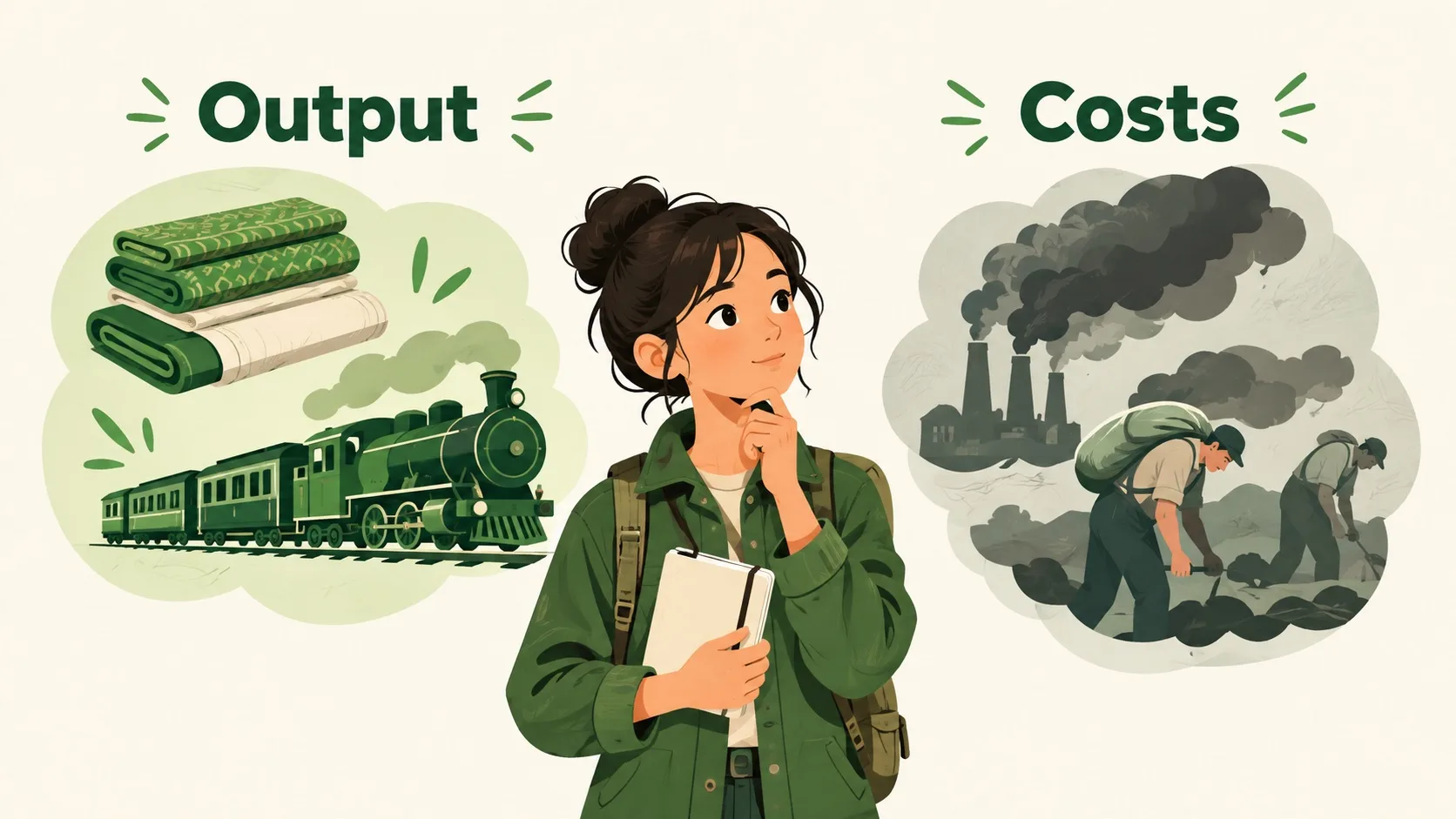
阿禾把便宜布料和烟尘分栏记录。Ahe records cheaper cloth alongside smoke and hazardous work.
工业化带来交通与产量增长。污染、危险劳动和童工也是历史。棉花贸易还关联殖民与奴役制度。Industrialization expanded transport and production. Pollution and child labour were also part of its history. Cotton supply chains connected factories to colonial systems and enslavement.
🎮 接通工厂的条件🎮 Connect a factory system
按任务说明连好四条关系。依次点起点和终点;再次点击同一对可取消。图是关系示意,不是地理地图。Build the four relationships described below. Select a start and an end; repeat a pair to remove its link. This is a relationship diagram, not a geographic map.
工业化需要多种条件配合。Industrialization required interacting conditions.动力改变生产组织。Power changed production organization.增长与社会代价同时存在。Growth and social costs coexisted.
依据上述公开资料编写 · AI 辅助制作 · 发现问题欢迎指正,帮这片叶子长得更好。Based on the public sources above · AI-assisted production · Spotted a problem? Tell us — help this leaf grow.
 Back to tree