🔥 焦耳定律:电流生热的账本🔥 Joule's Law: The Heat Ledger of Current
上一片说到大功率电器要配粗线,因为细线会发热。这一片把热的账算清楚:电流流过导体,一定会产生热——Q = I²Rt,一条公式记满一本账。Last leaf hinted that high-power appliances need thick wires, because thin wires get hot. This leaf settles the heat account: current through a conductor always makes heat — Q = I²Rt, one formula that keeps the whole ledger.
第 1 步:电热丝为什么发红Step 1: Why the heating wire glows red
先看实验室里最诚实的一条线:通电的电热丝会红。Start with the most honest line in the lab: a powered heating wire glows red.
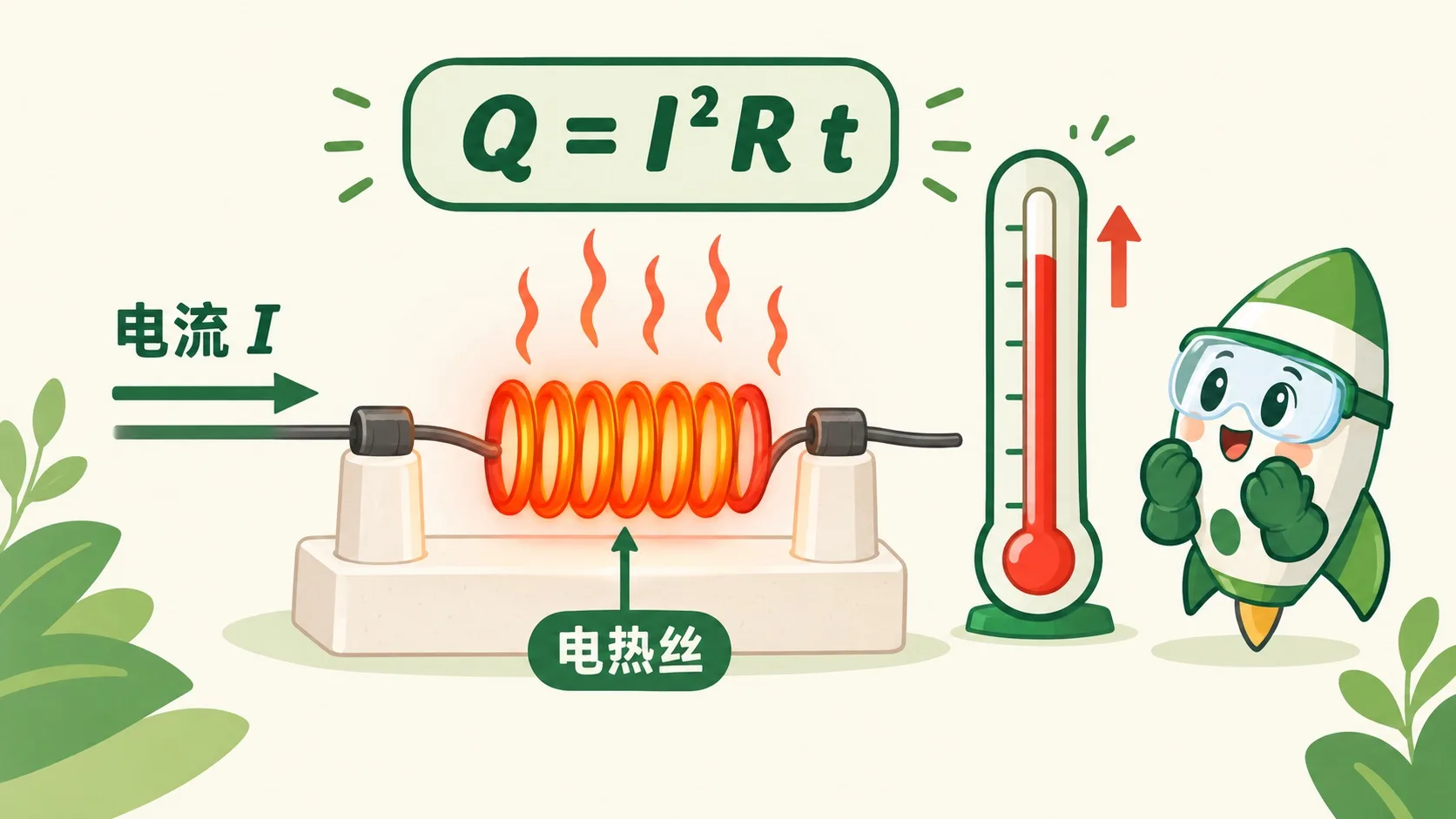
电流挤过电阻时,电子不断和原子「碰撞」,电能就变成了热能。Q = I²Rt:电流 I 的平方、电阻 R、时间 t,三样越大热越多。看那根电热丝:电流把它烧得通红——这正是电暖器、电吹风的原理。When current squeezes through resistance, electrons keep bumping into atoms, and electrical energy becomes heat. Q = I²Rt: the square of the current, the resistance and the time all add heat. Look at the wire: the current glows it red-hot — exactly how heaters and hair dryers work.
既然电流必产热,那输电线上这笔热账谁来付?Since current always makes heat, who pays the heat bill on a power line?
第 2 步:输电线上的「白丢」Step 2: The pure loss on the power line
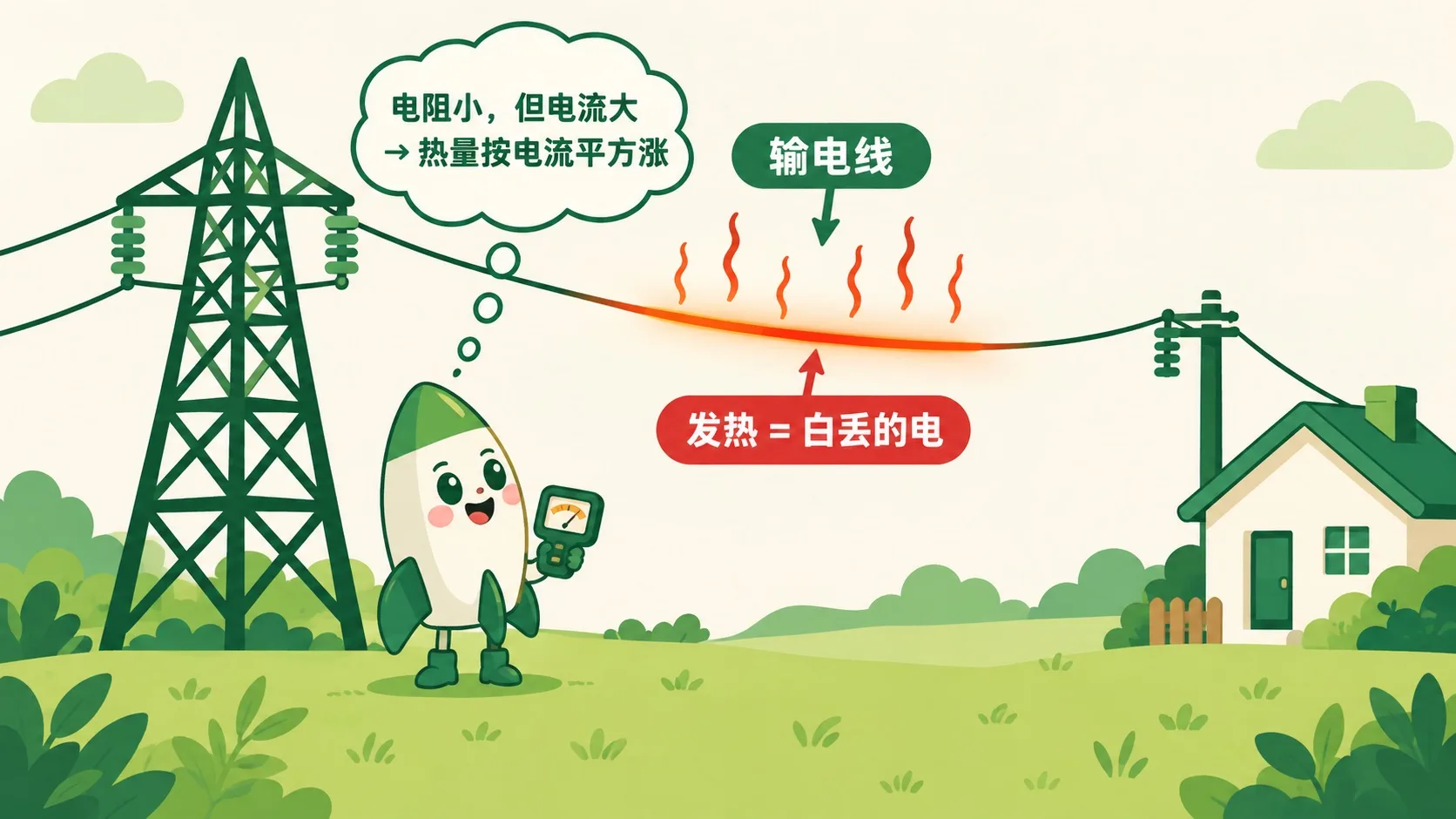
输电线的电阻很小,但电流可以很大:热量跟电流的平方成正比,电流翻倍,热就变 4 倍。这些热白白散进空气,是发电厂付钱的「白丢」。所以远距离送电用高压:电压高、电流小,这笔热账就小了。A power line has tiny resistance, but the current can be huge — and heat grows with the square of the current: double the current, quadruple the heat. That heat drifts into the air as a pure loss the power plant pays for. That is why long-distance lines use high voltage: higher voltage means lower current, shrinking this heat bill.
同一个公式,为什么电饭锅求它大、输电线求它小?Same formula — so why does a rice cooker want it big while a power line wants it small?
第 3 步:有用热与浪费热Step 3: Useful heat vs wasted heat
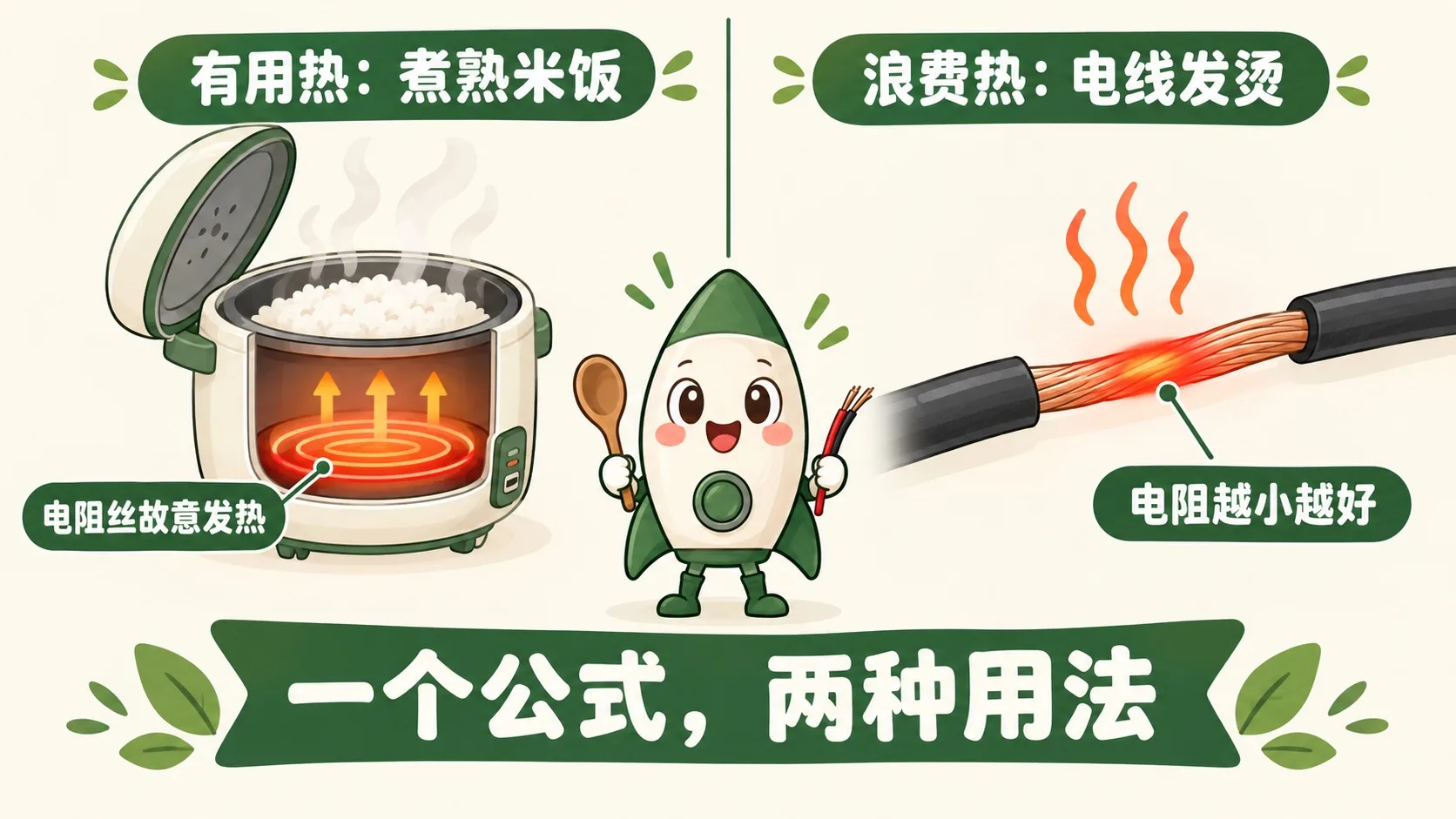
电饭锅、热水壶、电暖器:故意用高电阻的发热丝,把电能变成热来干活(有用热)。输电线:电阻越小越好,热是白丢(浪费热)。防范也靠这条公式:用粗铜线减小 R、不超负荷用大电流、装上保险丝和空气开关——都是为了把 Q 管住。Rice cookers, kettles and heaters use high-resistance elements on purpose, turning electricity into useful heat. Power lines want the smallest resistance — there the heat is pure waste. Prevention follows the same formula: thick copper lowers R, avoid overloading with big currents, and fit fuses or breakers — all to keep Q under control.
🎮 你来当电热实验室管理员(30 秒)🎮 Your turn: run the heating-wire lab (30 seconds)
道理讲完了。拖动电流、电阻、时间滑块,看发热量和热度条怎么变;再把发热量调到正好 200 J 和 900 J。Theory done. Drag the current, resistance and time sliders to watch the heat and temperature bar; then tune the heat to exactly 200 J and 900 J.
一句话记住它:Q = I²Rt——电流的平方、电阻、时间,一起决定电流生的热。Remember it in one line: Q = I²Rt — the square of the current, the resistance and the time decide the heat.
电流过电阻必发热;电流翻倍,热变 4 倍(平方项)Current through resistance always heats; double the current, quadruple the heat (the square)电饭锅、电热器故意发热;输电线发热是浪费,电阻越小越好Cookers and heaters glow on purpose; on power lines heat is waste, so smaller resistance is better防范:粗线减小 R、不超负荷、保险丝/空气开关;远距离高压送电减小电流Prevention: thick wires lower R, never overload, use fuses or breakers; high-voltage lines cut the current
内容参考 OpenStax 等公开教材,多来源核对 · AI 生成、人工审核 · 发现错误欢迎指正,帮这片叶子长得更好。Based on OpenStax and other open textbooks, cross-checked across sources · AI-generated, human-reviewed · Spotted a mistake? Tell us — help this leaf grow.
 Back to tree