上一片里,茎秆像一条双向传送带:把根吸来的水送上去,把叶子造出的糖运下来。可叶子究竟拿什么当原料、怎么把阳光变成糖?这一片,钻进叶片内部看个明白。Last leaf, the stem ran a two-way delivery line — water up from the roots, sugar down from the leaves. But what exactly goes into a leaf, and how does sunlight become sugar? This leaf takes us inside the workshop.
第 1 步:走进叶片车间Step 1: Inside the leaf workshop
一座能开工的工厂,少不了三样东西:车间、大门和运输管道。A working factory needs three things: a workshop, a gate, and delivery pipes.
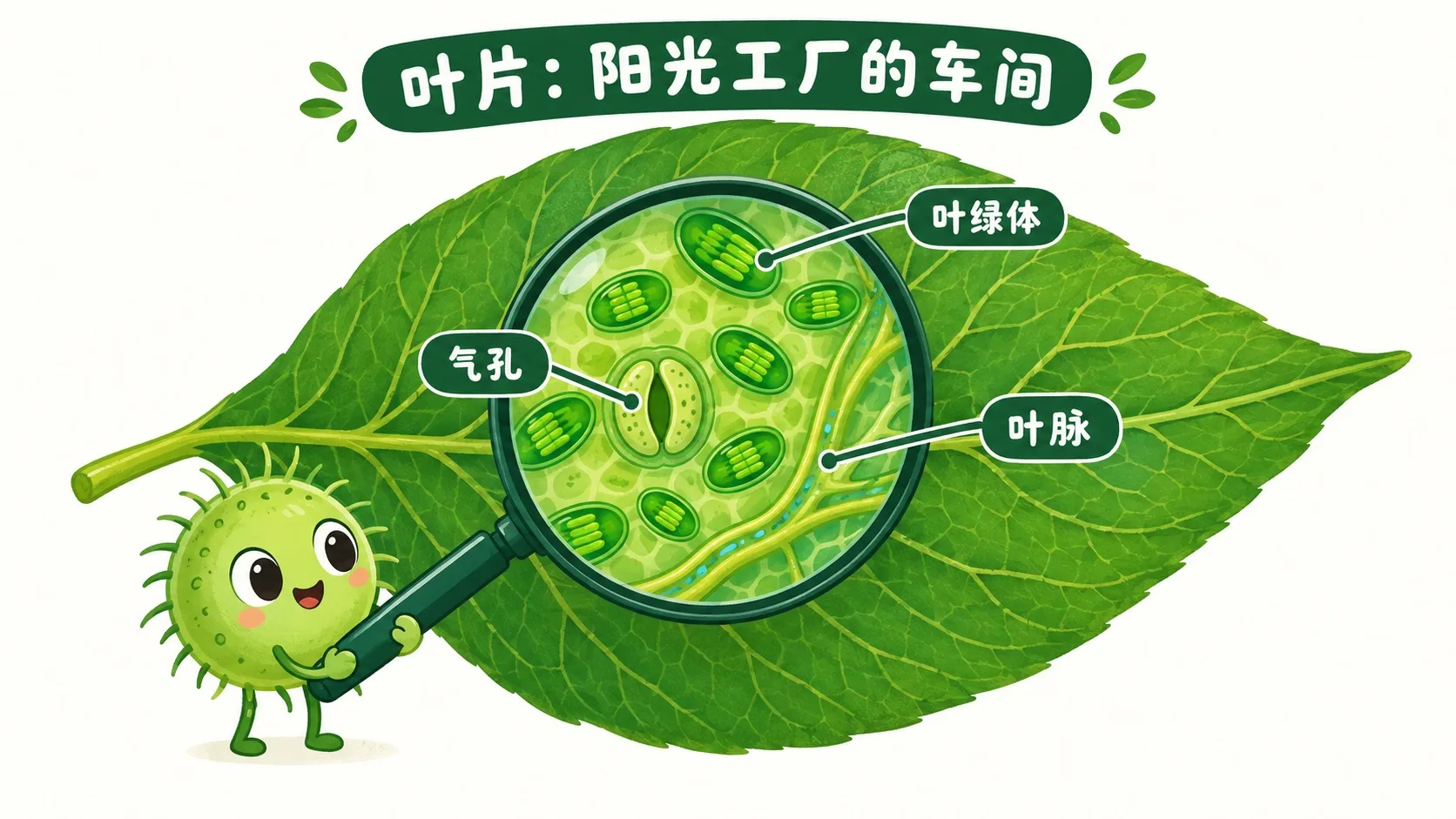
把叶片放大一万倍:叶肉里挤满绿色小车间「叶绿体」,光合作用就在这儿发生——阳光、二氧化碳和水在这里变成糖和氧气。叶子背面开着许多小门「气孔」:二氧化碳从这里进,氧气从这里出。纵横交错的「叶脉」是管道网:把水送进来、把糖运出去。车间、大门、管道凑齐,工厂开工。Zoom a leaf in ten-thousand-fold: the flesh is packed with tiny green workshops called chloroplasts — this is where photosynthesis happens, turning sunlight, carbon dioxide and water into sugar and oxygen. The underside is dotted with little gates called stomata: carbon dioxide walks in, oxygen walks out. Branching veins form the pipe network, bringing water in and carrying sugar away. Workshop, gate and pipes — with all three, the factory runs.
不过,光合作用也在消耗水——那些看不见的水蒸气,是从哪扇门溜走的?Photosynthesis uses water, too — so through which gate does the invisible water vapour slip away?
第 2 步:气孔——会开合的小门Step 2: The stoma — a gate that opens and shuts
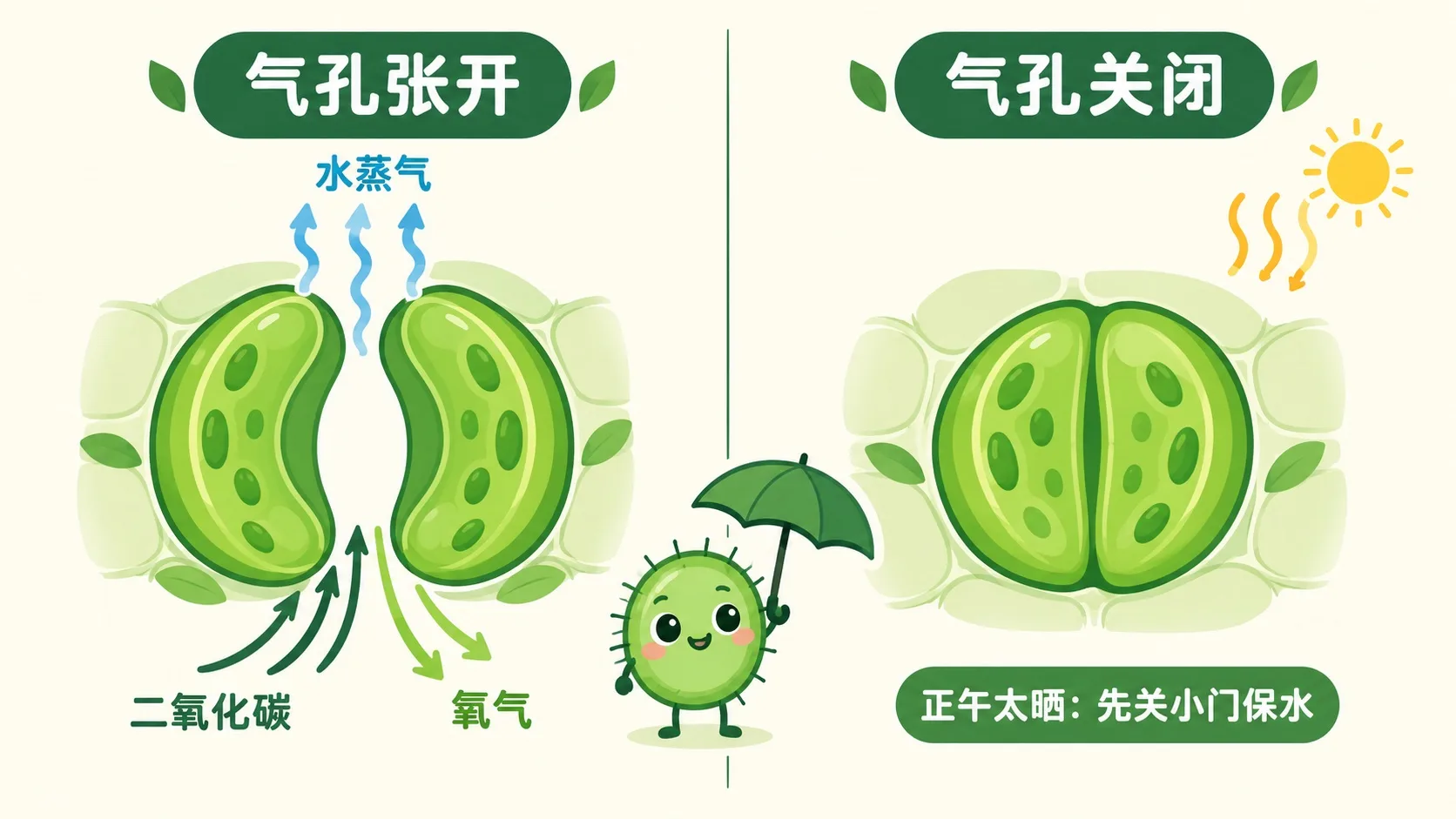
每扇气孔由两枚「保卫细胞」围成,能鼓能瘪:光照好、水分足,它们鼓起来,门就开大——二氧化碳进来,氧气和水蒸气出去。水蒸气从气孔溜走的过程叫「蒸腾作用」,它像一台看不见的抽水机,帮根把水一路往上拉。中午太晒时,根吸水跟不上叶片失水,叶子先蔫一下;气孔也会关小,先保住水,傍晚再挺起来。Each stoma is framed by two guard cells that swell or shrink: with good light and plenty of water they puff up and the gate opens wide — carbon dioxide in, oxygen and water vapour out. This escape of water vapour is called transpiration, an invisible pump that helps roots pull water upward. At noon, when the sun blazes and roots cannot keep up with the leaves, the leaf wilts a little; the stomata close down to save water, and by evening the leaf stands up again.
可是雪原、沙漠、雨林,环境相差那么大——一种叶形能应付得来吗?But snowfields, deserts and rainforests differ so wildly — can one leaf shape handle them all?
第 3 步:叶形是环境出的答卷Step 3: Leaf shapes answer the environment
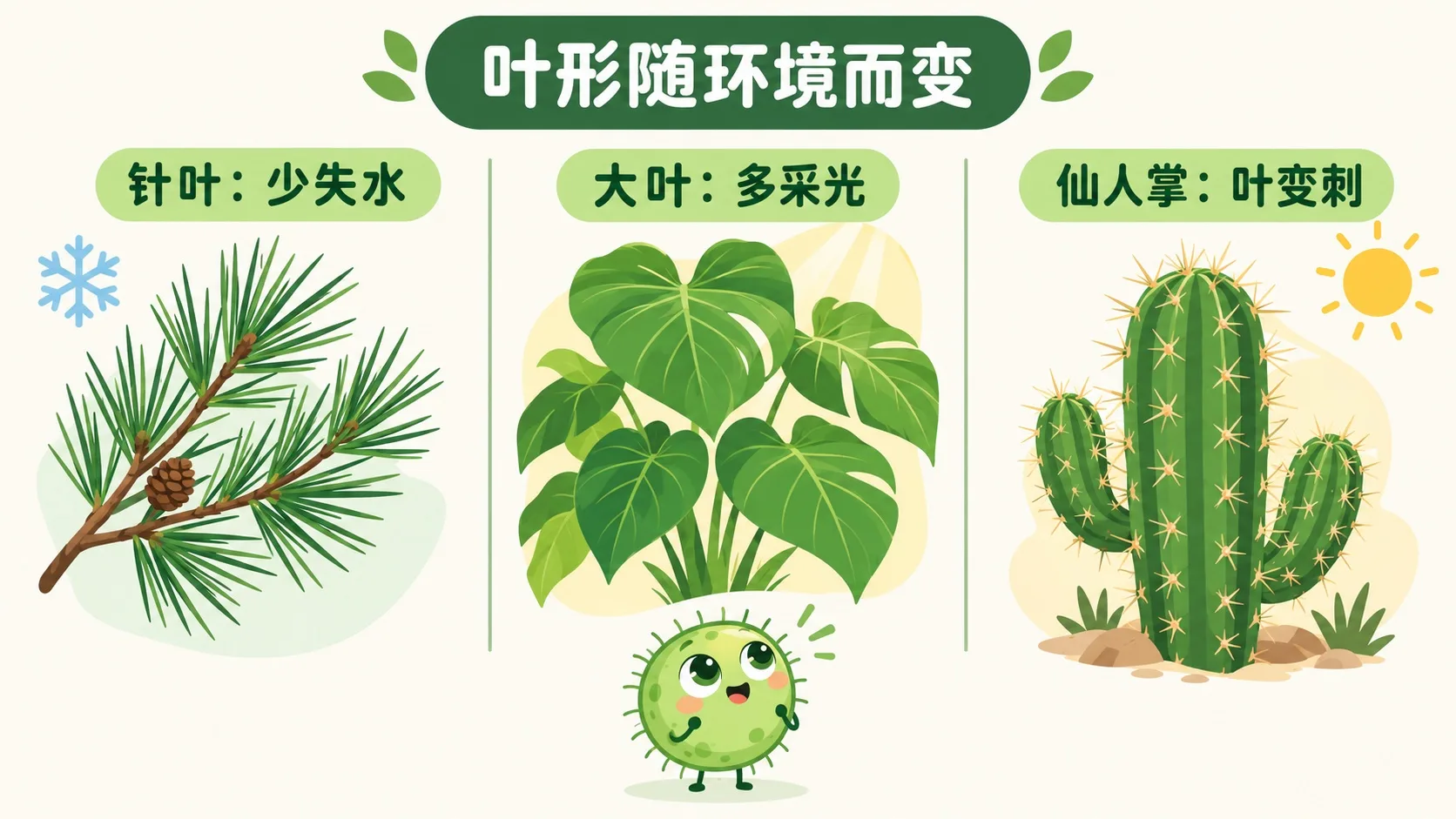
叶子会按环境改样子:松树的针叶又细又硬、表面有蜡,少失水、扛寒冬;雨林的大叶子摊得宽宽,多接一点阳光;仙人掌干脆把叶子缩成刺,让绿色的茎来当厨房。到了秋天,许多树落叶:叶绿素分解,叶片变黄变红,叶柄处断开飘落——既减少水分流失,也省着熬过缺光的冬天。Leaves reshape themselves to fit: pine needles are thin, tough and wax-coated — losing little water and shrugging off winter; rainforest leaves spread wide to catch more light; cacti shrink their leaves into spines and let green stems do the cooking. In autumn many trees drop their leaves: chlorophyll breaks down, leaves turn yellow and red, and the stalk snaps at the base — cutting water loss and riding out the dark, lean winter.
🎮 你来当气孔研究员(1 分钟)🎮 Your turn: stoma researcher (1 minute)
显微镜架好了:拖动「光照」和「土壤水分」,看气孔开合与水蒸气快慢;再完成 4 个实验,解开正午萎蔫之谜。The microscope is ready: drag “light” and “soil water” to watch the stoma and the steam; then finish 4 experiments to crack the noon-wilt mystery.
一句话记住它:叶片 = 阳光工厂的车间——叶绿体造糖,气孔管进出和排水(蒸腾),叶脉管运输。Remember it in one line: a leaf is the sunny workshop — chloroplasts make sugar, stomata handle air and water loss (transpiration), veins do the delivery.
叶绿体是车间、气孔是门、叶脉是管道——三件套缺一不可Chloroplast: the workshop; stoma: the gate; vein: the pipes — all three are essential气孔会开合:光照是开门信号;缺水时关门保水,这就是正午萎蔫的秘密Stomata open and shut: light is the opening signal; drought shuts them to save water — the noon-wilt secret叶形随环境变:针叶省水、大叶采光、仙人掌叶变刺;落叶是为了省水过冬Shapes follow the environment: needles save water, big leaves catch light, cactus leaves become spines; leaf drop saves water for winter
内容参考 OpenStax 等公开教材,多来源核对 · AI 生成、人工审核 · 发现错误欢迎指正,帮这片叶子长得更好。Based on OpenStax and other open textbooks, cross-checked across sources · AI-generated, human-reviewed · Spotted a mistake? Tell us — help this leaf grow.
 Back to tree