🪞 光的反射:入射角等于反射角🪞 Reflection of Light: Angle In Equals Angle Out
上一片里,光一直规规矩矩地走直线。可它一碰到镜子,立刻拐了个精确的弯——拐向哪里,其实有一条铁律。Last leaf, light kept to a perfectly straight path. But the moment it meets a mirror it turns — and there is an iron rule for exactly where it goes.
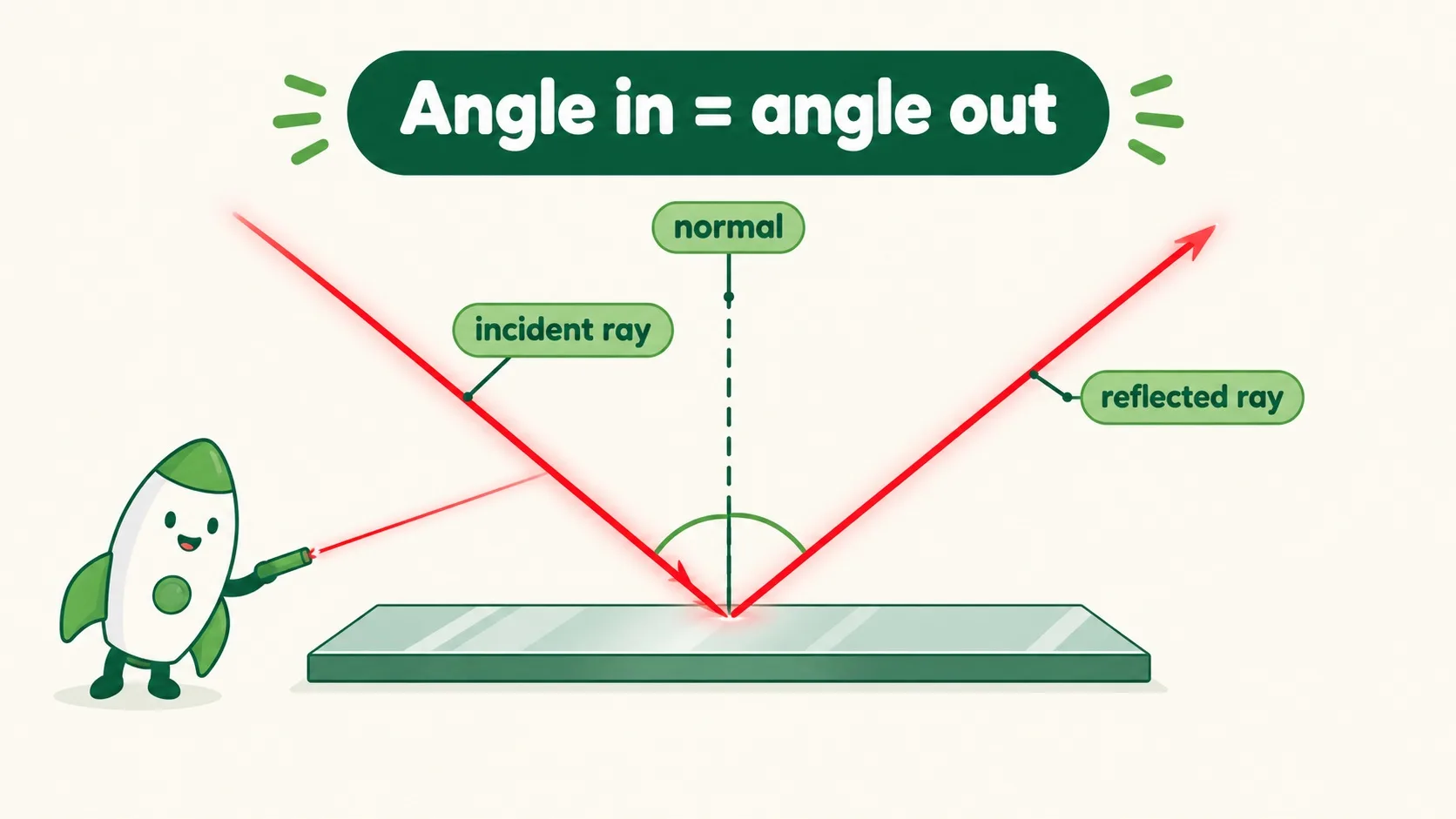
第 1 步:入射角 = 反射角Step 1: Angle in = angle out
先看清这场"反弹"的规矩。First, let's pin down the rule of this bounce.
把入射光线、镜面、法线(过入射点垂直于镜面的虚线)摆在一起看:入射光线与法线的夹角叫入射角,反射光线与法线的夹角叫反射角,两者永远相等。入射光线、反射光线和法线还在同一个平面里——像台球撞库边,但比台球守规矩得多。Line up the ray, the mirror and the normal (a dashed line perpendicular to the mirror at the hit point): the angle between the incoming ray and the normal is the angle of incidence; the angle between the outgoing ray and the normal is the angle of reflection — always equal. The two rays and the normal also share one flat plane. It's like a billiard ball off the cushion, but far more disciplined.
守规矩的反射,会"造"出什么东西?What does this disciplined bouncing create?
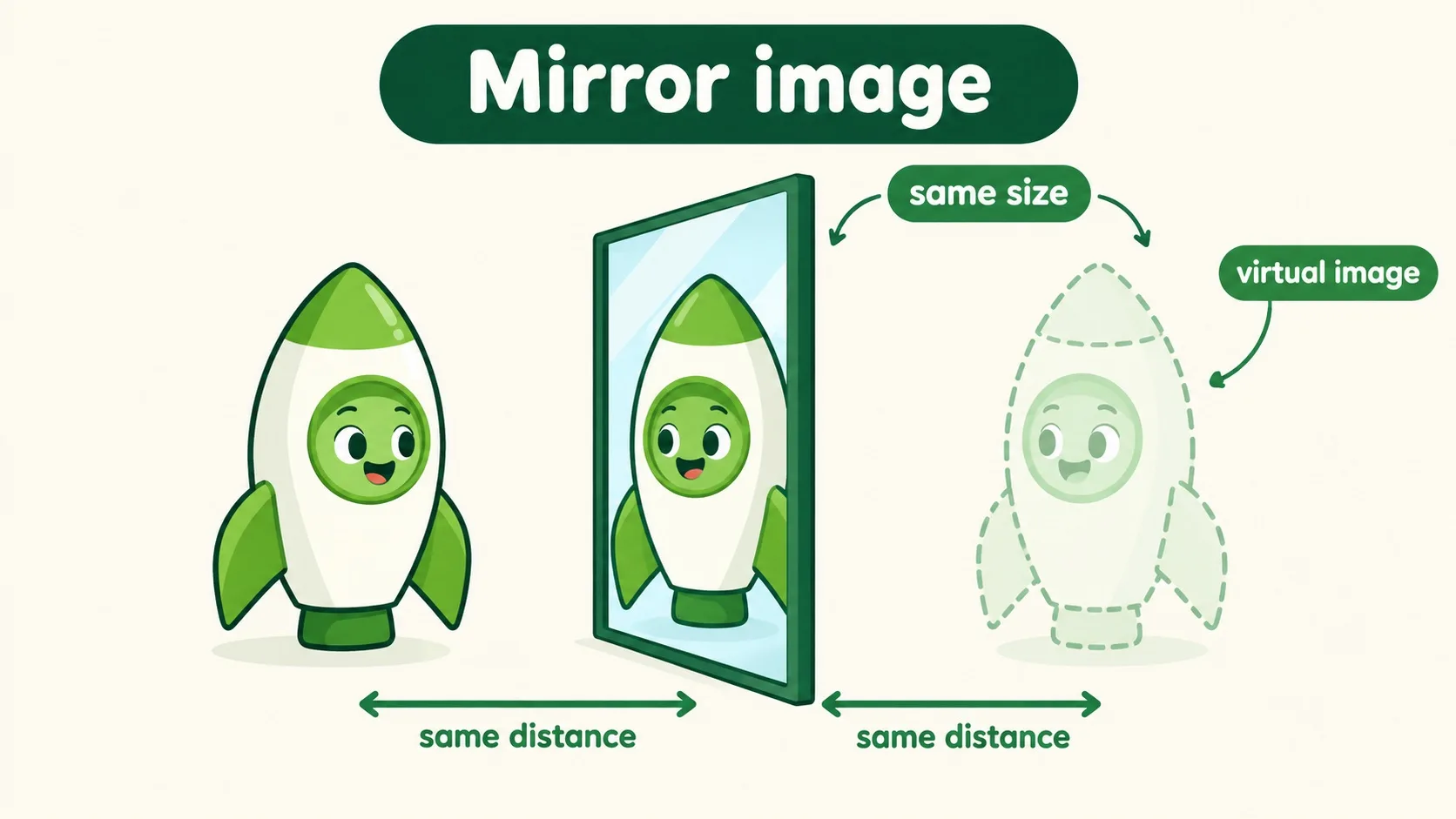
第 2 步:镜子里的那个"你"Step 2: The "you" inside the mirror
平面镜里的像:与物等大、到镜面的距离相等、左右相反。它由反射光线的反向延长线相交而成,镜后并没有真的东西——所以叫虚像。镜子够大,你才能看到完整的自己。A plane mirror image is the same size as the object, sits the same distance behind the mirror, and is left-right swapped. It forms where the reflected rays' backward extensions meet — nothing actually exists behind the glass, so we call it a virtual image.
同样是反射,为什么镜子晃眼,白纸却很温和?Same reflection — so why does a mirror glare while paper stays gentle?
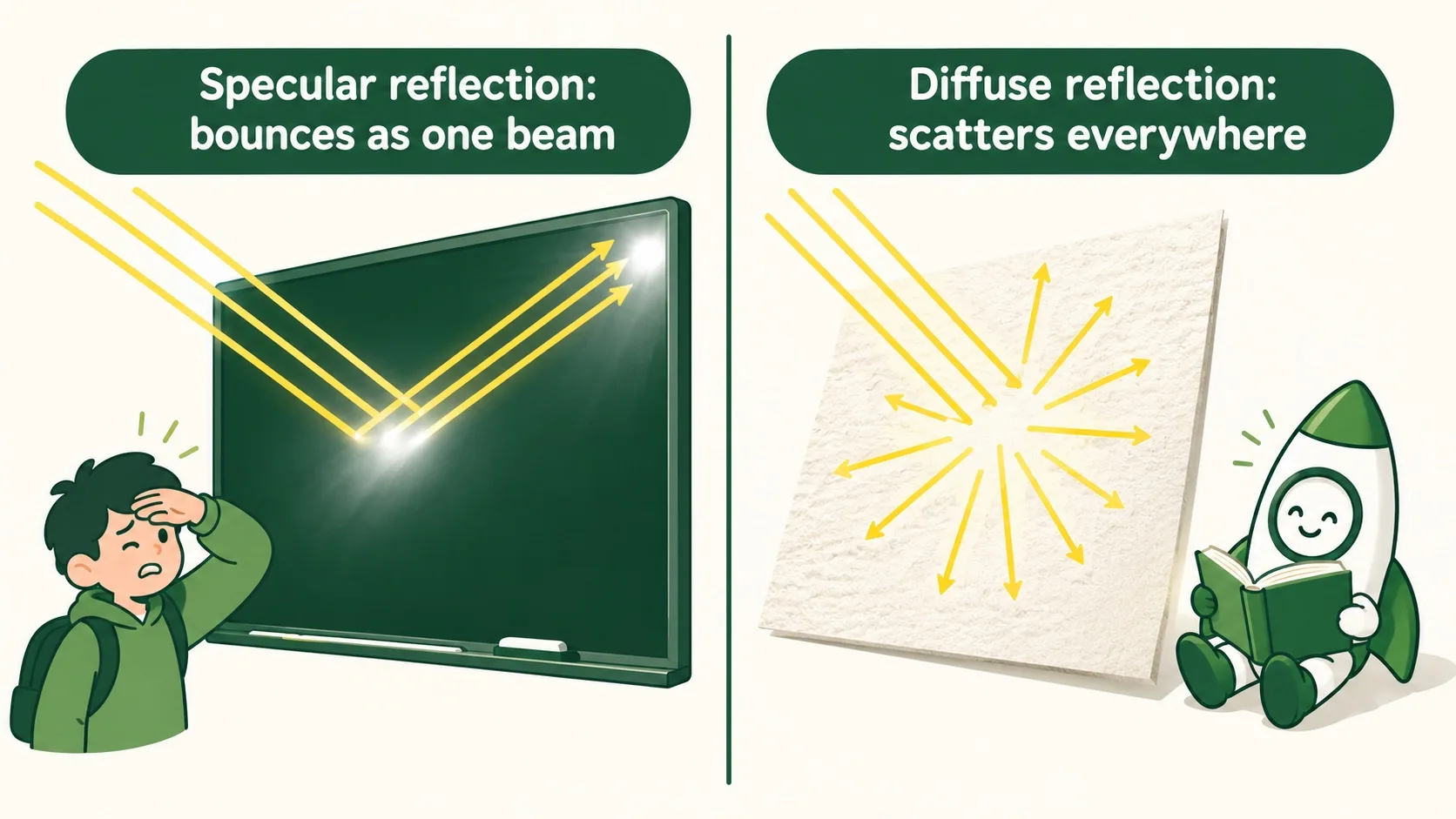
第 3 步:镜面反射与漫反射Step 3: Specular vs diffuse reflection
表面光滑时,平行光整齐地朝一个方向弹走——镜面反射,有时会刺眼(黑板某个角度反光就是这么来的)。表面粗糙时,光被弹向四面八方——漫反射,所以从任何角度都能看清纸上的字,月光下也一样。On a smooth surface, parallel rays bounce off together in one direction — specular reflection, which can glare (that's the shine you catch from a blackboard). On a rough surface, rays scatter in every direction — diffuse reflection, so a page is readable from any angle, even by moonlight.
🎮 你来当激光射手(1 分钟)🎮 Your turn: laser shooter (1 minute)
规矩学会了。转动镜子,把反射光送进靶心,4 个靶等你命中——入射角和反射角会实时亮出来。Rule learned. Rotate the mirror to send the beam into each bullseye — 4 targets, with both angles shown live.
一句话记住它:反射定律——入射角等于反射角,三线共面;平面镜成等大等距的虚像;镜面反射聚成束、会晃眼,漫反射散开来、让我们看清世界。Remember it in one line: angle in = angle out, all three lines in one plane; a plane mirror gives a same-size, same-distance virtual image; specular reflection beams and glares while diffuse reflection scatters and lets us see.
入射角 = 反射角,都从法线量起;入射光线、反射光线、法线三线共面Angle in = angle out, both from the normal; the two rays and the normal share one plane平面镜成像:等大、等距、左右相反,是虚像(镜后没有实物)Plane mirror: same size, same distance, left-right flipped — a virtual image镜面反射整齐 → 晃眼;漫反射散开 → 各角度都能看清物体Specular is tidy → glare; diffuse scatters → objects visible from every angle
内容参考 OpenStax 等公开教材,多来源核对 · AI 生成、人工审核 · 发现错误欢迎指正,帮这片叶子长得更好。Based on OpenStax and other open textbooks, cross-checked across sources · AI-generated, human-reviewed · Spotted a mistake? Tell us — help this leaf grow.
 Back to tree