文化馆收到一句话。研究语言先观察什么?The culture fair receives a sentence. What can a language researcher observe?
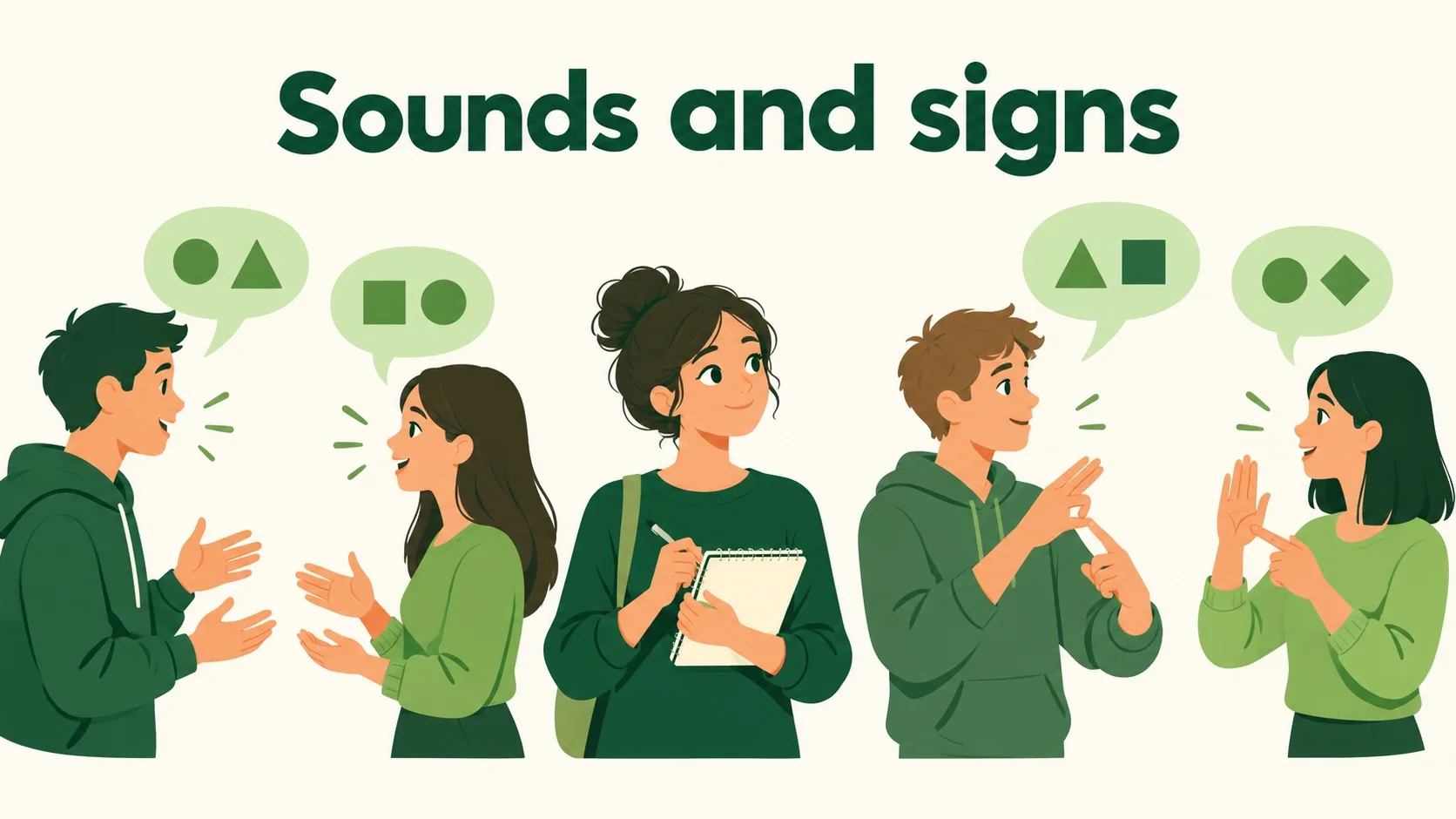
第 1 步:声音与手势Step 1: Sounds and signs
先记录人实际怎样交流。First observe how people communicate.
语言学研究语言的结构和使用。口语用声音,手语用可见动作。文字记录语言,却不等于全部语言。Linguistics studies language structure and use. Speech uses sounds; signed languages use visible movements. Writing represents language but is not language itself.
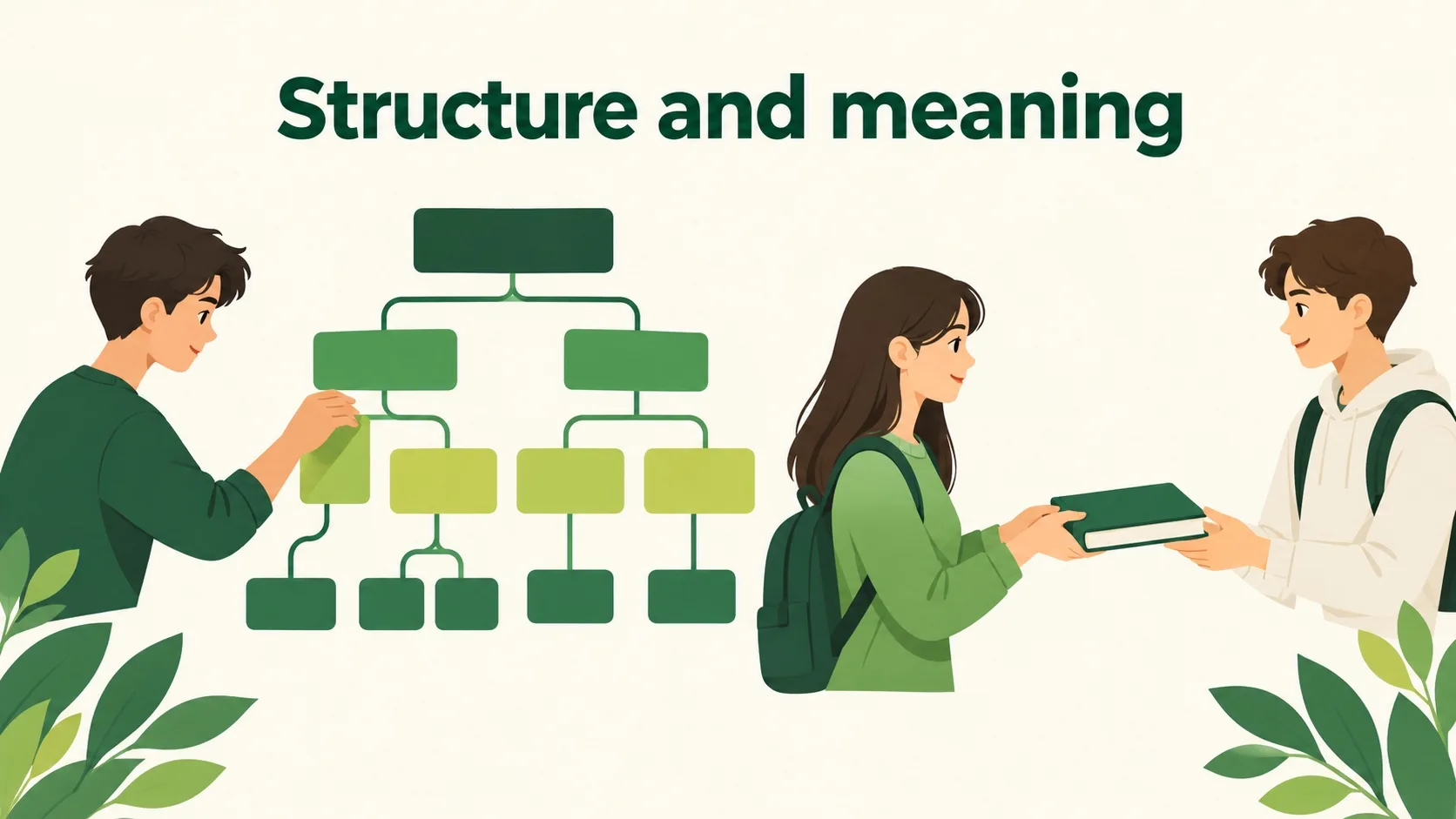
第 2 步:结构与意义Step 2: Structure and meaning
记录之后,再把句子拆开。Now examine parts of the sentence.
“小林送小叶一本书”含词和句法。句法研究词怎样组成结构。语义研究意思;语用研究具体场合的用法。In “Lin gives Ye a book,” words form a structure. Syntax studies such structures. Semantics studies meaning; pragmatics studies language in context.
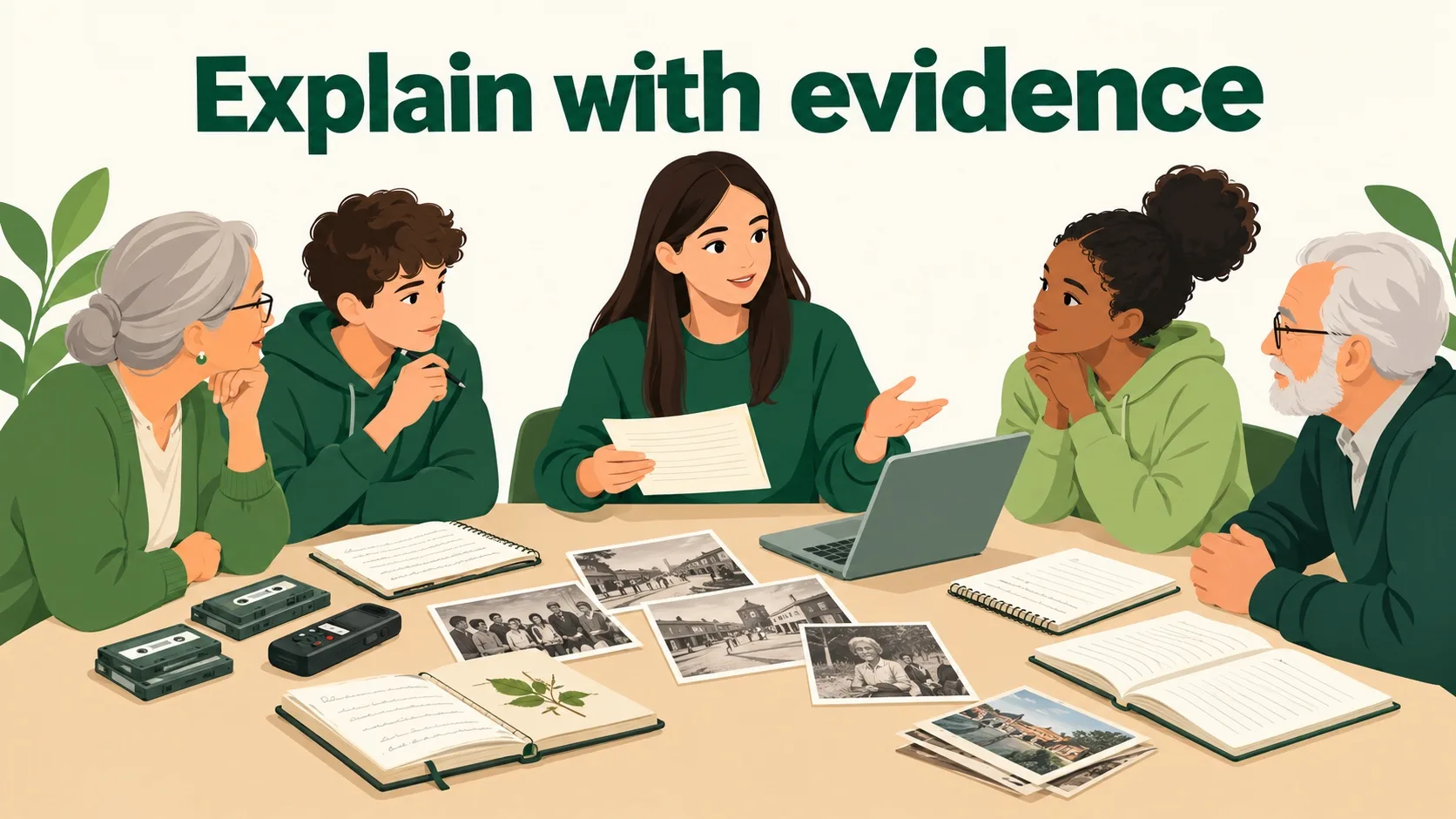
第 3 步:带着证据解释Step 3: Explain with evidence
懂结构,还得回到真实说话者。Structures must be checked against real speakers.
文化馆比较不同人的表达。方言也有系统规则。描述用法与制定写作规范是两种工作。样本太少,不能代表所有人。The fair compares speakers’ expressions. Dialects also have systematic rules. Describing usage differs from prescribing a writing standard. A small sample cannot represent everyone.
🎮 你来探索与判断🎮 Explore and reason
先操作实践台,再用四个挑战检验理解。每次判断都能看见理由。Explore the practice table, then try four challenges. Each judgment comes with a reason.
一句话记住它:语言学用证据研究语言如何运作。Remember: Linguistics uses evidence to study how language works.
语言包括手语。Language includes signed languages.结构、意义和场合要分开看。Separate structure, meaning and context.方言不是没有规则。Dialects are not ruleless.
来源与理解边界Sources and limits
核心概念有广泛共识。具体语言分析会随证据修订。Core concepts are widely accepted. Analyses of particular languages can change with evidence.
来源查阅:2026 年 10 月 6 日。场景与例题为教学创作;插图为概念示意,不是历史实物照片。Sources checked on 6 October 2026. Scenarios and exercises are educational creations; illustrations are conceptual, not historical photographs.
参考上列公开资料 · AI 生成与自动化检查 · 欢迎提供可核查的勘误。Based on the public sources above · AI-generated and automatically checked · Verifiable corrections are welcome.
 Back to tree