🔌 逻辑连接词:与、或、非的开关电路🔌 Logical Connectives: AND, OR, NOT as Circuits
上一片里,我们把一句话判成真或假,像一枚硬币只有两面。可生活里的话常常是拼起来的:“带伞并且穿雨衣”“刷卡或者扫码”“不许喧哗”。拼起来之后,整句话是真是假?小算盘机器人接了个新活——帮宝箱管理员装一套开关电路。Last leaf we judged one plain sentence true or false, like a coin with only two sides. But real sentences are built by joining pieces: “take an umbrella AND wear a raincoat”, “swipe a card OR scan a code”, “do NOT shout”. Once joined, is the whole sentence true? The little abacus robot has a new job — wiring a switch circuit for the treasure-chest keeper.
第 1 步:与 ∧——两把钥匙都拧,宝箱才开Step 1: AND ∧ — both keys must turn
先看最严格的连接词:它要求所有条件都满足。Start with the strictest connective: it demands every condition be met.
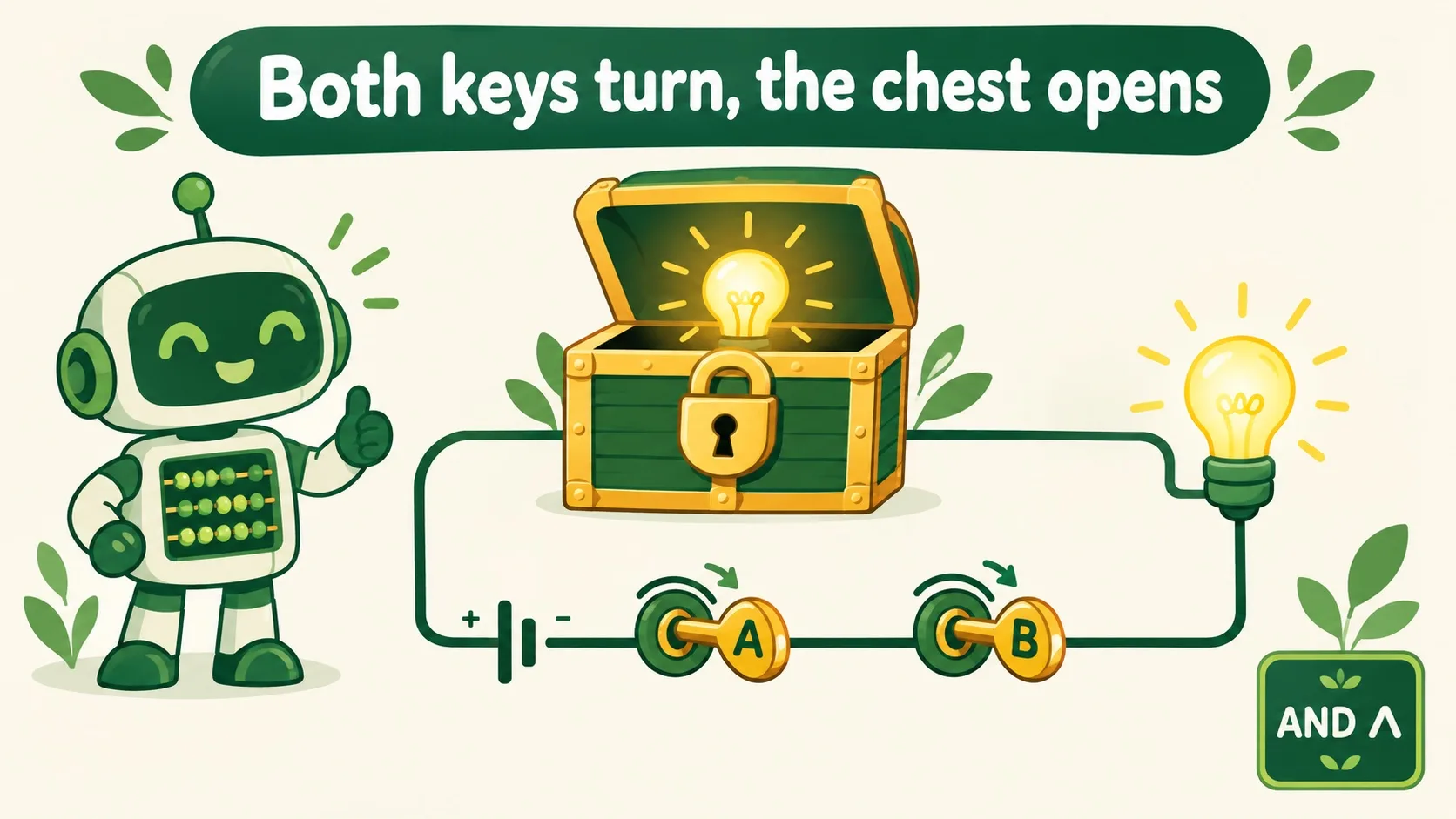
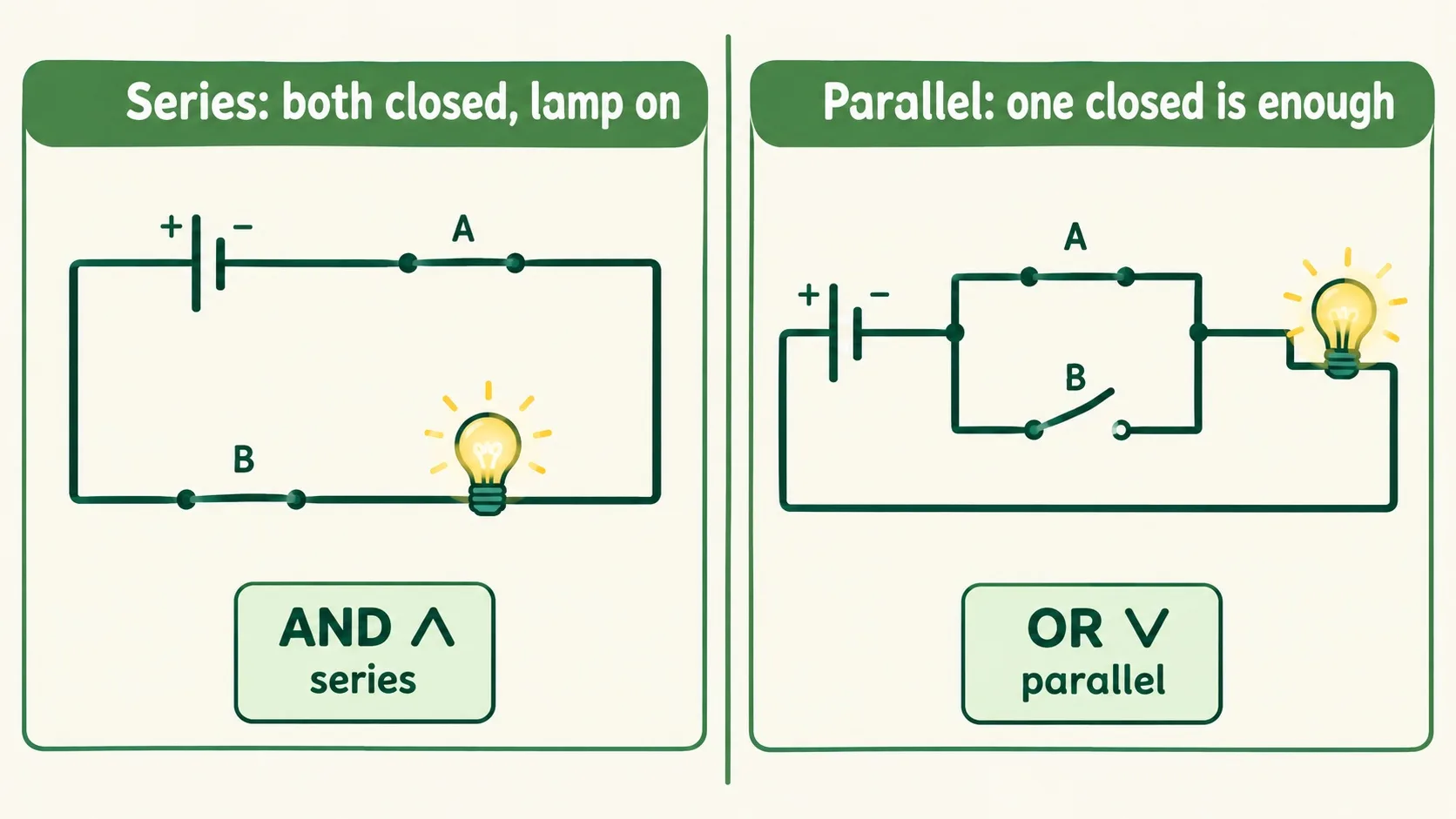
机器人把两把钥匙接成一条链:钥匙 A、钥匙 B,电流要挨个通过。两个条件都为真,灯才亮、箱才开——这就是「与」(∧,AND),日常话里的“并且”“同时”。比如:插卡 ∧ 输密码 = 取到钱,少任何一步机器都不放行。The robot chains two keys into one line: key A, then key B — the current must pass through each in turn. Only when both conditions are true does the lamp light and the chest open. That is AND (∧): everyday “and”, “also”, “at the same time”. Insert card ∧ enter PIN = cash out; skip either step and the machine refuses.
那要是两条路都走得通、不用等另一个呢?What if two routes both work — and neither waits for the other?
第 2 步:或 ∨——有一个就行Step 2: OR ∨ — either one will do
并联电路给电流留了两条路:A 通、或者 B 通,灯就亮——这就是「或」(∨,OR),日常话里的“或者”“至少一个”。注意:数学的“或”不排他——A、B 都真时整句照样真(两条路都通,灯当然也亮)。例:走前门 ∨ 走后门,都算到家。A parallel circuit leaves the current two routes: A closed, or B closed, and the lamp lights. That is OR (∨): everyday “or”, “at least one”. Note: maths OR is not exclusive — if A and B are both true, the whole sentence is still true (both routes open, the lamp still shines). Front door ∨ back door — either way, you are home.
最后一位连接词只有一个输入,却把结果整个翻过来。The last connective takes just one input — yet flips the whole result.
第 3 步:非 ¬——把真假反过来Step 3: NOT ¬ — flip true and false
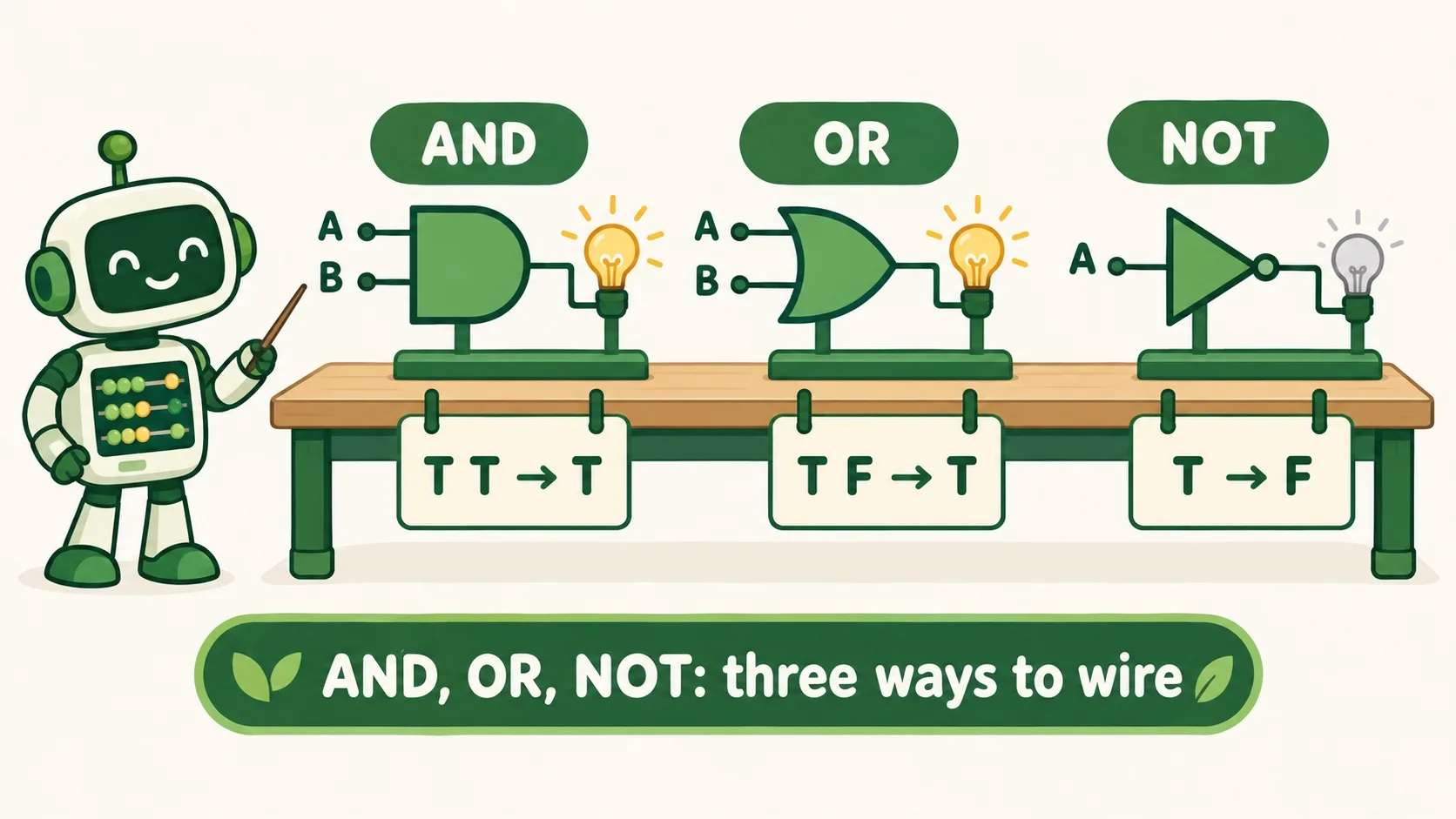
「非」(¬,NOT)像一个反向开关:输入真、输出假;输入假、输出真。日常话里的“不”“没有”:¬A =“没插卡”。三位还能合体:电梯能动 = 门关好 ∧ ¬超载。下一片,我们把这些组合的所有情况一次列清楚。NOT (¬) works like an inverted switch: input true, output false; input false, output true. Everyday “not”, “no”: ¬A = “card not inserted”. The three can team up: lift moves = doors closed ∧ ¬overloaded. Next leaf, we lay out every combination of these expressions — all at once.
🎮 拨开关,配连接词(30 秒)🎮 Flip switches, match connectives (30 seconds)
切换串联 / 并联 / 反向,拨拨开关看灯亮的规律;再把 4 张任务卡配给正确的连接词。Switch between series / parallel / inverted, flip the switches and watch the lamp; then match 4 task cards to the right connectives.
一句话记住它:连接词就是逻辑的“接线方式”:与 = 串联(都要满足),或 = 并联(一个就行),非 = 反着来。Remember it in one line: connectives are the wiring of logic: AND = series (both), OR = parallel (one is enough), NOT = the other way round.
与 ∧:两个都为真,结果才真——像串联,缺一个就断AND ∧: true only when both are true — like a series circuit, one gap breaks it或 ∨:有一个为真,结果就真——像并联;两个都真也算真OR ∨: true when at least one is true — like parallel; both true also counts非 ¬:真变假、假变真——像反向开关,“不”字诀NOT ¬: true becomes false and false becomes true — the inverted switch
内容参考 OpenStax 等公开教材,多来源核对 · AI 生成、人工审核 · 发现错误欢迎指正,帮这片叶子长得更好。Based on OpenStax and other open textbooks, cross-checked across sources · AI-generated, human-reviewed · Spotted a mistake? Tell us — help this leaf grow.
 Back to tree