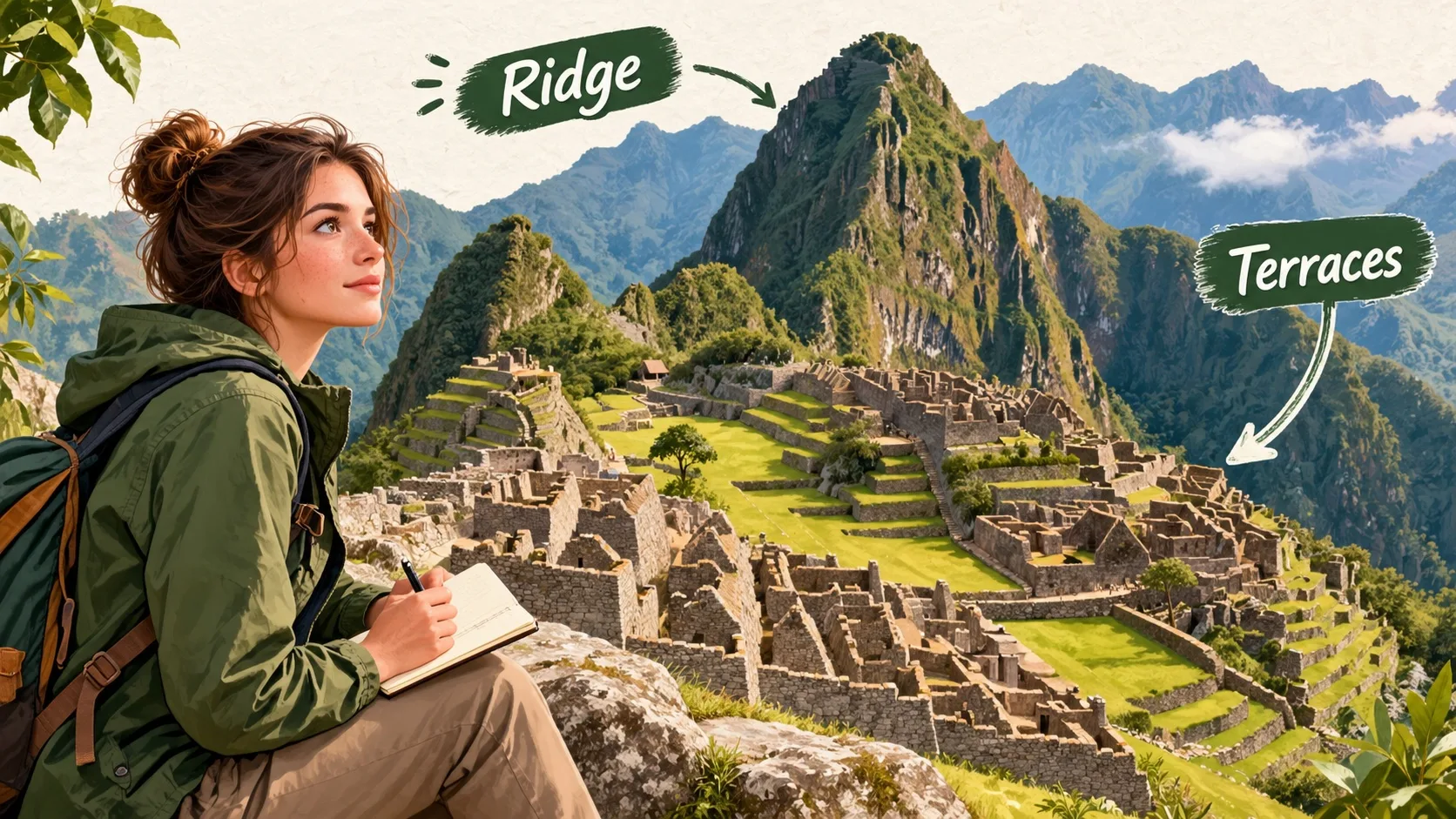
阿禾登上安第斯山脊。建在陡坡上的聚落,怎样应对雨水?Ahe climbs an Andean ridge. How does a settlement on a steep slope manage rain?
第 1 步:在山地理解建筑Step 1: Read architecture in its terrain
马丘比丘位于今秘鲁。Machu Picchu lies in present-day Peru and is associated with the fifteenth-century Inca world.
遗址与15世纪印加文明有关。房屋、台地与山脊互相适应。它不是无人知晓的空白,后来才被外来者发现。Buildings and terraces fit the mountain ridge. The place was not an unknown blank waiting for outsiders; local knowledge is part of its history.
第 2 步:台地不只为了好看Step 2: Terraces have practical roles
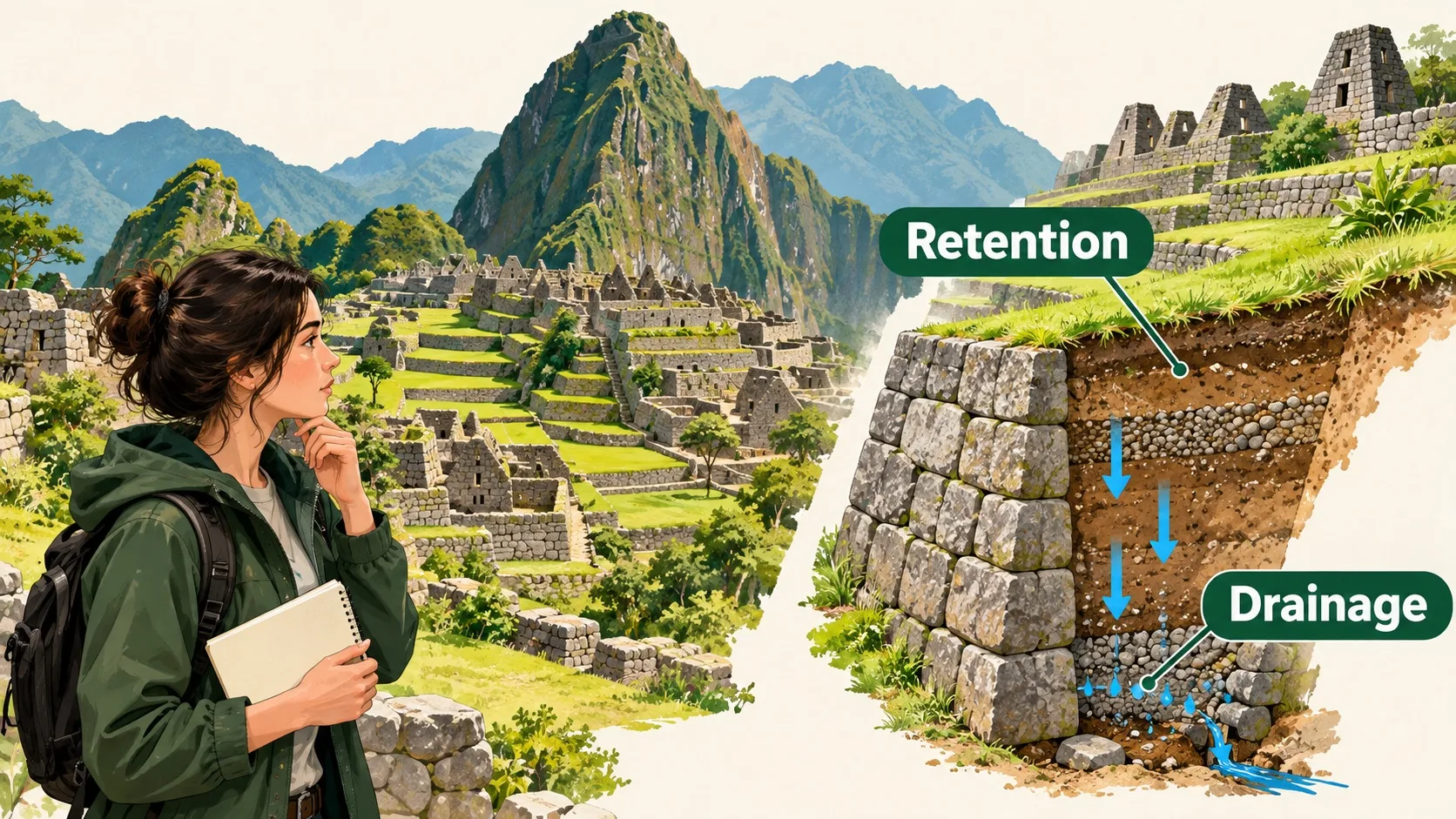
台地把陡坡分成较平的层级。Terraces divide a steep slope into flatter levels.
挡土结构与排水帮助管理水土。石作与地形共同工作。示意模型只解释原理,不代替遗址工程测量。Retaining structures and drainage help manage soil and water. Masonry and terrain work together. A simplified model explains these principles but does not replace engineering measurements at the site.
第 3 步:文化与自然一起保护Step 3: Protect culture and nature together
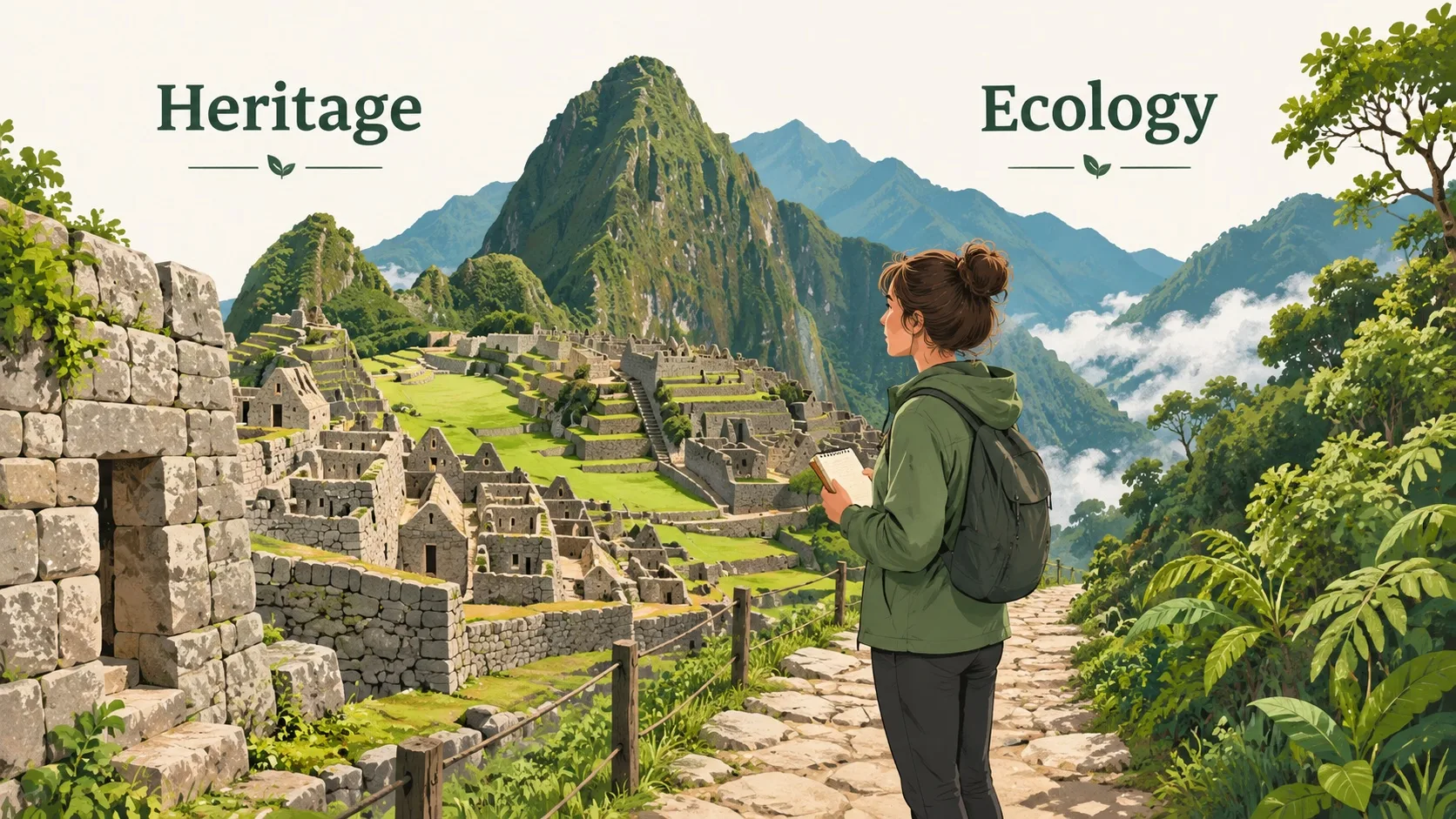
遗产价值包括建筑与周围生态。The site’s value includes architecture and its surrounding ecology.
旅游能支持保护,也带来压力。阿禾沿指定路线行走。理解遗址,也要了解当地社区与长期管理。Tourism can support conservation while also creating pressure. Ahe follows designated routes. Understanding the place includes local communities and long-term management, not only a famous viewpoint.
🎮 台地与排水实验🎮 Terrace and drainage model
调整台地层数并接通排水。四个挑战要求逐渐增加的层数。观察示意雨水:层级与排水共同工作,数值不是工程预测。Adjust the terrace count and connect drainage. Four challenges ask for increasing levels. Watch the schematic rain: terraces and drainage work together. The numbers are not engineering predictions.
一句话记住它:马丘比丘属于印加历史景观。Remember: Machu Picchu belongs to the Inca landscape.
马丘比丘属于印加历史景观。Machu Picchu belongs to the Inca landscape.台地与排水帮助适应陡坡。Terraces and drainage adapt to steep terrain.当地知识和自然环境同样重要。Local knowledge and the environment matter.
依据上述公开资料编写 · AI 辅助制作 · 发现问题欢迎指正,帮这片叶子长得更好。Based on the public sources above · AI-assisted production · Spotted a problem? Tell us — help this leaf grow.
 Back to tree