⚡ 电流的磁效应:电生磁的魔法⚡ The Magnetic Effect of Current: When Electricity Makes Magnetism
上一片我们认识了磁场——看不见、摸不着,却能让小磁针听话。这一片有个更神奇的发现:电流自己也能造出磁场。故事要从 1820 年奥斯特课堂上那根突然转动的小磁针说起。Last leaf we met magnetic fields — invisible, yet able to turn a compass. This leaf holds something stranger: an electric current can create a magnetic field of its own. It starts with a compass that suddenly twitched in Oersted's classroom in 1820.
第 1 步:奥斯特的意外发现Step 1: Oersted's surprise
小磁针平时安静地指着南北,是什么让它突然转了向?A compass quietly points north-south. What could possibly make it turn?
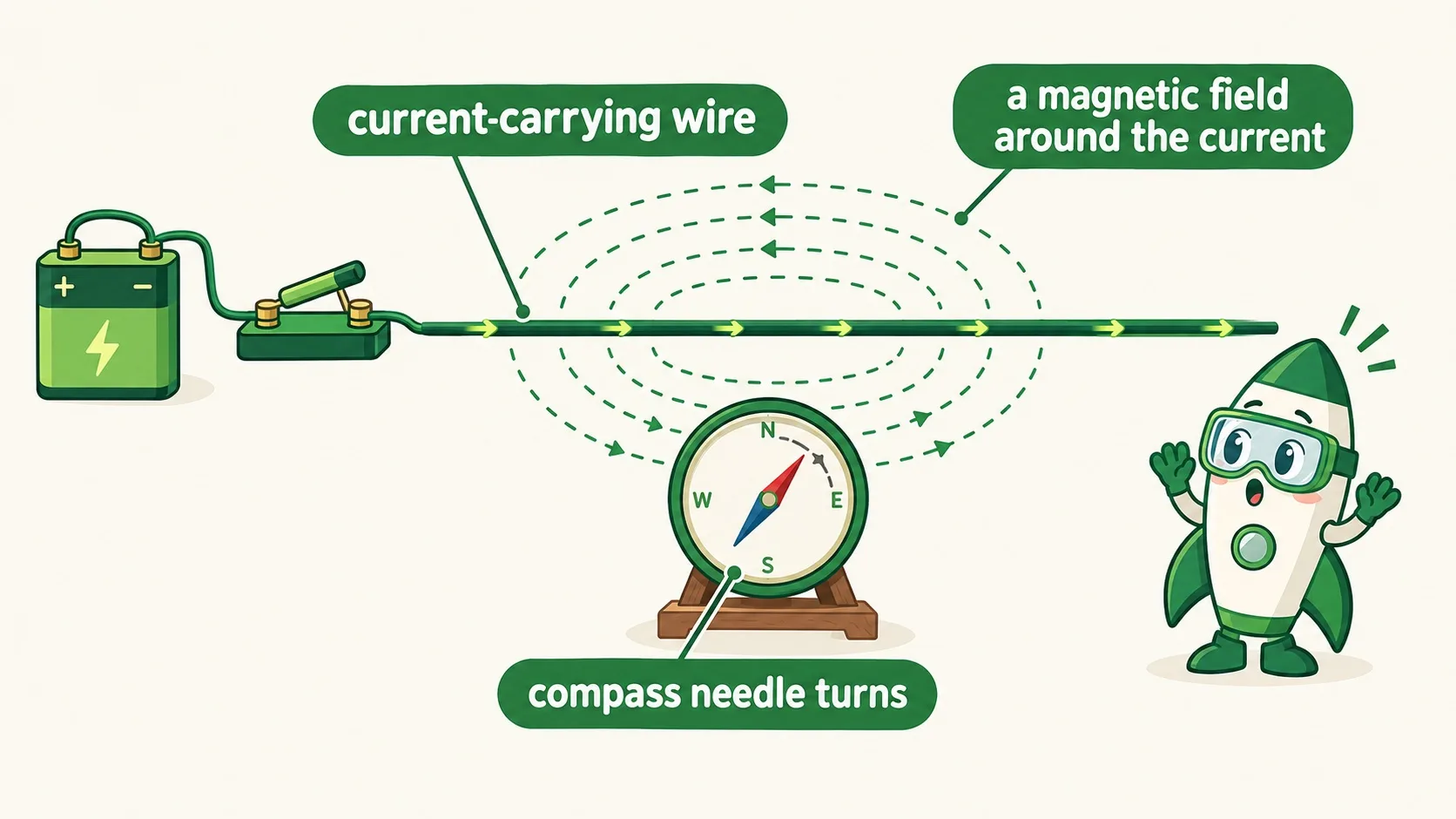
导线一通电,下方的小磁针立刻偏转——只有磁力才能推动磁针,说明电流周围出现了磁场,这就是电流的磁效应。把电流方向反过来,磁针就往另一边偏;电流越大,偏得越远。断开电流,磁针转回南北,磁场随之消失。The moment the wire carries current, the compass needle under it swings — and only a magnetic force can turn a compass. So a current is surrounded by a magnetic field: the magnetic effect of current. Reverse the current and the needle swings the other way; more current, bigger swing; cut the current and it settles back north.
既然电流能生磁,能不能造一块“想开就开、想关就关”的磁铁?If a current can make magnetism, can we build a magnet we can switch on and off?
第 2 步:造一块能开关的磁铁——电磁铁Step 2: A magnet you can switch on and off
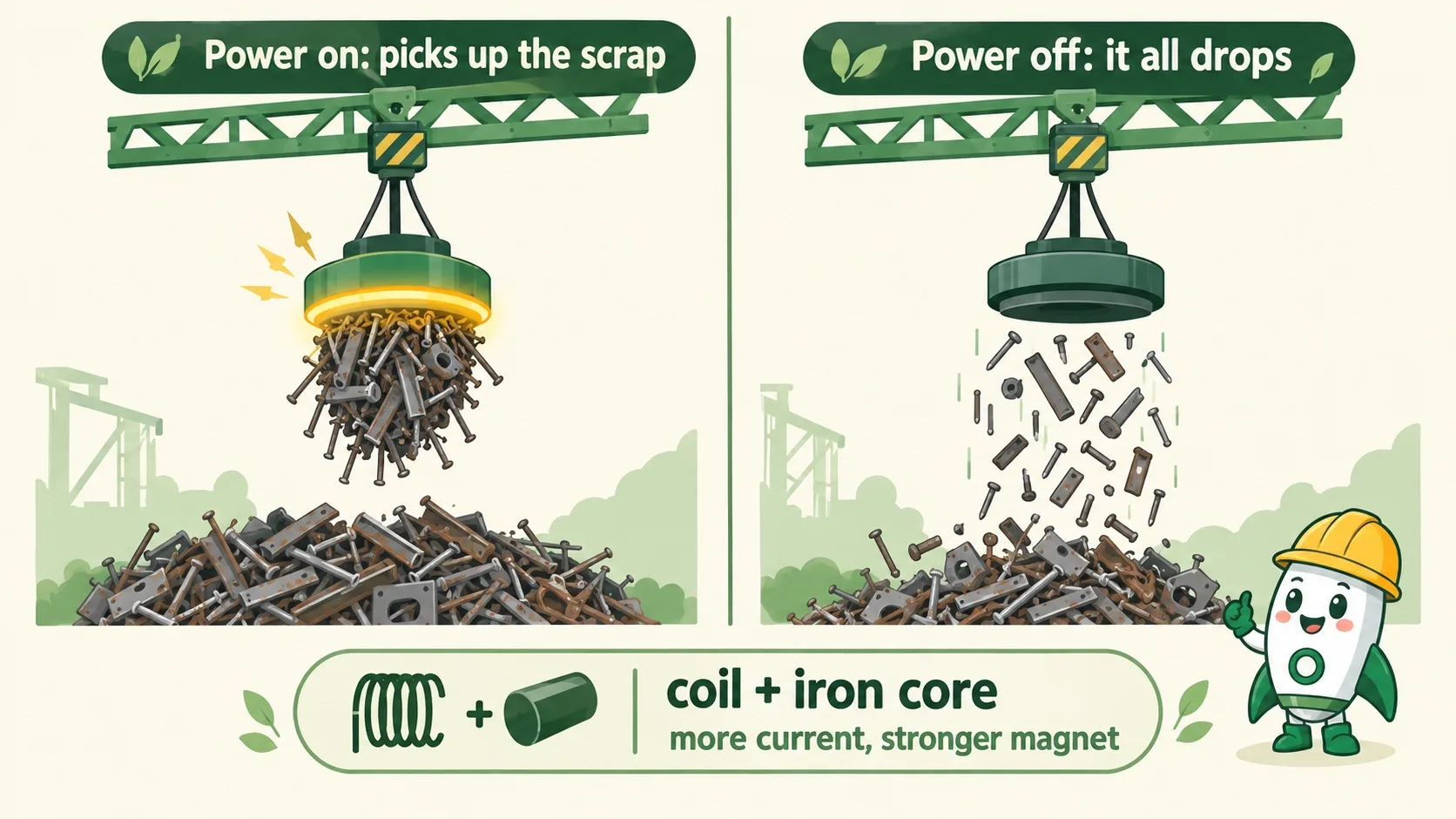
把导线绕成线圈,再插一根软铁芯,通电就成了电磁铁。电流越大、线圈匝数越多,磁性越强;断电以后,磁性几乎立刻消失。好用的秘密就在这儿:强弱可调、开关随意——这是永久磁铁做不到的。Coil the wire around a soft-iron core and the current turns it into an electromagnet. More current or more turns means a stronger magnet; switch the current off and the magnetism vanishes almost instantly. That's its superpower: adjustable strength and an on-off switch no permanent magnet has.
能开、能关、能调强弱的磁铁,会在哪里大显身手?A magnet that switches and tunes — where does it earn its keep?
第 3 步:电磁铁在干活Step 3: Electromagnets at work
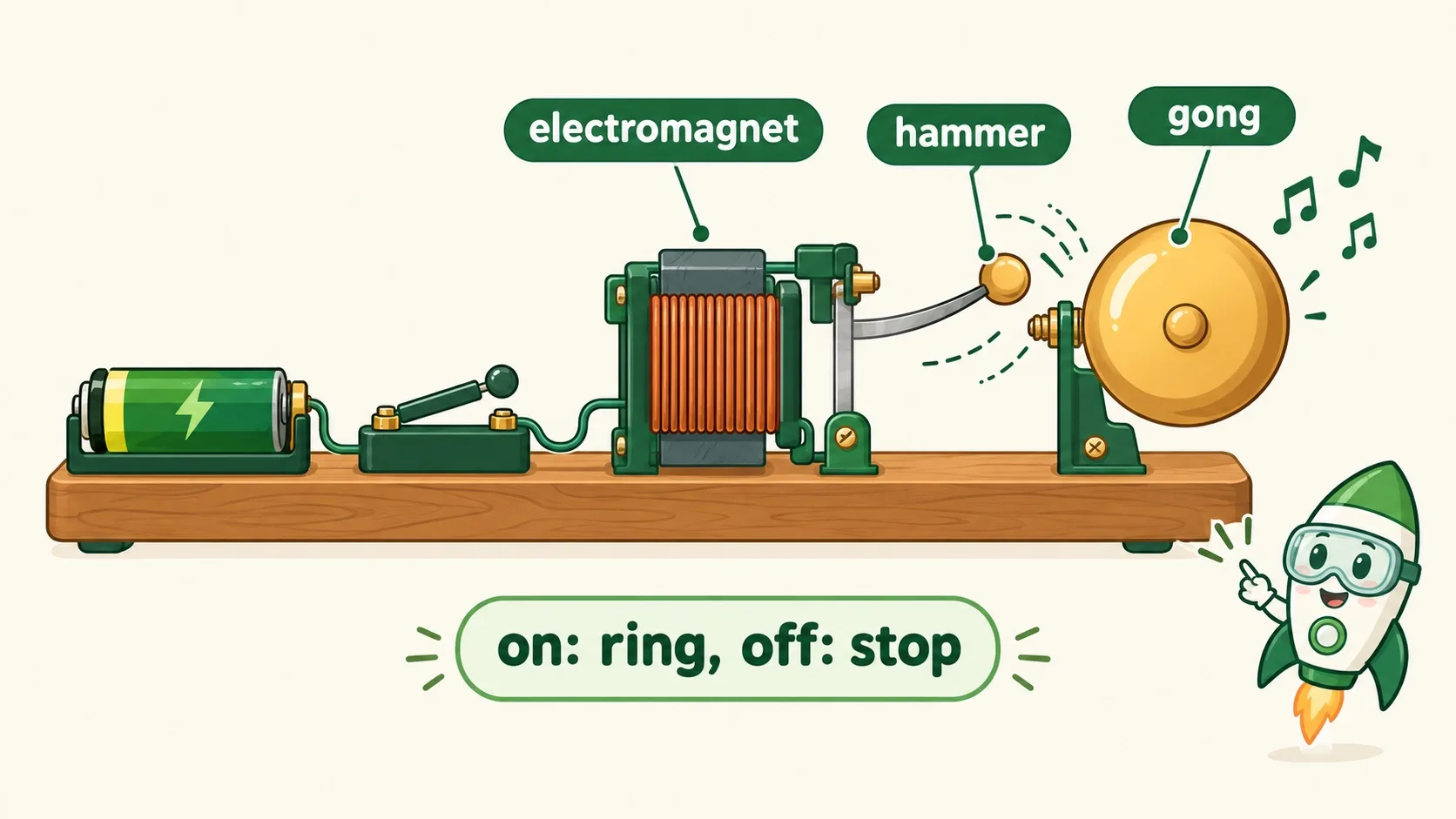
电磁起重机通电吸起成吨的废铁,断电一松就放下;电铃里电磁铁一通电就吸住小锤敲响铃,电路一断小锤弹回,于是“叮叮叮”响个不停。扬声器、磁悬浮列车、门铃里,都有它在工作。A scrap crane lifts tonnes of iron with the current on, and drops it all when the current stops. In an electric bell, the electromagnet tugs a hammer that strikes the gong, then the circuit breaks and the hammer springs back — buzzing on and on. Speakers, maglev trains and doorbells all put it to work.
🎮 你来当奥斯特(30 秒)🎮 Your turn: be Oersted (30 seconds)
道理讲完了。先拖电流滑块、切换方向,看小磁针怎么偏转;再切到电磁铁面板,看电流能吸起几根铁钉。4 个挑战等你通关。Theory done. Drag the current slider, flip its direction and watch the compass; then switch to the electromagnet panel and count the nails. Four challenges await.
一句话记住它:电流周围有磁场——电生磁;把导线绕成线圈插上铁芯就是电磁铁,电流越大磁性越强,断电就消失。Remember it in one line: a current is surrounded by a magnetic field; coil it around a soft-iron core to get an electromagnet — stronger with more current, gone the moment you switch it off.
奥斯特实验:通电导线让小磁针偏转,说明电流周围有磁场Oersted's experiment: a current-carrying wire turns a compass — a magnetic field surrounds the current磁场方向与电流方向有关:电流反向,偏转也反向The field's direction follows the current: flip the current, flip the swing电磁铁 = 线圈 + 铁芯:电流越大磁性越强,通断电可控Electromagnet = coil + iron core: more current, stronger pull; switchable on and off
内容参考 OpenStax 等公开教材,多来源核对 · AI 生成、人工审核 · 发现错误欢迎指正,帮这片叶子长得更好。Based on OpenStax and other open textbooks, cross-checked across sources · AI-generated, human-reviewed · Spotted a mistake? Tell us — help this leaf grow.
 Back to tree