🐟 海洋生态:海里的一本能量账🐟 Marine Ecology: the ocean's energy ledger
上一片我们量完了海底的山脊、深沟和平原。那些坡上住满了生命。这一片跟着蓝星导游下潜一次:海里的饭从哪来、怎么一层层往上传,谁跟谁合伙,最后一顿饭又去了哪。Last leaf we mapped the ridges, trenches and plains of the seafloor. Those slopes are crowded with life. Now dive with the globe guide: where the ocean's food comes from, how it climbs level by level, who teams up, and where the very last meal goes.
第 1 步:海里的四层饭桌Step 1: the ocean's four-level dinner table
先弄清最基本的一件事:海里的饭从哪来,又传给谁。First the basics: where does the ocean's food come from, and who gets it next?
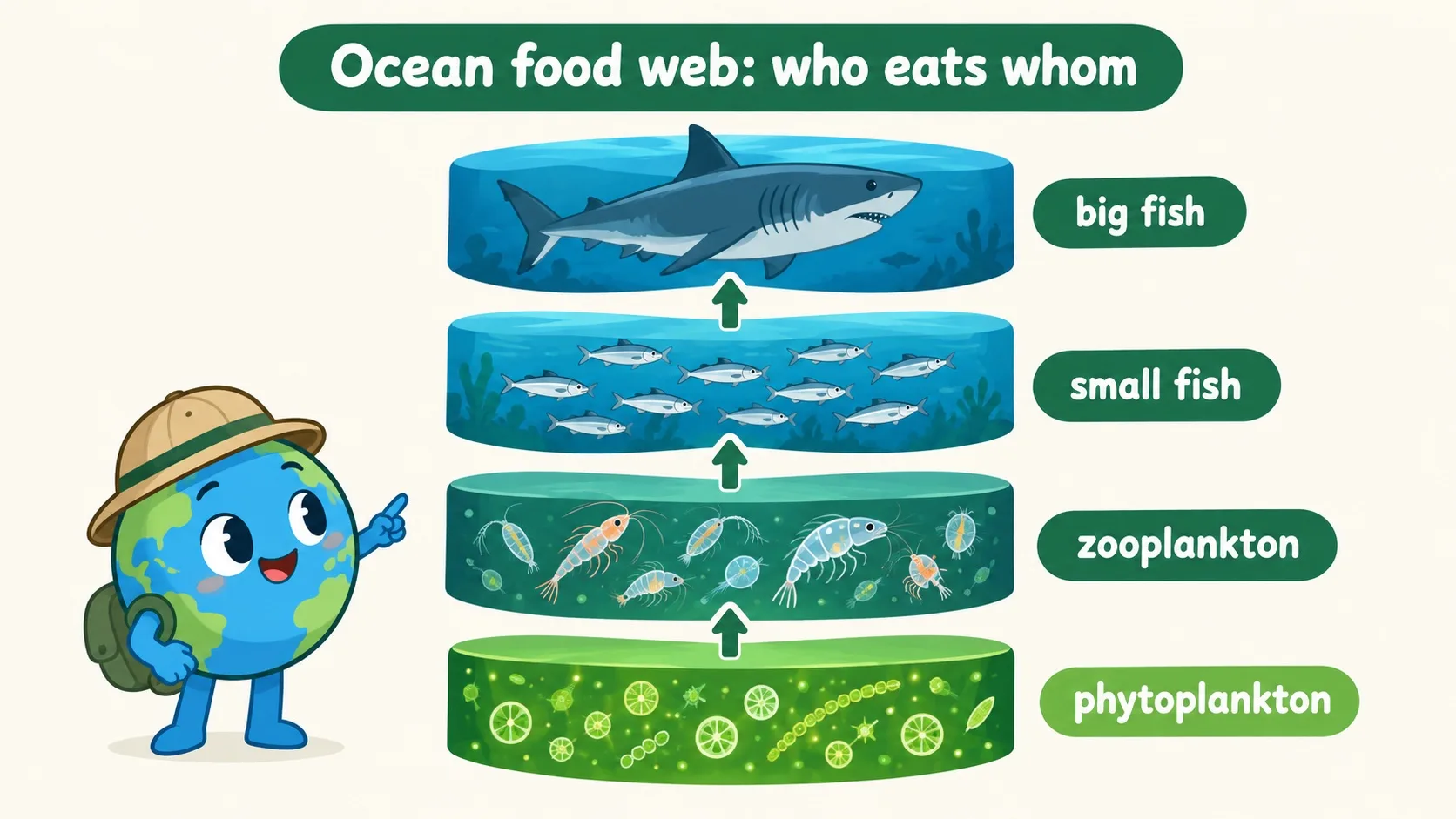
阳光只能照进海面最上面约两百米。浮游植物——漂在水里的微小“草”——就在这一层把阳光变成食物,做出整片海的第一道菜。往上:浮游动物吃浮游植物,小鱼吃浮游动物,大鱼吃小鱼。每往上爬一层,能量大约只剩十分之一,其余都当成体温和力气花掉了。所以海里永远是小鱼一大片、大鱼没几条。Sunlight only reaches the top 200 metres or so. Phytoplankton — microscopic drifting “grass” — live in that lit layer and turn sunlight into food: the ocean's first course. Then up it goes: zooplankton eat phytoplankton, small fish eat zooplankton, big fish eat small fish. Each step up keeps only about a tenth of the energy; the rest is spent on staying alive. That is why small fish come in clouds and big fish come in ones.
可海里并不全是“你吃我”,还有一种更划算的关系。But the ocean isn't only about eating each other — there's a cheaper deal on offer.
第 2 步:珊瑚和藻类合伙开饭店Step 2: coral and algae run a restaurant together
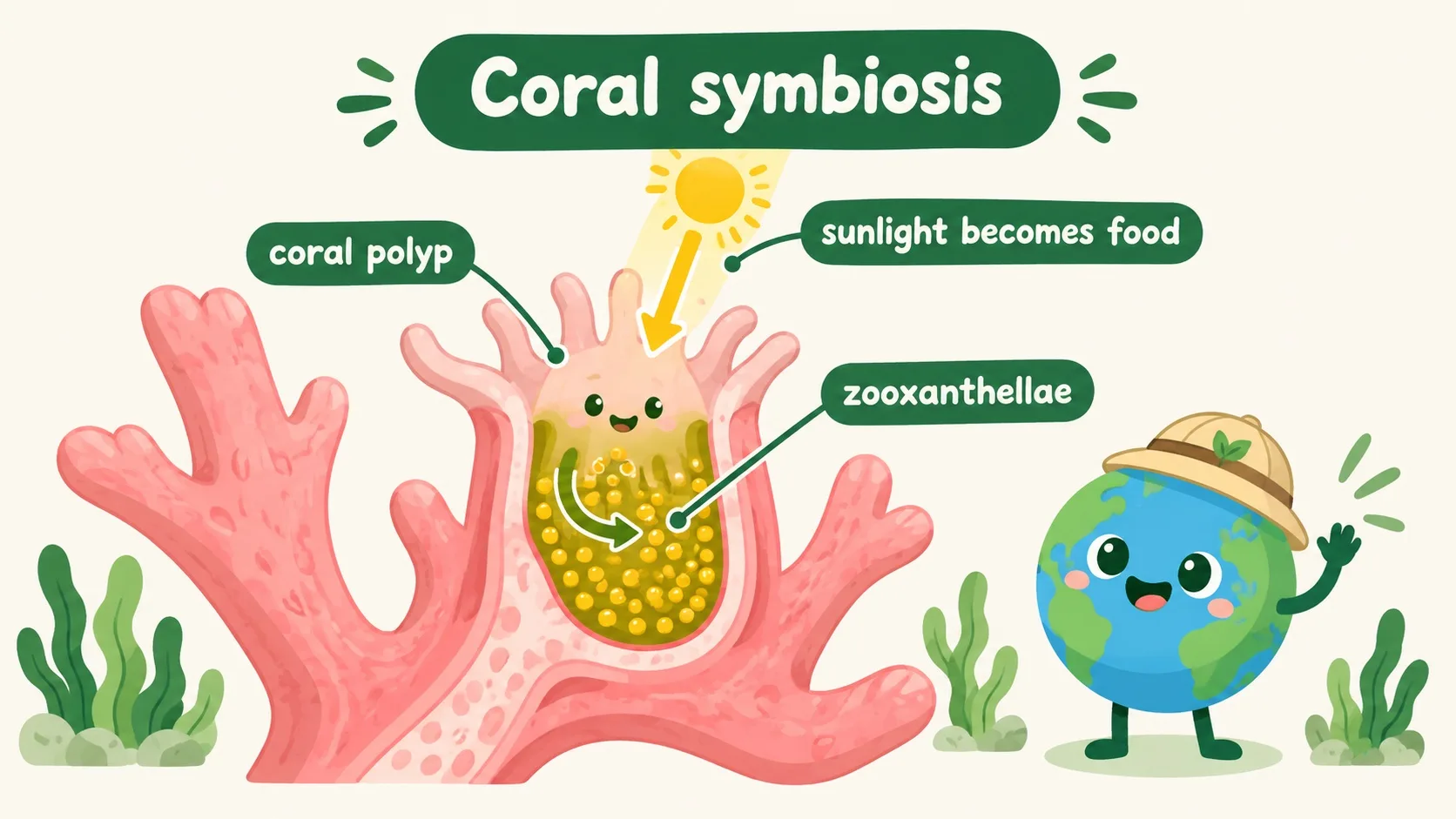
珊瑚虫只有米粒大,却把一种单细胞藻类(虫黄藻)请进自己身体里住。藻类靠阳光造糖,把九成交给房东;珊瑚虫回报它一个安全的家和现成的养分。靠这份合伙,珊瑚礁在几乎没有营养的清水里也能长成一座城:它占海底面积不到百分之一,却养着约四分之一的海洋物种。水温再高一两度,珊瑚虫就会把藻类赶出去,只剩白色的骨架——这就是珊瑚白化。A coral polyp is the size of a grain of rice, yet it takes in single-celled algae (zooxanthellae) as lodgers. The algae make sugar from sunlight and hand about 90% of it to their landlord; the polyp pays them back with a safe home and ready nutrients. That partnership lets reefs grow into cities in water with almost no nutrients: reefs cover less than 1% of the seafloor but shelter roughly a quarter of all marine species. Let the water warm by a degree or two and the polyp evicts the algae, leaving a white skeleton — that's coral bleaching.
吃了一辈子,那最后一顿饭去哪了?A lifetime of meals — so where does the last one end up?
第 3 步:鲸落——一头鲸养一片海底几十年Step 3: a whale fall feeds the seafloor for decades
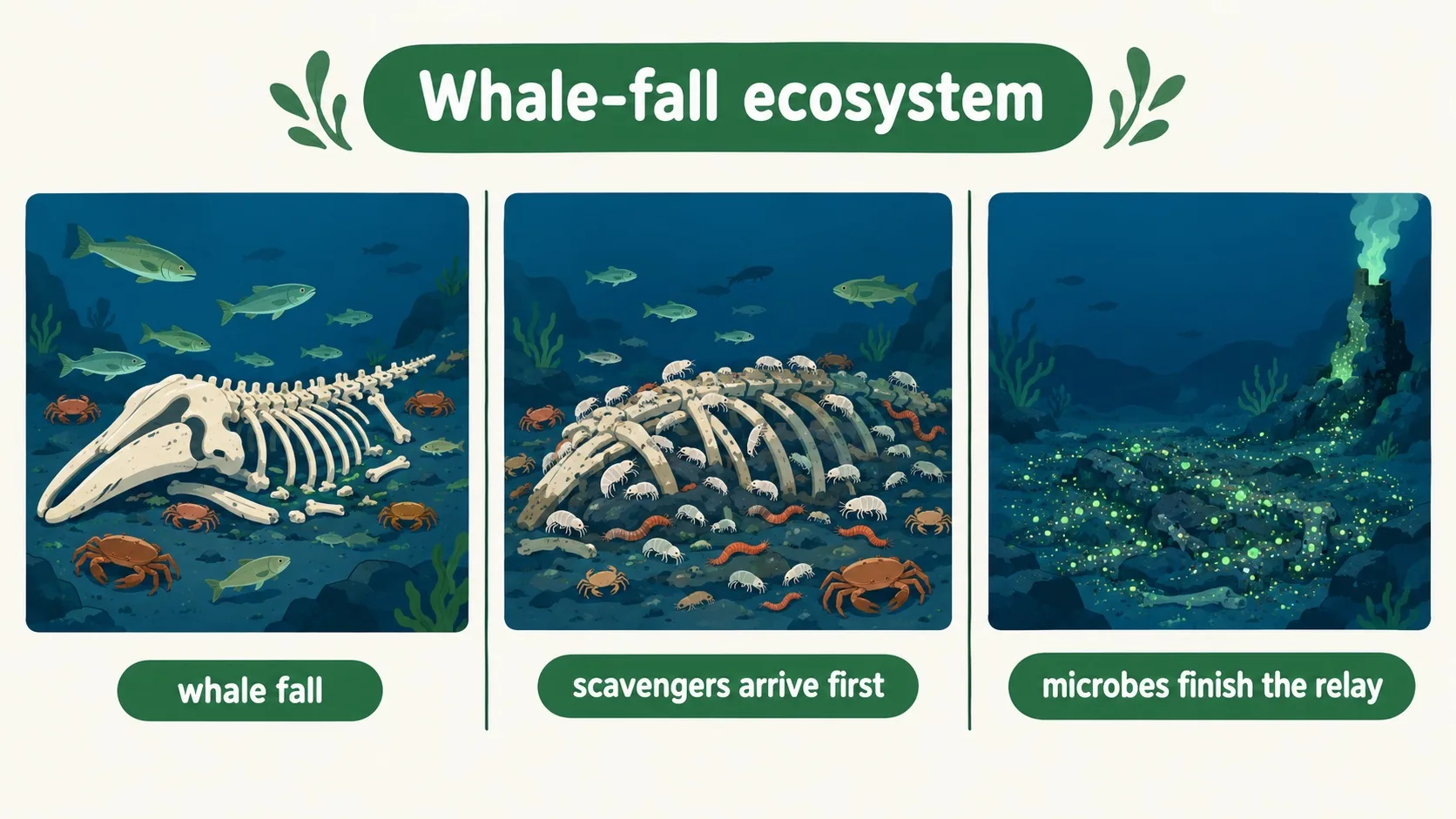
一头鲸死后沉到几千米深的海底,叫鲸落。第一批客人是盲鳗、睡鲨和螃蟹,几个月到两年把肉吃干净;接着是虾、蠕虫,在骨缝里捡剩下的碎渣;最后轮到细菌,分解鲸骨里的油脂,把化学物质变成食物,养出一片像深海热泉旁一样的生物群,能热闹几十年。能量一点没消失,只是一次次换了主人。When a whale dies it sinks kilometres down to the seafloor — a whale fall. The first guests are hagfish, sleeper sharks and crabs, who strip the flesh in a few months to two years. Next come shrimp and worms picking scraps from between the bones. Last come bacteria, breaking down the oil locked in the bone and turning chemicals into food, growing a community much like the ones beside deep-sea vents — and that stage can last decades. None of the energy vanishes; it just keeps changing owner.
🎮 你来推倒这串多米诺(30 秒)🎮 Your turn: topple the domino (30 seconds)
道理讲完了。先给任意一层点「多一些/少一些」,看这一下怎么一层层传到海底;再接下面 4 道挑战。Theory done. Push any level up or down and watch the change travel to the seafloor; then take the 4 challenges below.
一句话记住它:海洋生态就是一本能量账——阳光进来,一层层往上传,每层只剩十分之一,连最后的尸体都被算得干干净净。Remember it in one line: marine ecology is an energy ledger — sunlight comes in, climbs level by level keeping about a tenth each time, and even the last carcass is fully accounted for.
食物链:浮游植物 → 浮游动物 → 小鱼 → 大鱼,每上一层约剩十分之一Food chain: phytoplankton → zooplankton → small fish → big fish, about a tenth kept per step营养级联:动一层,下面就一层层反着来(大鱼少了,小鱼先变多)Trophic cascade: push one level and the ones below flip in turn (fewer big fish, more small fish)合伙与回收:珊瑚养虫黄藻换饭吃;鲸落让一头鲸的能量在海底再流转几十年Partnership and recycling: coral farms algae for meals; a whale fall recycles one whale for decades
内容参考 OpenStax 等公开教材,多来源核对 · AI 生成、人工审核 · 发现错误欢迎指正,帮这片叶子长得更好。Based on OpenStax and other open textbooks, cross-checked across sources · AI-generated, human-reviewed · Spotted a mistake? Tell us — help this leaf grow.
 Back to tree