⚖️ 质能方程:E=mc² 的惊天换算⚖️ Mass-Energy Equation: E=mc², the Great Exchange
上一片里,太阳把氢挤成氦,顺手放出巨量能量。可这股能量到底从哪儿来?答案藏在一个只有三个字母的方程里——这一片,我们把 E=mc² 拆开看。Last leaf, the Sun squeezed hydrogen into helium and released an enormous amount of energy. But where did that energy come from? The answer hides in a three-symbol equation — this leaf takes E=mc² apart.
第 1 步:质量就是能量,c² 是汇率Step 1: Mass is energy, c² is the exchange rate
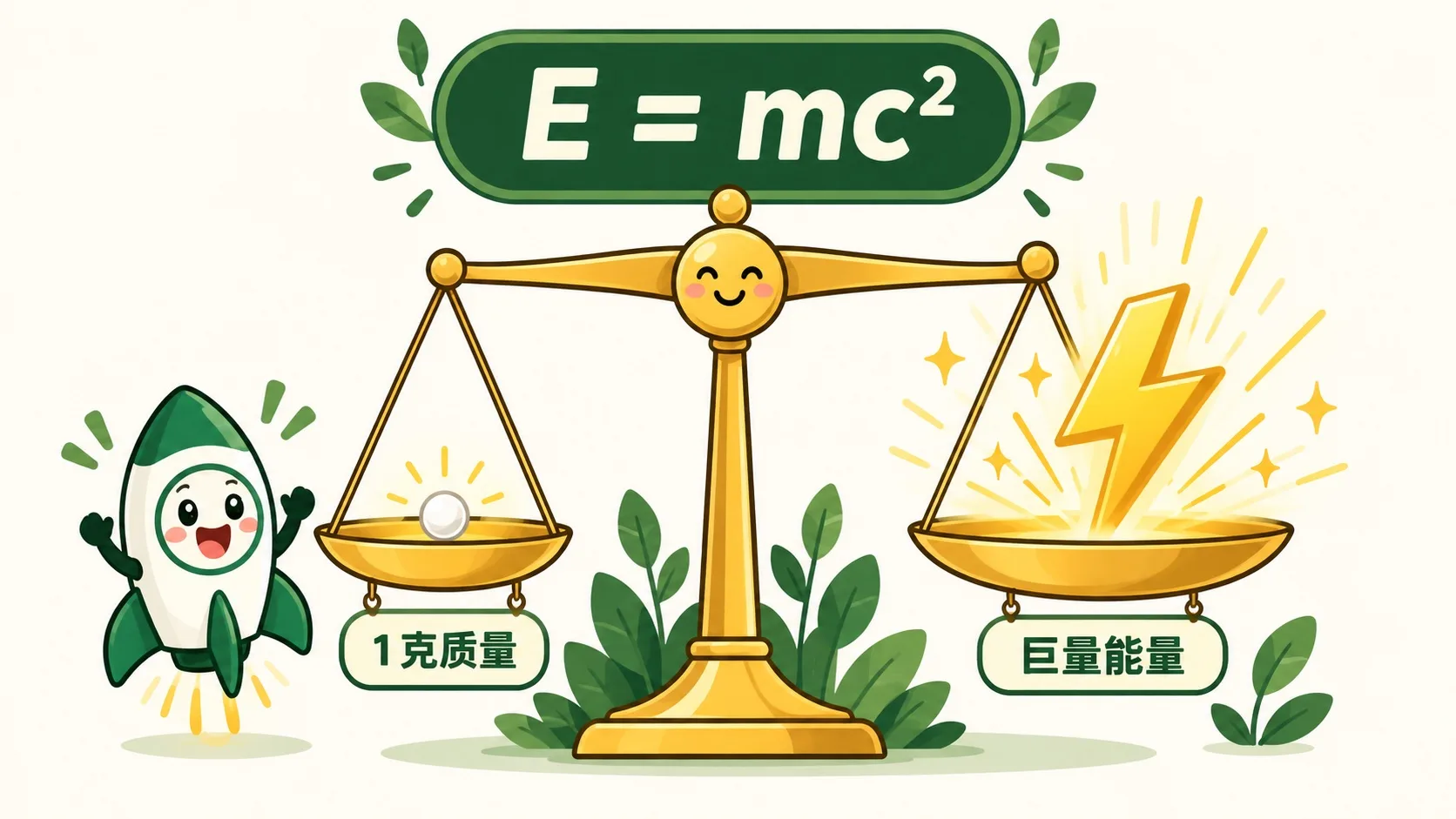
先把方程两边各放一端——为什么说质量就是能量?Put the two sides of the equation on a scale — why is mass the same thing as energy?
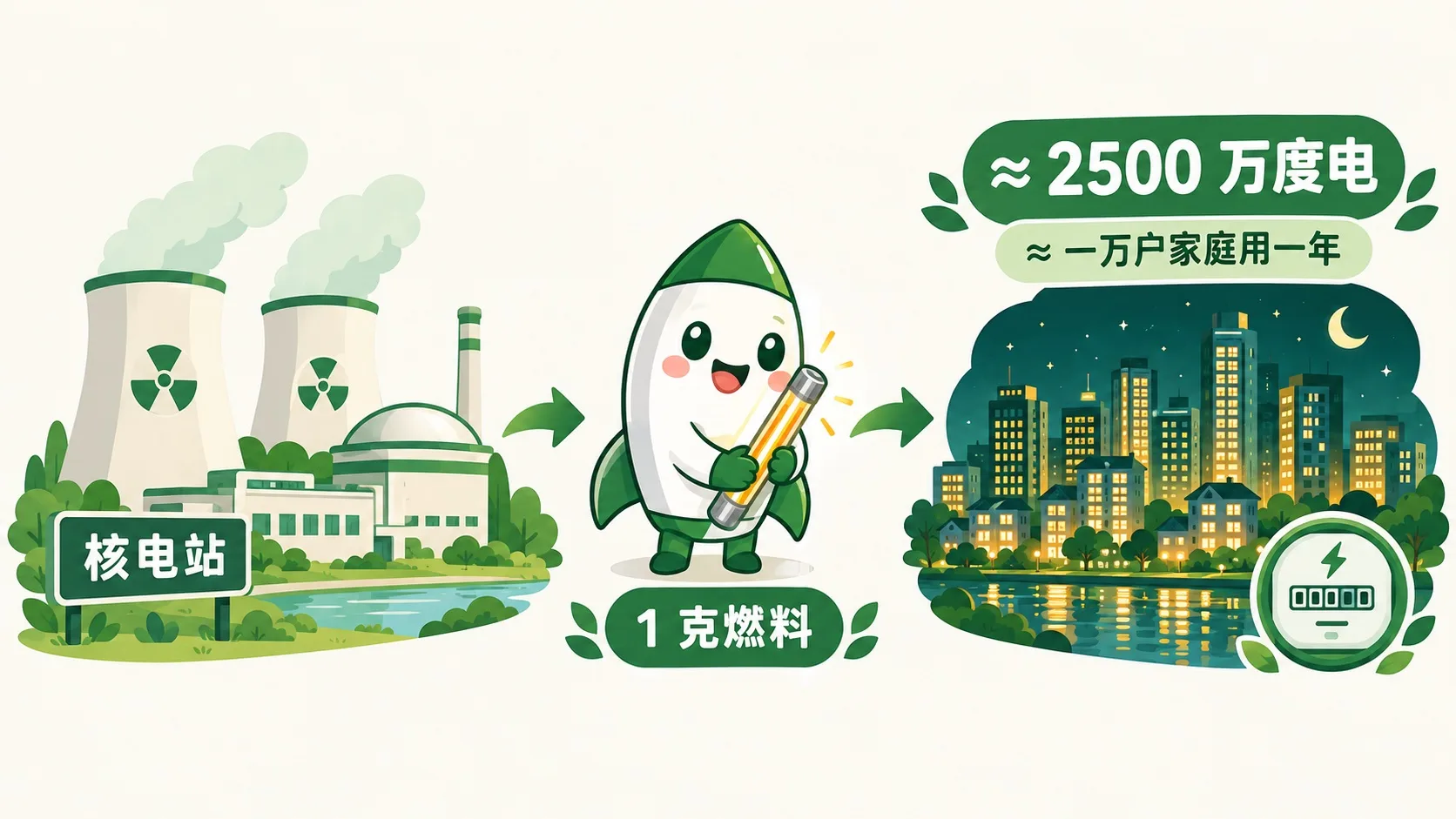
天平的左盘放 1 克质量,右盘放一团能量。汇率 c² 是光速的平方:9×10¹⁶(米/秒)²,大到离谱。1 克质量换出的 9×10¹³ 焦耳是什么概念?相当于 2500 万度电,够一万户家庭用上一整年。所以这个方程真正的震撼之处是:质量本身就是浓缩到极致的能量。A 1-gram marble sits on the left pan; a burst of energy sits on the right. The exchange rate c² is the speed of light squared: 9×10¹⁶ (m/s)² — absurdly large. The 9×10¹³ joules that 1 gram buys is roughly 25 million kWh: a whole year of power for 10,000 homes. The real shock of the equation is this: mass itself is energy, pressed to its densest form.
那太阳里的氢“变成”氦时,这笔账是怎么记的?So when hydrogen “turns into” helium in the Sun, how is the bill recorded?
第 2 步:核反应里的“质量亏损”Step 2: The “mass defect” in nuclear reactions
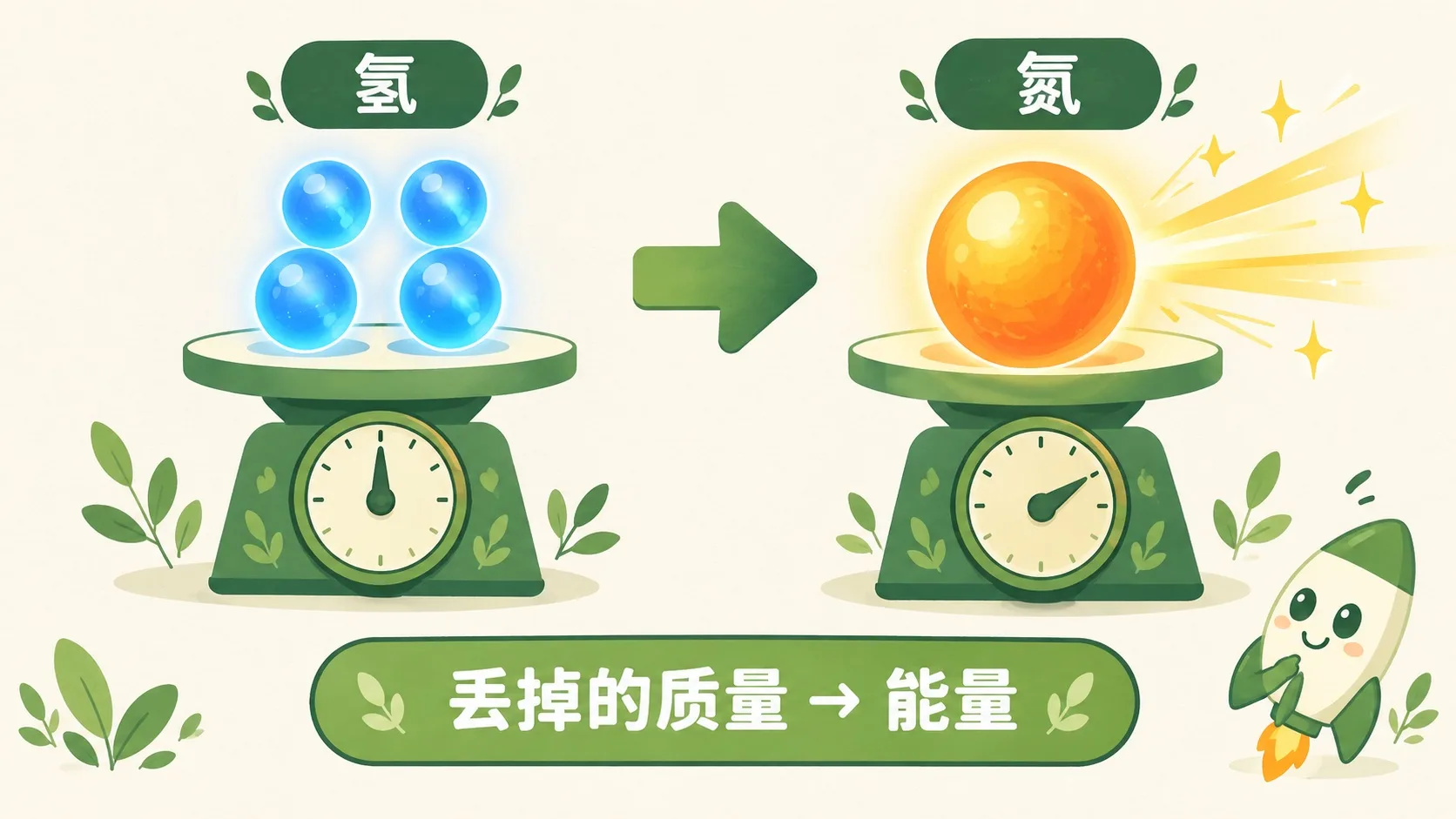
4 个氢核聚成 1 个氦核,仔细称一称:产物的质量比原料轻了约 0.7%。轻掉的那一点点没有消失,而是按 E=mc² 变成了能量跑掉了——这就是“质量亏损”。丢失的质量,就是放出的能量开的账单。太阳每秒把约 400 万吨质量变成光,才点亮了整个太阳系。Four hydrogen nuclei fuse into one helium nucleus. Weigh it carefully: the product is about 0.7% lighter than the ingredients. That missing sliver didn't vanish — it left as energy, exactly as E=mc² says. This is the “mass defect”: the lost mass is the bill for the energy released. The Sun converts about 4 million tonnes of mass into light every second — that's what lights up the whole solar system.
同样是放能,烧煤烧油为什么就没人提质量亏损?Burning coal also releases energy — why does nobody mention mass defect there?
第 3 步:为什么化学燃烧不涉及这笔账Step 3: Why chemical burning never meets E=mc²
化学燃烧动的是原子外层的电子,能量小,对应的质量变化小到测不出:1 千克汽油烧完,只轻约 0.5 微克——所以化学课本说“质量守恒”完全够用。核反应动的是原子核,账就大了:1 克铀-235 裂变放出的能量,相当于烧掉约 3 吨煤,燃料棒只需要一小截。而 1 克质量 100% 转化的理论上限,就是 9×10¹³ 焦耳 ≈ 2500 万度电。Chemical burning only rearranges outer electrons, so the energy is small and the mass change is unmeasurable: burning 1 kg of petrol leaves the world about 0.5 micrograms lighter — “mass conservation” is perfectly safe in chemistry class. Nuclear reactions touch the nucleus itself, and the bill gets serious: the energy from fissioning 1 gram of uranium-235 equals burning roughly 3 tonnes of coal, all from a stub of fuel rod. And the theoretical limit for 1 gram fully converted is 9×10¹³ J ≈ 25 million kWh.
🎮 你来当换算师(30 秒)🎮 Your turn: the converter desk (30 seconds)
道理讲完了。先拖质量滑块,看一点点质量能换出多少电;再接 4 道挑战——算给考官看。Theory done. First drag the mass slider to see how much electricity a speck of mass can buy; then take 4 challenges and show your work.
一句话记住它:E=mc² 说:质量就是能量,c² 是巨大的汇率;核反应里轻掉的质量,都变成了能量。Remember it in one line: E=mc² says mass is energy at an enormous exchange rate c² — in nuclear reactions, the missing mass leaves as energy.
质量与能量是同一种东西的两种形态,汇率 c² = 9×10¹⁶Mass and energy are two forms of one thing; the rate c² = 9×10¹⁶1 克质量 ≈ 9×10¹³ J ≈ 2500 万度电,够一万户家庭用一年1 gram of mass ≈ 9×10¹³ J ≈ 25 million kWh — a year for 10,000 homes核反应有“质量亏损”;化学燃烧的质量变化微乎其微,质量守恒够用Nuclear reactions show a mass defect; chemical burning changes mass far too little to notice
内容参考 OpenStax 等公开教材,多来源核对 · AI 生成、人工审核 · 发现错误欢迎指正,帮这片叶子长得更好。Based on OpenStax and other open textbooks, cross-checked across sources · AI-generated, human-reviewed · Spotted a mistake? Tell us — help this leaf grow.
 Back to tree