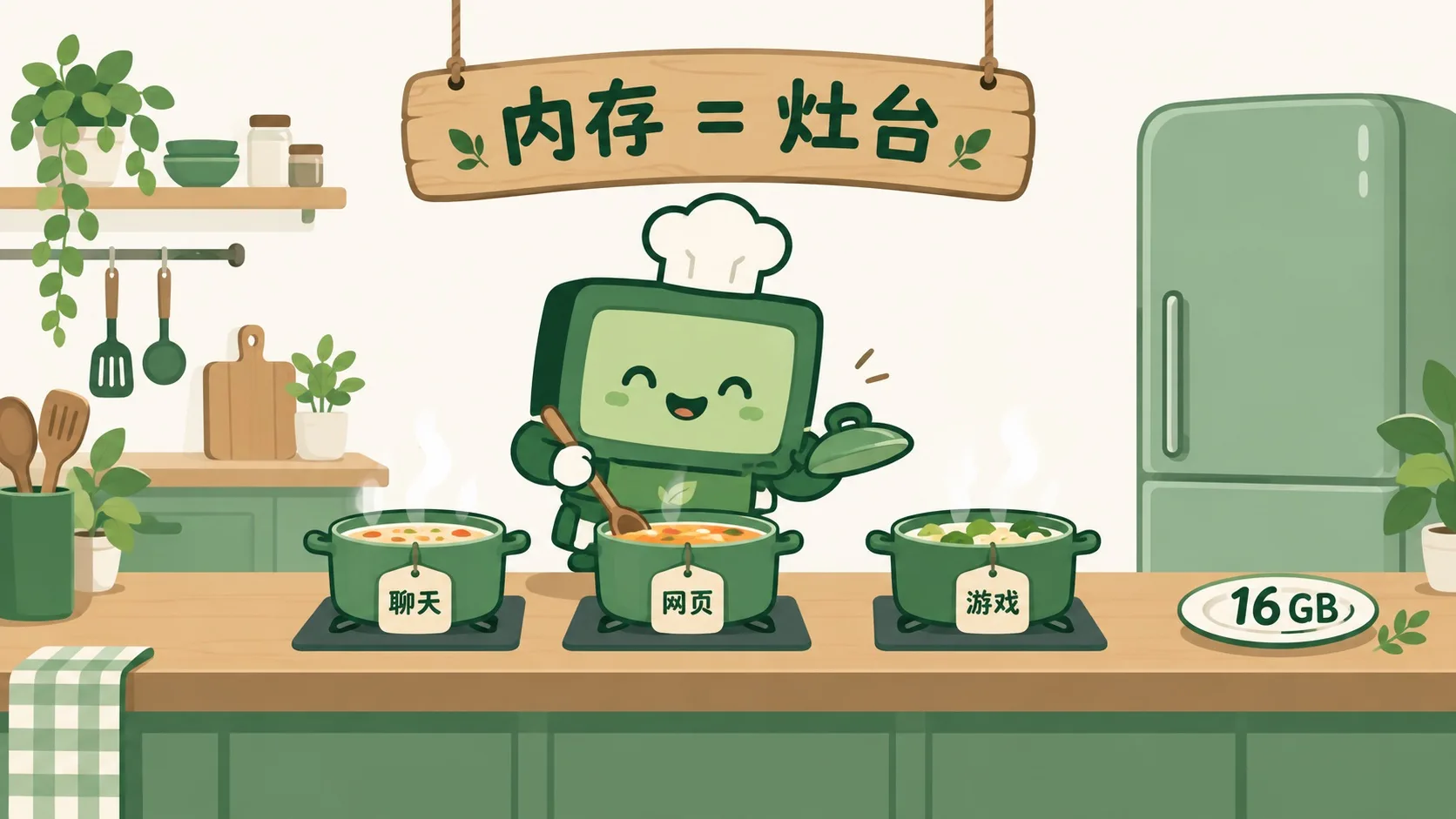
上一片里,CPU 厨师每秒挥铲几十亿次。可食材总得有地方放——就放在手边的灶台上。这块灶台,就是内存。Last leaf, the CPU chef swung its spatula billions of times a second. But the ingredients need a spot within reach — the countertop right in front of it. That countertop is memory.
CPU 算得再快,也得有东西可算。东西放哪?However fast the CPU is, it needs something to work on. Where does that sit?
打开一个程序,电脑就把它从硬盘搬进内存。CPU 只从内存里拿数据,就像厨师只在灶台上做菜。灶台 16 GB,就是能同时摆 16 GB 的菜。内存也叫 RAM(随机存取存储器),意思是哪一格都能直接拿。Open an app and the computer carries it from the drive into memory. The CPU only takes data from memory — like a chef who only cooks at the counter. A 16 GB counter holds 16 GB of dishes at once. Memory is also called RAM (Random Access Memory): any spot, grabbed directly.
灶台这么顺手,为什么不把所有东西都放上面?If the counter is so handy, why not keep everything on it?
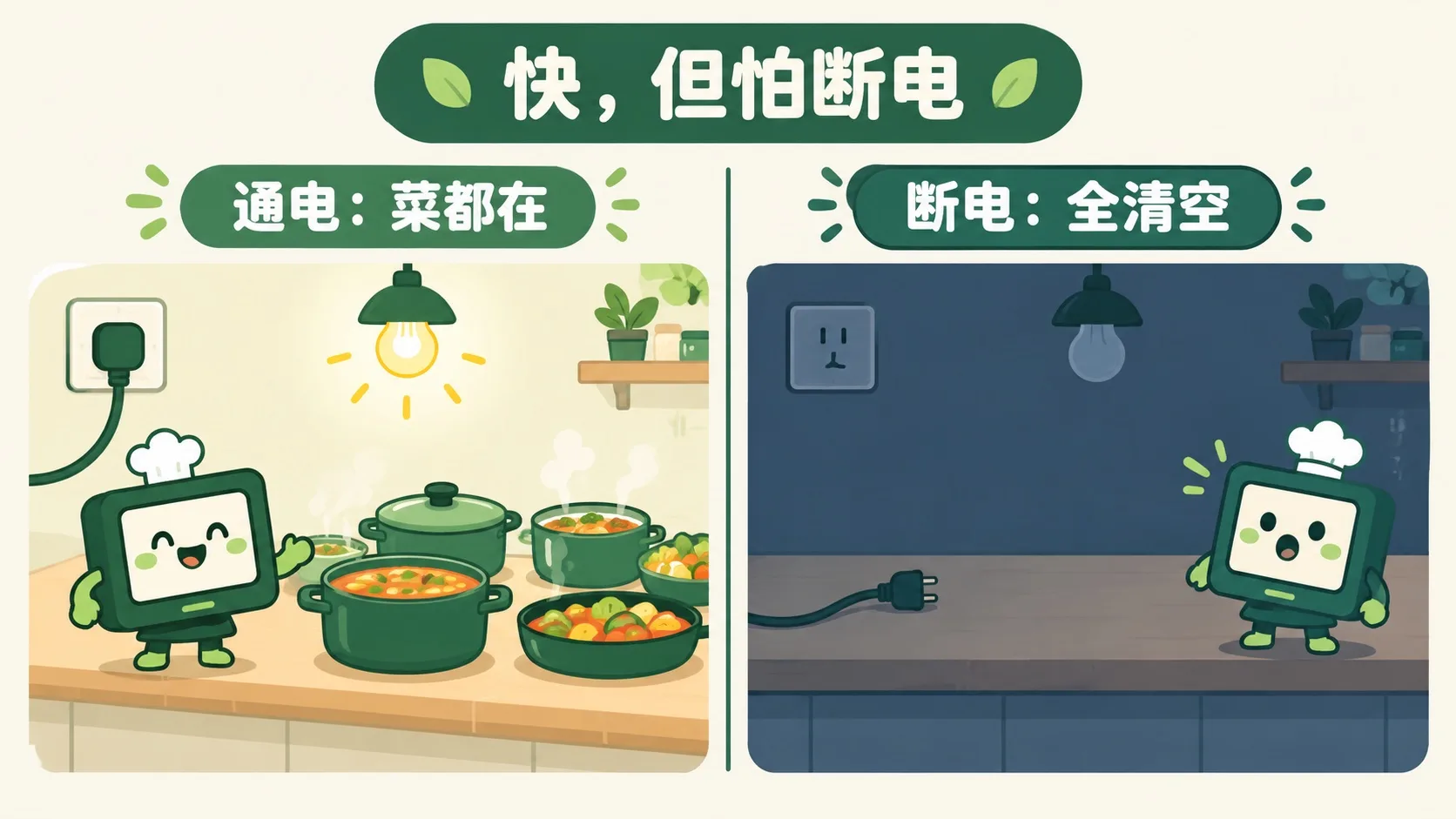
第 2 步:快,但一断电就清空Step 2: Fast — but power off wipes it
内存用无数个小电容存 0 和 1,要一直通电、不停刷新才记得住。一断电,灶台瞬间清空——没保存的作文就这么没了。好处是快:取一次约 0.0001 毫秒,比固态硬盘快约 1000 倍。代价是贵:同样 1 GB,价格是固态硬盘的几十倍,所以做不大。Memory keeps 0s and 1s in billions of tiny capacitors that need constant power and refreshing. Cut the power and the counter is wiped instantly — that's how an unsaved essay vanishes. The upside is speed: one fetch takes about 0.0001 ms, roughly 1000× faster than an SSD. The catch is price: per GB it costs dozens of times more than an SSD, so it stays small.
灶台就这么大。菜多到放不下,会怎样?The counter is only so big. What happens when the dishes don't fit?
第 3 步:灶台满了,就得来回搬Step 3: A full counter means shuttling back and forth
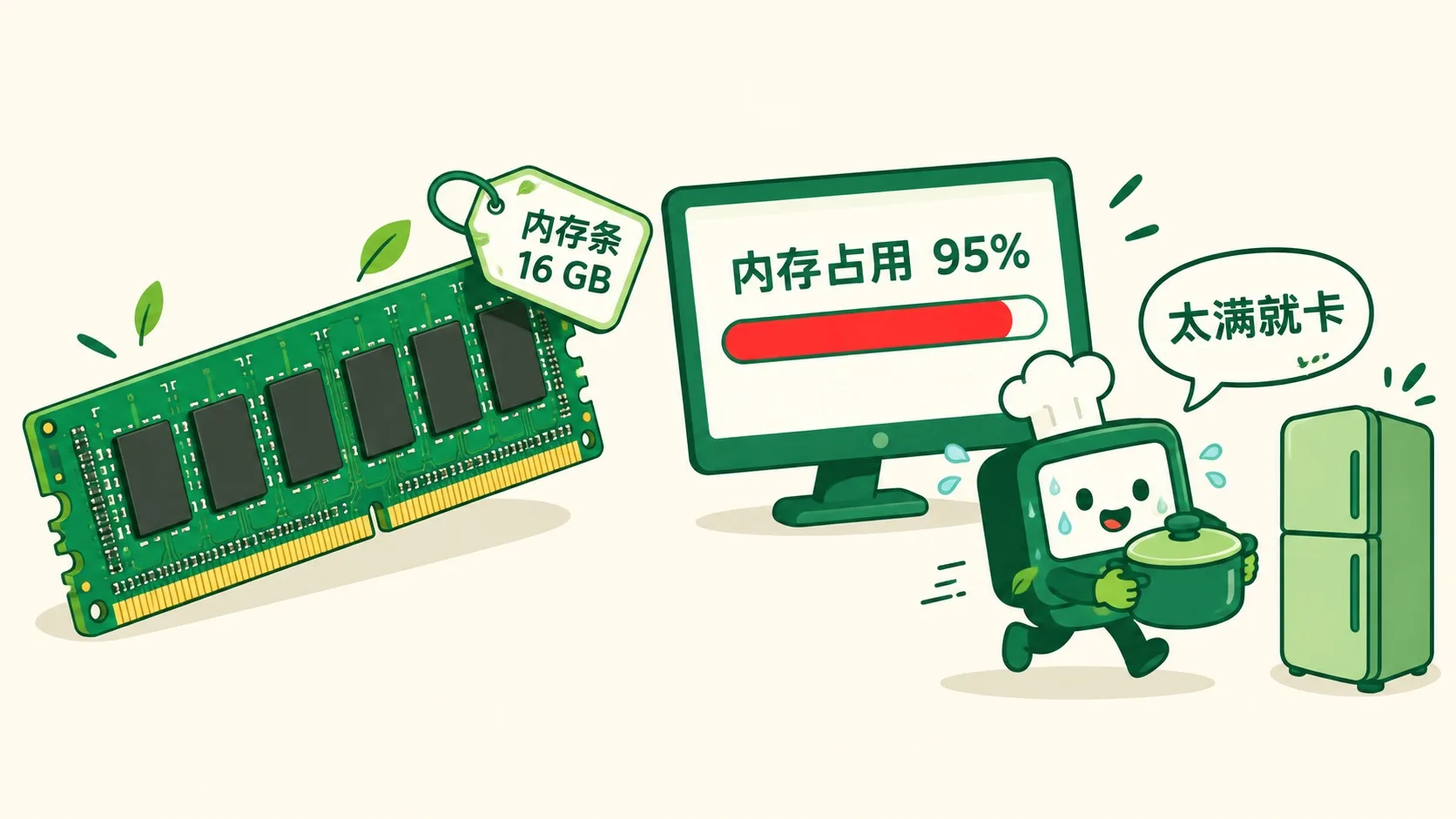
内存快满时,系统把暂时不用的菜挪进硬盘(叫虚拟内存),要用再搬回来。搬一趟比灶台慢上千倍,电脑就“卡”了。所以手机常见 8 GB、电脑常见 16 GB:够装下同时开的程序就好。卡了?先关掉不用的程序。When memory is nearly full, the system parks idle dishes on the drive (called virtual memory) and hauls them back when needed. Each trip is a thousand times slower, so the computer lags. That's why phones often have 8 GB and laptops 16 GB — enough for what you run at once. Laggy? Close the apps you aren't using.
🎮 挑一块刚好的内存条(30 秒)🎮 Your turn: pick the right RAM (30 seconds)
道理讲完了。4 张点菜单,每张要同时开几个程序——选一块放得下、又不浪费钱的内存。Theory done. 4 orders, each running a few apps at once — pick memory that fits without wasting money.
一句话记住它:内存是 CPU 手边的灶台:快,但小、贵,一断电就清空;满了就要来回搬,电脑变卡。Remember it in one line: memory is the CPU's countertop — fast but small and pricey, wiped at power-off; when it's full, dishes shuttle and the computer lags.
位置:程序运行时住在内存,CPU 只从这里拿数据Role: running apps live in memory; the CPU fetches from here脾气:比固态硬盘快约 1000 倍,但断电即清空Trait: ~1000× faster than an SSD, but wiped at power-off容量:够装同时开的程序就好,太满会来回搬变卡Size: enough for what runs at once — too full means shuttling and lag
内容参考 OpenStax 等公开教材,多来源核对 · AI 生成、人工审核 · 发现错误欢迎指正,帮这片叶子长得更好。Based on OpenStax and other open textbooks, cross-checked across sources · AI-generated, human-reviewed · Spotted a mistake? Tell us — help this leaf grow.
 Back to tree