🔬 微生物:看不见的小居民🔬 Microorganisms: the Invisible Little Residents
上一片里,分类学家把生命分进不同的大类。可还有一大群居民,小到肉眼根本看不见——它们住在你的手上、肚子里,还躲在酸奶和面包里。🦠 小细胞今天带你认识这些看不见的小居民。Last leaf, classifiers sorted life into big groups. But a whole crowd of residents is too small to see with the naked eye — they live on your hands, in your gut, and inside yogurt and bread. 🦠 Little Cell is here to introduce these invisible little residents.
第 1 步:三类小居民:细菌、病毒、其他Step 1: Three kinds of tiny residents: bacteria, viruses, others
上一片把生物分门别类,可这些看不见的小家伙该怎么分?Last leaf sorted living things into groups — so how do we sort these invisible ones?
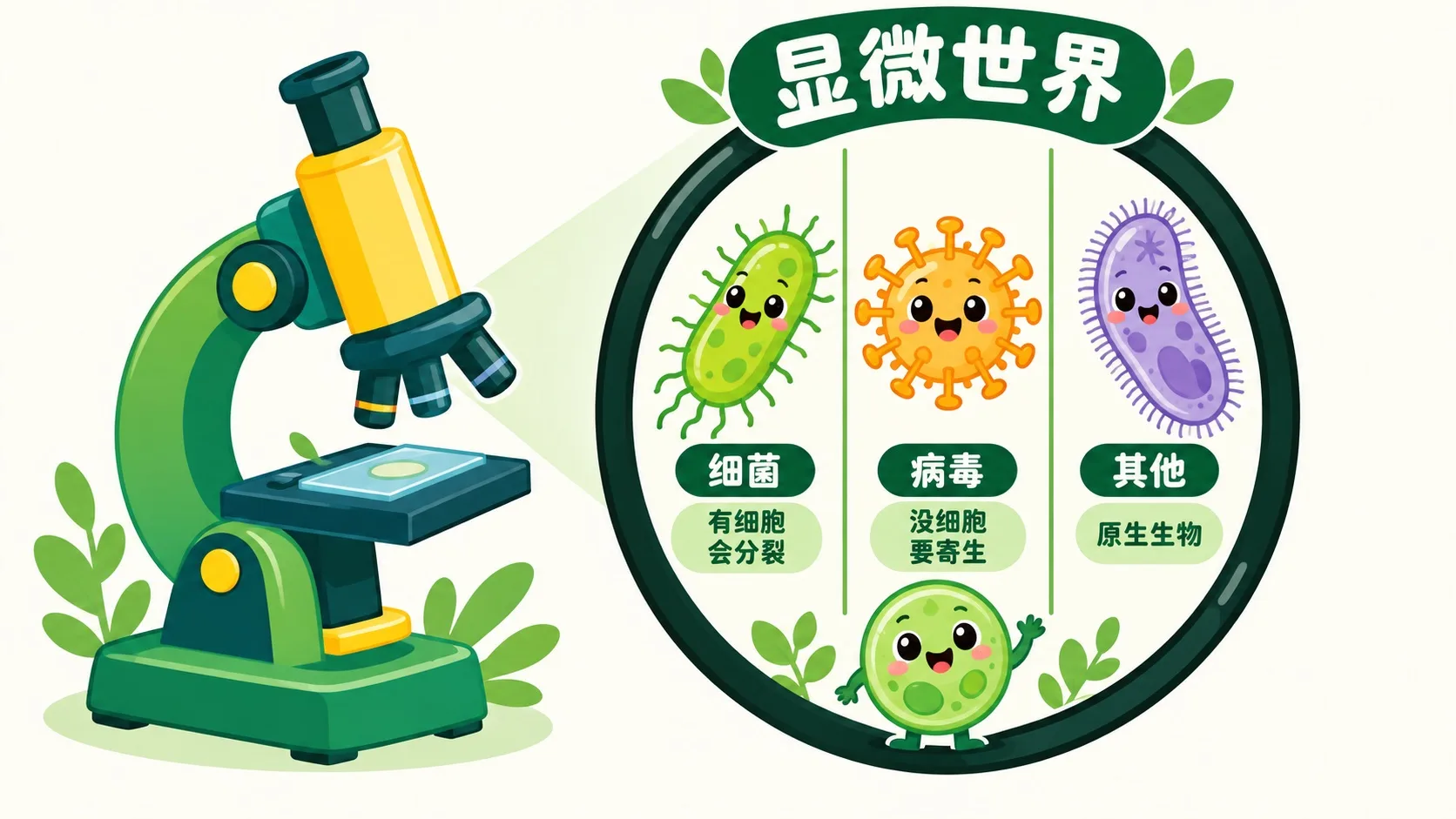
放到显微镜下,三类一眼就能分开。细菌是完整的细胞——有细胞膜、细胞质,只是没有细胞核,营养够了就自己一分为二;病毒连细胞都算不上,只有一件蛋白质外壳,裹着一小卷遗传物质,想复制只能钻进别人的细胞;草履虫这类原生生物也是单细胞,却会游、会吃、会躲危险。口诀:有没有细胞、能不能自己分裂,是分类的关键。Under the microscope the three groups split apart at a glance. Bacteria are complete cells — membrane, cytoplasm, just no nucleus — and when food is plentiful they split in two on their own. Viruses are not even cells: a protein coat wrapped around a tiny roll of genetic material, and they can only copy themselves by getting inside someone else's cell. Protists like the paramecium are single cells too, yet they swim, eat and dodge danger. The trick: having cells, and dividing by yourself, is the key.
既然有“病毒”这种听起来吓人的家伙,微生物是不是都很危险?With scary-sounding viruses around — are microbes all dangerous?
第 2 步:别怕,大多数是好朋友Step 2: Don't panic — most of them are good friends
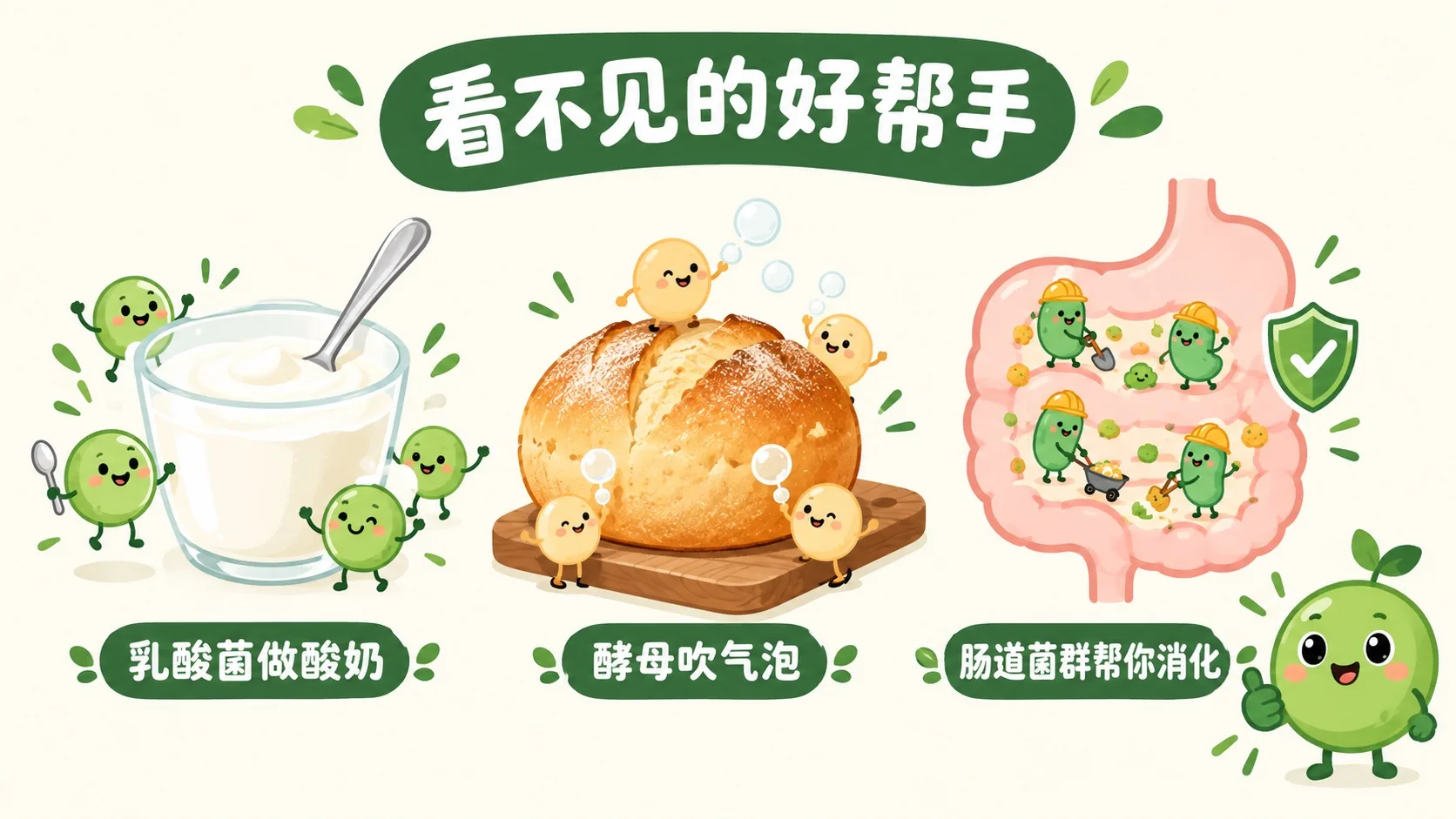
恰恰相反。你的肠道里住着数不清的细菌,它们帮你消化、帮你挡住坏菌;酸奶里的乳酸菌把牛奶的糖变成酸,让牛奶变稠;面包里的酵母吹出二氧化碳气泡,把面团顶得鼓鼓的。大多数微生物对我们无害,甚至一天也离不开——它们是看不见的好帮手,只有少数致病菌才会让人生病。Quite the opposite. Countless bacteria live in your gut, helping you digest and holding off the bad germs. Lactic acid bacteria turn the sugar in milk into acid, thickening it into yogurt; yeast blows carbon dioxide bubbles that puff the dough up. Most microbes are harmless — we could not get through a day without them. Only a few pathogens make us ill.
那少数致病的小家伙是怎么使坏的?我们又该怎么防?So how do the few troublemakers cause harm — and how do we defend ourselves?
第 3 步:病毒怎么入侵,我们怎么防Step 3: How viruses invade, and how we fight back
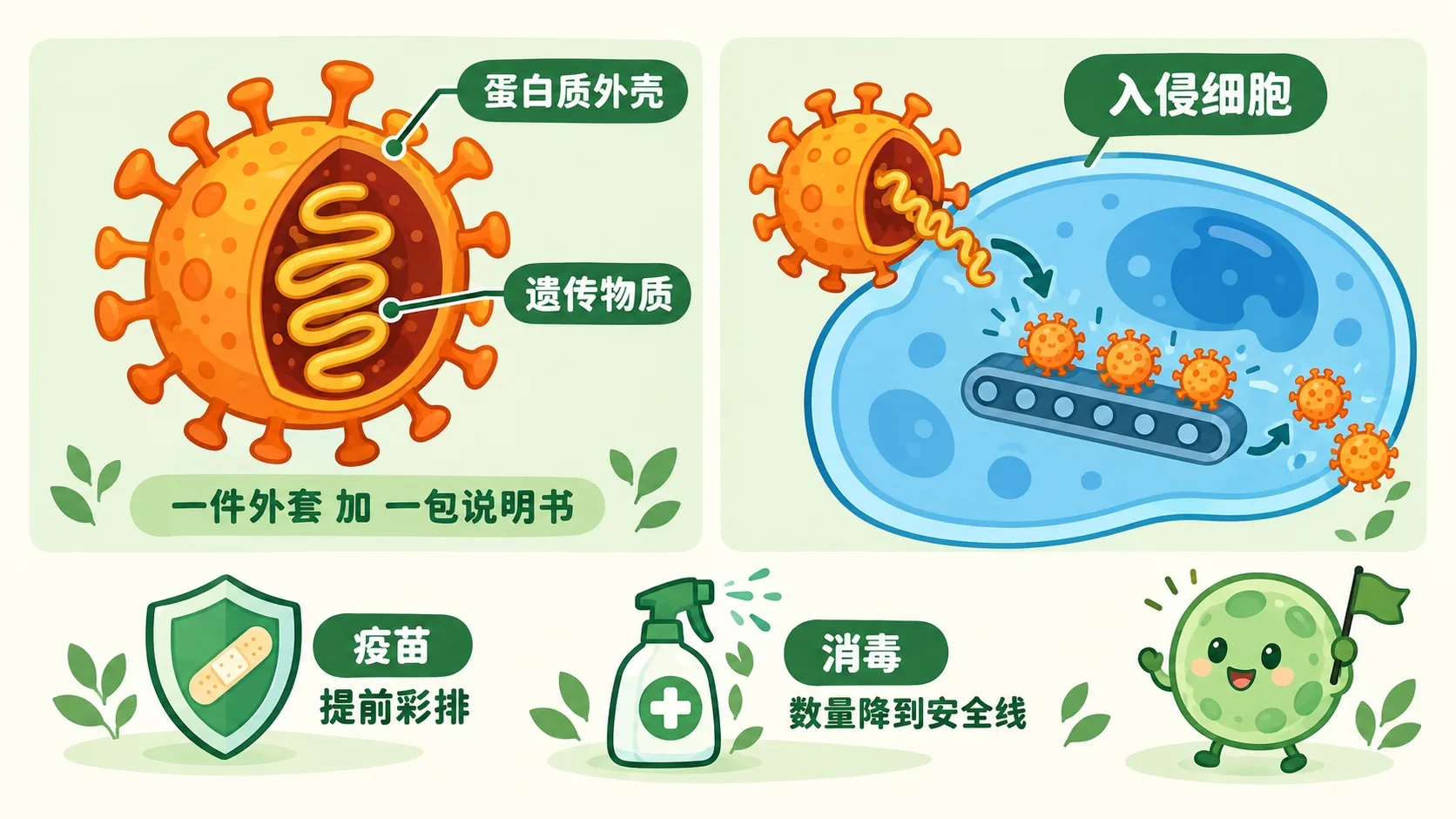
以病毒为例:它把自己那卷遗传物质注射进你的细胞,把细胞变成“病毒工厂”,复制出成千上万份自己。我们的对策也很清楚:疫苗像提前彩排,让免疫系统先认识敌人、备好武器;消毒是把微生物的数量降到安全线,所以饭前洗手、勤开窗都算消毒。还要记住:抗生素只打细菌,对病毒完全无效。Take a virus: it injects its roll of genetic material into your cell and turns it into a virus factory, producing thousands of copies. Our countermeasures are clear. A vaccine is like a rehearsal — it lets the immune system meet the enemy and prepare its weapons in advance. Disinfection means bringing the number of microbes down to a safe level: washing hands before meals and airing rooms both count. And remember: antibiotics fight bacteria only — they do nothing to viruses.
🎮 你来当显微镜分类员(1 分钟)🎮 Your turn: sort at the microscope (1 minute)
道理讲完了,轮到你了:显微镜送来 4 张卡片,把它们分进细菌、病毒、其他三个筐。Theory done — your turn: the microscope delivers 4 cards. Sort each one into bacteria, viruses, or others.
一句话记住它:微生物是一群小到看不见的居民——细菌有细胞会分裂,病毒没细胞要寄生,草履虫这类单细胞高手各显神通。Remember it in one line: microbes are residents too small to see — bacteria have cells and divide, viruses have no cells and must parasitize, and single-celled experts like paramecia do their own thing.
细菌有细胞、能自己分裂;病毒没细胞结构,必须寄生Bacteria have cells and divide on their own; viruses have no cell structure and must parasitize大多数微生物无害甚至有益:肠道菌、酸奶、面包都靠它们Most microbes are harmless or helpful: gut bacteria, yogurt and bread all depend on them疫苗像提前彩排,消毒把数量降到安全线;抗生素对病毒无效A vaccine is a rehearsal, disinfection lowers numbers to a safe level; antibiotics do not work on viruses
内容参考 OpenStax 等公开教材,多来源核对 · AI 生成、人工审核 · 发现错误欢迎指正,帮这片叶子长得更好。Based on OpenStax and other open textbooks, cross-checked across sources · AI-generated, human-reviewed · Spotted a mistake? Tell us — help this leaf grow.
 Back to tree