🔋 线粒体:细胞的发电站🔋 Mitochondria: The Cell's Power Plants
上一片里,细胞核发号施令,管着细胞的一举一动。可指令要执行、肌肉要收缩,全都得烧能量——这些能量是谁生产出来的?Last leaf, the nucleus gave the orders for everything the cell does. But carrying out orders and flexing muscles all burn energy — so who produces that energy?
第 1 步:能量在这里被“点燃”Step 1: Where energy gets “lit up”
跟着能量走:食物里的能量,到底在哪儿被释放出来?Follow the energy: where exactly is the energy in food released?
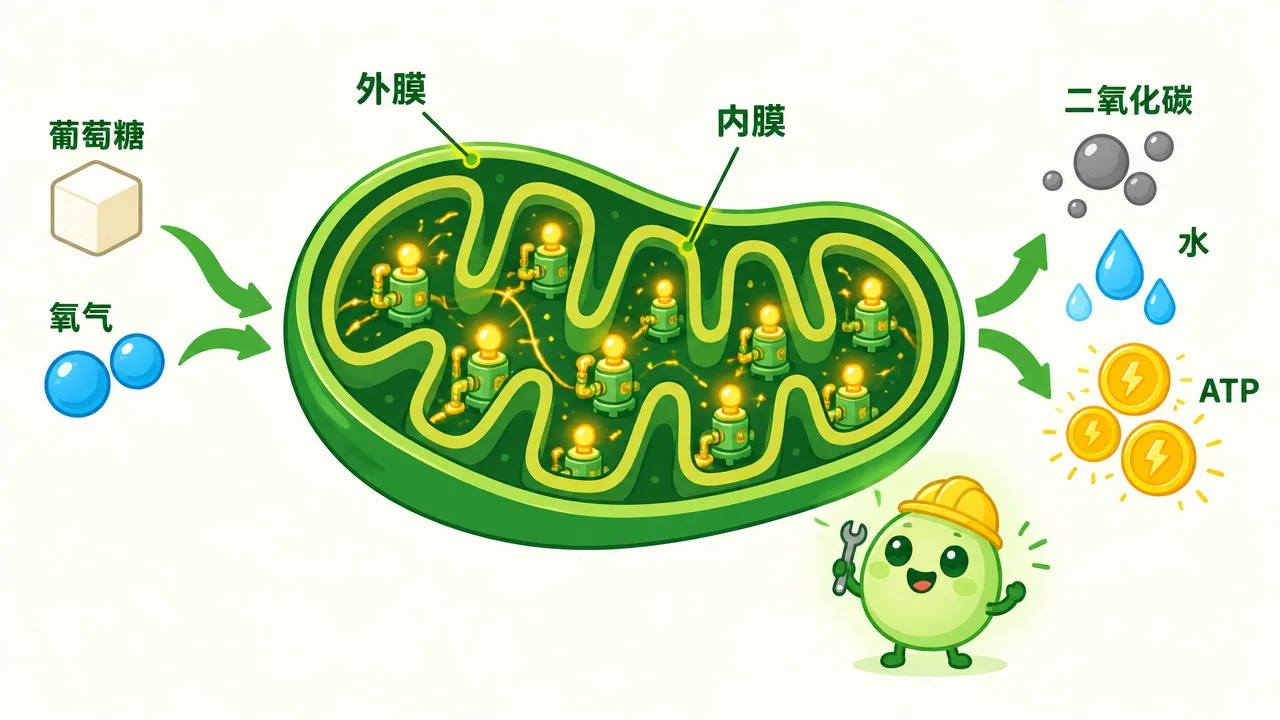
食物分解出的葡萄糖,加上吸进来的氧气,会被送进线粒体“燃烧”——不过它烧得很温柔:能量被一步步装进 ATP,同时产生二氧化碳和水。因为要请氧气帮忙,这套反应叫“有氧呼吸”;线粒体是它的主车间,内膜上折出许多“嵴”,把工作台铺得更多。Glucose from digested food, plus the oxygen you breathe in, is delivered to the mitochondrion to be “burned” — very gently, though: the energy is packed step by step into ATP, producing carbon dioxide and water along the way. Because oxygen is required, this is called “aerobic respiration”, and the mitochondrion is its main workshop. The inner membrane folds into many “cristae”, adding more workbenches.
既然线粒体是发电站,那用电多的细胞,发电站是不是也更多?If mitochondria are power plants, do energy-hungry cells have more of them?
第 2 步:谁家的发电站最多Step 2: Which cells run the most power plants
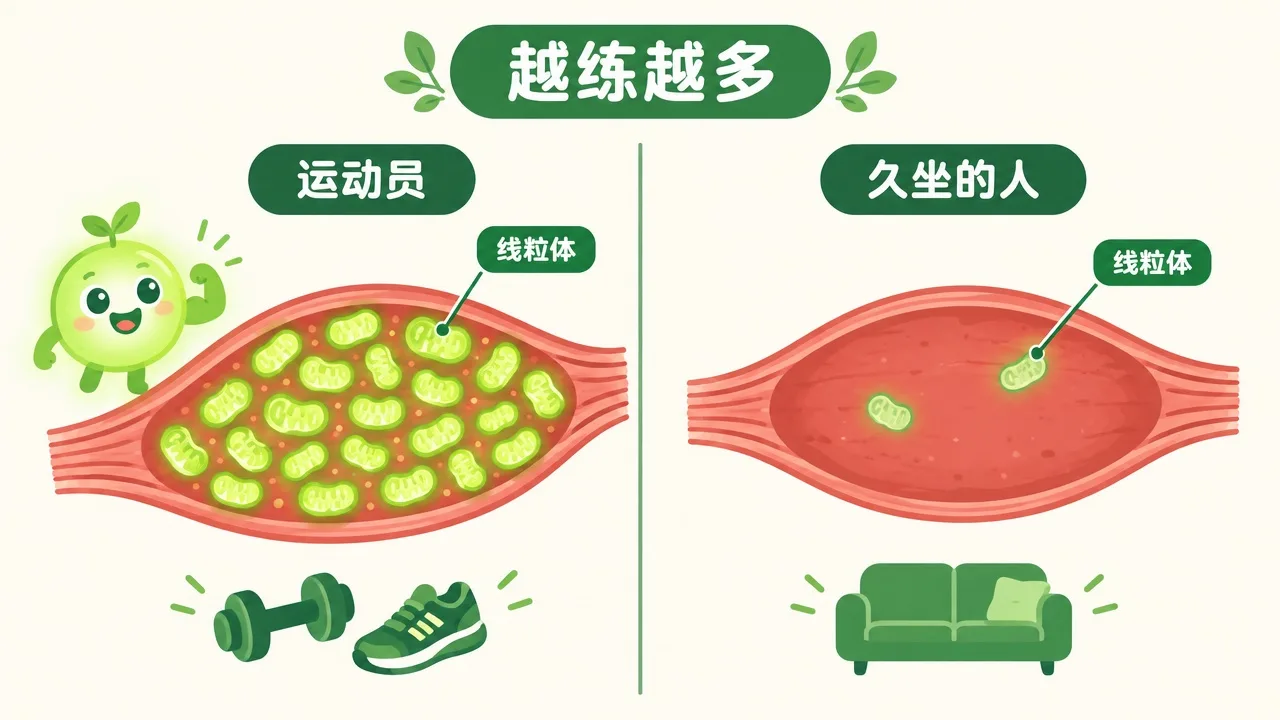
对!心脏一刻不停地跳,心肌细胞里线粒体多得惊人;运动员的腿肌细胞也比久坐的人多得多——长期锻炼会让线粒体越练越多,这正是他们耐力好的原因之一。肝脏是代谢工厂,肝细胞同样是用电大户。Yes! The heart beats without pause, so heart-muscle cells are packed with mitochondria; an athlete's leg-muscle cells hold far more than those of a couch potato — long-term training multiplies mitochondria, one reason athletes last longer. The liver is a metabolic factory, and its cells are big power users too.
能量被装进 ATP——这枚“硬币”到底长什么样?Energy gets packed into ATP — so what does this “coin” look like?
第 3 步:ATP,细胞里的能量硬币Step 3: ATP, the cell's energy coin
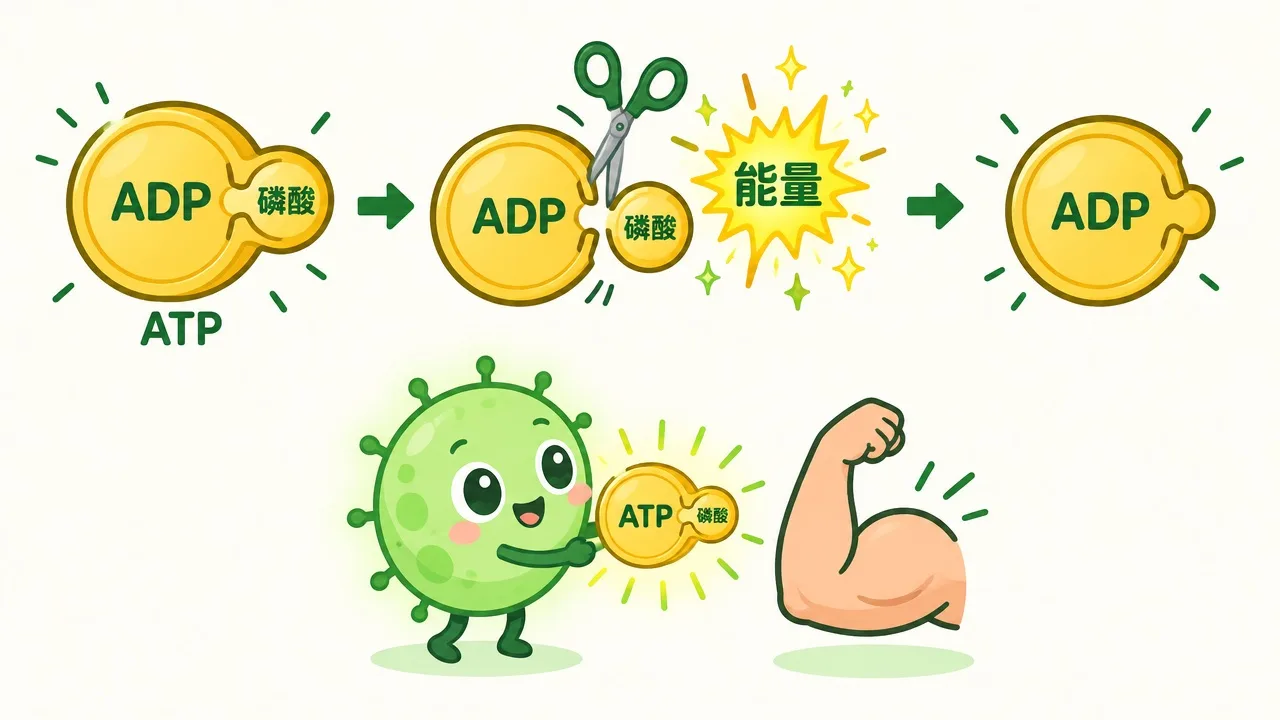
ATP 像一枚拼装硬币:一个 ADP 再插上一小块“磷酸”就成了。需要能量时,把磷酸拆下来,硬币立刻放出能量;用完再装回去,循环使用。还有个小彩蛋:线粒体只跟着妈妈传给孩子——受精时,爸爸的线粒体基本都被留在门外了。ATP is like a snap-together coin: an ADP with one small “phosphate” piece plugged in. When energy is needed, the phosphate piece is snapped off and energy bursts out; afterwards it is plugged back in, and the coin recharges. One fun bonus: mitochondria pass only from mother to child — at fertilisation, the father's mitochondria are mostly left outside the door.
🎮 你来当发电站工程师(1 分钟)🎮 Your turn: power-plant engineer (1 minute)
先做实验:拖动运动强度、坚持长期训练,看线粒体怎么加班。再闯 4 关:哪类细胞的发电站最多?Experiment first: drag exercise intensity and keep training to see the mitochondria work overtime. Then beat 4 levels: which cells run the most power plants?
一句话记住它:线粒体 = 细胞的发电站——葡萄糖 + 氧气在这里变成 ATP,给全细胞供电。Remember it in one line: mitochondria are the cell's power plants — glucose + oxygen become ATP here, powering the whole cell.
有氧呼吸主车间:葡萄糖 + 氧气 → 能量 + 二氧化碳 + 水Main workshop of aerobic respiration: glucose + oxygen → energy + CO₂ + water用电多的细胞线粒体多;长期锻炼会让它们越练越多Energy-hungry cells hold more mitochondria — and training multiplies themATP 是能量硬币:拆下磷酸放能,装上再充电;线粒体只从妈妈来ATP is an energy coin: snap off phosphate to spend, snap on to recharge; mitochondria come only from Mum
内容参考 OpenStax 等公开教材,多来源核对 · AI 生成、人工审核 · 发现错误欢迎指正,帮这片叶子长得更好。Based on OpenStax and other open textbooks, cross-checked across sources · AI-generated, human-reviewed · Spotted a mistake? Tell us — help this leaf grow.
 Back to tree