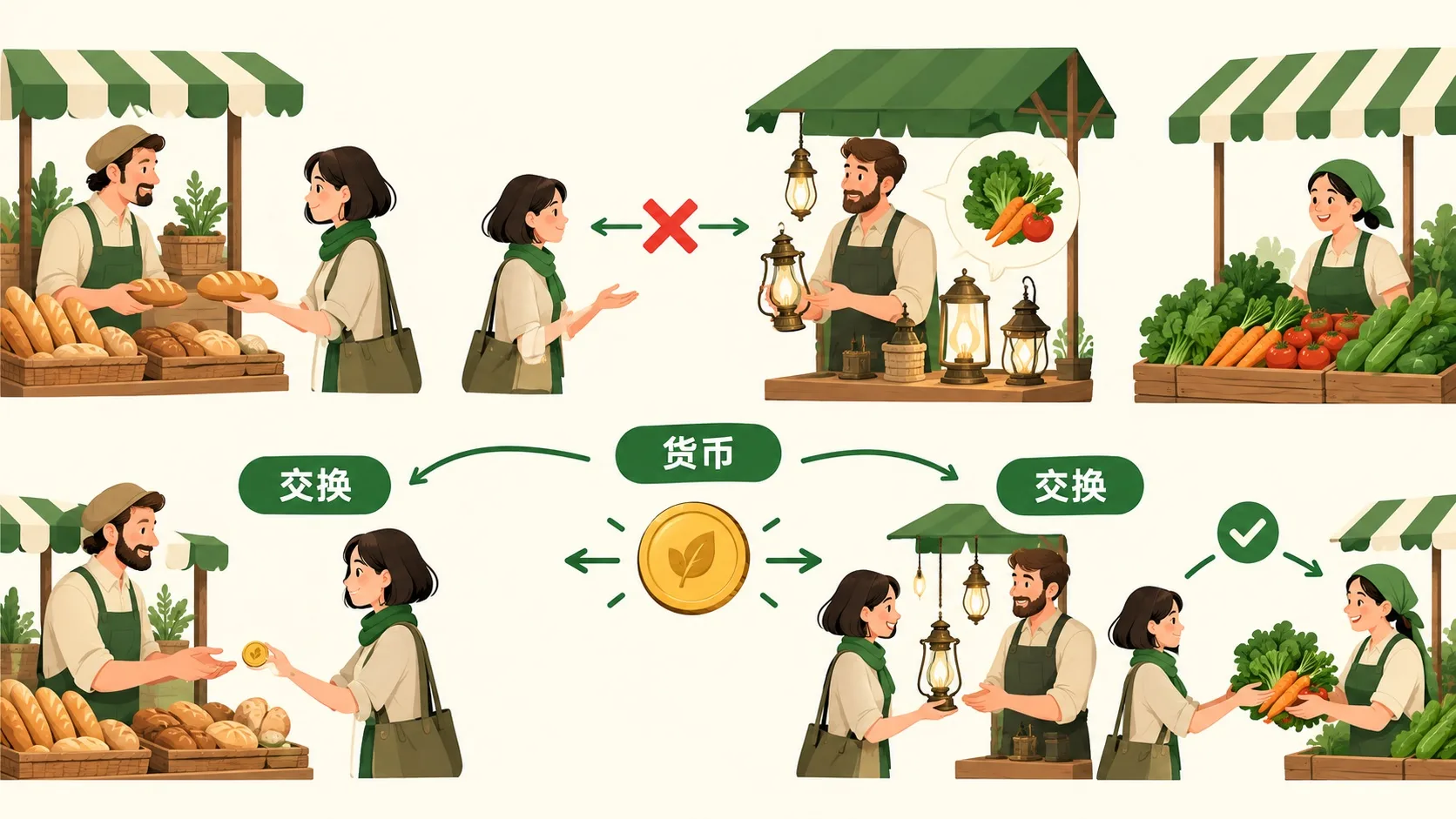
面包卖完后,小树想买一盏灯。灯匠不想要面包,交易怎样继续?After selling bread, Mia wants a lamp. The lamp maker does not want bread. How can trade proceed?
第 1 步:共同接受的交换工具Step 1: A commonly accepted medium
直接交换为什么会卡住?Why can direct exchange get stuck?
以物易物需要双方需求匹配。货币让买与卖可以分开。小树先卖面包得到钱。再用钱购买灯。Barter requires a match between what both parties want. Money separates selling from buying. Mia can sell bread for money, then use the money to buy a lamp.
第 2 步:标价,也保存名义价值Step 2: Prices and nominal value
除了付款,钱还能做什么?What else does money do?
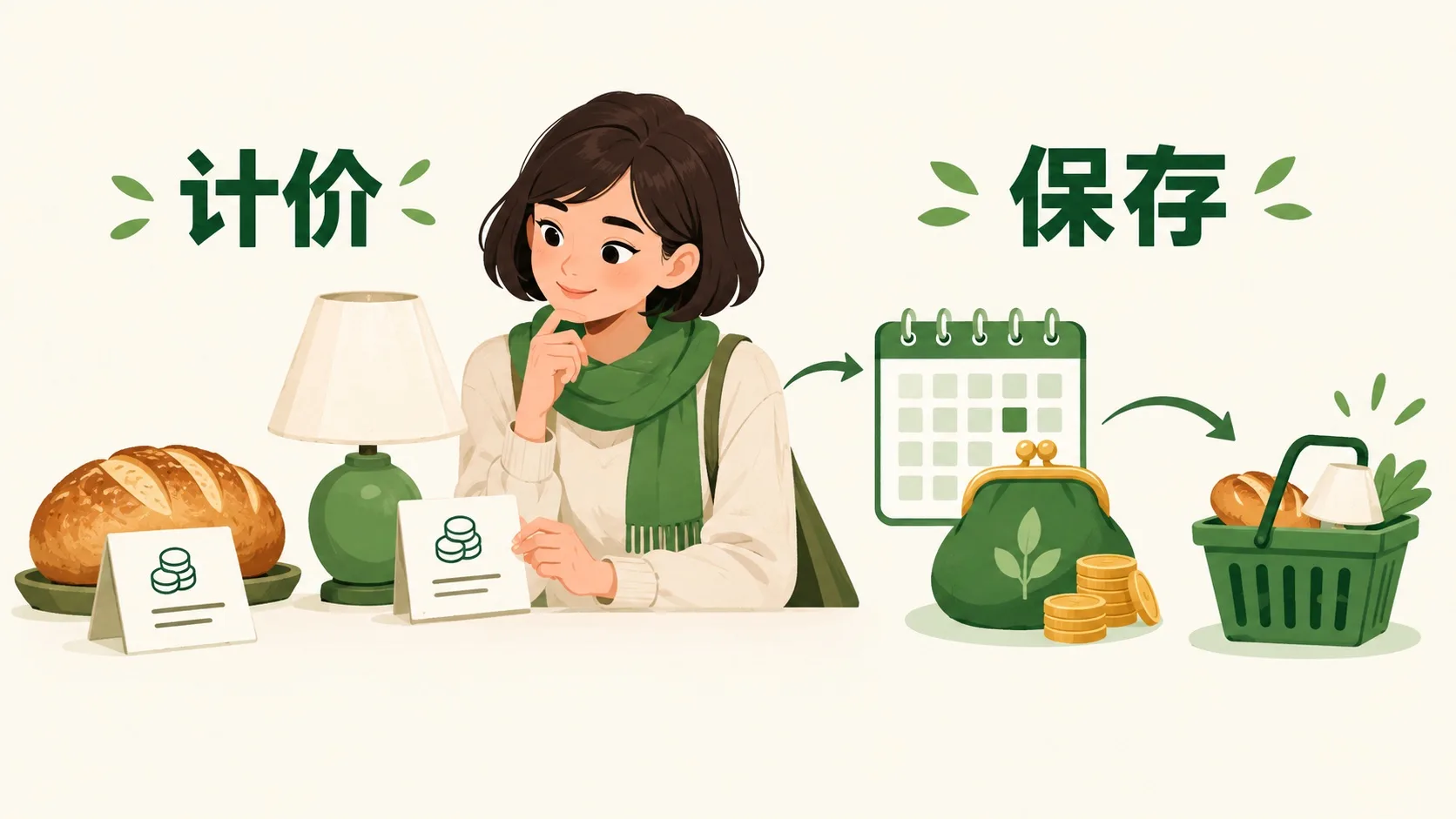
共同单位方便比较价格。钱也能把购买计划留到以后。但名义金额不等于购买力。物价上涨时,同样的钱可能买得更少。A common unit makes prices comparable. Money also lets people postpone purchases. A nominal amount is not the same as purchasing power. Rising prices can make the same sum buy less.
第 3 步:信任与制度支撑使用Step 3: Trust and institutions support use
纸片或账户数字为何被接受?Why accept paper or an account entry?
货币形式包括现金和银行存款。支付系统帮助转移账户余额。人们的信任与制度很重要。不同社会的货币历史并非同一条路线。Money includes cash and bank deposits. Payment systems transfer account balances. Trust and institutions matter. Monetary history does not follow one identical path across all societies.
🎮 机制实验室:观察,再判断🎮 Mechanism lab: observe, then decide
可购买数量取金额除以价格的整数部分。保持金额不变,观察价格上升的影响。Affordable whole loaves equal money divided by price, rounded down. Hold money fixed and raise the price.
一句话记住它:Remember it:货币连接交换、计价与跨时间的购买计划。Money supports exchange, pricing, and purchasing plans across time.
以物易物需要双方需求匹配。Barter requires a match between what both parties want.共同单位方便比较价格。A common unit makes prices comparable.货币形式包括现金和银行存款。Money includes cash and bank deposits.
货币功能:较高把握。以物易物仅为机制例子,不主张所有社会都从它发展而来。High confidence in money’s functions. Barter is a mechanism example, not a claim about every society’s origin.
核对日期:2026 年 10 月 6 日。文字与配图由 AI 生成;已做来源核对及程序测试,待人工复核。Checked 6 October 2026. Text and illustrations are AI-generated. Sources and software checks were performed; human review is pending.
 Back to tree