🏔️ 造山运动:大地的褶皱与隆起🏔️ Mountain Building: How the Ground Rises
上一片里,火山把岩浆喷成岛屿和山。可世界最高的喜马拉雅不是岩浆堆的——它是两块大陆像推地毯一样,硬生生“挤”出来的。🌍 星球向导带你围观板块之间的这场拔河。The last leaf showed volcanoes erupting islands into being. But the world's tallest Himalayas aren't built of lava — they were “squeezed” out by two continents shoving like a pushed carpet. 🌍 your guide takes you ringside to the tug-of-war between plates.
第 1 步:使劲挤,山就隆起——地毯实验Step 1: Push hard, up come mountains — the carpet test
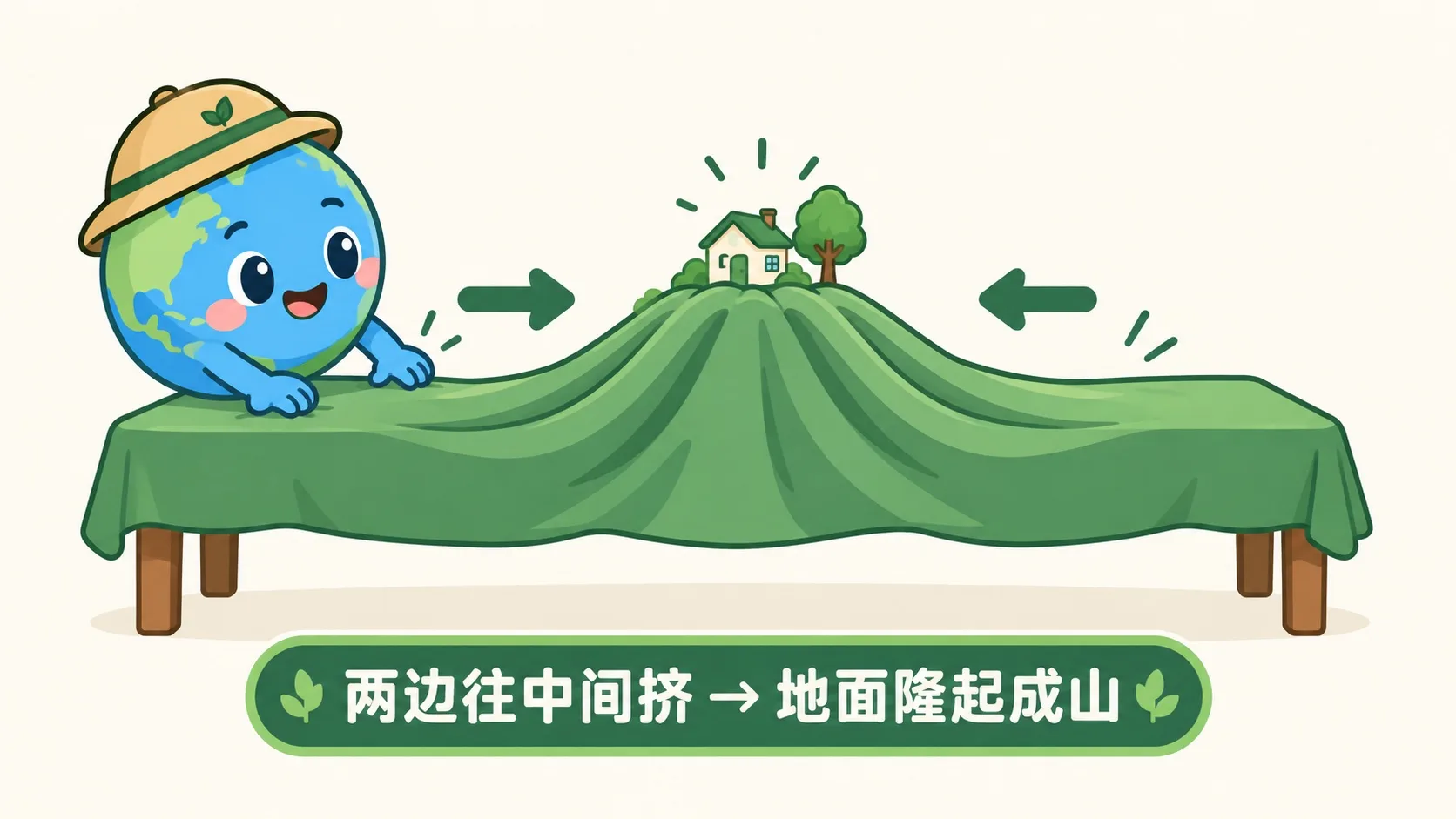
山是从哪儿来的?先在桌面上做个地毯实验。Where do mountains come from? Start with a carpet on your desk.
把桌布从两端往中间推,布料没处去,只能在中间鼓起一道道“山梁”。地壳也是这样:板块每年只挪几厘米,但一挤就是几百万年——印度板块撞上欧亚板块,挤出喜马拉雅,而且今天还在长高,速度约等于你的指甲。Push a tablecloth from both ends and it has nowhere to go but up, buckling into ridges. The crust works the same way: plates creep a few centimeters a year, but keep it up for millions of years — India rammed into Eurasia and squeezed up the Himalayas, which still grow today at about the speed of your fingernails.
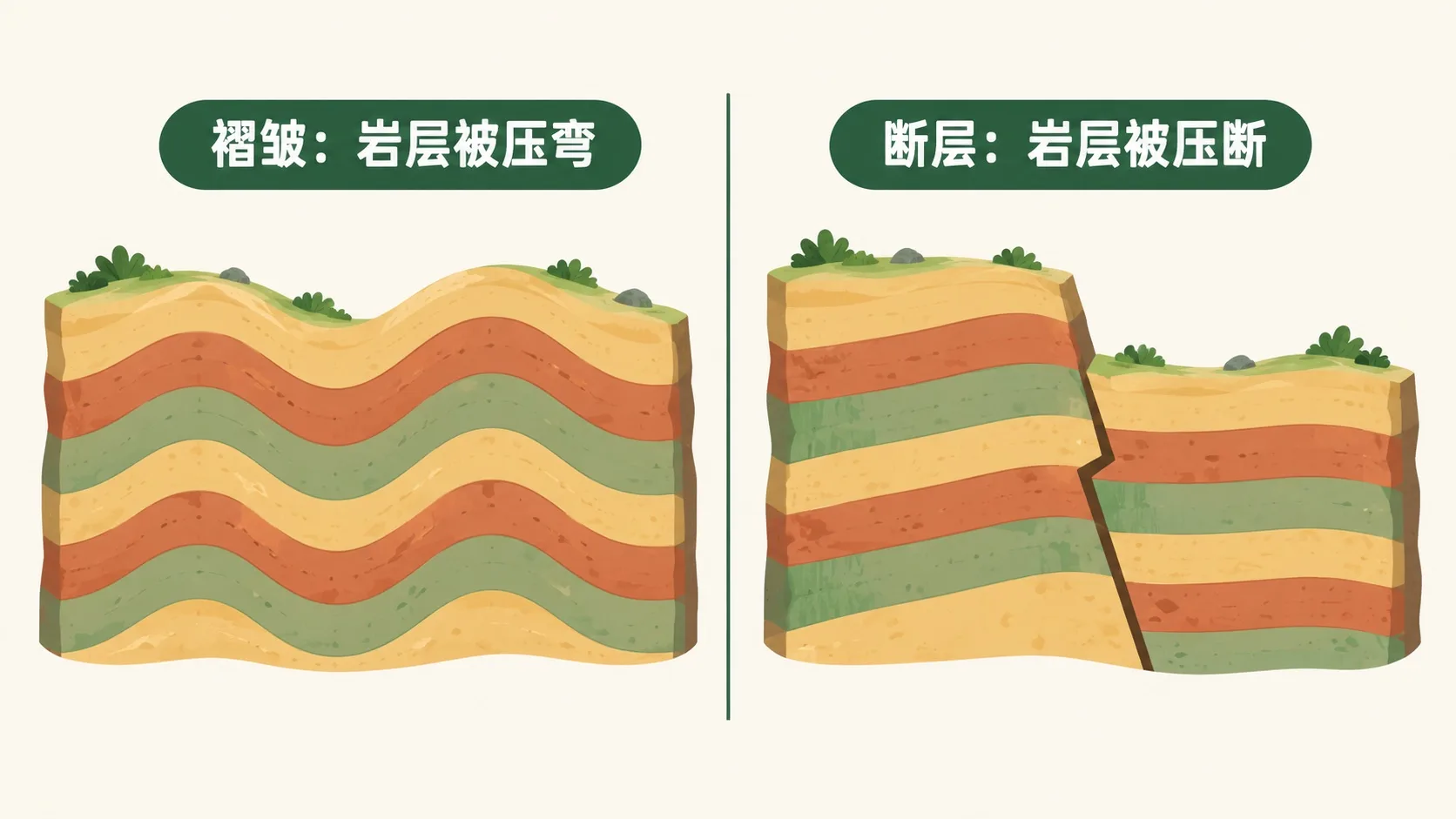
地壳被挤的时候,有的弯了腰,有的断了骨头——怎么区分?Under squeezing, some rock bends and some snaps — how do you tell them apart?
第 2 步:两种变形——褶皱与断层Step 2: Two ways to deform — folds and faults
岩层像千层饼。受到挤压:软一点的岩层像橡皮泥,被压出一连串波浪,这叫“褶皱”;脆一点的岩层像饼干,直接“咔嚓”断开、两边的地层错开位置,这叫“断层”。地球上大多数大地震,就发生在断层突然滑动的那一瞬间。Rock layers are like a stack of pancakes. Under squeezing: softer layers bend like clay into waves — a “fold”; brittle layers snap like a cracker, the two sides sliding out of place — a “fault”. Most big earthquakes happen at the instant a fault suddenly slips.
喜马拉雅每年还在长高几毫米——那它一亿年前长什么样?The Himalayas still rise a few millimeters a year — what were they 100 million years ago?
第 3 步:鱼怎么会“游”上珠峰?Step 3: How did fish “swim” up Everest?
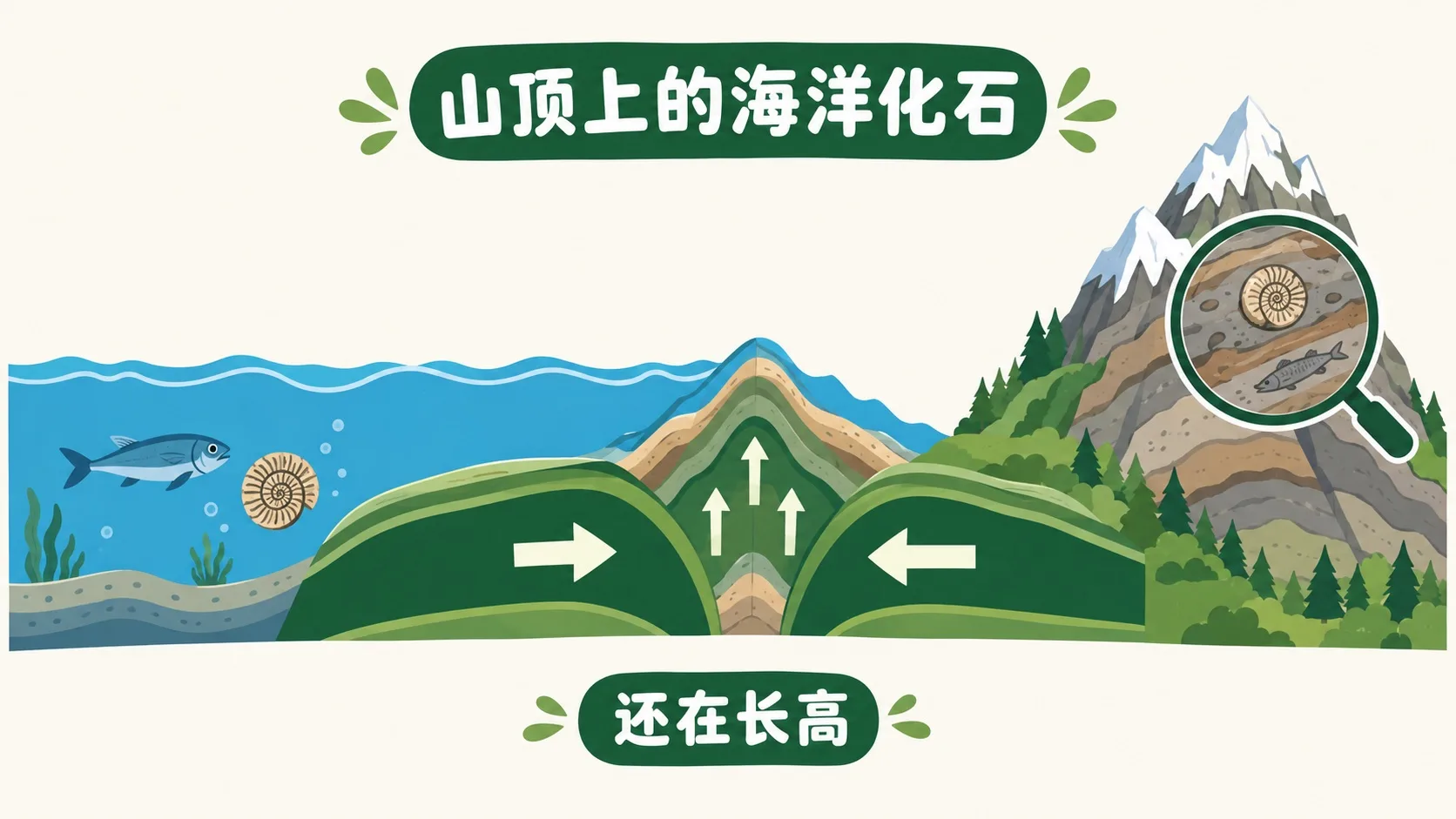
登山者在喜马拉雅山顶的岩石里找到了菊石等海洋生物化石——铁证:这里曾经是一片汪洋大海!海洋里的泥沙一层层沉积,板块一挤,海床连同化石被整体抬到 8848 米。同时风雨从没停工:它们不断把山顶往低处削——造山和侵蚀的拔河,决定了一座山最终多高。Climbers have found marine fossils like ammonites in Himalayan summit rock — proof: this was once an open sea! Layer upon layer of seafloor sediment got squeezed and hoisted, fossils and all, to 8,848 meters. Meanwhile wind and rain never stop sawing peaks down — the tug-of-war between uplift and erosion decides a mountain's final height.
🎮 你来操作挤压实验台(30 秒)🎮 Your turn: run the squeeze lab (30 seconds)
道理讲完了。先亲手把板块挤出一条山脉,看看褶皱和断层;再答对 3 道山脉配对题。Theory done. First squeeze out a mountain range yourself and watch folds and faults; then ace 3 mountain-matching questions.
一句话记住它:造山运动 = 板块碰撞挤压,把地壳挤弯、堆高成山脉。同一股力量:相撞挤出喜马拉雅、俯冲顶起安第斯、拉开裂出东非大裂谷。Remember it in one line: mountain building = plates colliding and squeezing the crust into ranges. One force: collisions raise the Himalayas, subduction heaves the Andes, pulling apart cracks the East African Rift.
大陆相撞 → 褶皱山系;喜马拉雅至今仍以约指甲生长的速度长高Continent-on-continent → fold ranges; the Himalayas still grow at fingernail speed岩层被挤两种变形:变弯是褶皱(软),断裂错位是断层(脆)Squeezed layers deform two ways: bends are folds (soft), breaks are faults (brittle)山顶的海洋化石证明喜马拉雅曾是海底;风雨侵蚀与造山在拔河Marine fossils on the summit prove the Himalayas were once seafloor; erosion tug-of-wars with uplift
内容参考 OpenStax 等公开教材,多来源核对 · AI 生成、人工审核 · 发现错误欢迎指正,帮这片叶子长得更好。Based on OpenStax and other open textbooks, cross-checked across sources · AI-generated, human-reviewed · Spotted a mistake? Tell us — help this leaf grow.
 Back to tree