📡 神经细胞:身体的电报员📡 Nerve Cells: the Body's Telegraphers
上一片里,肺泡把氧气送上了血液快车。可比氧气更急的是消息:手一碰烫杯子,0.2 秒就缩了回来——这封加急电报是谁发的?🦠 小细胞带你顺线追过去,🩺 小医生正在终点站等结果。Last leaf, the alveoli loaded oxygen onto the blood express. But messages travel even faster: touch a hot cup and your hand snaps back in 0.2 seconds — who sent that urgent telegram? 🦠 Cellie follows the wire, while 🩺 Doc waits at the terminal.
第 1 步:认识电报员——神经元Step 1: Meet the telegrapher — the neuron
一封电报 0.2 秒跑完全程——先看看这位跑腿长什么样。One telegram, 0.2 seconds door to door — first, look at the runner.
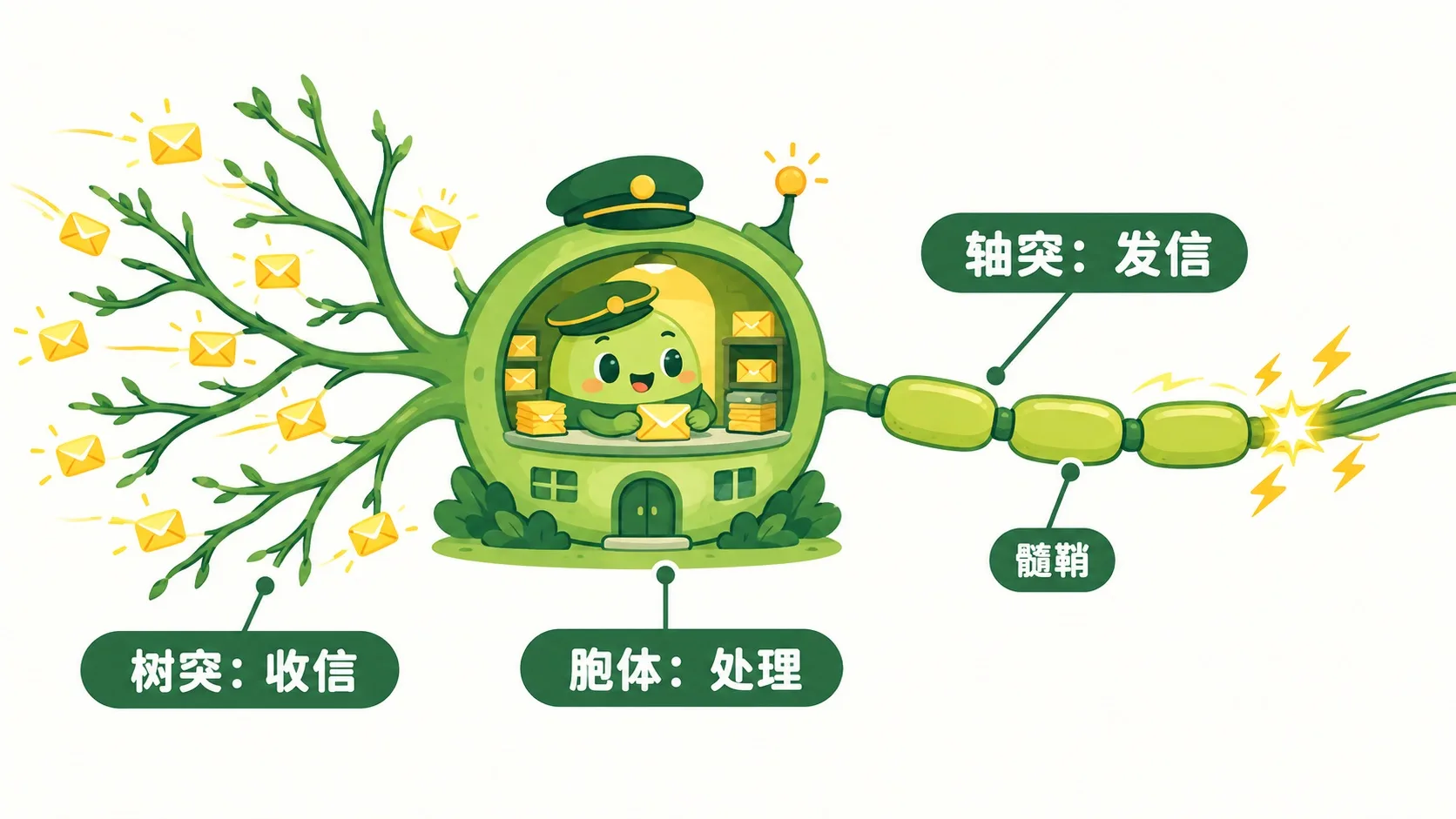
这就是神经细胞,外号神经元。左边树枝一样的树突负责收信,把四面八方的消息抓过来;中间圆滚滚的胞体负责处理,判断这封信急不急;右边长长的轴突负责发信,把消息一路送出去。轴突上还套着一段段的髓鞘——像电线外面的胶皮,让电信号跑得又快又不漏电。This is a nerve cell, nicknamed a neuron. The branchy dendrites on the left receive, grabbing messages from every direction; the round cell body in the middle processes, judging how urgent the mail is; the long axon on the right sends, carrying the message down the line. The axon wears segmented myelin — like the rubber around a wire — so the signal runs fast without leaking.
你全身住着 860 亿个这样的电报员——它们互相碰不到手,消息怎么交给下一个?Your body hosts 86 billion of these telegraphers — they never touch, so how does a message reach the next one?
第 2 步:突触——细胞之间的小间隙Step 2: The synapse — a tiny gap between cells
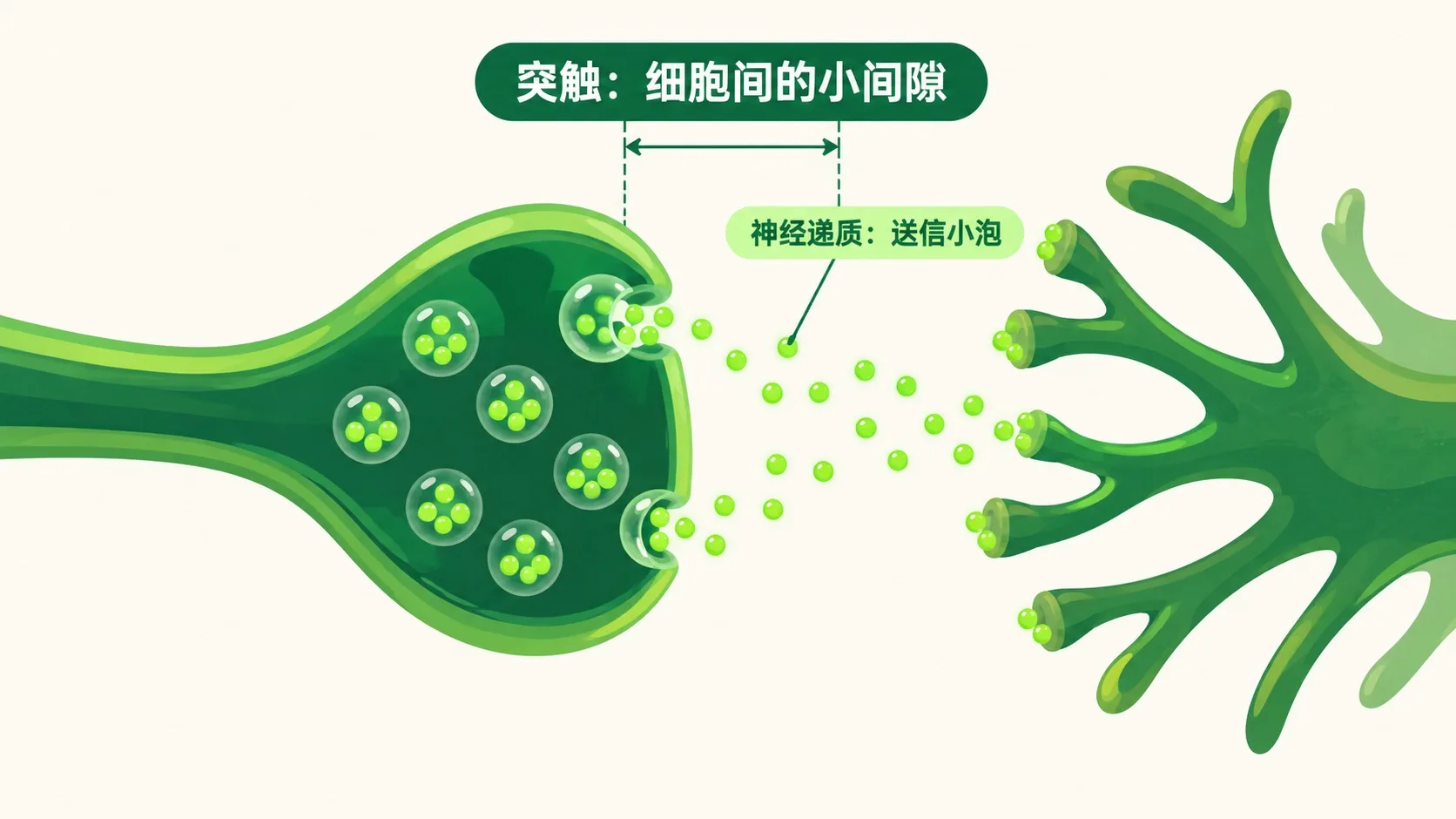
两个神经元之间有一条细细的间隙,叫突触。电信号跑到轴突末梢时,里面的小泡会释放神经递质——化学信使像小船一样把消息划过间隙,对岸的树突一接住,就变成新的电信号继续跑。860 亿个神经元就这样手拉手,连成一张比全城电网还密的网。Between two neurons lies a slender gap called the synapse. When the signal reaches the axon tip, tiny vesicles release neurotransmitters — chemical couriers that row the message across the gap. The dendrites on the far bank catch it and turn it into a fresh electrical signal. Link by link, 86 billion neurons weave a web denser than any city power grid.
这么大的网,怎么让常走的路线越跑越快?In a web this vast, how do well-traveled routes get faster and faster?
第 3 步:用进废退——越练越亮Step 3: Use it or lose it — brighter with practice
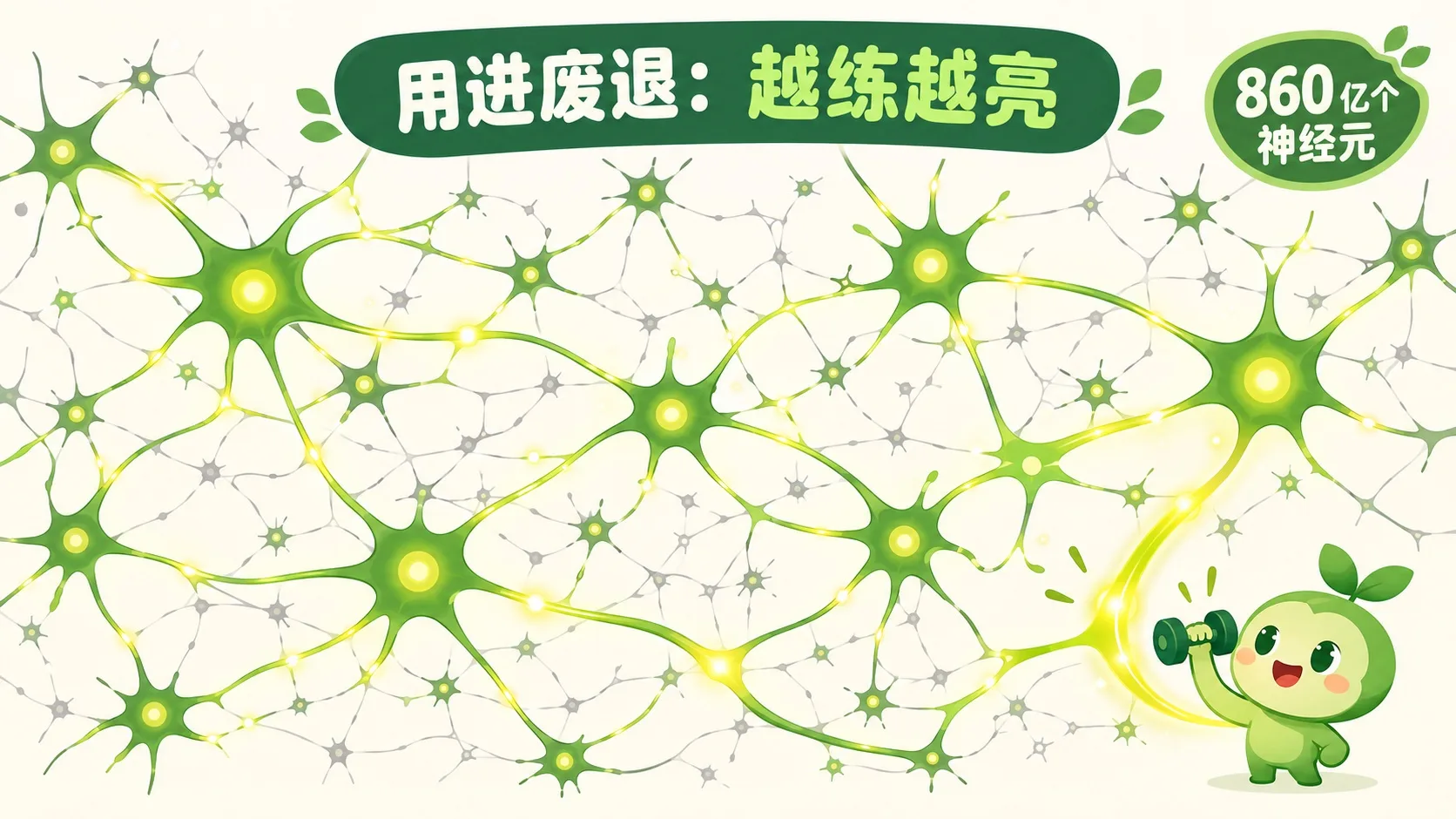
神经元有个脾气:常用的连接会越用越强、越练越亮,长期不用的会慢慢变弱——这叫"用进废退"。练琴、背单词、练投篮,其实都是在反复点亮同一条线路,把它升级成"高速公路"。学习的本质,就藏在这件小事里:练习 = 给连接加固。Neurons have a temper: connections that fire often grow stronger and brighter, while idle ones slowly fade — "use it or lose it." Practicing piano, memorizing words, shooting hoops — all of it re-lights the same route and upgrades it into a highway. That's the heart of learning: practice strengthens the wiring.
🎮 你来当调度员:信号传递台(30 秒)🎮 Your turn: run the relay (30 seconds)
道理讲完了。帮 🦠 小细胞把烫手的消息点站传递:收信、处理、发信、渡过突触,4 关送进 🩺 小医生的司令部。Theory done. Help 🦠 Cellie pass the hot message station by station: receive, process, send, cross the synapse — 4 levels to reach 🩺 Doc's HQ.
一句话记住它:神经细胞 = 身体的电报员——树突收信、胞体处理、轴突发信;860 亿个神经元靠突触上的神经递质传递消息;越练越强的连接,就是学习的本质。Remember it in one line: a nerve cell is the body's telegrapher — dendrites receive, the cell body processes, the axon sends; 86 billion of them chat via neurotransmitters across synapses; connections that strengthen with practice are what learning is.
神经元三段式:树突收信 → 胞体处理 → 轴突发信,髓鞘给线路提速Three-part neuron: dendrites receive → body processes → axon sends; myelin speeds the line突触小间隙:神经递质当小船,把消息划给下一个神经元Synapse gap: neurotransmitter boats row the message to the next neuron用进废退:常用连接变强变亮——练习就是在给大脑线路升级Use it or lose it: busy links brighten — practice upgrades your brain's wiring
内容参考 OpenStax 等公开教材,多来源核对 · AI 生成、人工审核 · 发现错误欢迎指正,帮这片叶子长得更好。Based on OpenStax and other open textbooks, cross-checked across sources · AI-generated, human-reviewed · Spotted a mistake? Tell us — help this leaf grow.
 Back to tree