💧 物态变化:冰水汽的变身六招💧 Phase Changes: Six Moves of Ice, Water, and Steam
上一片里热量跑来跑去;这一片看它顺手干了件大事——让物质“变身”。冰、水、水蒸气其实是同一群分子的三种排法,热量进进出出,它们就换队形。Last leaf, heat was on the move; this leaf watches it pull off a bigger trick — changing matter's form. Ice, water and vapour are the same molecules in three different arrangements, and heat moving in or out makes them switch teams.
第 1 步:六个方向,两两成对Step 1: Six directions, three pairs
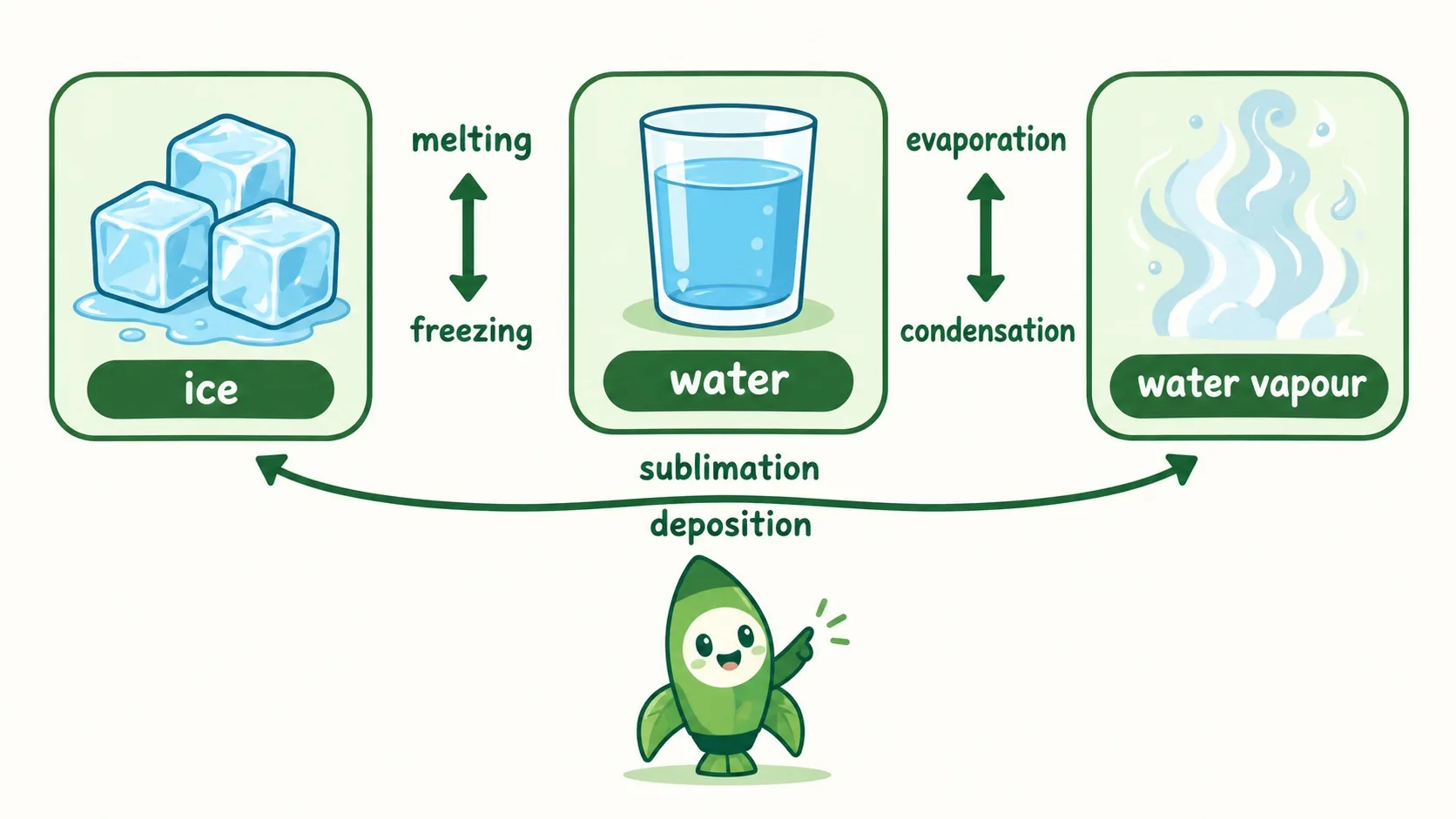
冰、水、水蒸气是三态;两两之间来回变,正好凑出六招。Ice, water and vapour are the three states; moving between each pair gives exactly six moves.
固体→液体叫熔化,倒过来是凝固;液体→气体叫汽化,倒过来是液化;固体和气体还能不经过液体直通——固体直接变气体叫升华,气体直接变固体叫凝华。升温吸热的三招(熔化、汽化、升华),降温放热的三招(凝固、液化、凝华),正好三对。Solid→liquid is melting, and back is freezing; liquid→gas is evaporation, and back is condensation; solid and gas can even skip the liquid — solid→gas is sublimation, gas→solid is deposition. The three warming moves (melting, evaporation, sublimation) absorb heat; the three cooling moves (freezing, condensation, deposition) release it — three neat pairs.
明明一直在加热,为什么冰化成水的时候温度计不动?热量跑哪儿去了?The flame keeps heating — so why does the thermometer freeze while the ice melts? Where does the heat go?
第 2 步:熔化时,吸热却不升温Step 2: During melting, heat goes in but the temperature won't budge
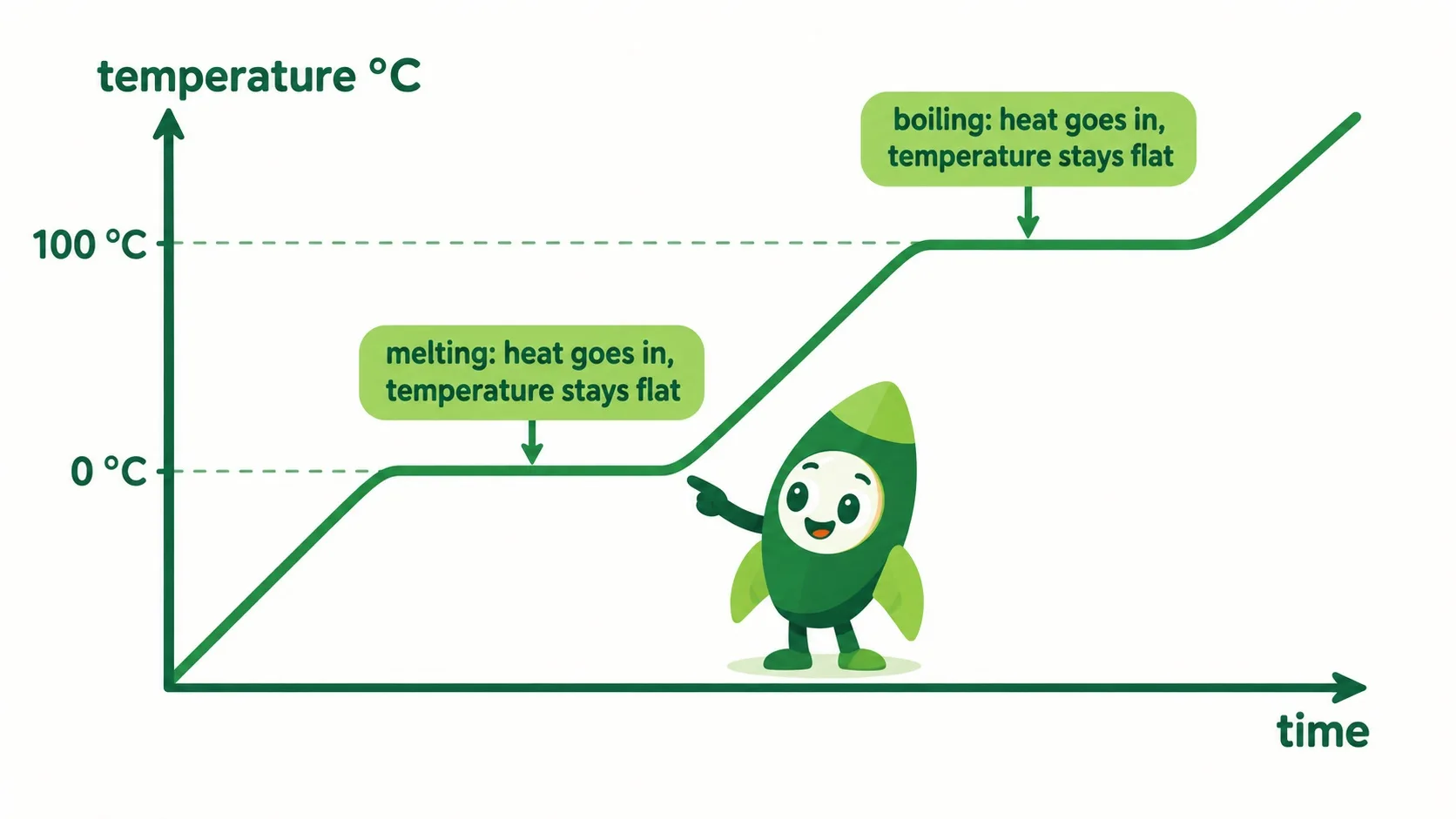
看这条温度-时间曲线:冰升到 0 ℃ 后出现一段“平台”,温度卡住不动,直到冰全化完才继续上升。因为这份热量被拿去拆分子“阵列”了——冰里的分子排得整整齐齐,熔化就是把这些“队形”拆开,拆完温度才重新开始涨。水沸腾的 100 ℃ 平台同理:热量用来把水分子彻底拆散成水蒸气。Look at the temperature–time curve: after the ice reaches 0 °C the line goes flat — the temperature stays put until every last bit of ice is gone. That heat is spent prying apart the molecules' tidy lattice; only when the last “formation” is broken does the temperature start climbing again. The 100 °C plateau at boiling is the same story: the energy is busy tearing water molecules free into vapour.
六招离我们一点都不远——冰棍、干冰、冰箱,全在眼皮底下上演。These six moves are all around us — on popsicles, dry ice, and the freezer.
第 3 步:生活里的变身现场Step 3: Phase changes in real life
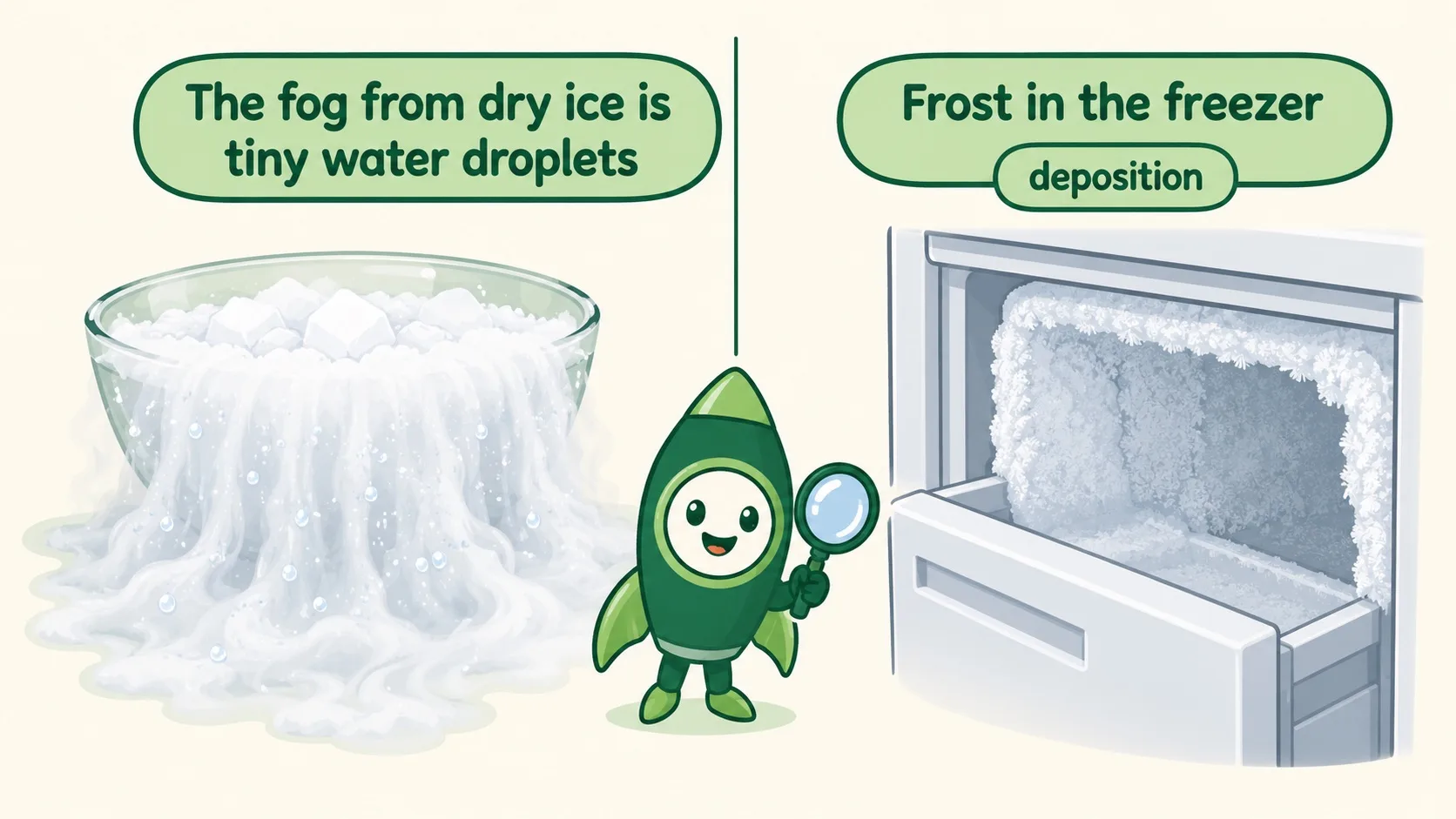
干冰(固态二氧化碳)一升华就吸走周围的热,让空气里的水蒸气液化成小水珠,于是“冒白雾”——那不是气,是雾。冰箱冷冻室里的霜,是水蒸气遇冷凝华直接结成的冰晶。冰棍周围的白气也一样:小水珠,不是水蒸气。记住这个坑:“白气”是液化的结果。Dry ice (solid CO₂) sublimates and pulls heat from its surroundings, so water vapour in the air condenses into tiny droplets — that white fog is liquid mist, not gas. Frost in the freezer is vapour going straight to ice crystals by deposition. The “mist” around a popsicle is the same: tiny droplets, not vapour. Watch out for the classic trap: white mist means condensation, not steam.
🎮 你来当变身鉴定师(40 秒)🎮 Your turn: phase-change inspector (40 seconds)
拖动时间滑块,把冰从 -20 ℃ 加热到 120 ℃,盯住两段平台;再来鉴定 4 个变身现场。Drag the time slider to heat ice from −20 °C to 120 °C, keep an eye on the two plateaus, then identify 4 real-life changes.
一句话记住它:冰水汽三态、六招两两成对;平台期吸热不升温,“白气”其实是小水珠。Remember it in one line: ice, water, vapour — six moves in three pairs; plateaus absorb heat without warming; “white mist” is tiny droplets.
六招:熔化↔凝固、汽化↔液化、升华↔凝华,两两成对Six moves: melting↔freezing, evaporation↔condensation, sublimation↔deposition — three pairs平台期热量用来拆分子阵列,所以吸热不升温On a plateau, heat is busy breaking the molecular lattice, so the temperature stays flat“白气”是水蒸气液化成的小水珠,不是气“White mist” is tiny droplets from condensing vapour — not gas
内容参考 OpenStax 等公开教材,多来源核对 · AI 生成、人工审核 · 发现错误欢迎指正,帮这片叶子长得更好。Based on OpenStax and other open textbooks, cross-checked across sources · AI-generated, human-reviewed · Spotted a mistake? Tell us — help this leaf grow.
 Back to tree