上一片里,我们看见分子永不停歇地撞墙;这一片,🚀 小火箭钻进光学实验室:光一照,金属里的电子居然会“跳”出来。可这件怪事,连爱因斯坦都认真想过。Last leaf we watched molecules never stop hitting walls. This leaf, the little rocket 🚀 slips into a light lab — shine light on a metal plate and electrons jump right out. A strange rule hides inside, and even Einstein had to think hard about it.
第 1 步:光一照,电子跳出来Step 1: Light on, electrons out
电子好好待在金属里,光凭什么把它“敲”出来?Electrons sit snug inside the metal — how can light knock one out?
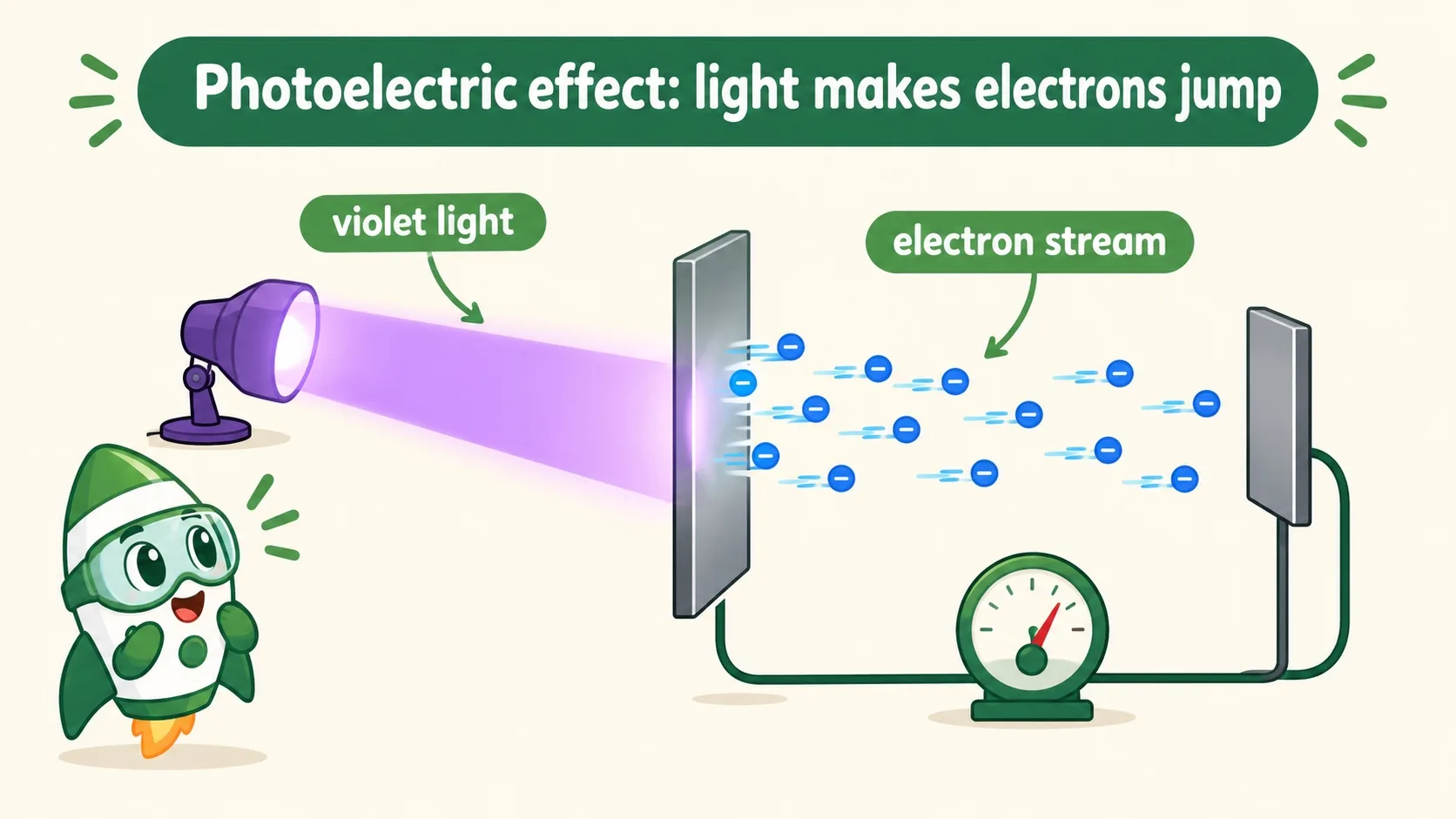
光照在金属板上,能量被电子吸收;电子攒够了劲,就挣脱金属飞出来,形成一股电子流,这就是光电流。这个现象叫光电效应——光不只是照亮东西,还能“踢”出电子。Light lands on the metal plate and electrons soak up its energy. Once one has enough, it breaks free and flies off, forming a stream of electrons — a photocurrent. The whole effect is called the photoelectric effect: light doesn't just brighten things, it can kick electrons out.
亮一点不行,那亮到刺眼总行了吧?If a little light won't do it, surely blinding light will?
第 2 步:怪事:红光再亮也没用Step 2: The strange part: bright red light fails
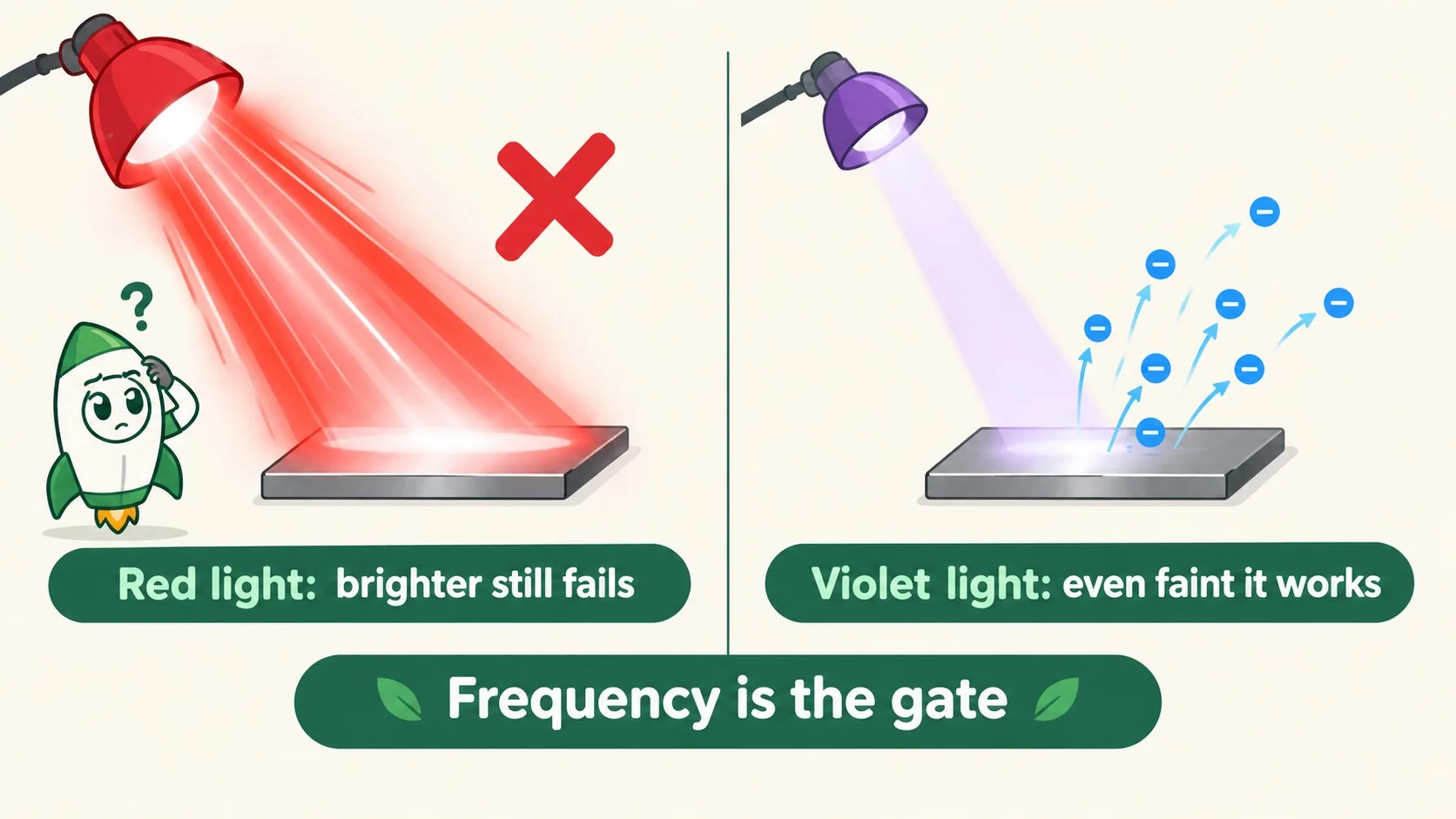
怪就怪在这里:红光调到再亮,也打不出一个电子;换成很弱的紫光,电子立刻跳出来。原来频率才是门槛——红光光子能量不够,来多少个都敲不开;紫光、紫外光子能量够,一个就能敲出一个。亮度只决定电子的数量。Here is the twist: turn red light up as bright as you like — not one electron comes out. Switch to a faint violet light and electrons fly immediately. Frequency is the gate: red photons carry too little energy, and a million weak punches still can't open the door; violet and ultraviolet photons carry enough, one punch per electron. Brightness only sets the count.
这件怪事,该找谁来解释?So who can explain this strange rule?
第 3 步:爱因斯坦说,光是一份一份的Step 3: Einstein said, light comes in packets
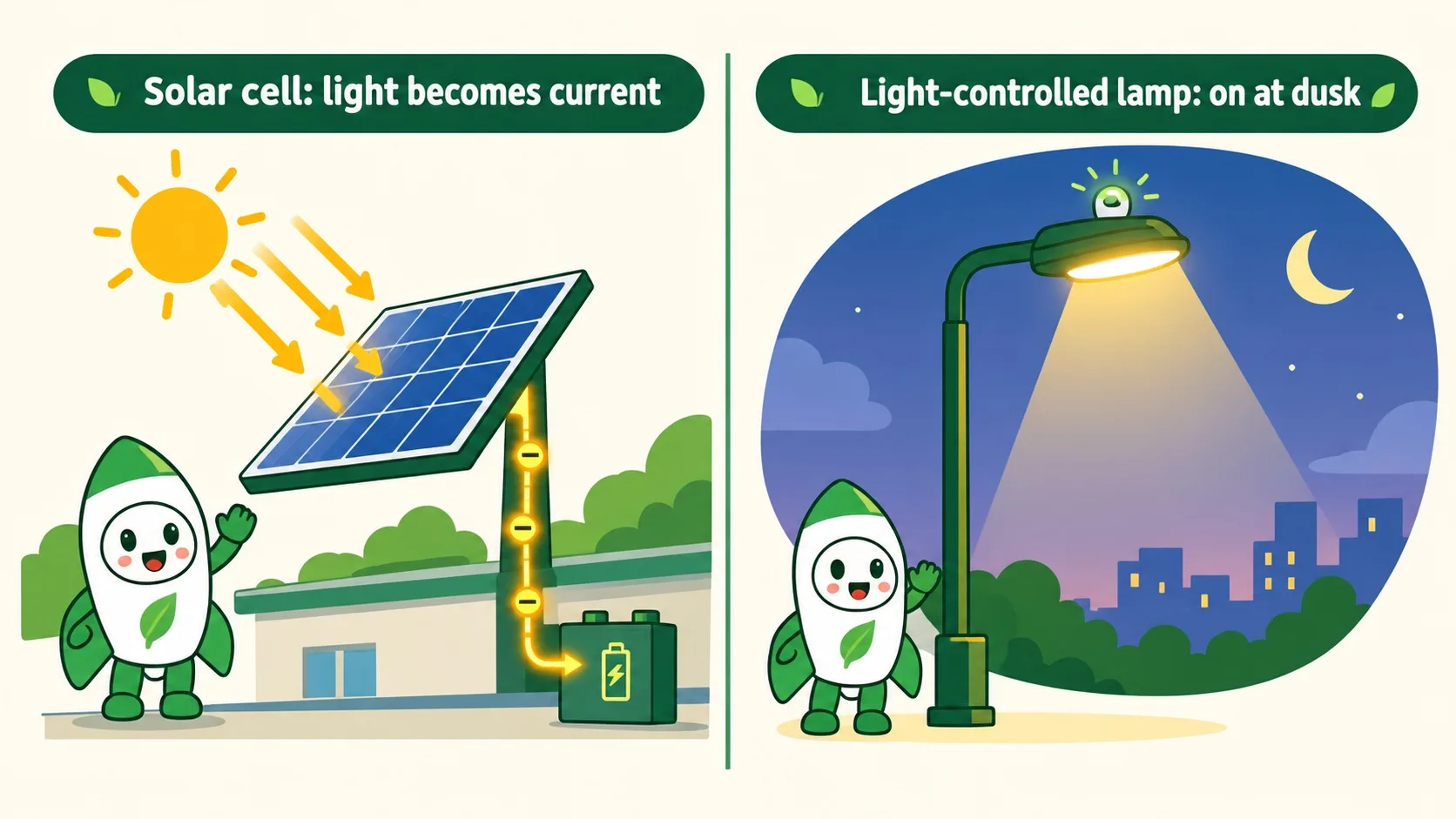
爱因斯坦说:光不是连续的“水流”,而是一份一份的“光子”,每份的能量由频率决定(E = hf)。一个光子一般只能打出一个电子:红光光子太“穷”,付不起挣脱金属的“赎金”,再来多少也没用;紫光光子够“富”,一个就能赎出一个。太阳能电池、光控路灯,都靠这套规则干活。Einstein's answer: light is not a smooth stream but a stream of packets — photons — and each packet's energy is set by its frequency (E = hf). One photon usually frees one electron. Red photons are too "poor" to pay the ransom that frees an electron, no matter how many arrive; violet photons are "rich" enough to free one on their own. Solar cells and light-controlled street lamps run on exactly this rule.
🎮 你来当实验室观察员(30 秒)🎮 Your turn: lab observer (30 seconds)
道理讲完了。拖动光的颜色和亮度滑块,看电子出不出来、电流表怎么变;再接下面 4 个小任务。Theory done. Drag the light-colour and brightness sliders to see whether electrons come out and how the meter moves — then take 4 quick tasks.
一句话记住它:光电效应 = 光子把能量交给电子,把它从金属里“赎”出来;频率是门槛,亮度只管数量。Remember it in one line: the photoelectric effect is photons paying an electron's ransom out of a metal — frequency is the gate, brightness only sets the count.
光一照,金属表面飞出电子,形成光电流Light hits a metal plate, electrons fly out, a photocurrent flows频率不够(红光)再亮也打不出;频率够(紫光/紫外)再弱也能打Below the threshold (red) even the brightest light fails; above it (violet/UV) even the faintest works爱因斯坦:光是一份份光子,E = hf,一个光子对一个电子;太阳能板、光控路灯都靠它Einstein: light comes in photons, E = hf, one photon per electron — solar cells and light-controlled lamps run on it
内容参考 OpenStax 等公开教材,多来源核对 · AI 生成、人工审核 · 发现错误欢迎指正,帮这片叶子长得更好。Based on OpenStax and other open textbooks, cross-checked across sources · AI-generated, human-reviewed · Spotted a mistake? Tell us — help this leaf grow.
 Back to tree