上一片「构造法」要亲手把对象造出来。可有些结论,不用造也能断定“一定有”——5 只鸽子塞进 4 个巢,总有一个巢挤了两只。The last leaf, constructive proof, builds the object by hand. But some conclusions are certain without building anything: put 5 pigeons into 4 nests and one nest must hold two.
第 1 步:5 只鸽子,4 个巢Step 1: 5 pigeons, 4 nests
先从这个最朴素的版本开始:为什么“挤一挤”躲不掉?Start with the simplest version: why can't the squeeze be avoided?
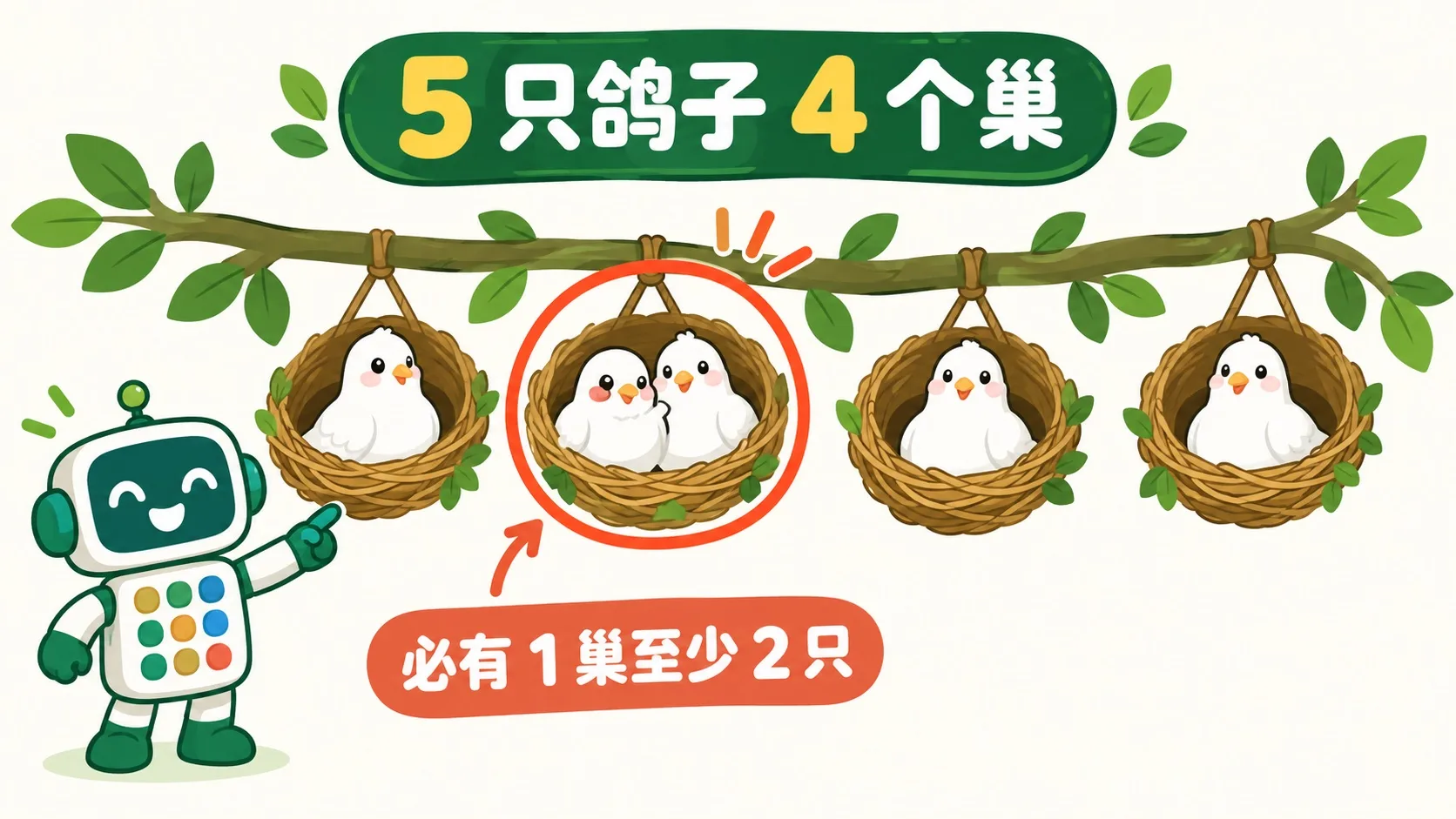
5 只鸽子住 4 个巢:哪怕每个巢先住 1 只,还剩 1 只没处去,它只能挤进某个已经有鸽子的巢。“总有一巢至少 2 只”不是运气,是数学上的必然——这就是鸽巢原理(也叫抽屉原理)。5 pigeons, 4 nests: give every nest 1 pigeon first and one is still homeless — it must squeeze into a nest that already has one. “Some nest holds at least 2” is not luck; it is a mathematical certainty. This is the pigeonhole principle (Dirichlet's drawer principle).
听着像废话?换到生活里,它马上发威。Sounds trivial? In real life it strikes immediately.
第 2 步:13 个人,总有两人生日同月Step 2: 13 people, two share a month
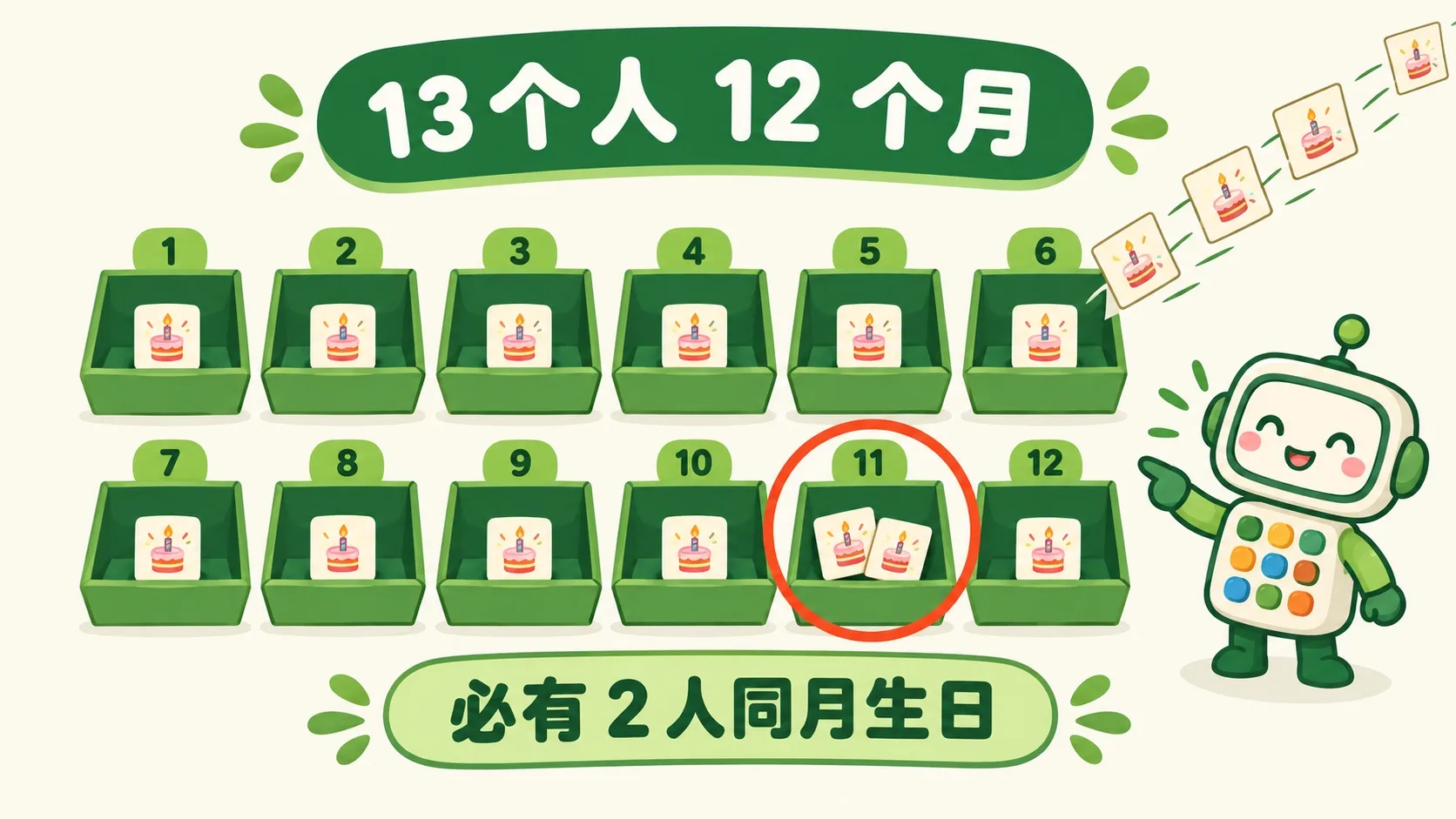
一年只有 12 个月:把 13 个人的生日按月份放进 12 个格子,必有 2 人落在同一格。不用问任何人的生日,结论已经成立。12 个月是 12 个“巢”,13 个人是 13 只“鸽子”,鸽巢原理直接出手。A year has only 12 months: sort 13 birthdays into 12 boxes and two must land in the same box — without asking anyone's birthday. The 12 months are 12 holes, the 13 people are 13 pigeons. The principle goes straight to work.
那要“保证”摸到一双同色袜子,该摸几只?So how many draws make a matching pair a sure thing?
第 3 步:摸袜子——“保证”看最坏情况Step 3: Socks — “sure” means the worst case
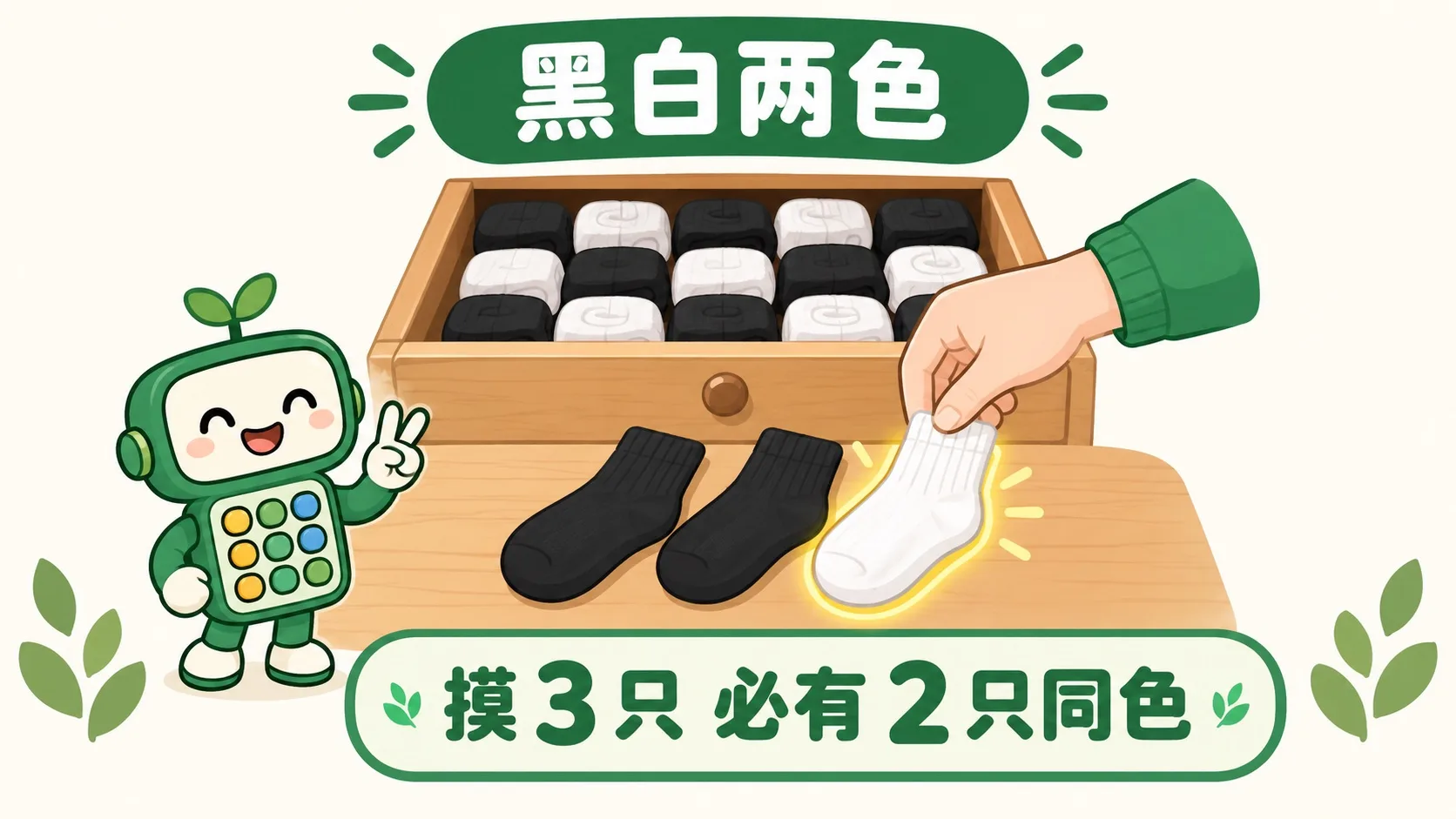
抽屉里有黑白两色袜子,闭眼摸 3 只:最倒霉是前两只一黑一白;第 3 只无论黑、白,都会和其中一只配成同色。“保证”的意思就是:连最坏情况都逃不掉。颜色数是巢,袜子数是鸽子。A drawer holds black and white socks. Pull 3 with eyes shut: the worst case is one of each color first — then the 3rd must match one of them. “Sure” means: even the worst case can't escape. Colors are holes, socks are pigeons.
🎮 你来当鸽巢管理员(30 秒)🎮 Your turn: pigeonhole keeper (30 seconds)
先把 5 只鸽子拖进 4 个巢,看重复怎么“自己冒出来”;再挑战 4 关抽屉问题。First drag 5 pigeons into 4 nests and watch the repeat emerge on its own; then take on 4 drawer challenges.
一句话记住它:n+1 只鸽子进 n 个巢,必有一个巢至少 2 只;要“保证”,就想最坏情况。Remember it in one line: n+1 pigeons in n holes force a hole with at least 2 — and “sure” means “worst case”.
鸽巢原理:n+1 只鸽子 → n 个巢,必有一巢 ≥2 只Pigeonhole: n+1 pigeons into n holes — some hole holds at least 2推广:要保证有一巢至少 k+1 只,需要 n×k+1 只鸽子General form: to force k+1 in some hole you need n×k+1 pigeons非构造性:它断定“一定有”,却不告诉你是哪个巢Non-constructive: it proves “there must be one” without naming the hole
内容参考 OpenStax 等公开教材,多来源核对 · AI 生成、人工审核 · 发现错误欢迎指正,帮这片叶子长得更好。Based on OpenStax and other open textbooks, cross-checked across sources · AI-generated, human-reviewed · Spotted a mistake? Tell us — help this leaf grow.
 Back to tree