上一片里,苗追着光长,是为了开工造糖、攒下能量。攒够了,植物要办一件大事——开花结果。可花粉长在雄蕊上,柱头在另一朵花上,谁把它们送到一起?Last leaf, seedlings chased the light to make sugar and bank energy. With enough in the vault, the plant attempts its grand event — blooming and fruiting. But pollen sits on the stamen while the stigma waits on another flower. Who brings them together?
第 1 步:花粉的旅行路线Step 1: The pollen's route
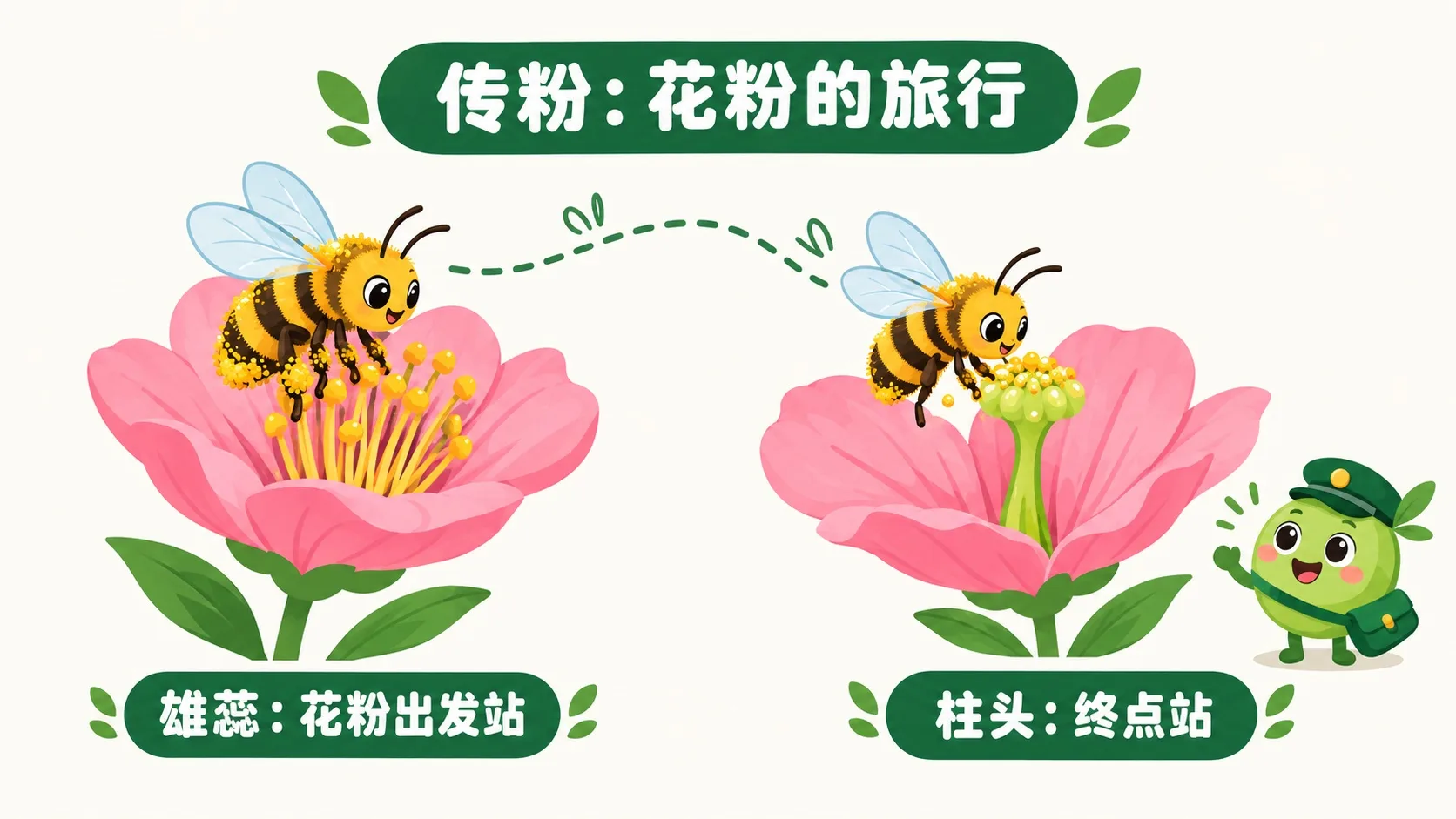
花粉的旅程只有一段路:从雄蕊的花药,到另一朵花的柱头。The journey is one short leg: from the anther on a stamen, to a stigma on another flower.
蜜蜂钻进花里吸花蜜,毛茸茸的身上沾满花粉;飞到下一朵花,花粉正好蹭在黏黏的柱头上——传粉完成!之后花粉萌发出花粉管、完成受精,子房长成果实、胚珠变成种子。落到自己花的柱头叫自花传粉,落到别的植株叫异花传粉——异花的后代更强壮,所以多数花都会想办法“婉拒”自己的花粉。A bee dives in for nectar and its fuzzy body gets dusted with pollen; on the next flower, the pollen brushes right onto the sticky stigma — pollinated! The pollen then grows a pollen tube, fertilization happens, the ovary swells into fruit and ovules become seeds. Landing on your own stigma is self-pollination; another plant's is cross-pollination — cross kids are stronger, so most flowers find ways to politely refuse their own pollen.
花粉自己不会动,得有人捎它一程。不同花粉,请的“快递员”完全不同。Pollen can't move on its own — it needs a courier. And different pollen hires completely different couriers.
第 2 步:快递员名册Step 2: The courier roster
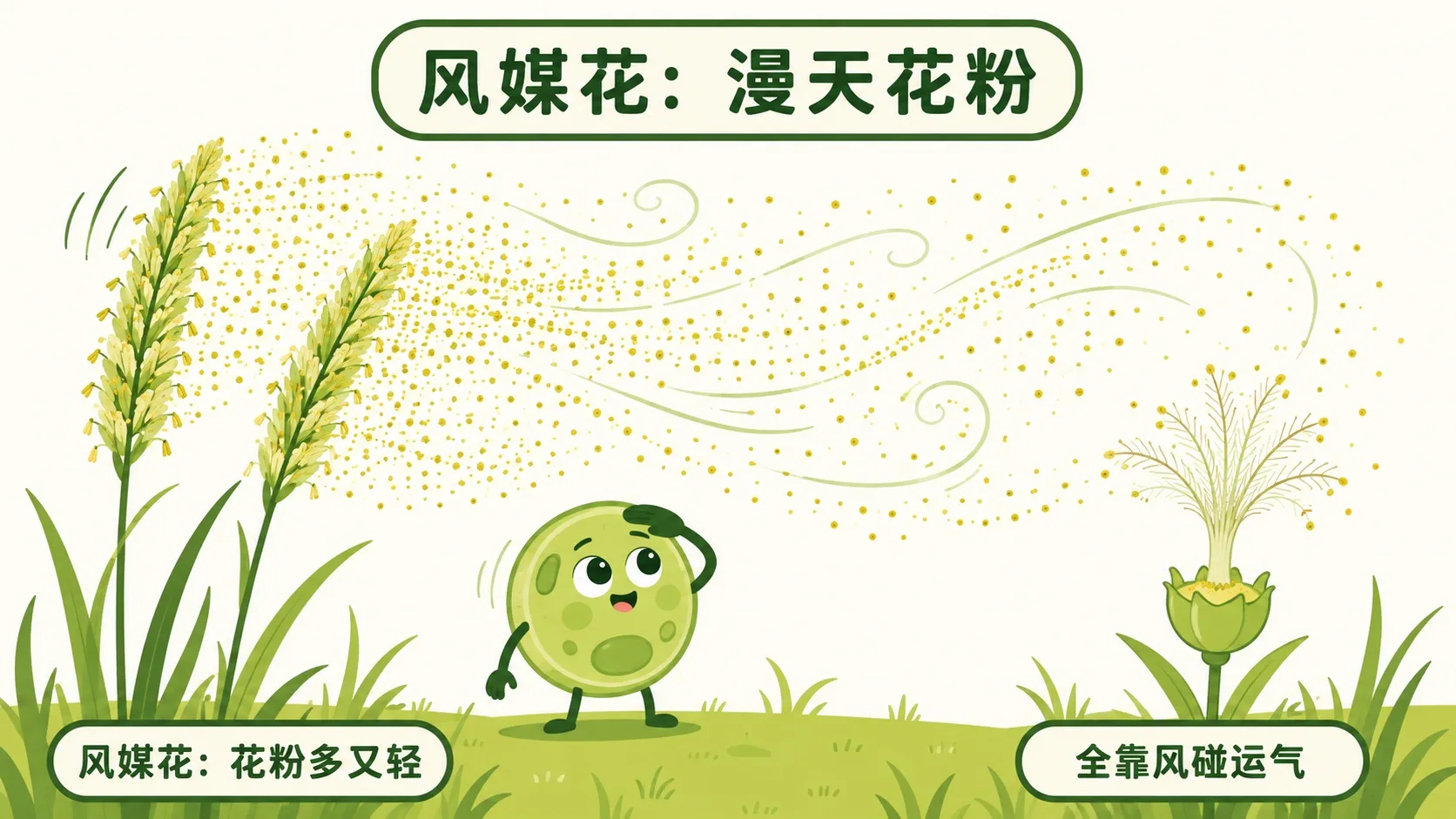
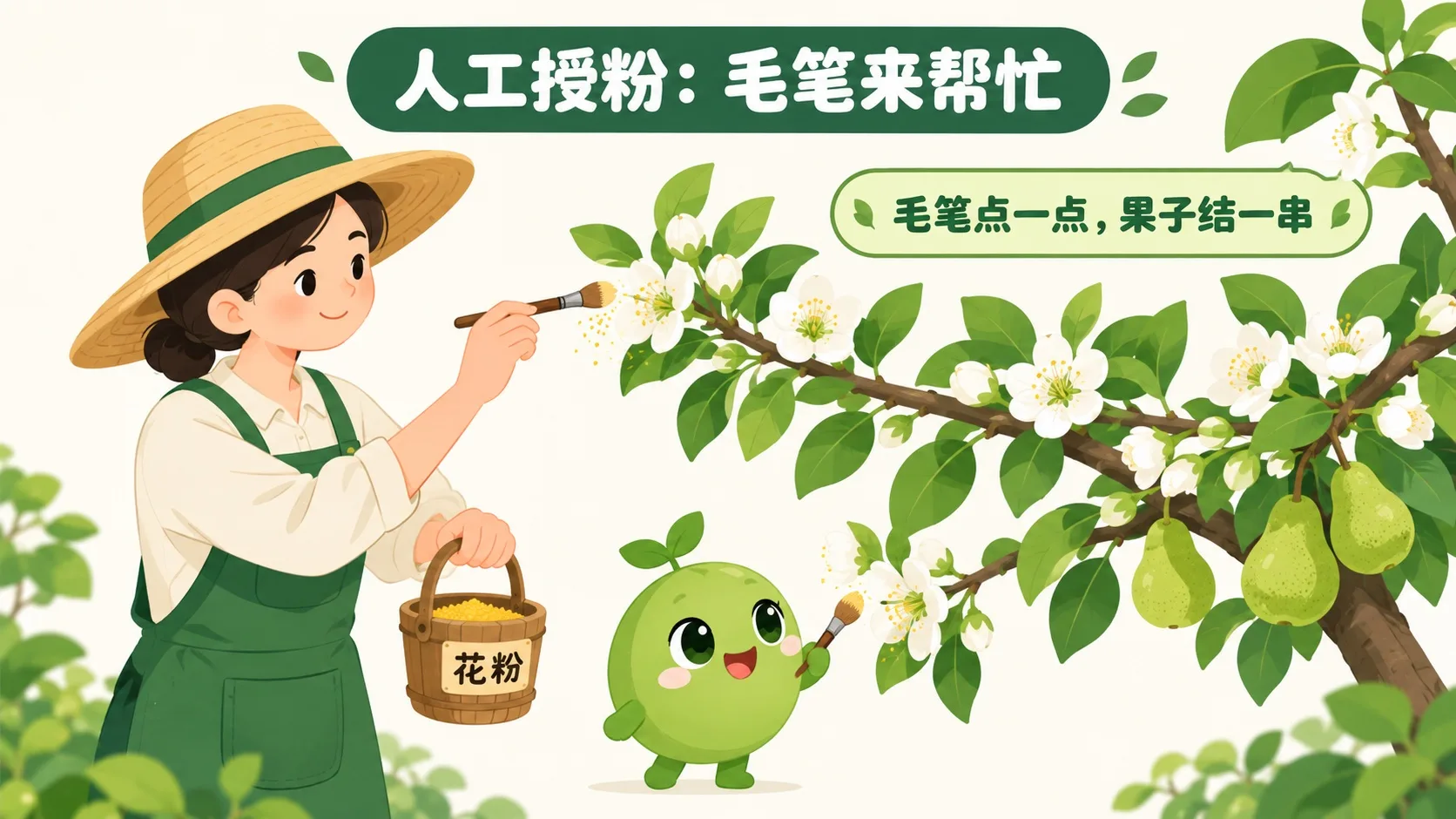
风媒花走“量”:素颜、无香、不起眼,花粉却多得像面粉,又轻又干,风一吹漫天撒,撞上柱头全靠运气——水稻、小麦、杨树都这样。虫媒花走“质”:穿鲜艳花衣、送花蜜当工钱,请蜜蜂蝴蝶精准快递。还有鸟媒花,用一大口甜汁款待蜂鸟。快递员不够时,果农亲自上阵:一支毛笔逐花轻点,这叫人工授粉。Wind-pollinated flowers go for volume: plain, scentless, unremarkable, but their pollen is as plentiful and light as flour — scattered to the sky, landing by sheer luck (think rice, wheat, poplars). Insect-pollinated flowers go for quality: bright outfits and nectar wages hire bees and butterflies for precise delivery. Bird flowers pay hummingbirds in sweet syrup. When couriers run short, farmers step in and tap each blossom with a brush — hand pollination.
请不到蜜蜂,就得果农自己爬梯子——反过来看,蜜蜂到底有多重要?If bees can't be hired, farmers climb the ladders themselves — which tells you exactly how much bees matter.
第 3 步:蜜蜂很重要,也很累Step 3: Bees matter — and they're struggling
全球约三分之一的农作物要靠蜜蜂等传粉者帮忙结果:一只蜜蜂一天能拜访几百朵花。可如今农药、栖息地减少,蜜蜂越来越少,一些果园只好雇人拿毛笔一朵朵点花——又贵又慢。保护蜜蜂就是保护我们自己的餐桌:留一片野花、少喷一次药,都是在帮花粉完成它的旅行。About one in three food crops relies on bees and other pollinators: a single bee visits hundreds of flowers a day. But pesticides and shrinking habitats are thinning their ranks, and some orchards now hire people to brush every blossom — slow and costly. Protecting bees protects our own dinner tables: leave a patch of wildflowers, spray one time less — every bit helps pollen finish its journey.
🎮 传粉大作战(30 秒)🎮 Your turn: the great pollination (30 seconds)
先帮蜜蜂排好授粉四步,再给三种花各配一位正确的“快递员”。First put the bee's four steps in order, then match each flower with its right courier.
一句话记住它:传粉 = 花粉从雄蕊搬到柱头。快递员可以是风、虫、鸟,甚至人。Remember it in one line: pollination = pollen carried from stamen to stigma. The courier can be wind, insect, bird — even a person.
旅程:花药 → 柱头,之后才有果实和种子;异花传粉的后代更强壮The route: anther → stigma; fruit and seed follow. Cross-pollinated kids are stronger风媒靠量(花粉多又轻),虫媒靠质(花衣 + 花蜜工钱)Wind hires by volume (light, plentiful pollen); insects by quality (colors + nectar wages)约三分之一庄稼靠传粉者;保护蜜蜂 = 保护餐桌About 1 in 3 crops needs pollinators; protecting bees protects our tables
内容参考 OpenStax 等公开教材,多来源核对 · AI 生成、人工审核 · 发现错误欢迎指正,帮这片叶子长得更好。Based on OpenStax and other open textbooks, cross-checked across sources · AI-generated, human-reviewed · Spotted a mistake? Tell us — help this leaf grow.
 Back to tree