放大镜小队扫完图,记下的发现堆成小山。机器人直发愁:格子再多下去,本子就写不下了。得给发现“浓缩”一下。The magnifier squad finished its sweep, and the findings piled into a small hill. The robot frowns: any more cells and the notebook will overflow. Time to squeeze.
第 1 步:位置不重要,有特征就行Step 1: Position doesn't matter — the feature does
先弄清一件事:这个图案出现在哪一格,真的要紧吗?First, one question: does it really matter which cell a pattern lands on?
池化(Pooling)把小块的多个数压成一个数:它不盯着精细位置,只问“这一片里有那个特征吗”。就像把大照片过一遍压榨机——出来的小照片上,关键像素还发着光。Pooling presses several numbers in a small patch into one. It doesn't stare at exact positions — it only asks "is the feature in this patch?" Like running a big photo through a press: on the small photo that comes out, the key pixels still glow.
那压缩的时候,留下哪个数好?So when squeezing, which number gets to stay?
第 2 步:最大池化,每 2×2 块只留最大的数Step 2: Max pooling keeps the largest in each 2×2
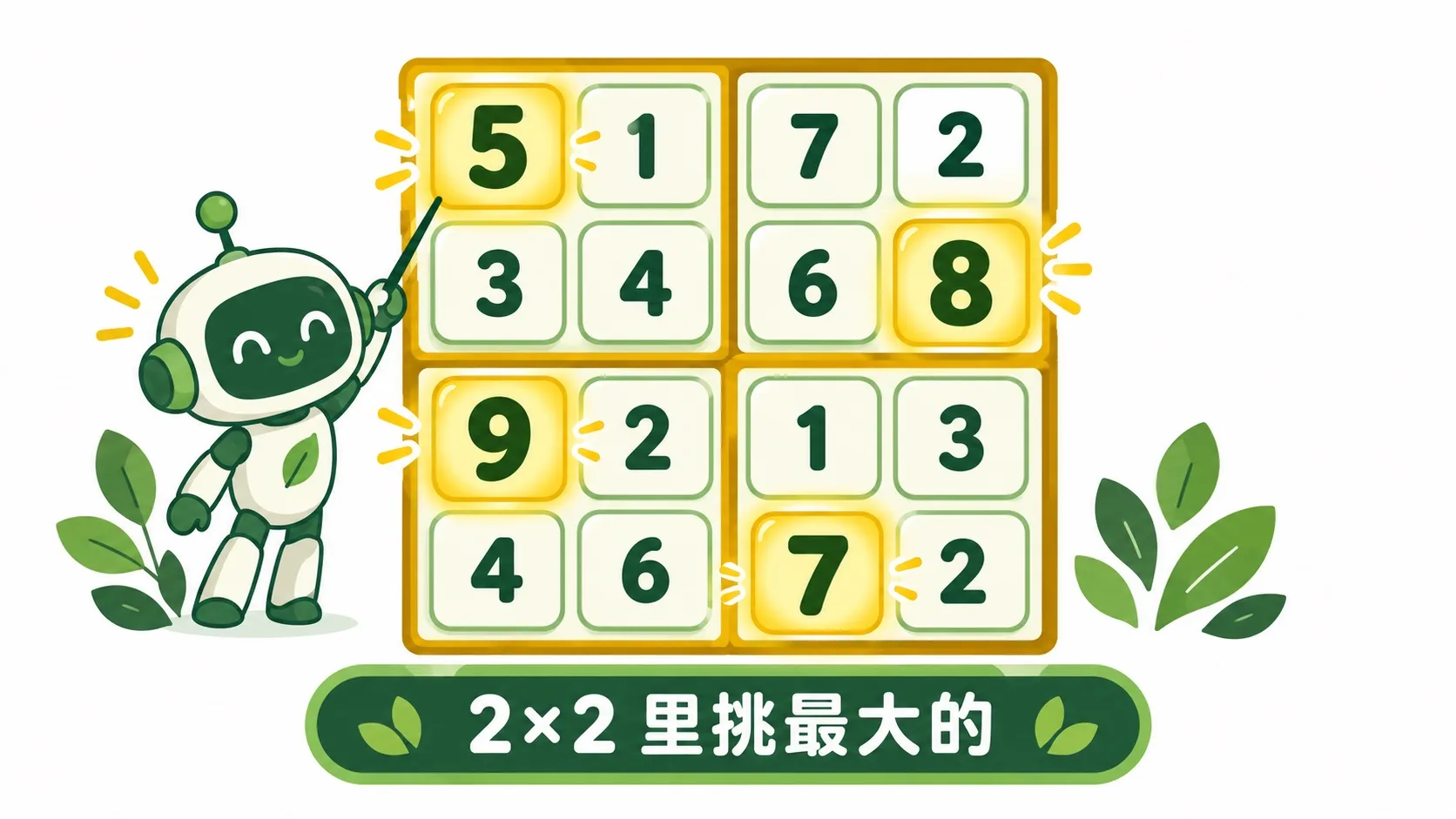
最常用的办法叫最大池化(Max Pooling):把网格切成 2×2 的小块,每块只留最大的那个数。4×4 的 16 个数字,一压就变成 2×2 的 4 个——少了四分之三,最亮的信号一个没丢。The most common way is max pooling: cut the grid into 2×2 blocks and keep only the largest number in each — the rest are dropped. A 4×4 grid of 16 numbers squeezes into a 2×2 of 4. Three quarters gone, not one strongest signal lost.
浓缩之后,机器人能拿到什么好处?What does the robot actually gain from this squeeze?
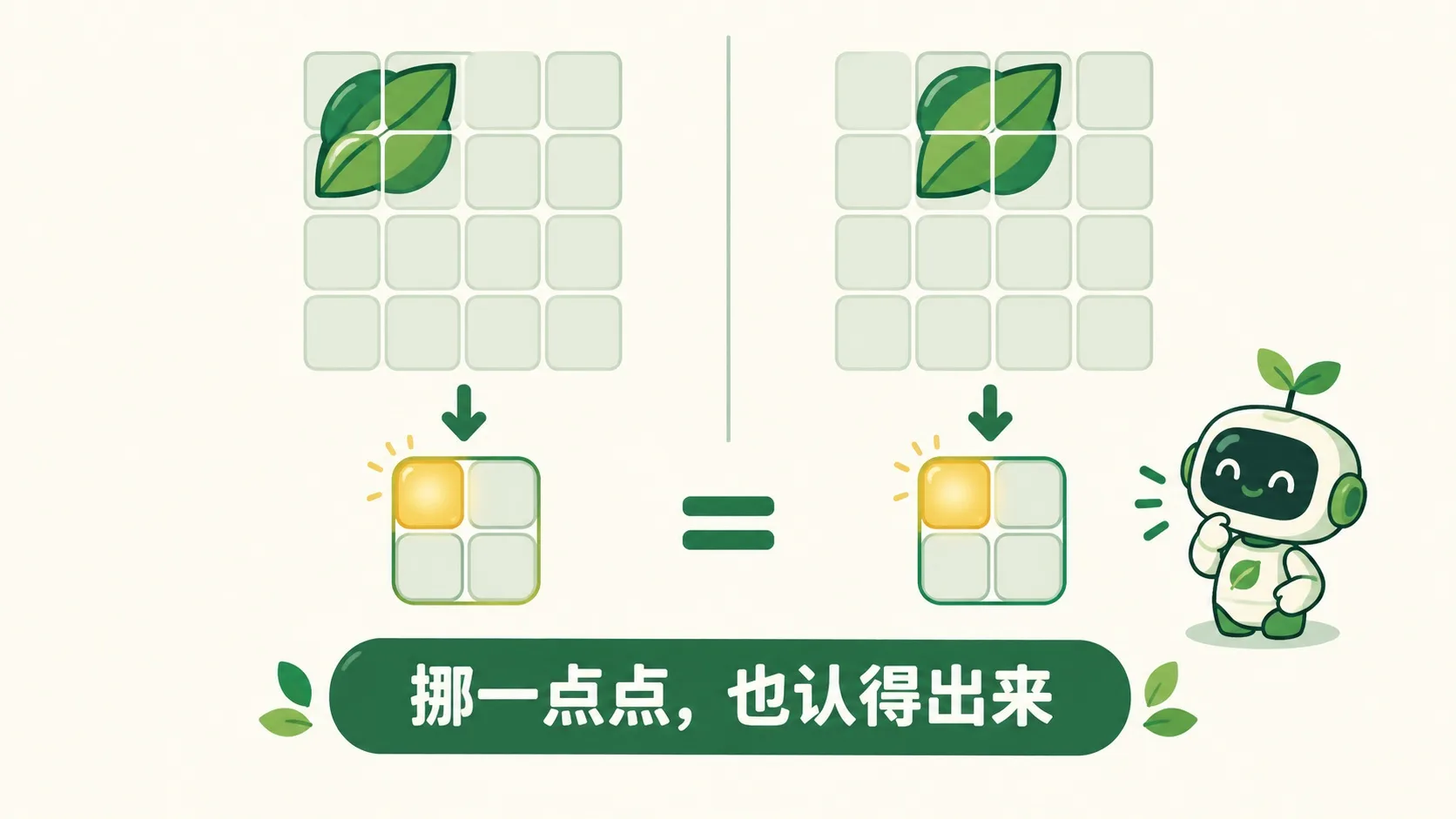
两个好处。一是快:格子少四分之三,后面的计算省力得多。二是稳:图案挪动一小格,最大池化的结果几乎不变——它只关心“这一片里有没有最强的信号”。挪一点点也照样认得出,这个本领叫平移不变性(translation invariance)。Two gains. Faster: three quarters of the cells are gone, so the math that follows costs far less. Steadier: shift the pattern a cell and the pooled result barely moves — it only cares "is the strongest signal in this patch?" A tiny shift changes nothing; this trick is called translation invariance.
🎮 你来浓缩(30 秒)🎮 Your turn: squeeze it (30 seconds)
道理讲完了。下面是一张 4×4 数字网格:按高亮顺序,在每块里点出最大的数字,看它压成 2×2 浓缩图。Theory done. Below is a 4×4 number grid: in the highlighted order, tap the largest number in each block and watch it press into a 2×2 map.
一句话记住它:池化 = 把大图浓缩成要点——2×2 里挑最大,格子少四分之三,要点一个不丢;挪一点点也照样认得出。Remember it in one line: pooling squeezes a big map into the gist — keep the largest in each 2×2, lose three quarters of the cells, keep every key signal, and stay steady when things shift.
池化(Pooling):把小块里的多个数压成一个,位置不重要,有特征就行Pooling: press several numbers in a patch into one — position doesn't matter, the feature does最大池化:每 2×2 块只留最大的数,4×4 一压变 2×2Max pooling: keep the largest in each 2×2 — a 4×4 grid presses down to 2×2好处:图小算得快;特征挪一点点也认得出(平移不变性)Gains: smaller maps compute faster; tiny shifts change nothing (translation invariance)
内容参考 OpenStax 等公开教材,多来源核对 · AI 生成、人工审核 · 发现错误欢迎指正,帮这片叶子长得更好。Based on OpenStax and other open textbooks, cross-checked across sources · AI-generated, human-reviewed · Spotted a mistake? Tell us — help this leaf grow.
 Back to tree