🧱 质数与合数:数世界的原子与积木🧱 Prime & Composite: Atoms and Bricks of Numbers
上一片里,我们量了数字到 0 的距离。这一片换个问题:数字自己是怎么拼出来的?拆开看——有的拆不动,有的能拆成小块。Last leaf, we measured how far numbers sit from zero. This leaf asks a different question — what are numbers made of? Take them apart: some refuse to split, others break into tidy pieces.
第 1 步:拆积木Step 1: Take the blocks apart
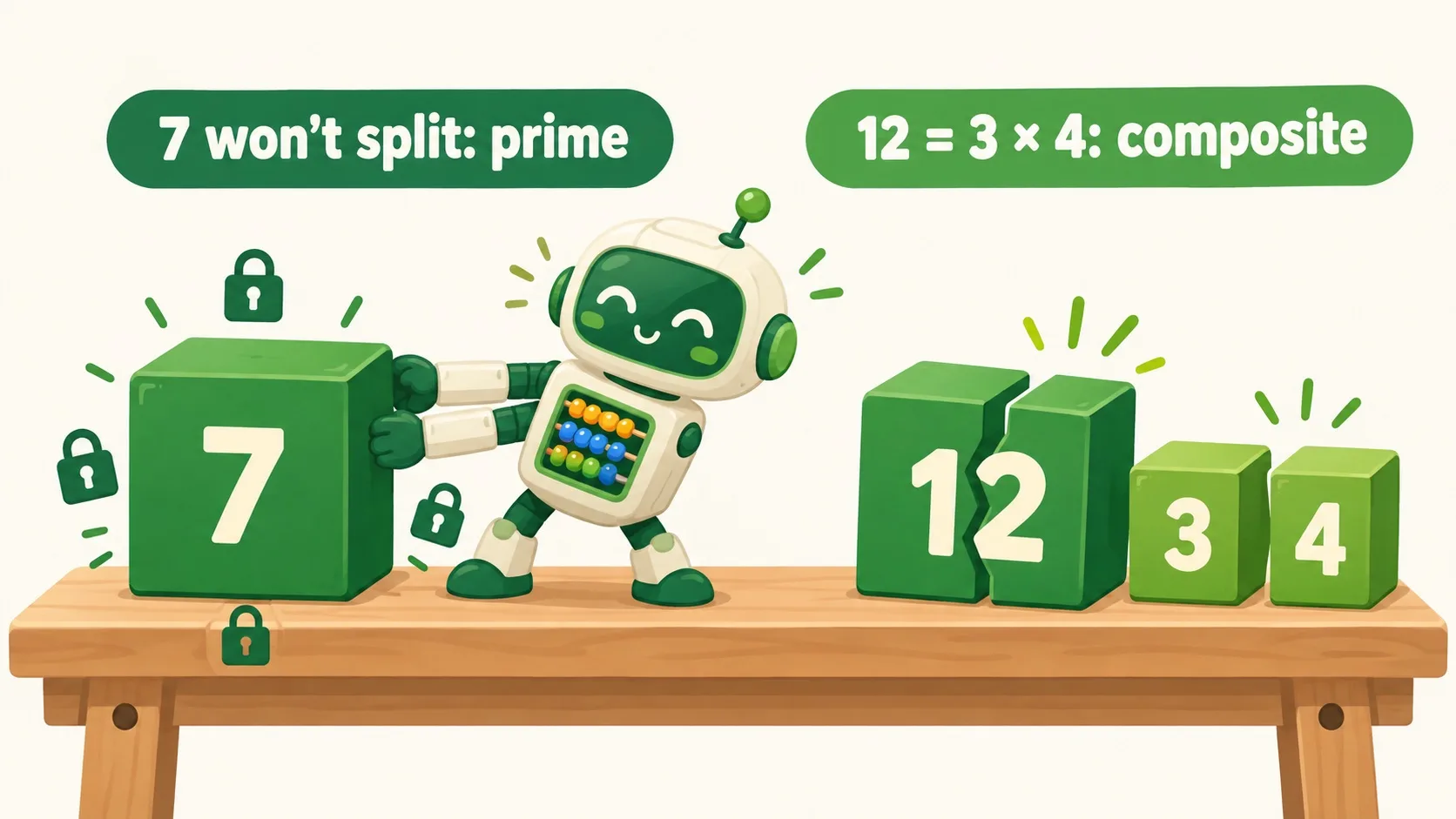
先试两个数:7 和 12,看谁拆得动。Try two numbers first: 7 and 12. See which one comes apart.
7 只有 1 × 7 一种拆法,像一颗原子,谁也掰不小它——它叫质数(prime)。12 就热闹了:2 × 6、3 × 4 都能拼回 12——它叫合数(composite)。2、3、5、7、11 都是原子;4、6、8、9、10、12 都是能拆的积木。Seven has only one split, 1 × 7 — like an atom nothing can break smaller: it is prime. Twelve is livelier: 2 × 6 and 3 × 4 both build it back: it is composite. 2, 3, 5, 7, 11 are atoms; 4, 6, 8, 9, 10, 12 are brick piles.
那怎么快速把质数全找出来?So how do we quickly find every prime?
第 2 步:拿筛子筛一遍Step 2: Run it through a sieve
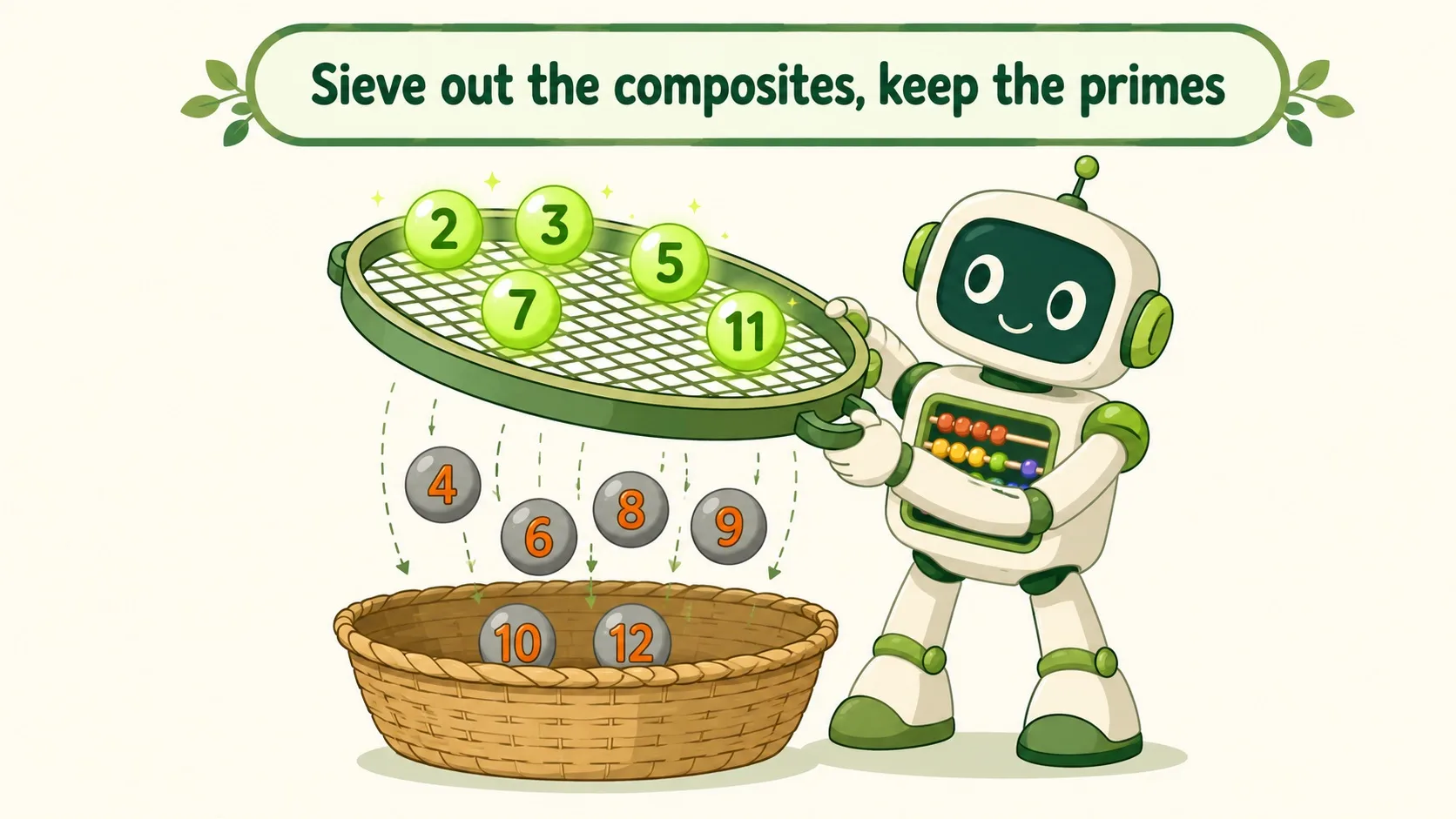
把 1~12 摆上筛子:2 留下,再把 2 的倍数(4、6、8、10、12)筛掉;3 留下,再筛掉 6、9、12;下一个没被筛掉的 5 也留下……筛到底,留在筛面上的全是质数。这个方法叫“筛法”,两千多年前就有人在用。Put 1–12 on the sieve: keep 2, then sift out its multiples (4, 6, 8, 10, 12); keep 3, sift out 6, 9, 12; the next survivor, 5, is kept too... Sift to the end, and whatever stays on the mesh is prime. This trick is called a sieve — people were using it over 2,000 years ago.
这些“拆不动”的数,到底有什么用?What are these unsplittable numbers actually good for?
第 3 步:质数守护密码锁Step 3: Primes guard the padlock
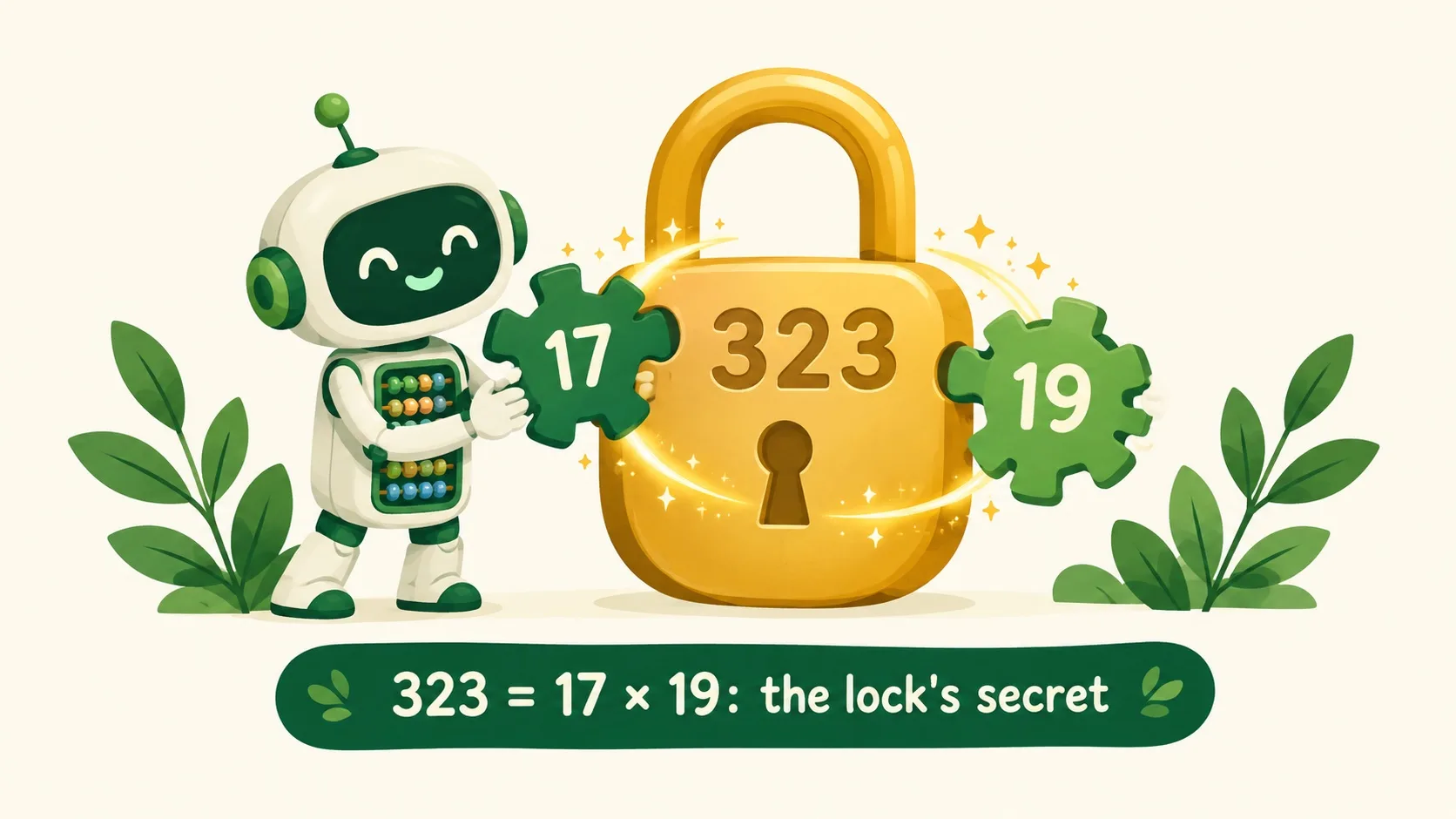
把两个大质数乘起来很快:17 × 19 = 323。但反过来,只看见 323、要拆回 17 和 19,电脑也要试很久。密码锁正是靠这一点:乘法容易,把大数拆回质数很难。Multiplying two big primes is fast: 17 × 19 = 323. But seeing only 323 and splitting it back into 17 and 19 takes computers a very long time. Locks rely on exactly this: multiplying is easy, un-multiplying is hard.
🎮 你来筛一筛(30 秒)🎮 Your turn: sift the primes (30 seconds)
1~12 已经摆上筛子。点出所有质数,把合数漏下去。1–12 are on the sieve. Tap every prime and let the composites fall through.
一句话记住它:质数只能被 1 和自己整除,是数世界的原子;合数能拆成更小的积木。Remember it in one line: a prime divides only by 1 and itself — an atom of numbers; a composite breaks into smaller bricks.
质数:只有 1 和它自己两个因数(比如 7)Prime: exactly two factors, 1 and itself (like 7)合数:能拆成两个更小数的乘积(12 = 3 × 4)Composite: splits into smaller factors (12 = 3 × 4)1 很特别:既不是质数,也不是合数1 is special: neither prime nor composite
内容参考 OpenStax 等公开教材,多来源核对 · AI 生成、人工审核 · 发现错误欢迎指正,帮这片叶子长得更好。Based on OpenStax and other open textbooks, cross-checked across sources · AI-generated, human-reviewed · Spotted a mistake? Tell us — help this leaf grow.
 Back to tree