☢️ 放射性:原子核也会“瘦身”☢️ Radioactivity: when nuclei shed weight
上一片里我们看到,微观世界处处是概率。这一片的主角更不安分:有些原子核坐不住,会自己“瘦身”——甩出一点东西,变成另一种核。这就是放射性。Last leaf, the microscopic world showed us probability everywhere. This leaf's star is even more restless: some nuclei just cannot sit still — they shed a piece of themselves and become a different nucleus. That is radioactivity.
第 1 步:一次“瘦身”,甩出三种射线Step 1: One shed, three rays
先看原子核瘦身时,到底甩出了什么。First, let's see what a nucleus actually throws off.
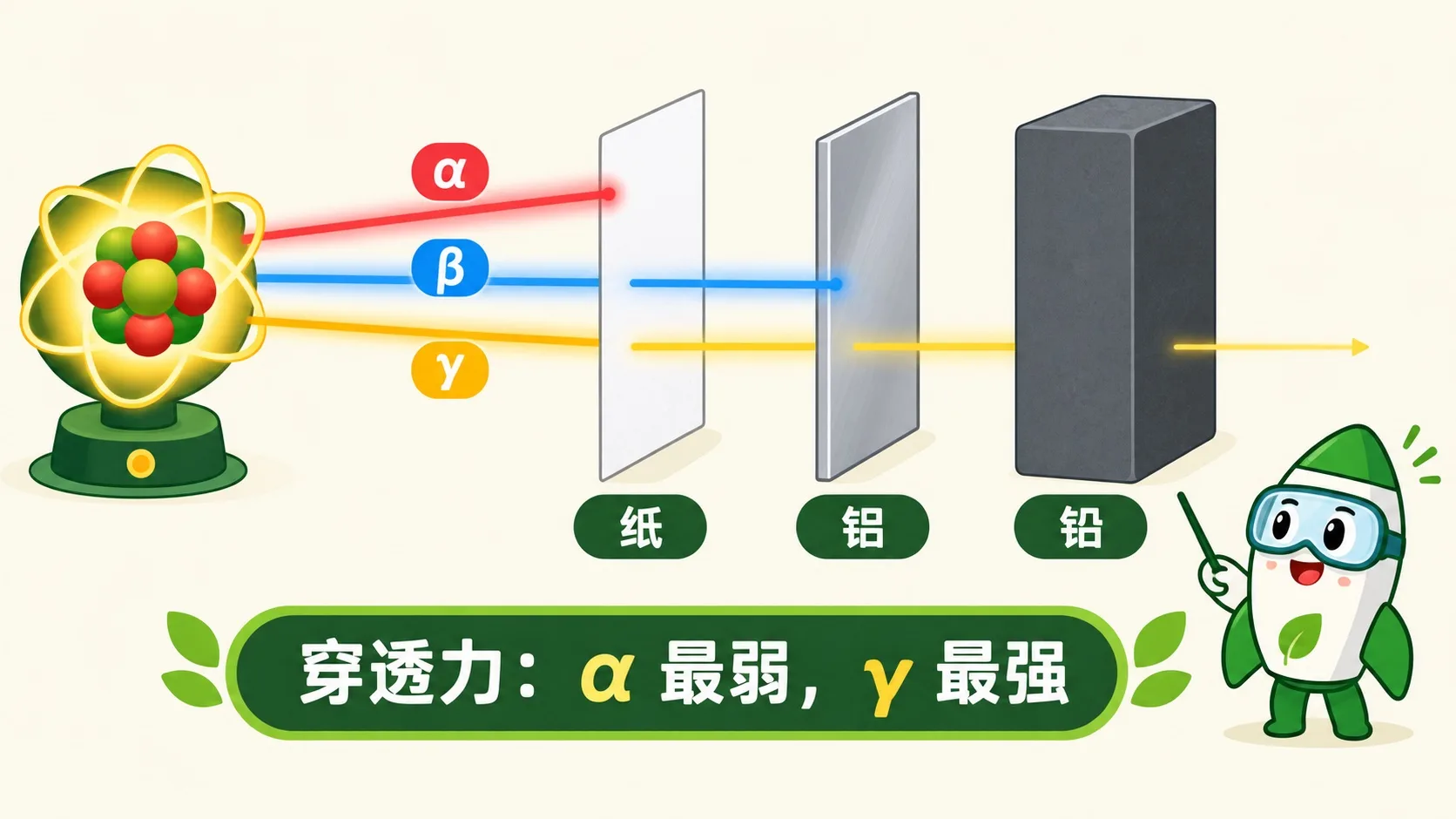
不安分的核会自发衰变,甩出三种东西:α 是一团笨重的“包袱”(两个质子加两个中子),β 是一颗高速电子,γ 是一束纯能量(高能光)。它们冲进物质时被“绊住”的机会不同:α 又大又带电,一张纸就拦住;β 小巧一些,能穿纸,却被几毫米铝板挡住;γ 不带电、跑得最快,穿过纸和铝,厚铅也只能削弱它。A restless nucleus decays on its own and throws off three things: α is a bulky “bundle” (two protons plus two neutrons), β is a fast electron, and γ is a pure burst of energy (high-energy light). They get snagged by matter differently: α is big and charged — paper stops it; β is smaller, passes paper but is blocked by a few millimeters of aluminum; γ carries no charge and races through paper and aluminum — thick lead only weakens it.
知道了射线能穿透什么,这跟我们的日常生活有什么关系?Knowing what rays can pierce — how does that touch daily life?
第 2 步:考古学家的时钟:碳-14Step 2: The archaeologist's clock: carbon-14
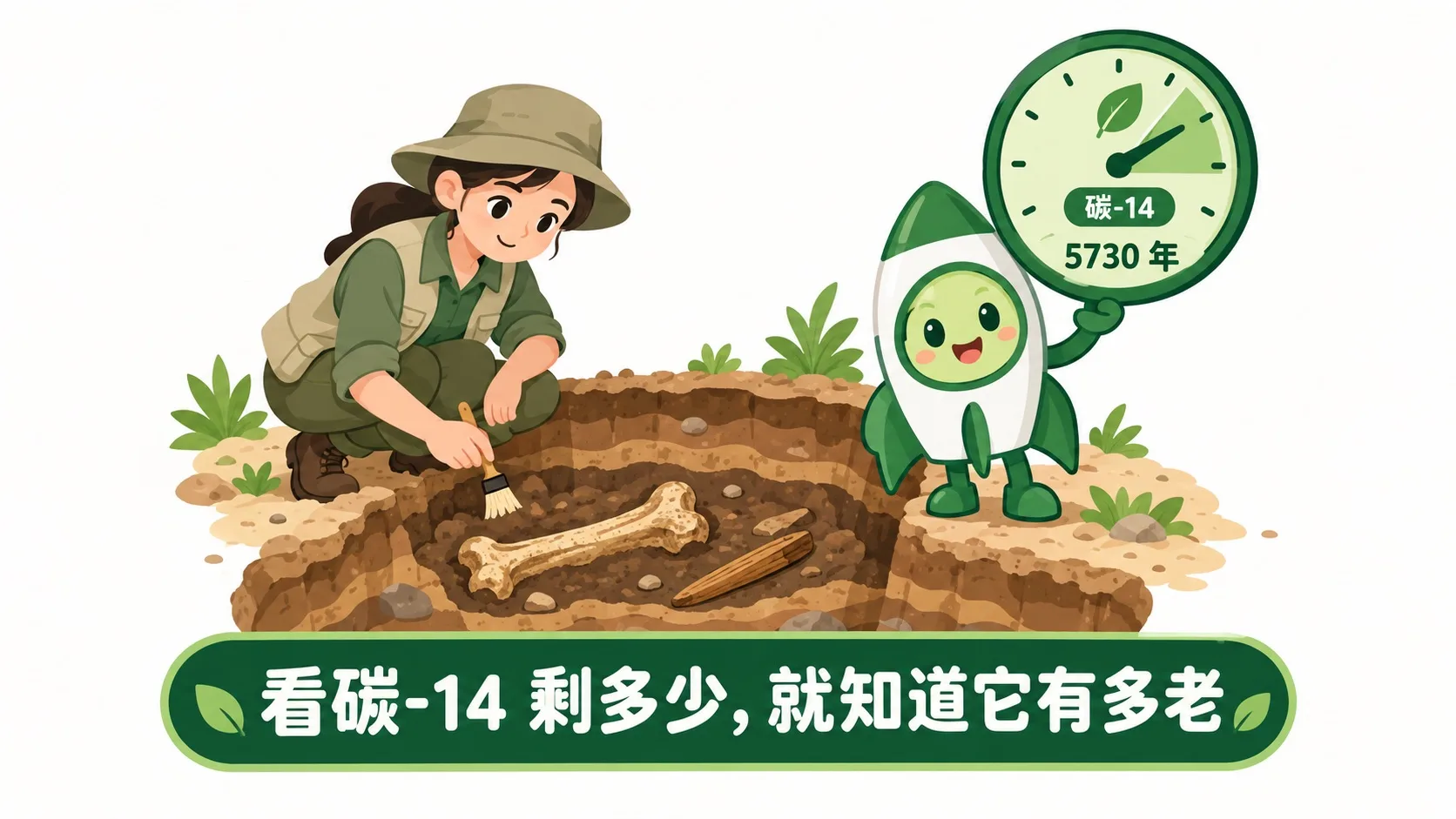
高空宇宙射线不停制造碳-14,它也会慢慢衰变(一种 β 衰变)。生物活着时,呼吸进食让体内的碳-14 一直换新;死去的瞬间,补充停了,剩下的碳-14 只能按固定节奏减少。考古学家量一量骨头或木器里还剩多少碳-14,就能倒推出它大约是多少年前的东西——这就是碳定年。Cosmic rays keep making carbon-14 high in the sky, and it slowly decays (a kind of β decay). While a living thing breathes and eats, its carbon-14 is constantly replaced; the moment it dies, the supply stops and the leftovers can only tick down at a fixed rate. Measure how much carbon-14 remains in a bone or wooden tool, and you can work out how many years ago it lived — that's carbon dating.
射线能伤害细胞,为什么医生反而把它送进病人身体里?Rays can harm cells — so why do doctors aim them into a patient's body?
第 3 步:同一种射线,医院用来救命Step 3: The same rays, saving lives in hospital
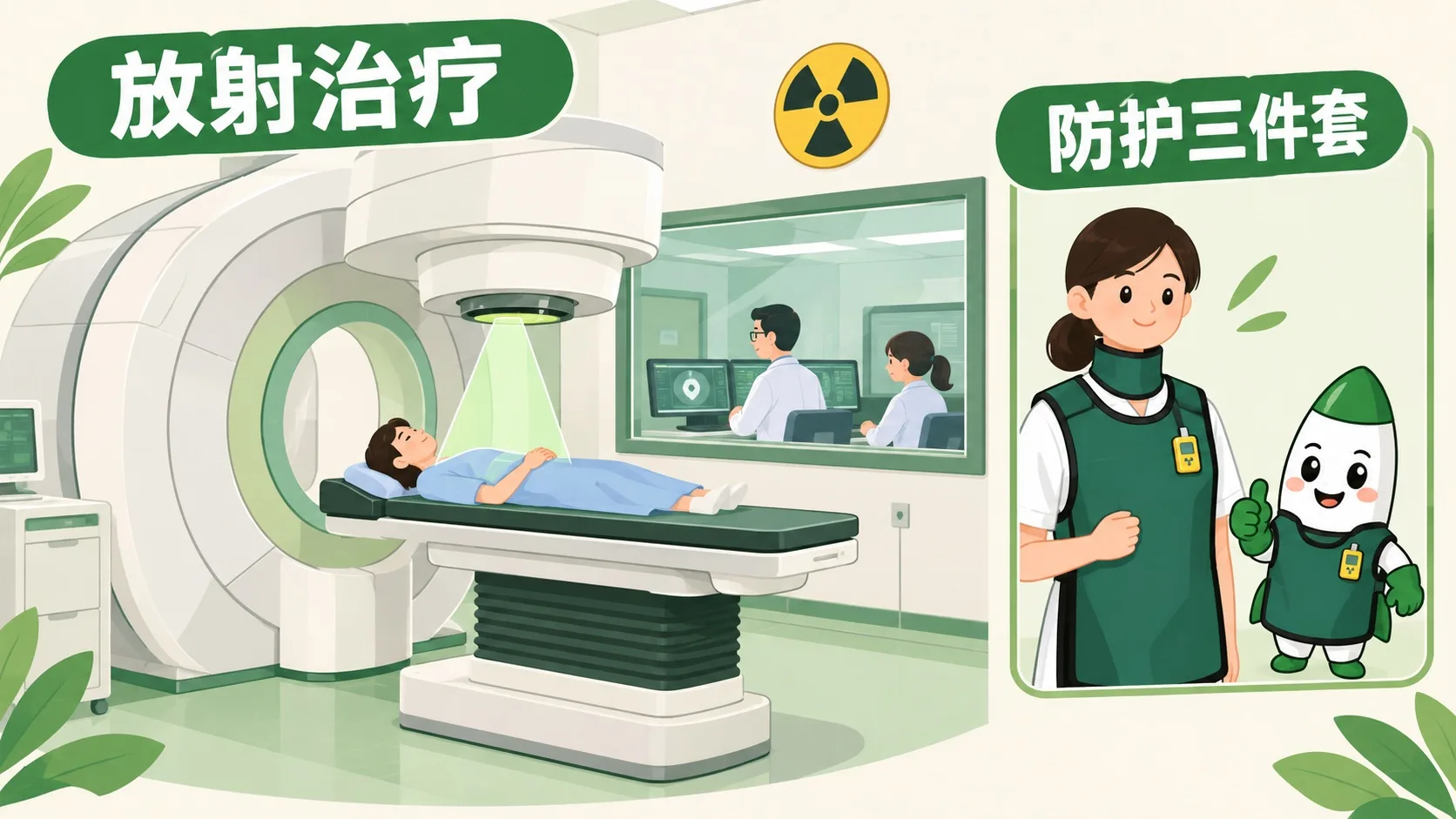
γ 射线穿透力最强,能穿过皮肤直达体内的肿瘤——放疗就用它集中火力杀死癌细胞。也正因为穿透强,操作时必须防护:铅围裙、铅围脖挡住身体,剂量徽章记录累积量;离得越远、待得越短越安全。反过来,α 射线连纸都穿不过,可一旦被吸进身体,反而最危险——所以处理 α 源要戴手套、防止扬尘吸入。γ rays penetrate best, reaching a tumor deep under the skin — radiotherapy focuses them to kill cancer cells. And because they pierce so well, protection matters: a lead apron and thyroid collar shield the body, a dose badge tracks the total, and farther away plus shorter time is safer. Conversely, α rays cannot even pass paper — yet inhaled into the body they are the most dangerous of all. So handling an α source means gloves and keeping the dust out of your lungs.
🎮 你来当射线实验员(1 分钟)🎮 Your turn: run the ray lab (1 minute)
道理讲完了。先切换 α / β / γ 看它们各自被什么挡住,再完成 4 个任务。Theory done. Switch between α / β / γ to see what stops each one — then finish 4 tasks.
一句话记住它:放射性 = 不安分的原子核自发“瘦身”,甩出 α、β、γ 三种射线;穿透力 α < β < γ,防护就要各有对策。Remember it in one line: radioactivity is a restless nucleus shedding weight on its own, throwing out α, β and γ rays; penetration goes α < β < γ, so protection has three different answers.
α:一团重粒子,一张纸就挡住;但吸入体内最危险,防的是“入口”α: a heavy particle stopped by paper — yet worst once inhaled, so guard the entrancesβ:高速电子,穿过纸、被几毫米铝板拦住;护目镜能护住眼睛β: a fast electron — through paper, stopped by millimeters of aluminum; goggles shield the eyesγ:穿透力最强的高能光,厚铅只能削弱;放疗用它的穿透,防护靠铅 + 距离 + 时间γ: the strongest high-energy light, only weakened by thick lead; radiotherapy uses it — lead + distance + time protect you
内容参考 OpenStax 等公开教材,多来源核对 · AI 生成、人工审核 · 发现错误欢迎指正,帮这片叶子长得更好。Based on OpenStax and other open textbooks, cross-checked across sources · AI-generated, human-reviewed · Spotted a mistake? Tell us — help this leaf grow.
 Back to tree