🥄 抽样方法:尝一勺知一锅🥄 Sampling Methods: One Spoon Tells the Pot
上一片里,小算盘机器人学会用新证据更新判断——可证据从哪来?全校上千人,一个一个问过来根本不现实。这一片就讲:怎样只查一小部分,就能知道整体的情况。Last leaf, the robot learned to update beliefs with new evidence — but where does the evidence come from? Asking a thousand students one by one is hopeless. This leaf shows how checking just a small part can tell you about the whole.
第 1 步:锅太大,只能尝一勺Step 1: Too big a pot — taste one spoon
先看机器人遇到的第一个难题:锅太大。First, the robot's very first problem: the pot is too big.
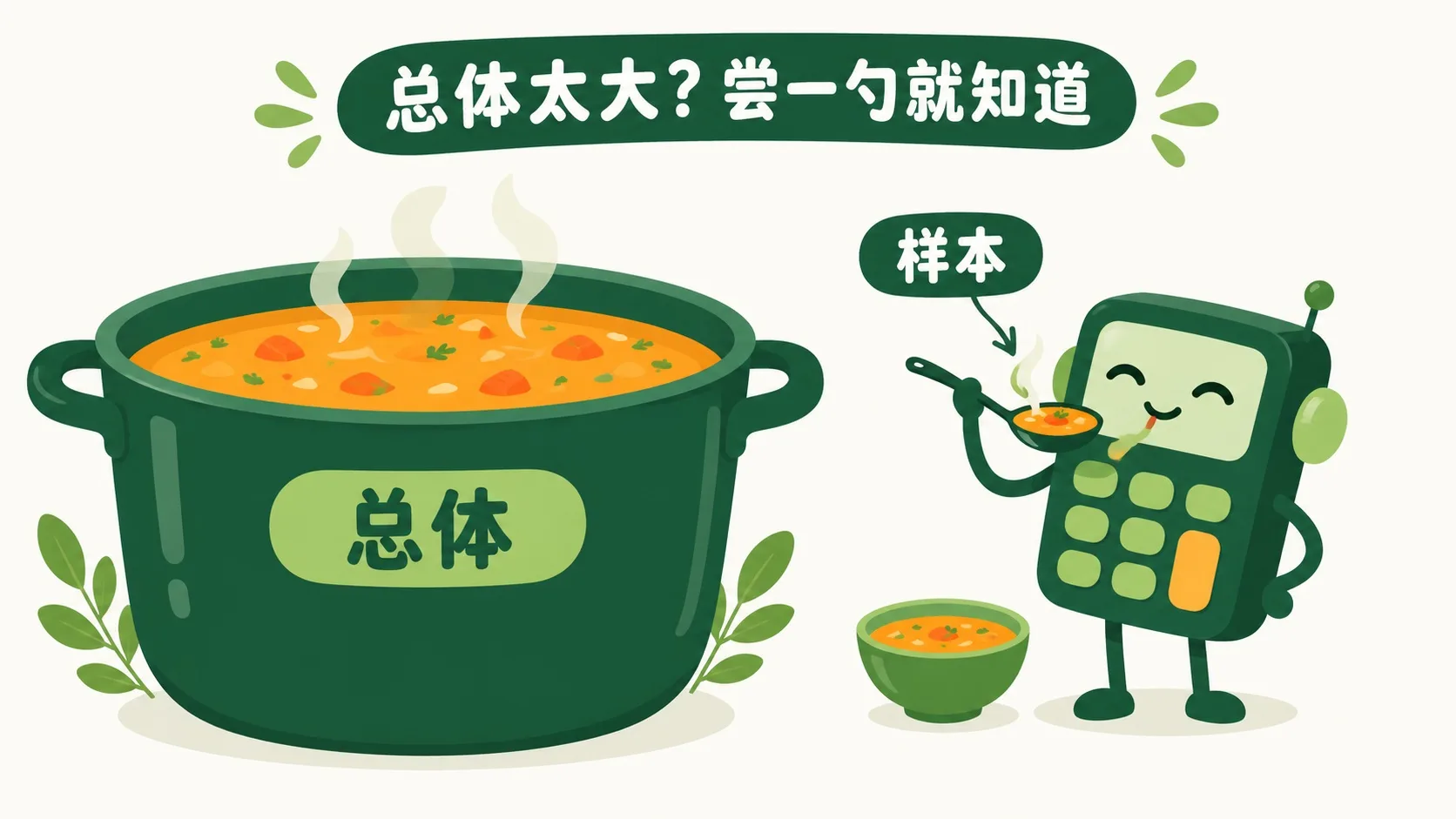
食堂要验证一大锅汤的咸淡,总不能把整锅喝光。整锅汤叫「总体」,舀出的一小勺叫「样本」。只要这勺够公平,尝它就能推断整锅味道——这就是抽样调查。To check the saltiness of a huge pot, you can't drink the whole thing. The whole pot is the "population"; one spoonful is a "sample". If the spoon is fair, tasting it tells you about the whole pot — that is a sample survey.
那“随便舀一勺”真的随便吗?机器人的勺子在锅边转了两圈。So is "just grab a spoonful" really fine? The robot's ladle circles the rim of the pot.
第 2 步:怎么舀才公平Step 2: How to make the spoon fair
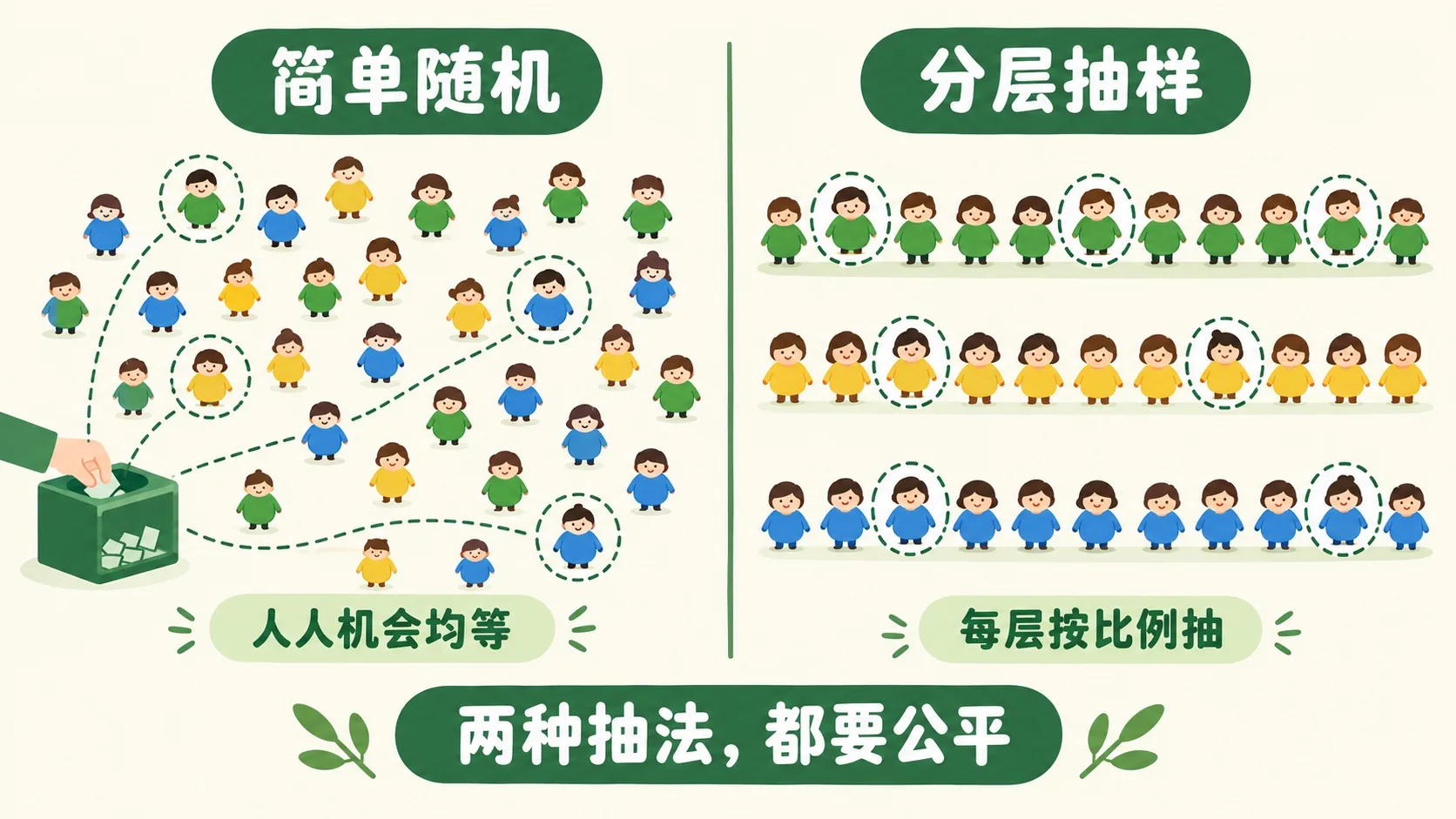
两种公平的舀法。简单随机抽样:给每个人编号抽签,谁都可能被抽中。分层抽样:先按特征分组,每层再按比例随机抽。全校六成是初中生,样本里也大致六成——这样才像整锅汤。Two fair ways. Simple random sampling: number everyone and draw lots — an equal chance for all. Stratified sampling: split first by a feature, then draw at random inside each group by share. If 60% of the school are juniors, the sample should be about 60% juniors too.
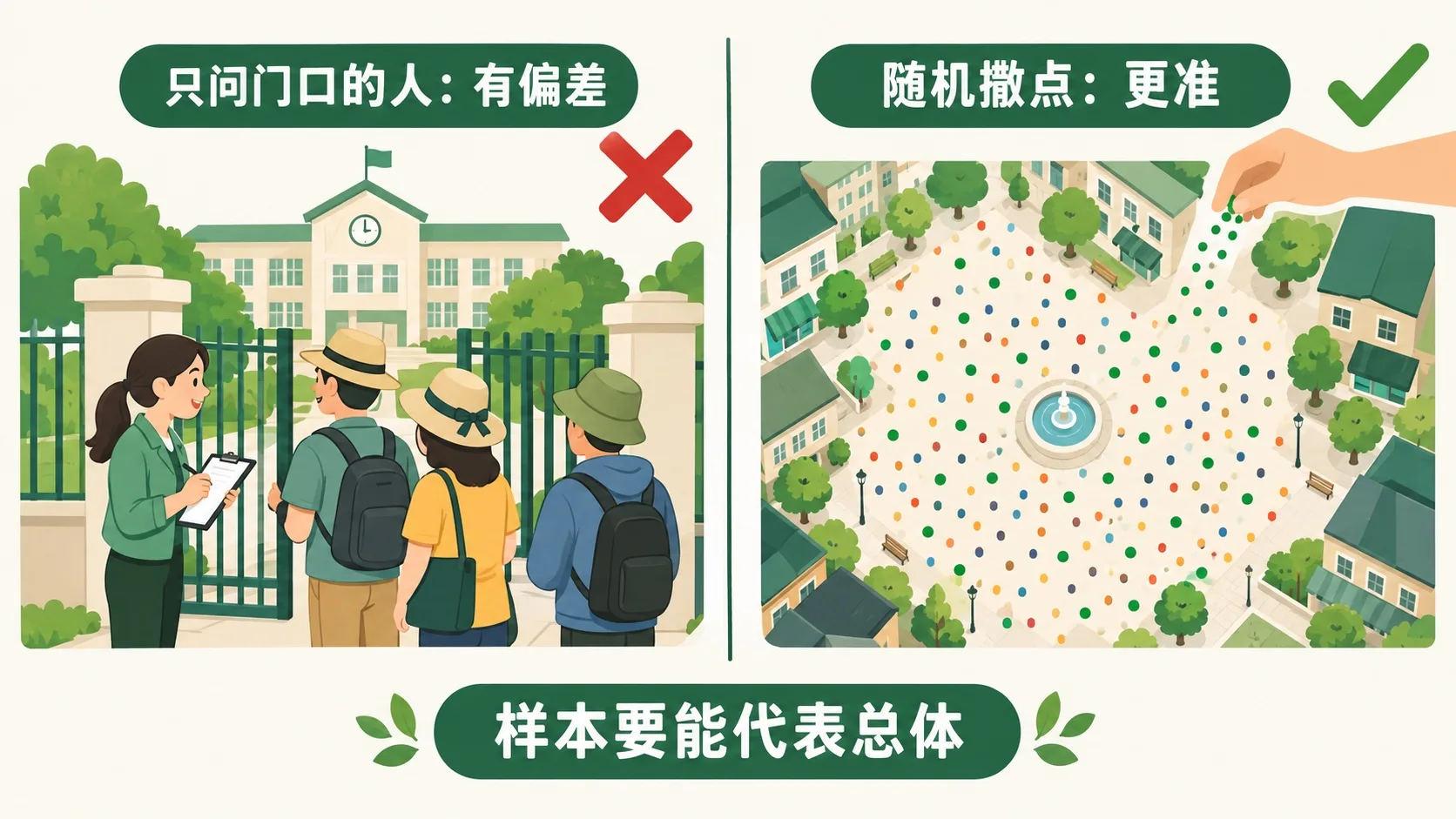
可机器人差点踩坑:它端着勺子,走向了食堂门口。But the robot nearly steps into a trap — it walks to the canteen door with its ladle.
第 3 步:两个大坑:偏差与样本量Step 3: Two traps: bias and sample size
坑一:抽样偏差。只在食堂门口问,问到的都是来吃饭的人——方便,但不公平。坑二:样本太小。一勺可能碰巧,多舀几勺结果才稳。样本量越大越准,但先保证随机,再谈数量。Trap 1: sampling bias. Asking only at the canteen door reaches only canteen-goers — convenient, but not fair. Trap 2: too small a sample. One spoon can be luck; more spoonfuls make the result steadier. A bigger sample is more reliable — but fairness comes first, size second.
🎮 你来当调查员(40 秒)🎮 Your turn: be the surveyor (40 seconds)
先做小实验:随机抽 10 人 vs 只在校门口抽 10 人,哪种样本更像全校?再完成 4 道抽样方案题。Warm-up first: pick 10 at random vs pick 10 at the school gate — which sample looks like the school? Then solve 4 plan-choice tasks.
一句话记住它:尝一勺知一锅——只要这勺够随机、有代表性,就敢替整锅说话。Remember it in one line: one spoon tells the pot — as long as it's random and representative.
总体太大时,用样本估计整体;样本要能代表总体When the population is too big, estimate it from a sample that stands for the whole简单随机:人人等机会;分层:先分组、再按比例抽Simple random: equal chance for all; stratified: split into groups, then pick by share只问门口的人=抽样偏差;样本越大越准,但要先随机Door-only asking is bias; bigger samples are steadier — but only if random
内容参考 OpenStax 等公开教材,多来源核对 · AI 生成、人工审核 · 发现错误欢迎指正,帮这片叶子长得更好。Based on OpenStax and other open textbooks, cross-checked across sources · AI-generated, human-reviewed · Spotted a mistake? Tell us — help this leaf grow.
 Back to tree