🔺 正余弦定理:解任意三角形的两把钥匙🔺 Sine & Cosine Laws: Two Keys to Any Triangle
上一片里,三角函数把角度变成了比值。现在把问题反过来:一个三角形里,知道几条边和几个角,能把剩下的都算出来吗?🧮 小算盘机器人站在山脚下——它得先拿到两把钥匙,才能量出爬不上去的山有多高。Last leaf, trigonometry turned angles into ratios. Now flip the question: in a triangle, given a few sides and angles, can we work out all the rest? The little calculator robot stands at the foot of a mountain — it needs two keys before it can measure a peak it cannot climb.
第 1 步:余弦定理——勾股定理的升级版Step 1: The cosine law — Pythagoras, upgraded
先看最常见的情况:知道两条边和它们夹住的角,怎么求第三条边?Start with the most common case: two sides and the angle between them — how long is the third side?
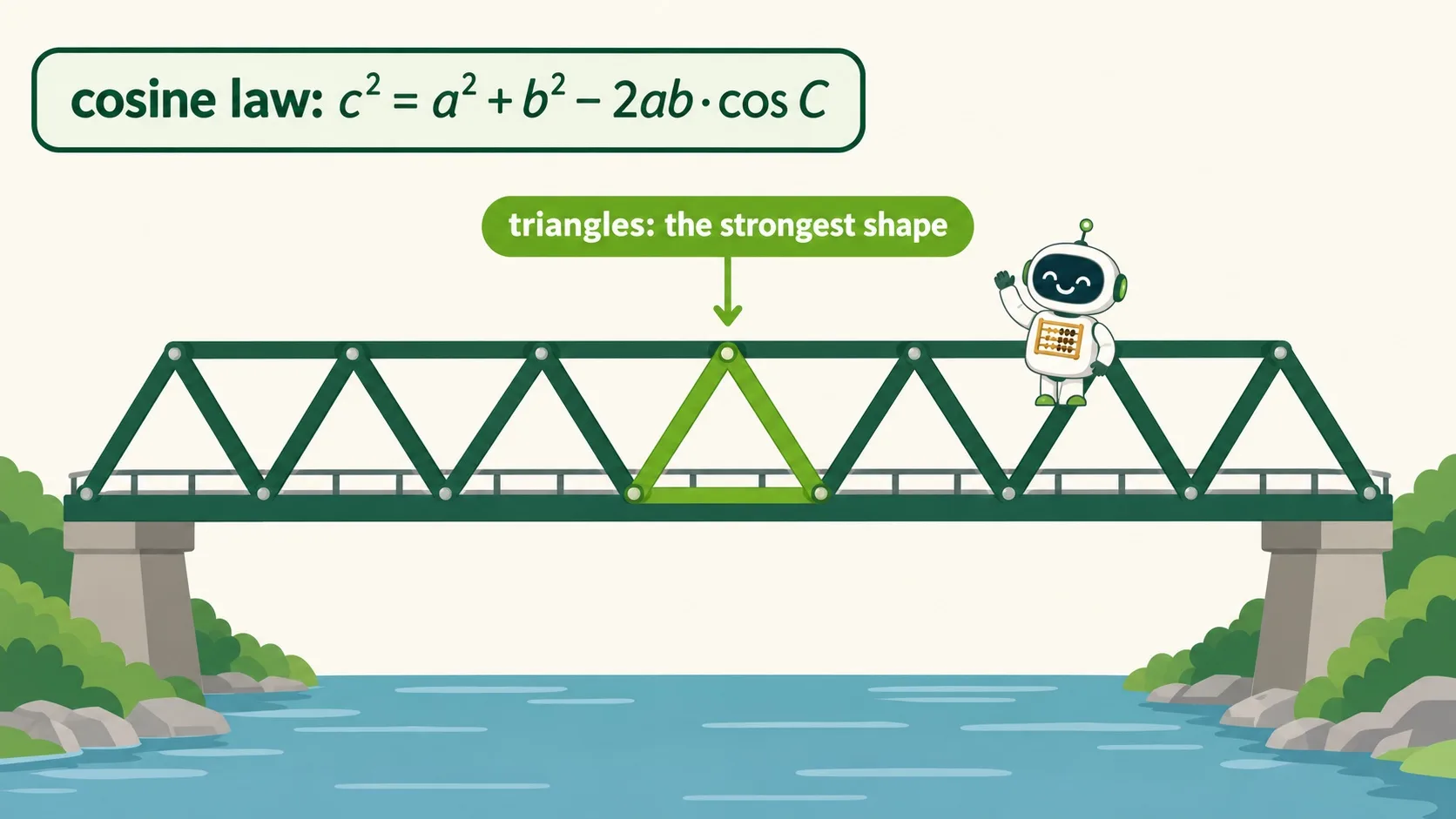
把勾股定理 c² = a² + b² 修一修:夹角不是 90° 时,减去 2ab·cos C 做补偿,就成了余弦定理 c² = a² + b² − 2ab·cos C。夹角 90° 时 cos C = 0,公式正好退回勾股定理。桥的三角钢架、房子的屋顶,全靠它算长度。Take Pythagoras c² = a² + b² and patch it: when the angle is not 90°, subtract 2ab·cos C as compensation, and you get the cosine law c² = a² + b² − 2ab·cos C. At 90°, cos C = 0 and it settles right back into Pythagoras. Bridge trusses and roof frames lean on it to size every beam.
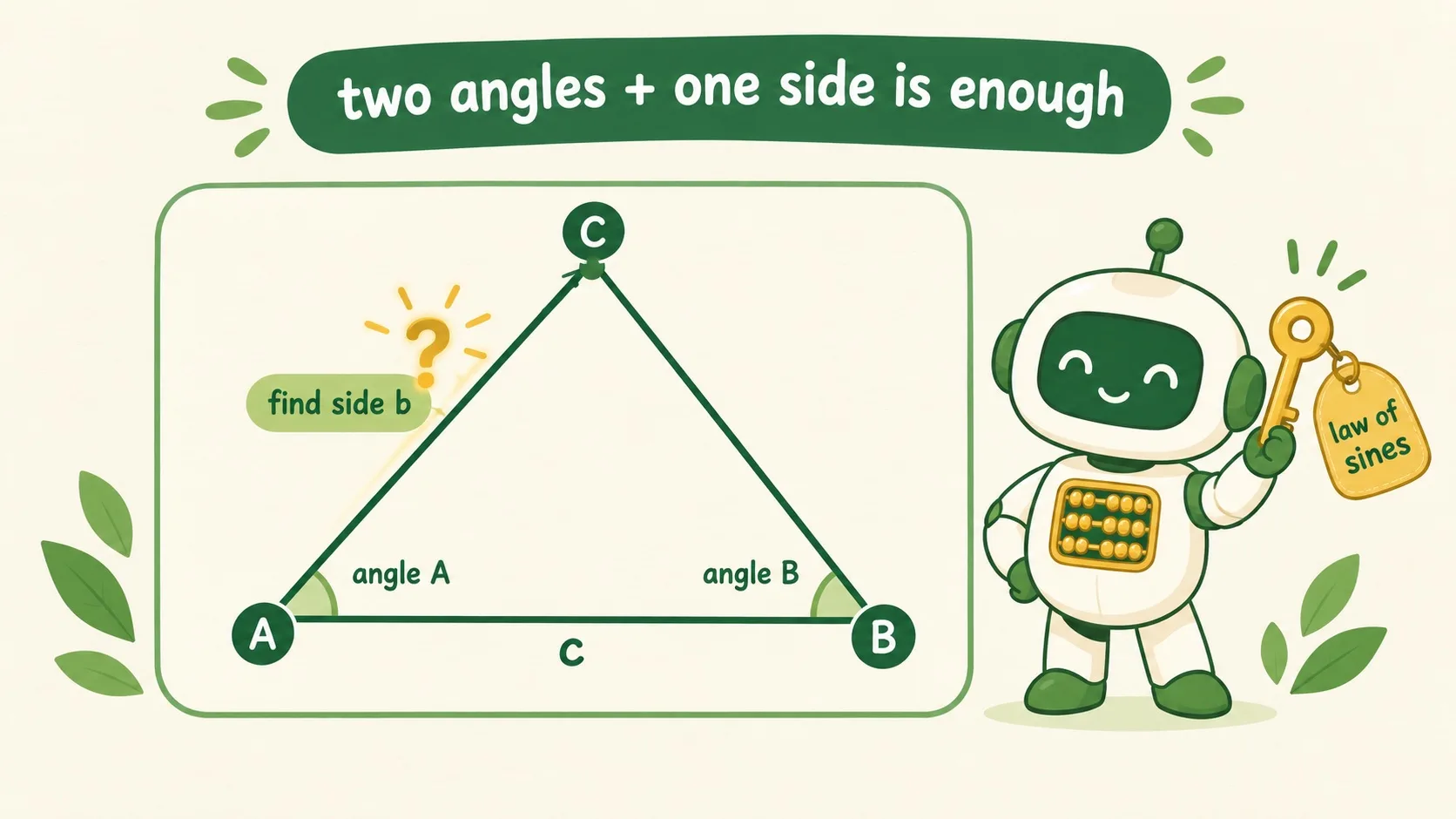
如果知道的是两个角和一条边呢?余弦定理帮不上,换第二把钥匙。What if you know two angles and one side instead? The cosine law cannot help — bring out the second key.
第 2 步:正弦定理——两角一边的通行证Step 2: The sine law — passport for two angles and a side
正弦定理说:三角形的每条边,除以它对面角的正弦,结果都一样——a ÷ sin A = b ÷ sin B = c ÷ sin C。所以只要有两个角、一条边,就能顺着比例把其他边全推出来,像翻三张写着同一比例的信息卡。The sine law says: every side divided by the sine of its opposite angle gives the same number — a ÷ sin A = b ÷ sin B = c ÷ sin C. So two angles plus one side is enough to push out all the other sides through one shared ratio, like reading three cards that all carry the same proportion.
两把钥匙都拿到了——机器人把它们串起来用。Both keys in hand — now the robot uses them together.
第 3 步:不用爬山,也能量山Step 3: Measure the mountain without climbing it
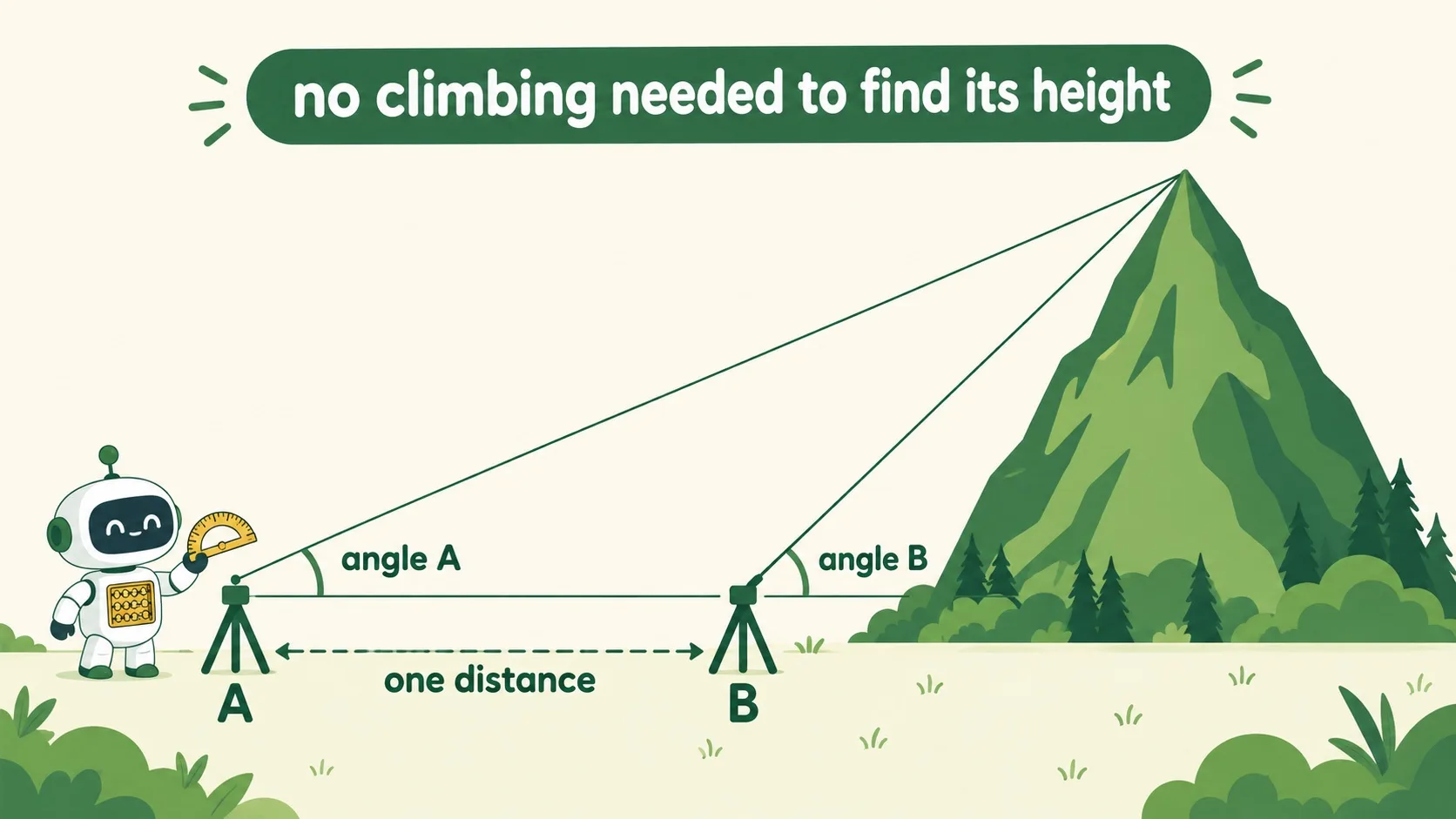
山太高爬不上去?在山脚选两个观测点 A、B,量出它们之间的距离,再各测一个仰角。先用三角形内角和补出第三个角,再用正弦定理算出到山顶的斜距,最后用 sin 求高度。测河宽、量塔高、算卫星距离,都是同一套办法。Mountain too steep to climb? Pick two points A and B on the ground, measure the distance between them and one elevation angle from each. Fill in the third angle, use the sine law to get the slant distance to the peak, then sin to turn it into height. River widths, tower heights, satellite ranges — same recipe.
🎮 你来拉一拉(30 秒)🎮 Your turn: stretch it (30 seconds)
拖滑块把未知的边拉到正确长度,4 关分别考余弦定理和正弦定理。Drag the slider to stretch the unknown side to its correct length — 4 levels test the cosine law and the sine law.
一句话记住它:两边夹一角 → 余弦定理;两角加一边 → 正弦定理。两把钥匙在手,任意三角形都能解开。Remember it in one line: two sides with an angle → cosine law; two angles with a side → sine law. Two keys, and any triangle opens.
余弦定理:c² = a² + b² − 2ab·cos C,夹角 90° 时就是勾股定理cosine law: c² = a² + b² − 2ab·cos C — at 90° it becomes Pythagoras正弦定理:a ÷ sin A = b ÷ sin B = c ÷ sin C,边和对角一一成比例sine law: a ÷ sin A = b ÷ sin B = c ÷ sin C — every side pairs with its opposite angle测山高、量河宽:两个角 + 一段距离,人不过去也能算mountain heights and river widths: two angles plus one distance does it from afar
内容参考 OpenStax 等公开教材,多来源核对 · AI 生成、人工审核 · 发现错误欢迎指正,帮这片叶子长得更好。Based on OpenStax and other open textbooks, cross-checked across sources · AI-generated, human-reviewed · Spotted a mistake? Tell us — help this leaf grow.
 Back to tree